
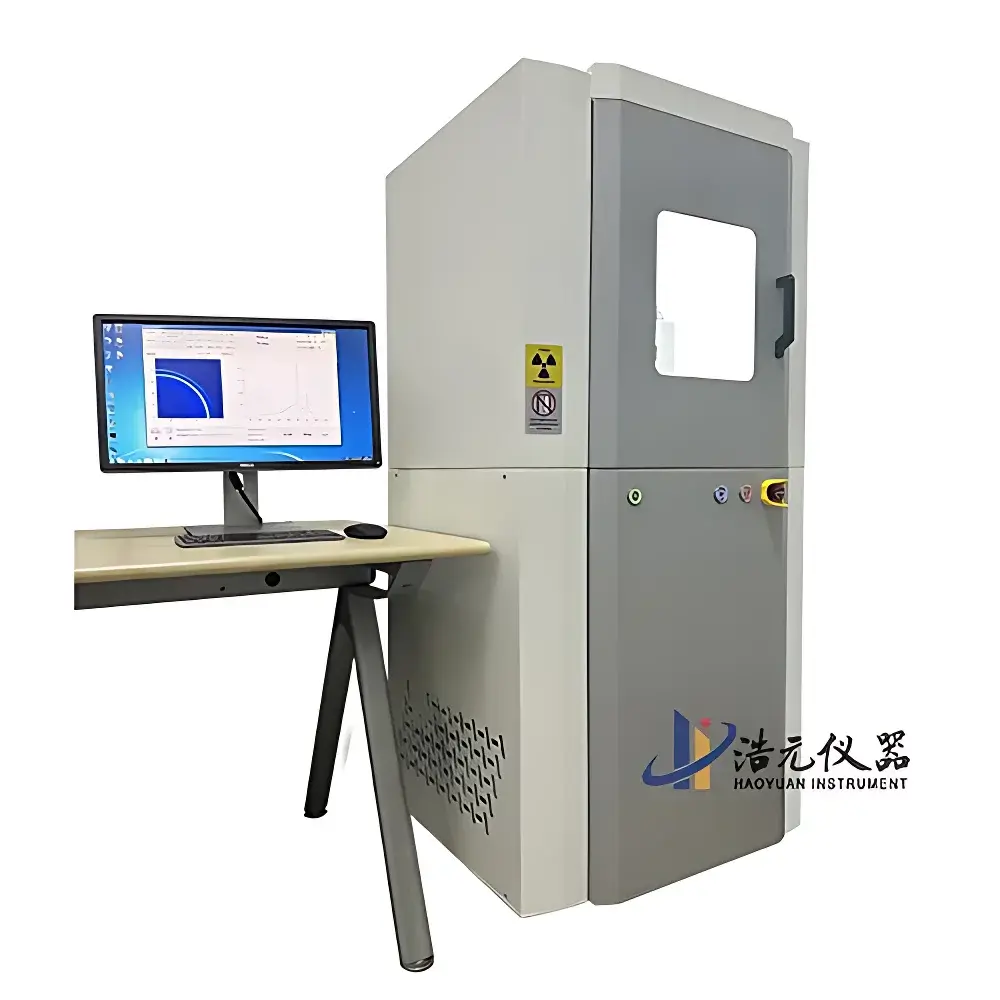
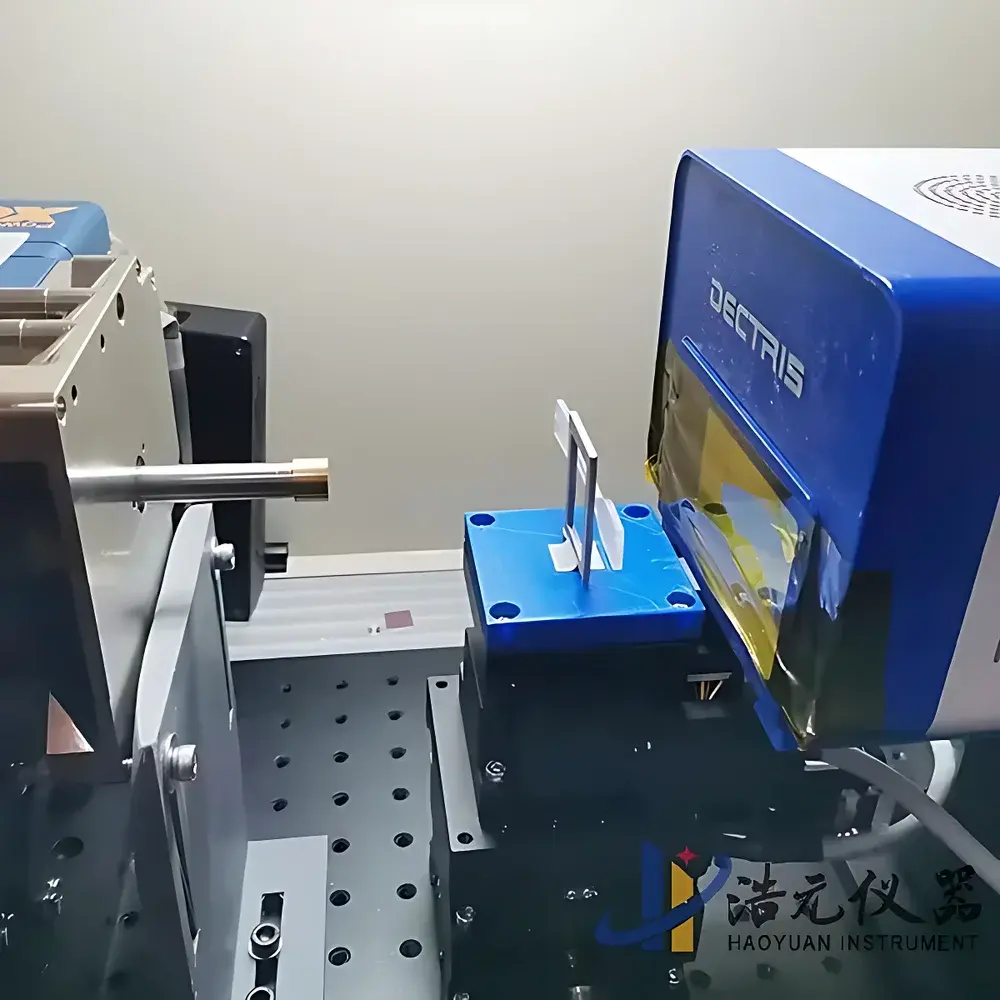
Haoyuan DX-2900 High-Resolution Horizontal/Vertical Dual-Mode 2D X-ray Diffractometer
| Brand | Haoyuan |
|---|---|
| Origin | Liaoning, China |
| Manufacturer Type | Direct Manufacturer |
| Country of Origin | China |
| Model | DX-2900 |
| Instrument Type | High-Resolution X-ray Diffractometer |
| Configuration | Floor-Standing |
| Power | 50 W |
| X-ray Source | Cu or Mo anode (50 kV / 1 mA) |
| Capillary Optics | Collimation ≤ 0.25°, Focal Spot Diameter: 0.5 mm, Photon Flux > 1×10⁸ ph/s |
| Goniometer | Two-Axis Thin-Film Stage (ω: –10° to +10°, resolution 0.002° |
| Z | 0–15 mm, resolution 0.002 mm) |
| Detector | 2D Array (512 × 512 pixels, pixel size 75 µm) |
| Optional Accessories | Transmission stage, in-situ heating stage (up to 600 °C), inert-atmosphere chamber, solvent vapor chamber, XY translation stage (150 mm × 150 mm), upgradeable to 3–5-axis thin-film goniometer or Pilatus200K/Eiger500K detectors |
Overview
The Haoyuan DX-2900 is a dual-mode, floor-standing 2D X-ray diffractometer engineered for high-resolution structural characterization of crystalline and semi-crystalline materials. Operating on Bragg’s law and Debye–Scherrer diffraction geometry, the system supports both horizontal and vertical sample configurations—enabling flexible experimental design for thin films, fibers, polymers, perovskites, ceramics, and bulk solids. Its core architecture integrates a microfocus sealed-tube X-ray source (Cu or Mo anode), precision multi-capillary optics delivering high photon flux (>1×10⁸ ph/s) with sub-0.25° divergence, and a large-area 2D detector array (512 × 512, 75 µm pixels) capable of capturing full Debye–Scherrer rings and azimuthal intensity distributions in a single exposure. Unlike conventional θ–2θ scanning systems, the DX-2900’s 2D detection capability eliminates sequential angular stepping, significantly accelerating phase identification, texture analysis, crystallite size distribution, and lattice strain quantification—particularly critical for anisotropic materials such as oriented polymer films, metal oxide coatings, and solution-processed perovskite layers.
Key Features
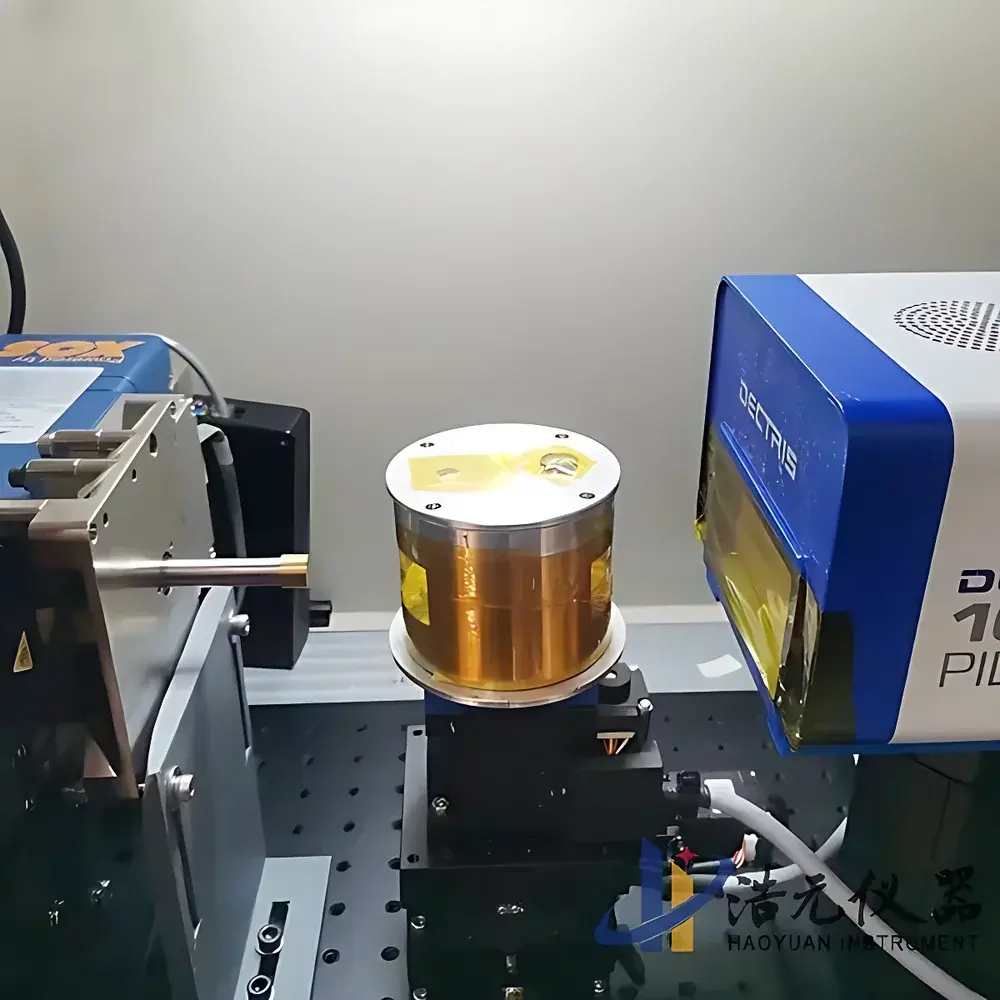
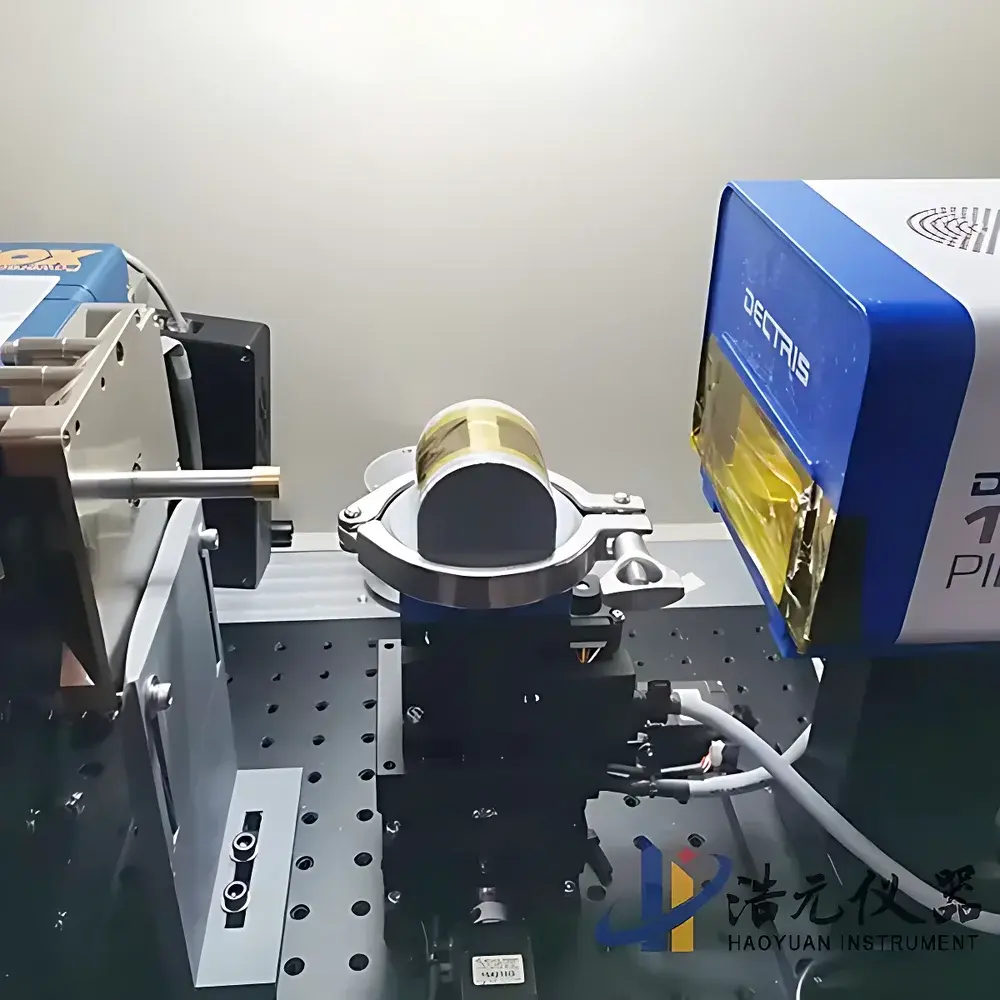
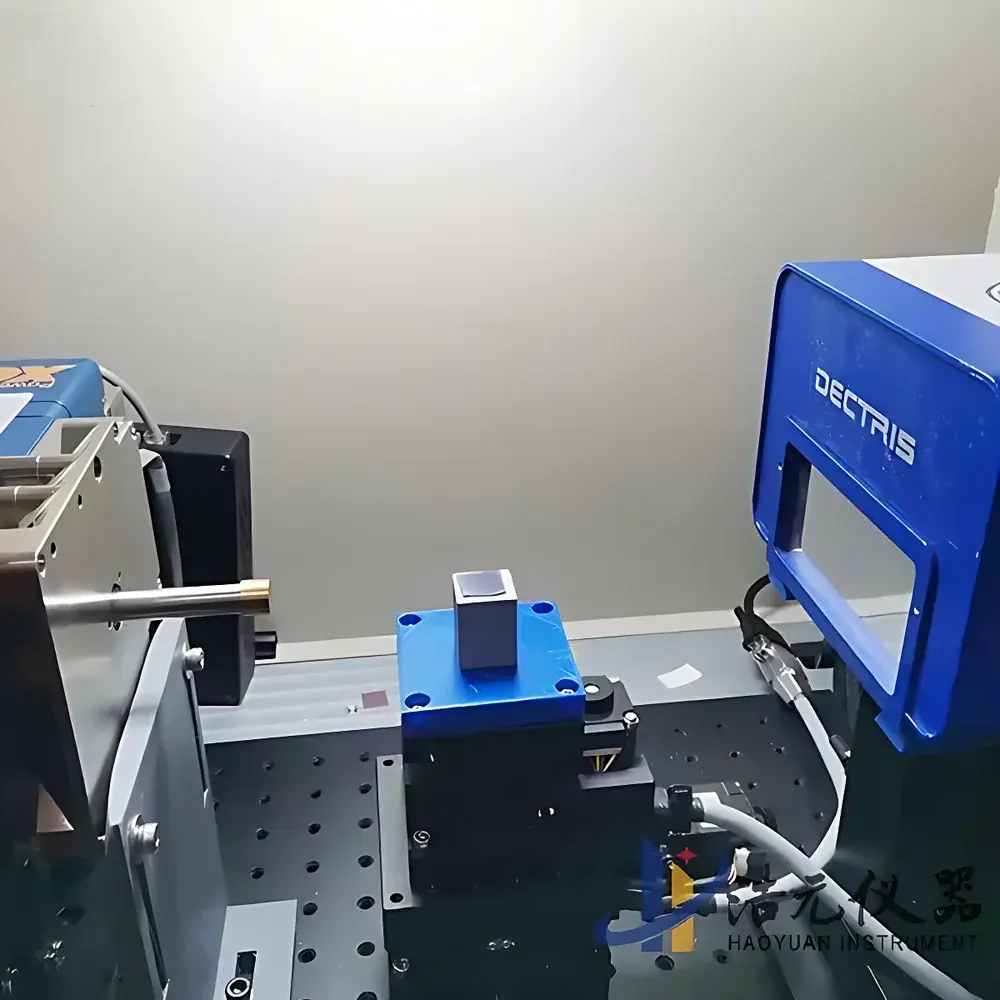
- Dual-configurable optical layout: switch between horizontal (for liquid/melt/solution-state samples) and vertical (for film-on-substrate or powder-on-plate geometries) measurement modes without hardware re-alignment
- High-stability two-axis thin-film goniometer with ω-axis range of –10° to +10° (angular resolution 0.002°) and Z-axis vertical translation (0–15 mm, positional resolution 0.002 mm)
- Expandable motion control: optional 150 mm × 150 mm motorized XY translation stage for automated multi-position mapping across heterogeneous or patterned samples
- In-situ compatibility: integrated mounting interfaces for heating stages (up to 600 °C), inert-gas glovebox adapters, solvent vapor chambers, and transmission-stage modules
- Modular detector pathway: native support for 2D silicon pixel array detectors; field-upgradable to Pilatus200K or Eiger500K/1M systems for higher dynamic range, faster frame rates, and zero-readout noise
- Rigorous mechanical design: vibration-damped optical bench, temperature-stabilized tube housing, and precision-ground bearing assemblies ensuring long-term angular reproducibility (<0.005° drift over 8 h)
Sample Compatibility & Compliance
The DX-2900 accommodates a broad spectrum of sample forms—including spin-coated perovskite thin films (e.g., MAPbI₃), melt-extruded polymer fibers (e.g., polybutadiene, N2200), sputtered Al₂O₃ coatings, and bulk ceramic pellets—without requiring destructive sectioning or complex mounting. Its modular stage ecosystem enables compliance with common analytical workflows defined in ASTM E975 (standard practice for XRD texture analysis), ISO 21382 (X-ray diffraction for polymer crystallinity), and IEC 62471 (radiation safety for analytical X-ray equipment). All firmware and acquisition software are architected to support audit-trail logging and user-access controls aligned with GLP and GMP documentation requirements. Radiation shielding meets national Class II cabinet standards (GBZ 117–2020), and interlock circuits conform to EN 61000-6-4 electromagnetic compatibility directives.
Software & Data Management
Acquisition and analysis are managed via Haoyuan’s proprietary XRDWorks Suite—a Windows-based platform compliant with FDA 21 CFR Part 11 for electronic records and signatures. The software provides real-time 2D image preview, automatic ring integration (azimuthal and radial), phase identification against ICDD PDF-4+ database (2023 edition), crystallite size modeling using Scherrer and Williamson–Hall methods, and pole figure reconstruction from series of ω scans. Raw .tif/.cbf files are stored with embedded metadata (voltage, current, exposure time, stage coordinates, calibration parameters), enabling traceable reprocessing. Batch processing pipelines support scripting via Python API (PyXRD), facilitating integration into automated QA/QC workflows in R&D labs and production environments.
Applications
- Thin-film texture analysis of transparent conductive oxides (TCOs), ferroelectric perovskites, and organic semiconductor layers
- Crystallinity mapping of extruded polymer fibers and blow-molded packaging films
- In-situ thermal evolution studies of phase transitions in battery cathode materials (e.g., LiCoO₂ → Co₃O₄)
- Solvent-vapor-induced structural reorganization in block copolymer thin films
- Residual stress profiling in thermally sprayed ceramic coatings via sin²ψ method
- Quantitative amorphous content determination in pharmaceutical tablet excipients using Rietveld refinement
FAQ
What X-ray anode options are supported?
The DX-2900 accepts interchangeable Cu and Mo sealed-tube anodes, each optimized for specific d-spacing ranges and absorption characteristics.
Is the system compatible with third-party detectors?
Yes—the detector interface follows standard HDF5 and TIFF protocols; Pilatus, Eiger, and PerkinElmer flat-panel detectors can be integrated via OEM SDKs.
Can the instrument perform grazing-incidence XRD (GIXRD)?
Yes—when configured vertically with the optional high-precision ψ/φ tilt stage, the system achieves incident angles down to 0.1° for surface-sensitive GIXRD measurements.
Does the software support Rietveld refinement?
Yes—XRDWorks includes full-profile Rietveld analysis using GSAS-II engine integration, with constraints for lattice parameters, atomic occupancy, and isotropic/anisotropic displacement parameters.
What safety certifications does the instrument hold?
The DX-2900 complies with GBZ 117–2020 (China), IEC 61010-1 (safety of laboratory equipment), and carries CE marking for EMC and low-voltage directive conformity.






