
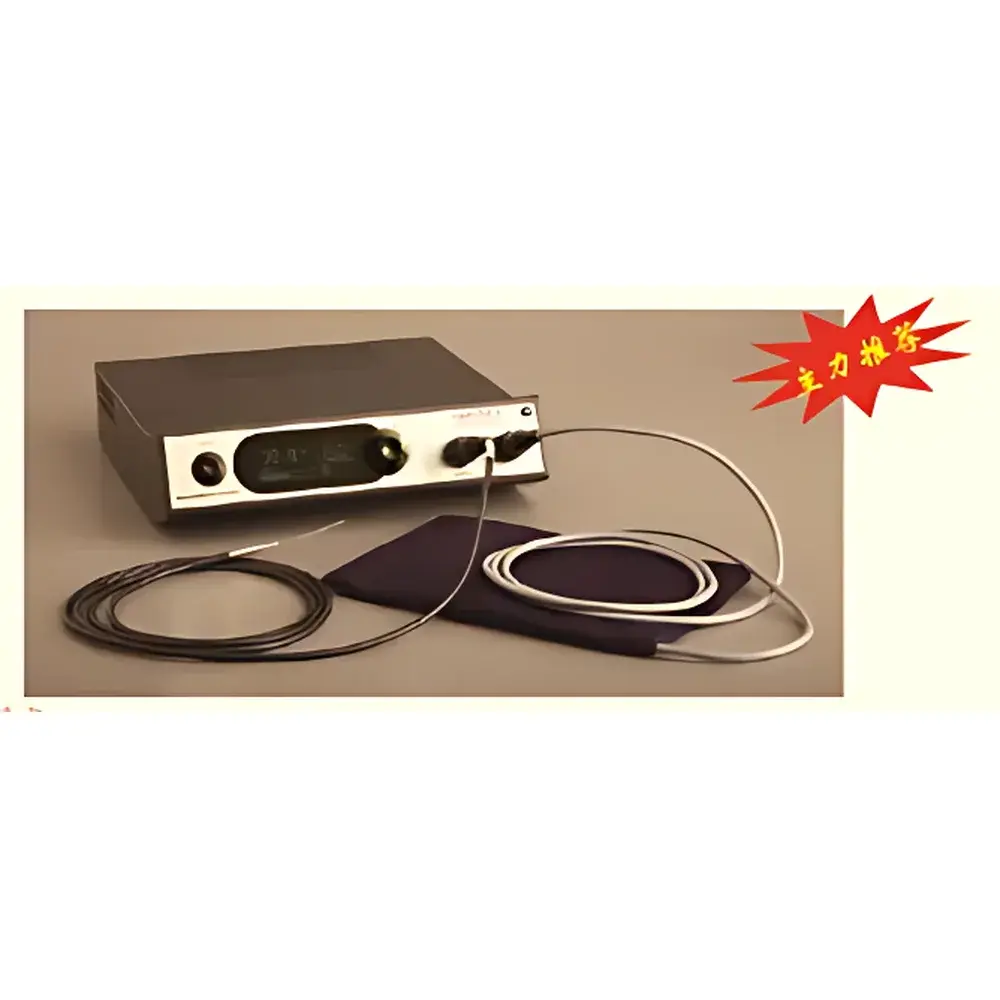
Harvard Apparatus Homeothermic Blanket System for Small to Large Laboratory Animals
| Brand | Harvard Apparatus |
|---|---|
| Origin | USA |
| Model | Homeothermic Blanket System |
| Temperature Range | 35–40 °C (95–104 °F) |
| Probe Types | Flexible (2 mm Ø, 100 mm length) & Rigid Stainless Steel (1.6 mm Ø) |
| Blanket Sizes | Small (15 × 20 cm), Medium (45 × 70 cm), Large (60 × 90 cm) |
| Power Supply | Regulated Low-Voltage DC |
| Control Method | Proportional Feedback Loop |
| Display | Front-Panel LCD + Horizontal LED Power Bar Graph |
| Cable Length | 2 m (probe & blanket) |
| Grounding Option | Front-Panel Switchable Ground |
| Electrical Noise Suppression | Integrated Shielded Circuitry |
| Compliance | Designed for GLP/GMP-aligned preclinical research environments |
Overview
The Harvard Apparatus Homeothermic Blanket System is an engineered thermal regulation solution designed specifically for maintaining core body temperature in conscious or anesthetized laboratory animals during surgical, electrophysiological, imaging, or behavioral procedures. It operates on a closed-loop proportional control principle: a precision thermistor-based temperature probe continuously feeds real-time core temperature data to the microprocessor-controlled unit, which dynamically modulates low-voltage DC power delivered to a highly flexible, insulated heating element embedded within the blanket. This proportional feedback architecture eliminates on/off switching artifacts—critical for compatibility with high-gain recording systems such as EEG, ECG, patch-clamp amplifiers, or extracellular neural probes. The system is not a passive warming device but an active, responsive thermoregulatory platform calibrated to sustain normothermia (35–40 °C) across species ranging from adult mice to large canines, supporting experimental reproducibility and animal welfare compliance per NIH Guide for the Care and Use of Laboratory Animals and AAALAC International standards.
Key Features
- Proportional temperature control algorithm ensures stable thermal output without overshoot or oscillation—minimizing thermal stress and electrical interference.
- Two interchangeable probe options: flexible epoxy-encapsulated thermistor (2 mm diameter, 100 mm length) optimized for rodents and larger mammals; rigid stainless-steel probe (1.6 mm diameter) suitable for precise rectal placement in mice, rats, rabbits, cats, and dogs.
- Three anatomically scaled blanket sizes—Small (15 × 20 cm), Medium (45 × 70 cm), and Large (60 × 90 cm)—enable secure, conformal wrapping with minimal restraint and maximal surface contact.
- Electrically floating heating element with front-panel ground-switching capability reduces common-mode noise and enhances signal fidelity in sensitive electrophysiology setups.
- Integrated noise-suppression circuitry meets electromagnetic compatibility requirements for use alongside low-noise amplifiers and data acquisition systems operating at microvolt-level sensitivity.
- LCD display shows real-time measured core temperature; horizontal LED bar graph provides immediate visual feedback on relative power delivery to the blanket.
Sample Compatibility & Compliance
The system accommodates a broad spectrum of laboratory species without modification: adult mice (C57BL/6, BALB/c), rats (Sprague-Dawley, Wistar), guinea pigs, rabbits, ferrets, cats, and dogs up to 25 kg. Blanket geometry and probe dimensions are validated for safe, repeatable rectal insertion across these models while minimizing mucosal trauma. All components—including thermistor calibration, cable shielding, and DC power regulation—are traceable to NIST-traceable references. The system supports documentation workflows aligned with Good Laboratory Practice (GLP) and Good Manufacturing Practice (GMP) requirements, including configurable temperature setpoints (35–40 °C), continuous digital logging readiness, and audit-ready operational parameters. While not FDA-cleared as a medical device, it conforms to ISO 10993 biocompatibility principles for short-term external contact and is routinely cited in IACUC protocols under USDA Animal Welfare Act provisions.
Software & Data Management
The Homeothermic Blanket System operates as a standalone analog-digital hybrid controller with no proprietary software dependency. Temperature data is output via analog voltage (0–10 V DC, scalable to 35–40 °C range) for integration into third-party acquisition platforms (e.g., Spike2, LabChart, National Instruments DAQ systems). Optional analog-to-digital conversion modules enable timestamped, high-resolution temperature logging at user-defined sampling rates (1–10 Hz typical). The control unit’s firmware supports factory preset defaults (37 °C) and manual front-panel adjustment—eliminating configuration drift and ensuring inter-laboratory consistency. No cloud connectivity or remote access features are included, preserving data sovereignty and meeting institutional cybersecurity policies for preclinical infrastructure.
Applications
- Intraoperative thermoregulation during stereotaxic surgery, craniotomy, or spinal cord injury models.
- Maintenance of normothermia during chronic electrophysiological recordings (LFP, single-unit, multi-electrode arrays).
- Stabilization of core temperature in fMRI, PET, or optical imaging sessions where thermal fluctuations degrade signal-to-noise ratio.
- Support of metabolic studies requiring strict thermal homeostasis (e.g., indirect calorimetry, glucose tolerance testing).
- Post-anesthesia recovery monitoring in rodent and companion animal models.
- Integration into automated phenotyping platforms where thermal stability impacts locomotor or cognitive assay outcomes.
FAQ
What is the recommended probe insertion depth for mice and rats?
For adult mice, insert the flexible probe 15–20 mm; for rats, 25–35 mm—ensuring the thermistor bead resides within the distal rectum without contacting fecal material.
Can the blanket be sterilized between uses?
The heating blanket surface is wipe-clean only with 70% ethanol or isopropyl alcohol; autoclaving, gamma irradiation, or ethylene oxide exposure will damage the embedded heating element and insulation.
Is the system compatible with MRI environments?
No—the blanket contains conductive elements and is not MRI-safe; it must be removed prior to scanning.
Does the controller support external temperature setpoint modulation via TTL or analog input?
Yes—pin-compatible analog input (0–10 V) allows dynamic setpoint override from external timing or feedback controllers.
How often should probe calibration be verified?
We recommend quarterly verification against a NIST-traceable reference thermometer in a stirred water bath at 37.0 ± 0.1 °C; full recalibration is available through Harvard Apparatus Service Centers.





