
HengaoDe HAD-T305 Surface and Volume Resistivity Tester for Conductive Coatings and Insulating Materials
| Brand | HengaoDe |
|---|---|
| Origin | Beijing, China |
| Model | HAD-T305 |
| Resistance Range | 10² Ω to 1×10¹⁴ Ω |
| Resistivity Range | 10² to 2.0×10¹⁵ Ω·cm |
| Test Voltage | 0–1000 V DC |
| Basic Accuracy | <1 GΩ ±1% |
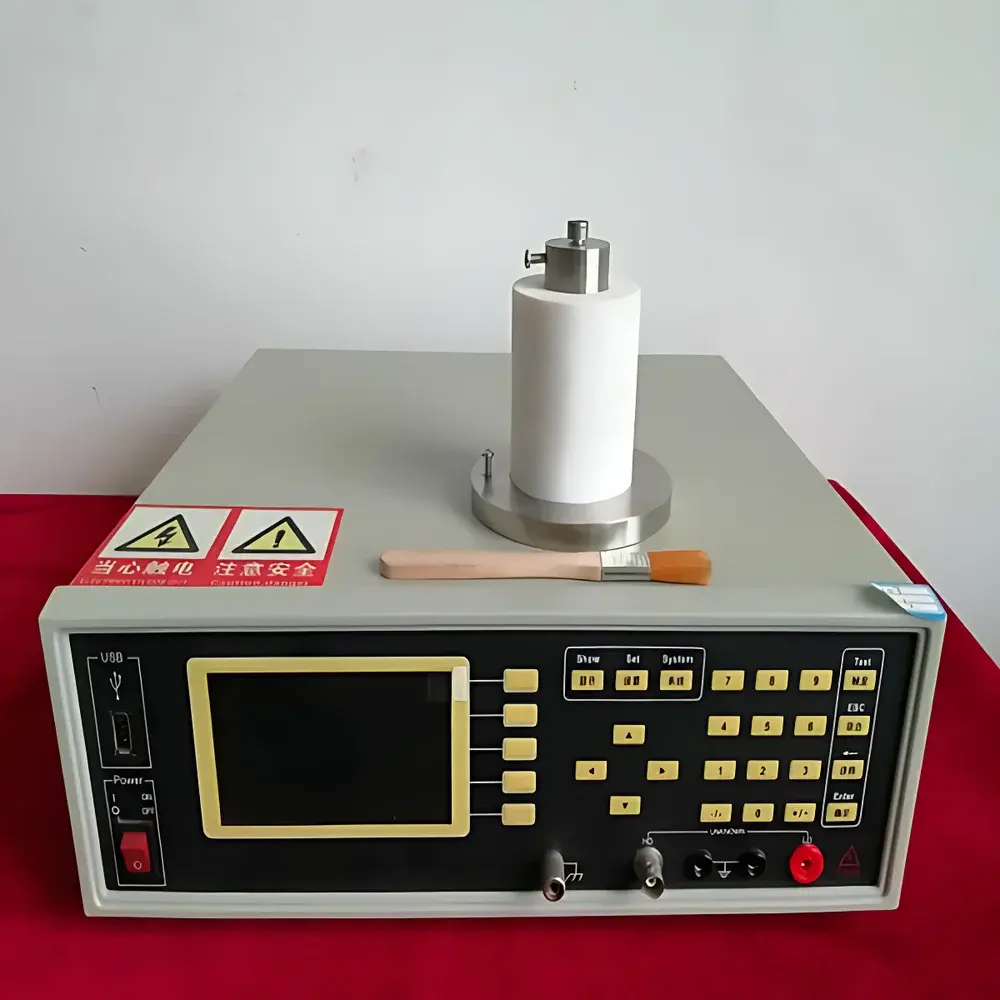
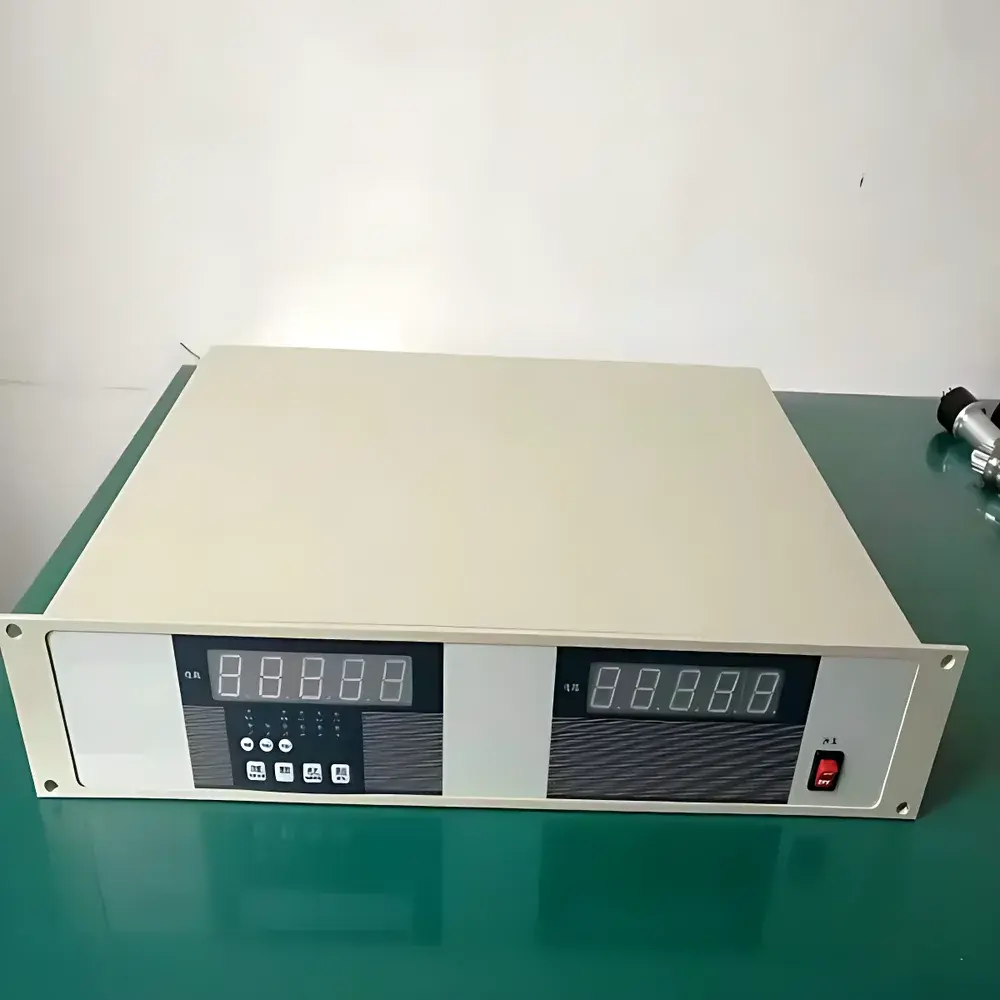
| Display | LCD showing resistivity, temperature, current, voltage, pressure, and sample dimensions |
| Operating Environment | 0–40 °C, RH <80% |
| Power Supply | AC 220 V, 50 Hz, 5 W |
| Communication Interfaces | RS-232 and USB |
| Dimensions | 340 × 320 × 120 mm (L×W×H) |
Overview
The HengaoDe HAD-T305 Surface and Volume Resistivity Tester is an engineered instrument designed for precise, traceable measurement of electrical resistance and resistivity in solid, powdered, and liquid dielectric and conductive materials. It operates on the principle of direct-current (DC) two-terminal or four-terminal (Kelvin) resistive measurement, compliant with standardized electrode configurations defined in ASTM D257, IEC 60093 (equivalent to GB/T 1410-2006), and ISO 3915. The system supports both surface resistivity (measured across the top layer using concentric ring electrodes) and volume resistivity (measured through bulk material thickness using parallel plate or three-electrode arrangements), enabling full characterization of electrostatic dissipation performance in functional coatings, polymer composites, antistatic flooring, ESD-safe packaging, and electronic substrates. Its design adheres to fundamental metrological requirements for laboratory-grade insulation testing, including stable high-voltage sourcing, low-noise current sensing, and thermal drift compensation within specified environmental limits.
Key Features
- Wide dynamic resistance range spanning 12 decades (10² Ω to 1×10¹⁴ Ω), supporting evaluation from moderately conductive coatings to highly insulating polymers.
- Configurable test voltage output (0–1000 V DC) with fine resolution, enabling compliance with application-specific stress conditions per EN 1149-1, GB/T 22042, and SJ/T 10694.
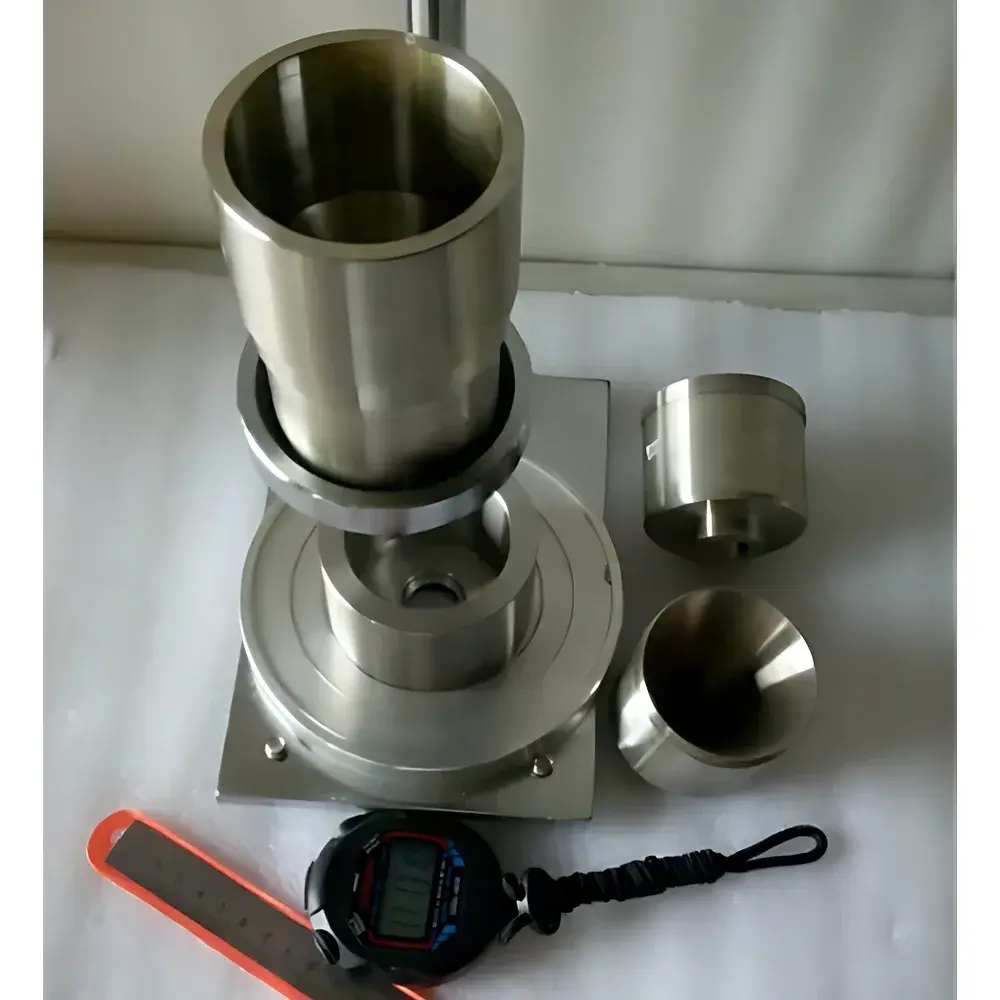
- Modular electrode system: supports interchangeable fixtures including solid three-ring electrode (Model 1.05A), liquid three-ring cell (2.04A), and powder/gel measurement assembly (3.03A) — all constructed from corrosion-resistant stainless steel.
- Dual-language interface (English/Chinese) with intuitive LCD menu navigation and real-time display of resistivity, applied voltage, measured current, ambient temperature, and geometric parameters.
- Integrated microprocessor-controlled timing, data logging, and error diagnostics; meets basic GLP documentation requirements for lab notebooks and audit trails.
- Low-power consumption (5 W) and compact footprint (340 × 320 × 120 mm), suitable for benchtop use in QC labs, R&D facilities, and production line verification stations.
Sample Compatibility & Compliance
The HAD-T305 accommodates heterogeneous sample forms — rigid solids (films, sheets, molded parts), granular powders (carbon black fillers, metal oxides), viscous pastes (conductive inks, EMI shielding gels), and low-conductivity liquids (solvent-based dispersions). Its electrode configurations comply with standardized test geometries required by GB/T 1410-2006 (IEC 60093), ASTM D257, and ISO 3915 for volume resistivity, and GB/T 22042-2008 and EN 1149-1 for surface resistivity. For regulatory alignment, measurements performed with certified reference resistors (optional 1 MΩ to 1 TΩ set) support traceability to national standards. While not inherently 21 CFR Part 11 compliant, the instrument’s deterministic operation, manual log capability, and optional PC software with timestamped data export facilitate integration into GMP/GLP workflows where electronic records are governed by local SOPs.
Software & Data Management
An optional Windows-compatible PC application connects via USB to enable remote control, synchronized multi-parameter acquisition, and automated report generation. The software displays real-time plots of resistivity vs. time, resistivity vs. temperature (when external PT1000 sensor is connected), and voltage–current linearity checks. All datasets are saved in CSV format with embedded metadata (operator ID, date/time stamp, fixture type, voltage setting, ambient conditions). Exported files support post-processing in MATLAB, Excel, or LIMS platforms. No cloud storage or network connectivity is embedded — data sovereignty remains fully under user control. Firmware updates are delivered via offline executable files to maintain air-gapped security in regulated environments.
Applications
This instrument serves critical quality assurance functions across multiple sectors: validation of antistatic additives in plastics and rubber per GB/T 2439-2001; screening of conductive coatings on aerospace composites; verification of ESD flooring resistance in semiconductor cleanrooms (per SJ/T 10694); batch release testing of carbon-loaded elastomers; and R&D of battery separator films requiring controlled ionic/electronic conduction pathways. It is routinely deployed in textile labs assessing static-dissipative fabrics (GB/T 12703.4-2010), powder coating manufacturers optimizing charge retention, and pharmaceutical packaging developers verifying triboelectric safety of blister foils.
FAQ
Does the HAD-T305 meet international calibration traceability requirements?
Yes — when used with NIST-traceable standard resistors (sold separately), measurement uncertainty can be validated against ISO/IEC 17025-compliant calibration certificates.
Can it measure resistivity of thin-film coatings on non-conductive substrates?
Yes — using the 1.05A solid three-ring electrode, surface resistivity of coatings ≥1 µm thick can be determined without substrate interference, provided film continuity is verified optically or via SEM.
Is temperature compensation built-in?
The unit displays ambient temperature but does not auto-compensate resistivity values; users must apply correction factors per ASTM D257 Annex A2 if testing outside 23±2 °C.
What maintenance is required for long-term accuracy?
Annual verification with certified resistors and periodic cleaning of electrode contacts with isopropyl alcohol are recommended; no internal recalibration is user-serviceable.
Is firmware upgrade supported?
Yes — upgrades are distributed as standalone Windows executables with version-controlled release notes; no internet connection is required during installation.
Related Products







