
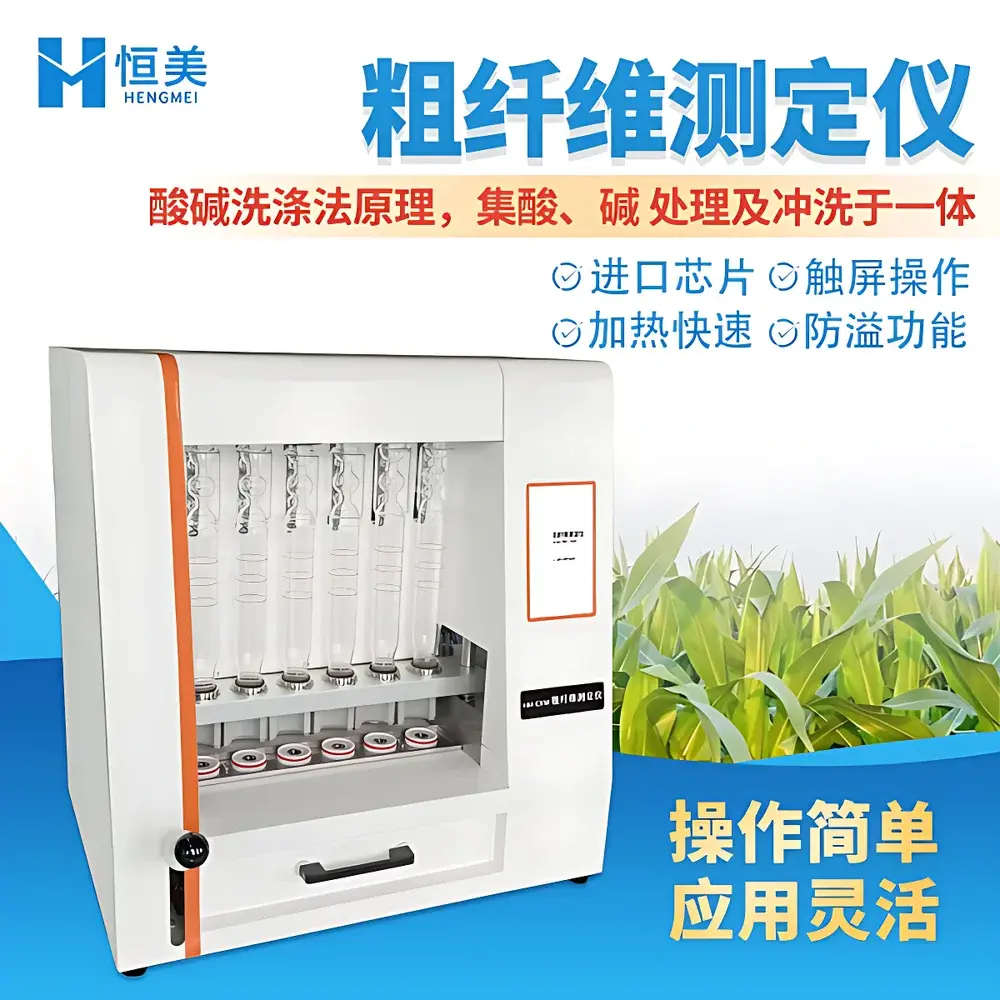
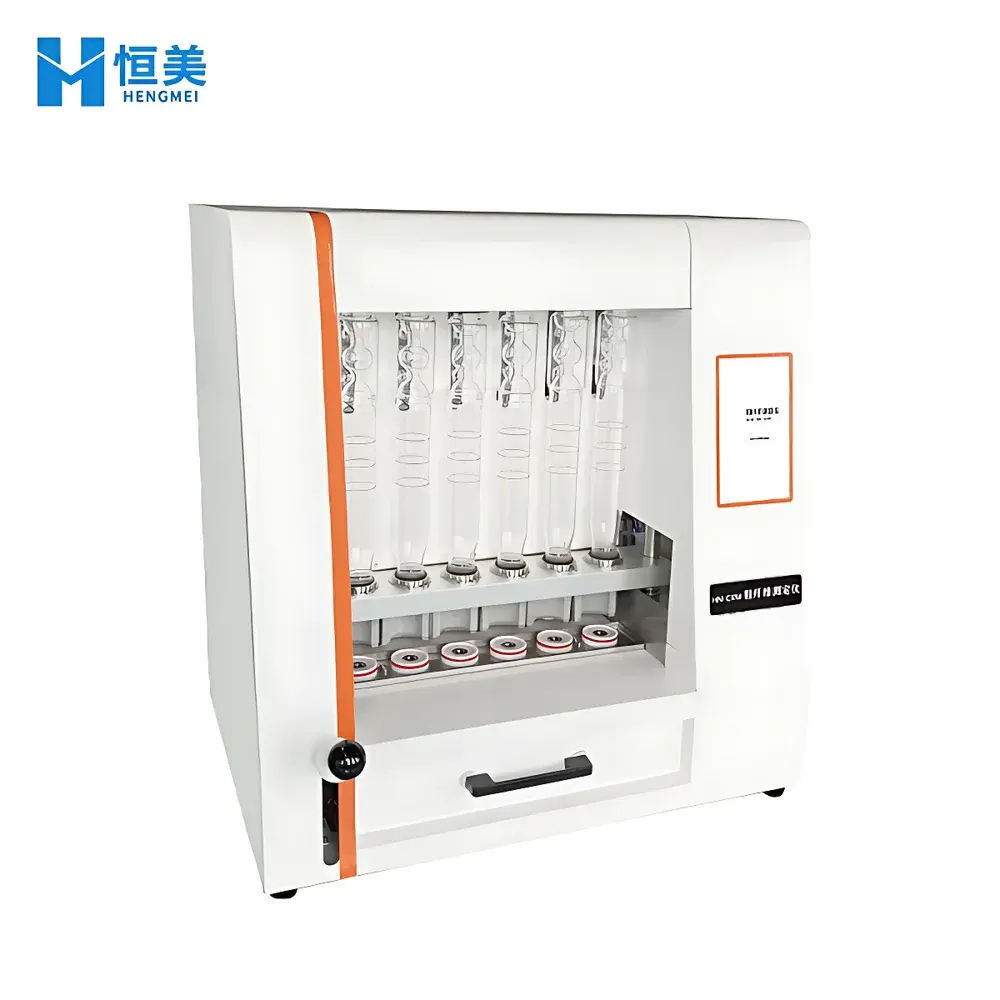
Hengmei HM-CXW Acid-Base Fiber Analyzer for Crude Fiber and Detergent Fiber Determination
| Brand | Hengmei |
|---|---|
| Origin | Shandong, China |
| Manufacturer Type | Direct Manufacturer |
| Country of Origin | China |
| Model | HM-CXW |
| Price | USD 3,500 (FOB Qingdao) |
| Detection Range | 0–100% |
| Sample Mass | 0.5–3.0 g |
| Batch Capacity | 6 samples |
| Temperature Control Accuracy | ±0.1 °C |
| Repeatability | ≤0.4% (crude fiber <10%) |
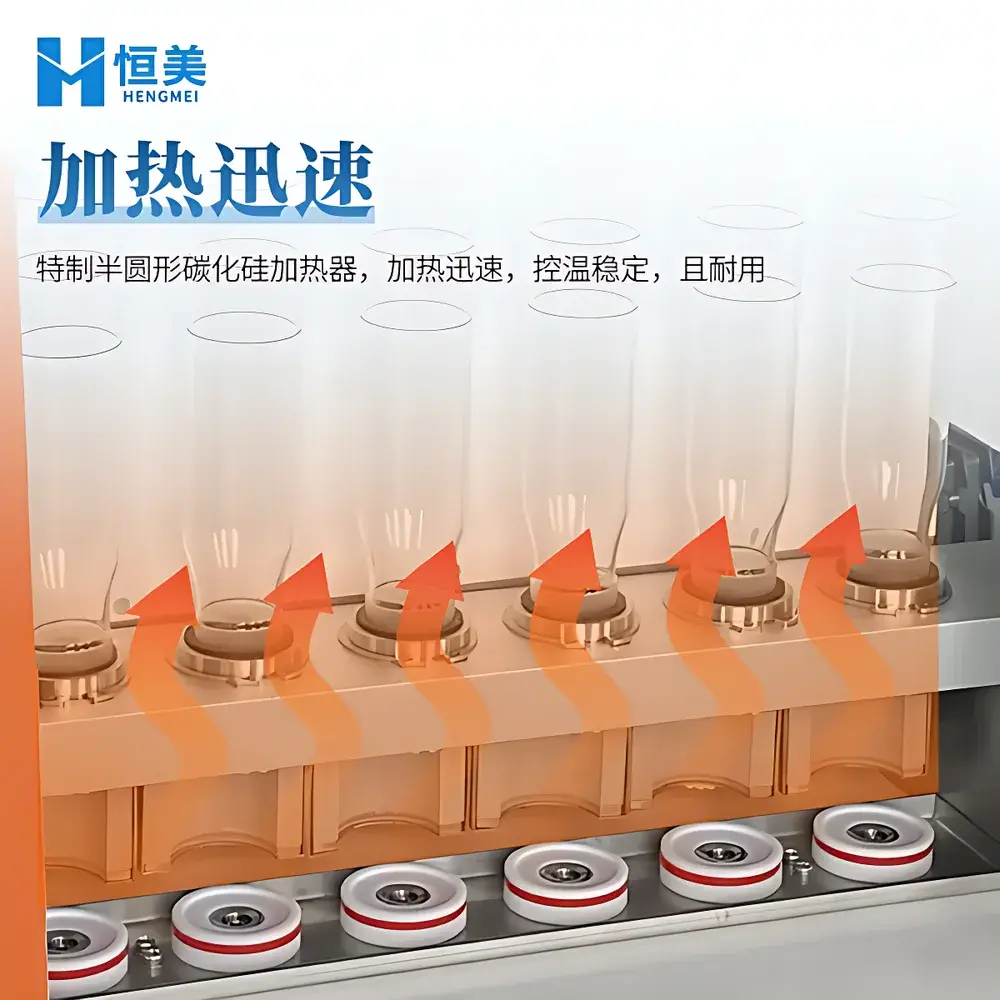
| Heating Element | Semi-circular silicon carbide heater |
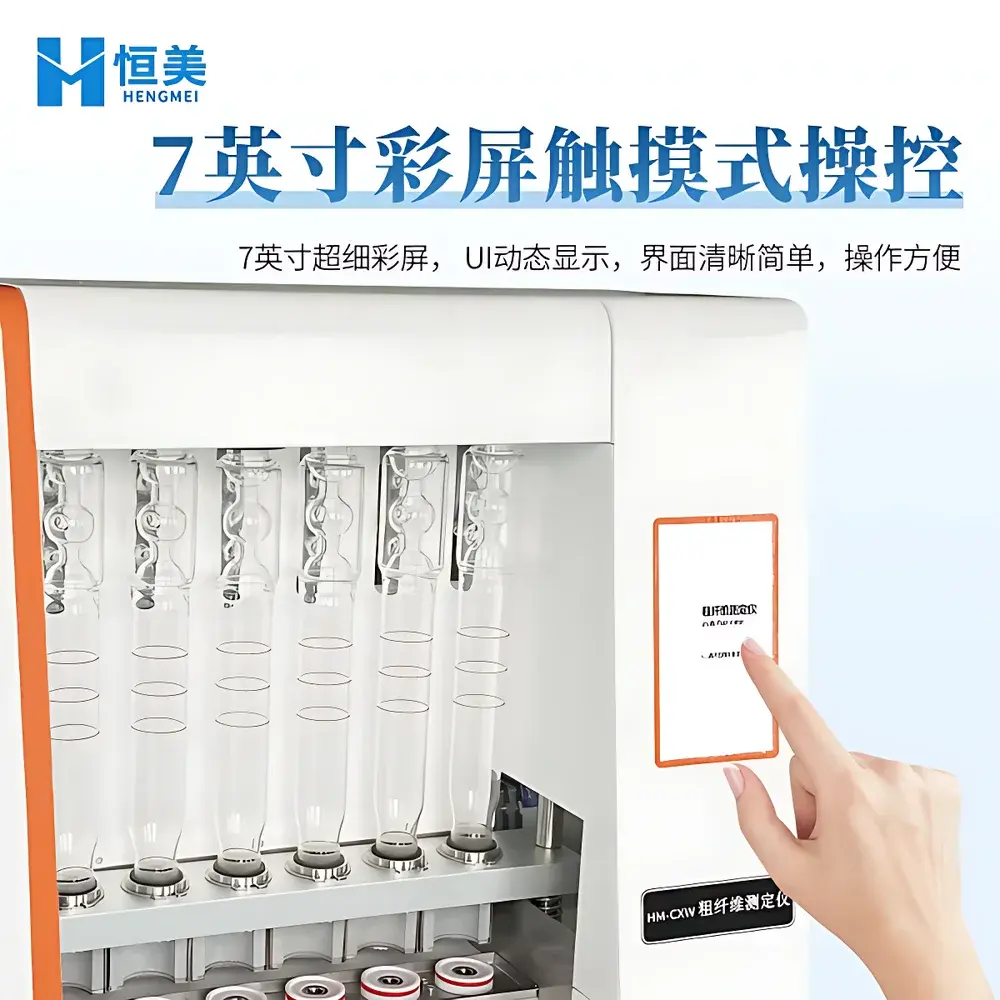
| Display | 7-inch color TFT touchscreen |
| Liquid Delivery | Programmable, fully automated acid/alkali reagent injection |
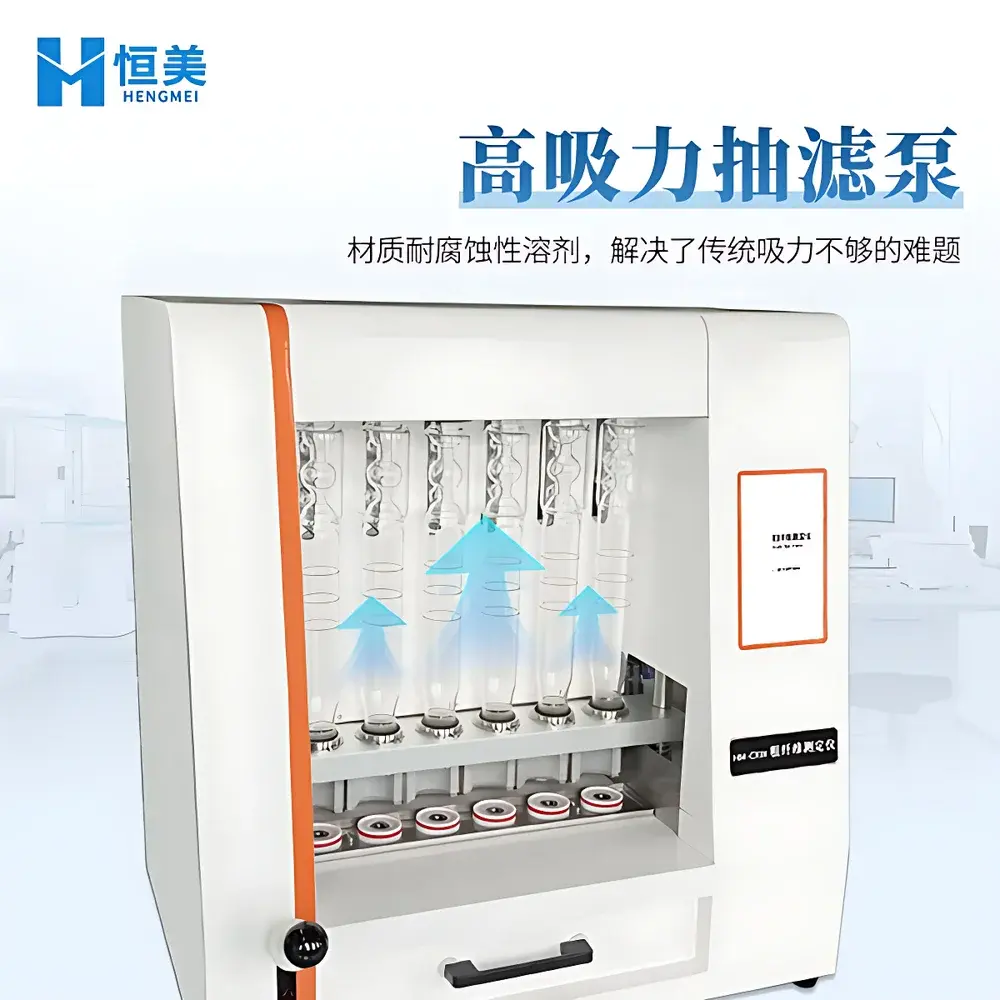
| Filtration System | High-suction corrosion-resistant diaphragm pump with integrated back-blow function |
| Safety Features | Overflow prevention logic, dry-run protection, external reagent preheating reservoir |
| Power Supply | 220 V ±10%, 50–60 Hz |
| Total Power | 1500 W (main unit) + 1200 W (digestion block) |
| Dimensions (W×D×H) | 620 × 440 × 655 mm |
| Weight | 45 kg |
Overview
The Hengmei HM-CXW Acid-Base Fiber Analyzer is a fully automated, benchtop laboratory instrument engineered for the precise and standardized determination of crude fiber, neutral detergent fiber (NDF), acid detergent fiber (ADF), cellulose, hemicellulose, and lignin in agricultural and food matrices. It implements the classical sequential acid-base digestion methodology—aligned with AOAC Official Method 962.09, AACC Method 32-20, and ISO 6865—as well as the Weende and Van Soest fractionation protocols. The system integrates controlled thermal hydrolysis, programmable reagent delivery, vacuum-assisted filtration, and timed solvent rinsing within a single, closed-loop architecture. Unlike manual or semi-automated setups, the HM-CXW eliminates operator variability in digestion time, temperature ramping, and wash volume, ensuring high reproducibility across batches and laboratories. Its design prioritizes method fidelity, chemical safety, and regulatory traceability—making it suitable for accredited feed testing labs, QC departments in animal nutrition companies, and research facilities conducting nutritional profiling per GB/T 5515 (crude fiber) and GB/T 6434 (crude fiber in feed).
Key Features
- Integrated silicon carbide heating system: Semi-circular ceramic-heated digestion blocks deliver rapid, uniform thermal transfer with ±0.1 °C stability over 60–100 °C operating range—critical for consistent hydrolysis kinetics.
- Corrosion-resilient fluid handling: All-wetted components—including diaphragm pump heads, solenoid valve manifolds, and reagent tubing—are chemically rated for concentrated H₂SO₄ (1.25 M), NaOH (1.25 M), and neutral/acid detergent solutions.
- Intelligent liquid management: Pre-programmed dispensing sequences include volume calibration, overflow detection logic, and real-time level monitoring to prevent uncontrolled reagent release during acid/alkali addition.
- Back-blow assisted filtration: An integrated reverse-pulse air pump dislodges compacted residue from Gooch-type crucibles prior to final drying, eliminating filter clogging and improving mass recovery accuracy.
- External reagent preheating reservoir: Independent temperature-controlled bath maintains digestants at target reaction temperature prior to injection—reducing thermal lag and shortening total assay time by up to 22%.
- Touchscreen-driven workflow: 7-inch capacitive TFT display runs a deterministic UI with step-by-step visual feedback, batch logging, and user-accessible method templates for Weende, Van Soest NDF/ADF, and sequential lignin protocols.
- No mechanical switches: Solid-state valve island controls all pneumatic and fluidic functions, enhancing long-term reliability in high-humidity, corrosive lab environments.
Sample Compatibility & Compliance
The HM-CXW accepts solid, ground, or milled samples including forage grasses, cereal grains, soybean meal, distillers’ dried grains (DDGS), pet food formulations, botanical extracts, and processed food ingredients. Sample mass is precisely loaded into pre-tared sintered glass crucibles (porosity G3/G4) prior to automated digestion. The system complies with analytical requirements defined in GB/T 5515–2022 (Crude Fiber in Grains and Oilseeds), GB/T 6434–2022 (Crude Fiber in Feeds), AOAC 962.09, and ISO 6865:2000. All thermal profiles, reagent volumes, and dwell times are programmable and logged with timestamped audit trails—supporting GLP documentation and internal quality audits. Optional CSV export enables integration with LIMS platforms compliant with ISO/IEC 17025:2017.
Software & Data Management
The embedded firmware supports user-defined method storage (up to 32 protocols), automatic calculation of NDF, ADF, ADL, cellulose, hemicellulose, and lignin using standard mass-balance equations, and real-time display of digestion progress. Each run generates a digital record containing sample ID, operator ID, start/end timestamps, temperature profiles, reagent consumption logs, and final %w/w results. Data output conforms to ASTM E1469-20 for analytical instrument data interchange and may be exported via USB 2.0 to CSV or PDF formats. While not FDA 21 CFR Part 11–certified out-of-the-box, the system’s deterministic control architecture and immutable event logging provide foundational elements for validation under GMP/GLP frameworks.
Applications
- Feed formulation labs quantifying fiber fractions to calculate total digestible nutrients (TDN) and net energy (NE) values for ruminant diets.
- Contract testing laboratories performing routine compliance testing against national feed standards (e.g., China’s GB 13078 series).
- Agricultural research stations evaluating fiber degradation kinetics during ensiling or microbial fermentation studies.
- Food ingredient suppliers validating fiber content claims for functional food labeling (e.g., “high-fiber” cereals or plant-based protein isolates).
- Academic laboratories conducting comparative phytochemical analysis of lignocellulosic biomass for biofuel feedstock characterization.
FAQ
What digestion methods does the HM-CXW support?
It supports Weende crude fiber (CF), Van Soest neutral detergent fiber (NDF), acid detergent fiber (ADF), acid detergent lignin (ADL), and sequential cellulose/hemicellulose/lignin determinations per AOAC and ISO protocols.
Is the instrument compatible with international standards such as AOAC or ISO?
Yes—the thermal profiles, reagent concentrations, and timing parameters align with AOAC 962.09, ISO 6865:2000, and AACC 32-20; full method documentation is provided for laboratory validation.
How is operator safety ensured during acid/alkali handling?
The system incorporates overflow detection logic, sealed reagent delivery paths, automatic dry-run shutdown, and physical separation between operator interface and digestion chamber.
Can raw data be exported for statistical analysis or LIMS integration?
Yes—results and process logs export to CSV via USB; column headers follow ASTM E1469 conventions for seamless ingestion into common statistical or laboratory informatics platforms.
What maintenance is required for long-term operational stability?
Routine cleaning of crucibles and filtration manifolds is recommended after each batch; annual calibration of temperature sensors and volumetric dispensing modules is advised per ISO/IEC 17025 guidelines.




