
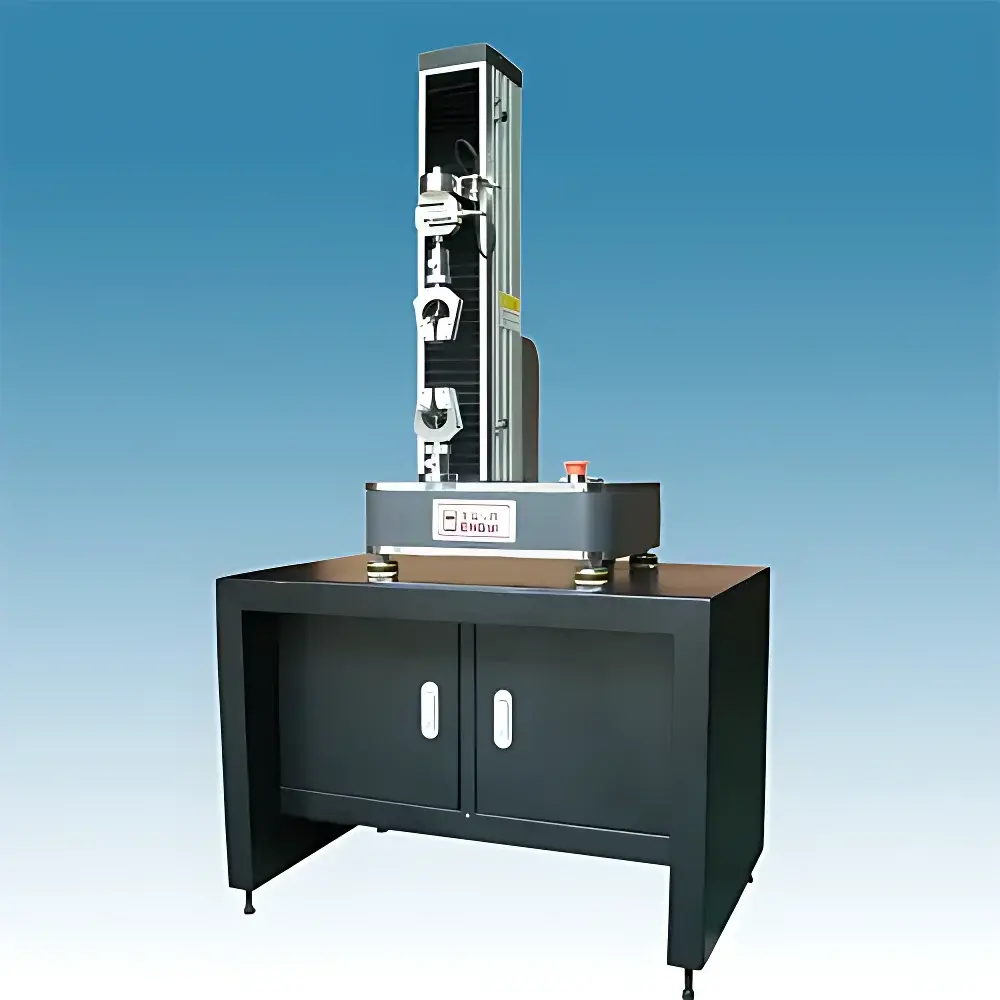
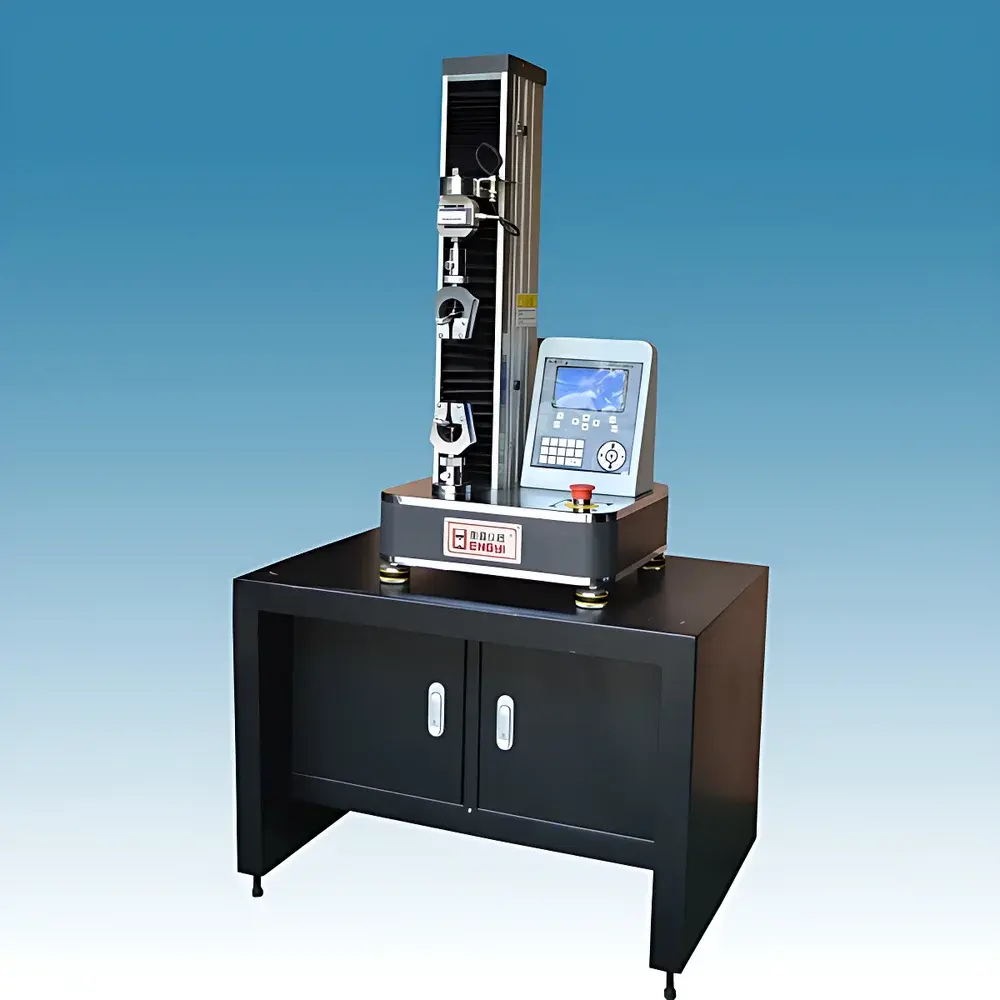
Hengyi HY-0230rt Rabbit Knee Joint Cartilage Compressive Strength Tester
| Brand | Hengyi |
|---|---|
| Origin | Shanghai, China |
| Manufacturer Type | Direct Manufacturer |
| Country of Origin | China |
| Model | HY-0230rt |
| Instrument Type | Electromechanical Universal Testing Machine |
| Load Capacity Options | 1 N to 2000 N (interchangeable load cells) |
| Force Accuracy | ≤ ±0.5% of reading |
| Force Resolution | ±500,000 counts (full-scale, no range switching) |
| Effective Test Width | 120 mm |
| Vertical Test Space | 300 mm |
| Speed Range | 0.001–300 mm/min (adjustable) |
| Speed Accuracy | ±0.5% of set value |
| Displacement Accuracy | ±0.5% of reading |
| Strain Control Range | 0.002–6% FS/s |
| Stress Control Range | 0.005–6% FS/s |
| Safety Features | Electronic travel limit, overload protection (110% FS), auto-return, programmable stop conditions (load/strain/time), real-time system diagnostics |
Overview
The Hengyi HY-0230rt Rabbit Knee Joint Cartilage Compressive Strength Tester is a precision-engineered electromechanical universal testing machine designed specifically for biomechanical evaluation of soft biological tissues—particularly articular cartilage harvested from rabbit knee joints. It operates on the fundamental principle of quasi-static uniaxial compression, applying controlled displacement or force to excised osteochondral plugs or full-thickness cartilage specimens under standardized environmental conditions (e.g., PBS immersion at 37 °C). The system complies with core mechanical testing frameworks outlined in ASTM F2458 (Standard Practice for Mechanical Testing of Articular Cartilage) and ISO 13385-1 (Geometrical product specifications—Coordinate measuring machines), enabling quantification of compressive modulus, equilibrium stress relaxation, creep compliance, and yield behavior under physiological loading rates (0.01–1 mm/min typical for cartilage). Its rigid single-column architecture, high-resolution load cell (down to 1 N full scale), and sub-micron displacement control ensure reproducible measurement of low-force, high-deformation responses characteristic of hydrated viscoelastic tissues.
Key Features
- Single-column, high-stiffness frame engineered for minimal deflection during low-load compressive testing of delicate biological specimens.
- Imported preloaded precision ball screw and maintenance-free servo motor drive system ensuring long-term positional stability and speed fidelity.
- Bidirectional high-accuracy load cell (ISO 376 Class 0.5, traceable calibration certificate optional) with seamless integration across 1 N–2000 N capacity ranges.
- Digital controller supporting both open-loop displacement control and closed-loop force/strain/stress regulation—configurable via intuitive front-panel interface or PC software.
- Multi-language, multi-unit firmware (SI, imperial, metric) compliant with international laboratory workflows; supports customizable test profiles and real-time parameter monitoring.
- Integrated safety architecture including electronic end-stop limits, 110% overload cut-off, automatic return-to-start, and programmable termination triggers (time, load, deformation).
Sample Compatibility & Compliance
The HY-0230rt accommodates standard osteochondral explants (typically 3–6 mm diameter × 1–3 mm thickness) mounted in custom-designed compression platens with hydrophilic surface treatment to prevent specimen slippage. Optional environmental chambers (not included) enable temperature- and humidity-controlled testing per ASTM D695 and ISO 604 protocols. The instrument meets mechanical accuracy requirements for GLP-compliant preclinical research environments and supports audit-ready data integrity when paired with validated software. While not FDA-cleared as a medical device, its measurement traceability aligns with ISO/IEC 17025 principles for testing laboratories and satisfies reporting criteria for peer-reviewed publications in journals such as Osteoarthritis and Cartilage and Journal of Biomechanics.
Software & Data Management
Control and analysis are performed using Hengyi’s proprietary WinTest v4.x software (Windows 10/11 compatible), which provides full 21 CFR Part 11 readiness through optional user authentication, electronic signatures, and immutable audit trails. Raw force-displacement data are acquired at ≥100 Hz and exported in CSV, Excel, or XML formats. Built-in modules support calculation of compressive Young’s modulus (via linear region slope), aggregate modulus (using biphasic theory fitting), stress-relaxation half-life, and dynamic stiffness (via ramp-hold sequences). All calibration files, test methods, and operator logs are stored with time-stamped metadata to fulfill ISO 17025 documentation requirements.
Applications
- Quantitative assessment of cartilage degeneration in osteoarthritis models (e.g., ACLT, MMT).
- Evaluation of tissue-engineered cartilage constructs (hydrogels, scaffolds, chondrocyte-seeded matrices).
- Preclinical screening of intra-articular therapeutics (e.g., hyaluronic acid derivatives, anti-inflammatory biologics).
- Mechanical validation of decellularized cartilage grafts prior to implantation studies.
- Comparative biomechanics across age, sex, or strain-matched rabbit cohorts.
- Method development for ISO/ASTM-compliant cartilage testing SOPs in academic and contract research organizations (CROs).
FAQ
Is this system suitable for testing human cartilage samples?
Yes—the HY-0230rt’s low-force capability (1 N sensor option), fine displacement resolution (≤0.1 µm), and adjustable platen geometry make it appropriate for small human osteochondral biopsies when used under IRB-approved protocols.
Can I integrate a temperature-controlled bath or environmental chamber?
The base unit includes mounting interfaces for third-party liquid baths (e.g., circulating water jackets) and optional heated/humidified enclosures; full integration requires custom bracketing and signal synchronization via analog I/O ports.
Does the system support cyclic compression or creep-recovery protocols?
Yes—WinTest software includes predefined templates for sinusoidal loading, staircase ramping, and multi-step relaxation sequences, with user-defined dwell times and amplitude modulation.
What calibration standards are provided?
Each shipment includes a NIST-traceable load cell calibration certificate; annual recalibration services are available through Hengyi’s ISO/IEC 17025-accredited service center in Shanghai.
Is remote operation supported?
The system features Ethernet and RS-232 connectivity; remote desktop control and live data streaming are enabled via secure LAN/WAN configuration, subject to local IT policy approval.



