
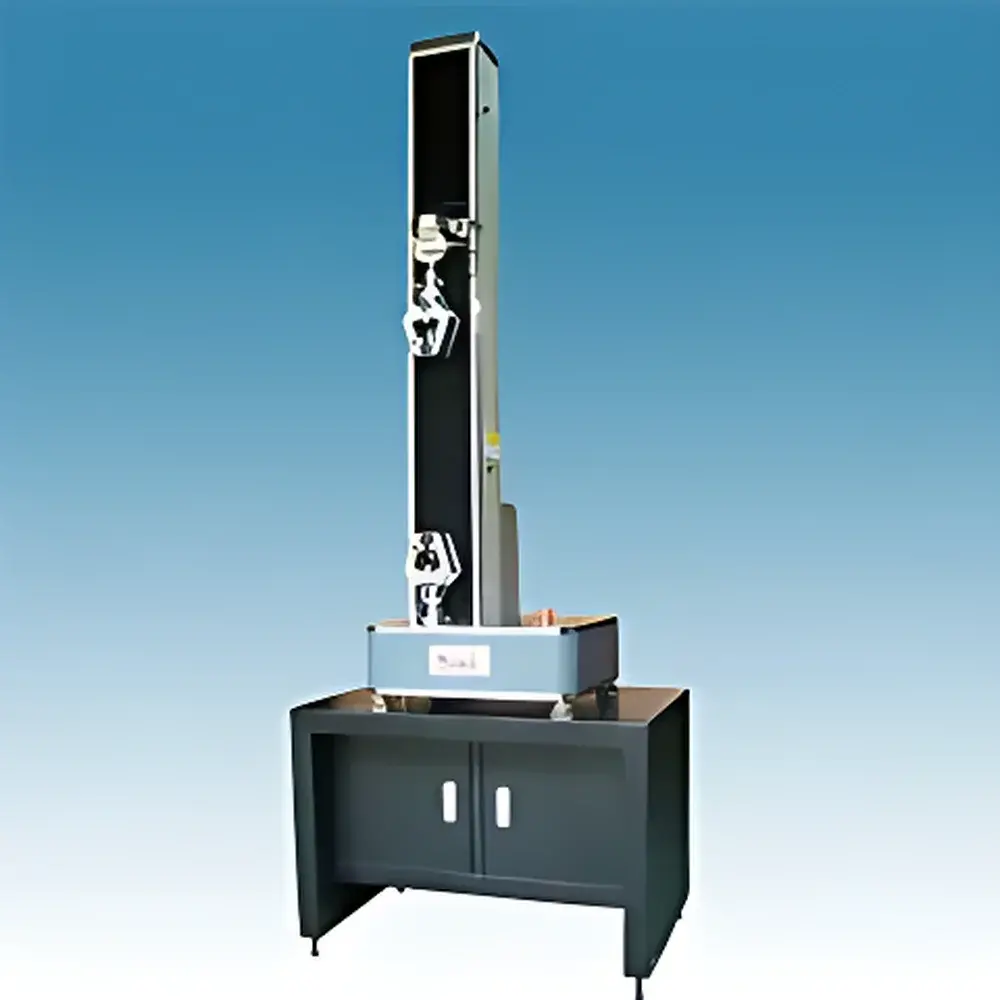
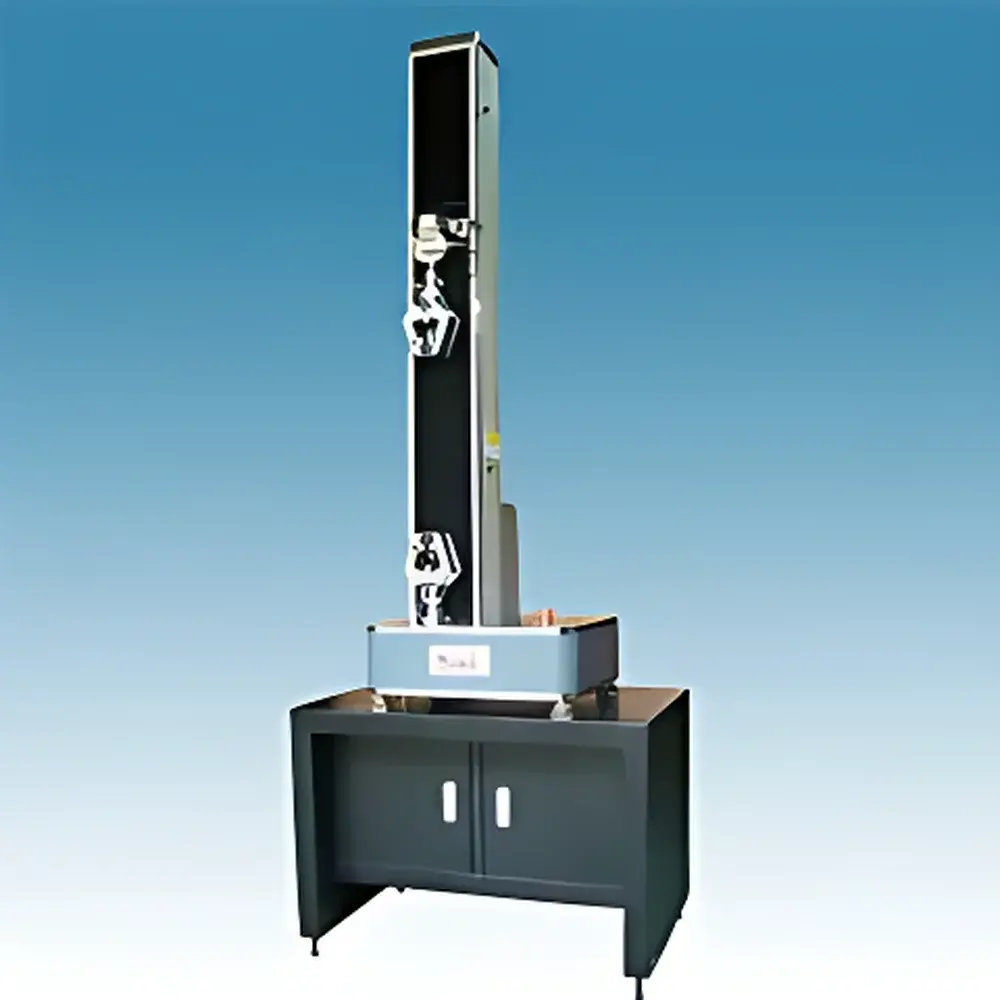
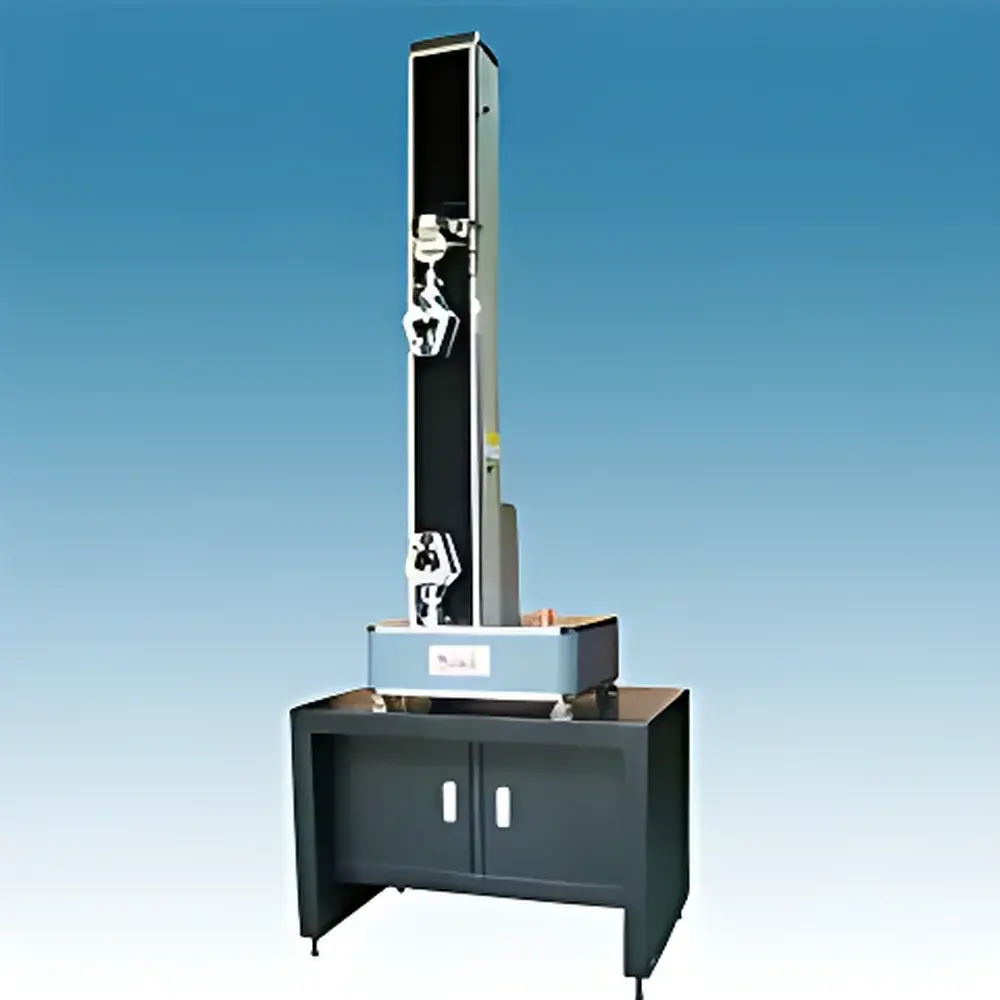
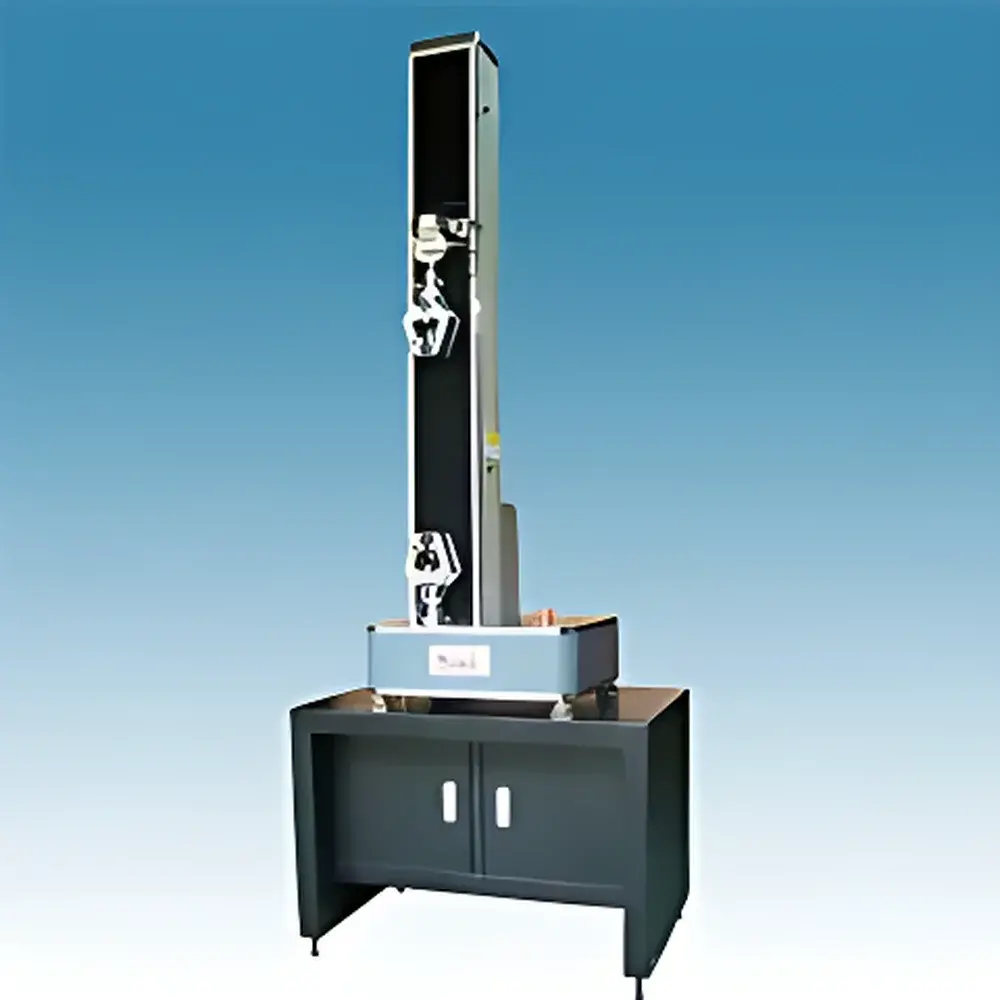
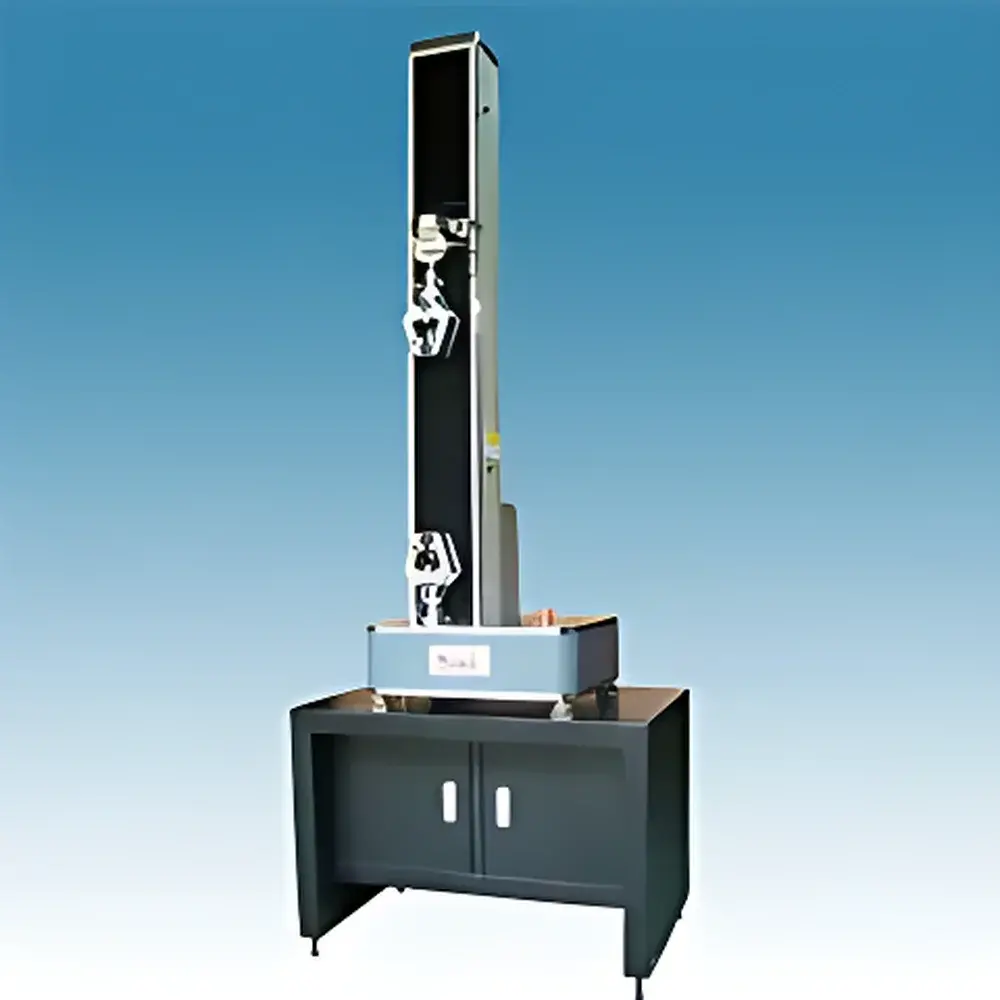
Hengyi HY-0580S Ceramic Flexural Testing Machine
| Brand | Hengyi |
|---|---|
| Origin | Shanghai, China |
| Manufacturer Type | Direct Manufacturer |
| Regional Classification | Domestic (China) |
| Model | HY-0580S |
| Instrument Type | Electromechanical Universal Testing Machine |
| Load Capacity | Up to 5000 N |
| Force Accuracy | ±0.01% of full scale |
| Measurement Accuracy | <±1% |
| Control Mode | PC-based closed-loop control |
| Effective Width | 150 mm |
| Stroke | 800 mm (extendable) |
| Test Speed Range | 0.001–500 mm/min |
| Speed Accuracy | ±0.5% |
| Displacement Accuracy | ±0.5% |
| Safety Features | Electronic limit switches, emergency stop button, overload protection |
| Power Supply | 220 V AC |
| Dimensions (W×D×H) | 590 × 355 × 1640 mm |
| Weight | ~85 kg |
| Compliance | Fully supports GB/T, ISO 6892, ASTM E8/E21/E111, DIN 50125, JIS Z2241 |
Overview
The Hengyi HY-0580S Ceramic Flexural Testing Machine is a precision-engineered electromechanical universal testing system designed specifically for mechanical property evaluation of brittle and quasi-brittle materials—including structural ceramics, advanced technical ceramics, refractory composites, and ceramic-matrix laminates. Built upon a high-rigidity single-column frame architecture, the system implements servo-controlled linear motion via a precision ball-screw drive actuated by a brushless DC motor and planetary gear reducer. Force transmission is calibrated through a high-stability load cell with ±0.01% full-scale accuracy, while displacement is tracked via an optical encoder with ±0.5% linearity across its 800 mm stroke range. The machine operates under closed-loop PID control, enabling precise regulation of test speed (0.001–500 mm/min), load ramping, and displacement profiling—critical for standardized three-point and four-point bending tests per ISO 14704, ASTM C1161, and GB/T 6569.
Key Features
- High-performance DSP-based control platform delivering real-time data acquisition at up to 10 kHz sampling rate, ensuring fidelity in capturing transient fracture events during ceramic flexure.
- USB 1.1 high-speed interface (12 Mb/s, bulk transfer mode) enabling deterministic communication between host PC and controller—compatible with Windows XP through Windows 10 (32/64-bit).
- Four-layer PCB design with optimized grounding and differential signal routing to suppress electromagnetic interference—validated under IEC 61326-1 for laboratory EMC compliance.
- Hot-pluggable USB peripheral architecture: all sensor inputs (load, extensometer, LVDT) and actuator outputs conform to standardized USB connectors with software-configurable I/O mapping.
- Integrated safety subsystem including dual-channel electronic end-limit detection, hardware-triggered emergency stop, and programmable overload cutoff—meeting Category 3 PLd requirements per ISO 13850.
- Modular firmware architecture supporting user-defined test sequences, conditional branching (e.g., auto-return-on-fracture), and multi-step loading protocols compliant with ISO 6892-1 Annex G for cyclic flexural fatigue.
Sample Compatibility & Compliance
The HY-0580S accommodates rectangular, square, and cylindrical ceramic specimens per ISO 14704 (three-point bending), ISO 178 (flexural properties of plastics—adapted for ceramics), and ASTM C1161 (high-temperature flexural strength). Fixture adaptability includes standard 10/20/40 mm support span options, adjustable roller diameters (3–10 mm), and hardened steel anvils with surface finish ≤Ra 0.4 µm to minimize stress concentration artifacts. All mechanical calibrations trace to NIM (National Institute of Metrology, China) standards, and force verification conforms to ISO 376 Class 0.5. System validation documentation supports GLP audit readiness and satisfies clause 4.2 of ISO/IEC 17025:2017 for testing laboratories.
Software & Data Management
HYtestV7.0 is a multilingual (English, German, French, Spanish, Japanese, Korean, Russian, Arabic, Chinese), standards-integrated test control and analysis suite. It provides native implementation of ASTM E177 (standardization of terminology), ASTM E691 (interlaboratory study methodology), and USP (mechanical testing of medical ceramics). Data export formats include CSV, XML, and PDF reports with embedded digital signatures. Audit trail functionality complies with FDA 21 CFR Part 11 requirements—including user authentication, electronic signature capture, and immutable event logging for all parameter changes, test executions, and result modifications.
Applications
- Flexural strength (MOR) and modulus of elasticity (E) determination for alumina, silicon carbide, zirconia, and silicon nitride ceramics.
- Fracture toughness estimation via indentation-strength correlation methods (e.g., ASTM C1421).
- Creep and slow crack growth behavior under sustained flexural loading at ambient and elevated temperatures (when paired with environmental chamber).
- Quality assurance testing of ceramic substrates, insulators, dental prostheses, and armor tile batches per MIL-STD-810G Method 516.6.
- Educational use in materials science curricula for hands-on instruction in Weibull statistics, flaw sensitivity analysis, and probabilistic failure modeling.
FAQ
What bending test standards does the HY-0580S natively support?
ASTM C1161, ISO 14704, ISO 178, GB/T 6569, and EN 843-1—with preloaded test templates and automatic calculation of flexural stress (σf = 3FL/2bd²) and strain (ε = 6D/t²).
Can the system perform compression testing on ceramic tiles or monoliths?
Yes—the base configuration includes flat platens (Ø100 mm) and optional compression fixtures meeting ASTM C133 and ISO 5013 specifications for compressive strength of refractories.
Is third-party calibration certification available?
Hengyi provides factory calibration certificates traceable to CNAS-accredited reference standards; optional on-site calibration by ISO/IEC 17025-certified service providers is supported.
Does the software allow custom test method creation for proprietary ceramic formulations?
Yes—HYtestV7.0 permits definition of user-specific test logic, pass/fail criteria, and derived parameter formulas using VBScript-compatible syntax, with version-controlled method libraries.
What maintenance intervals are recommended for long-term metrological stability?
Load cell recalibration every 12 months; ball-screw lubrication every 500 operational hours; encoder alignment verification semiannually—documented in the included GLP-compliant maintenance log template.



