
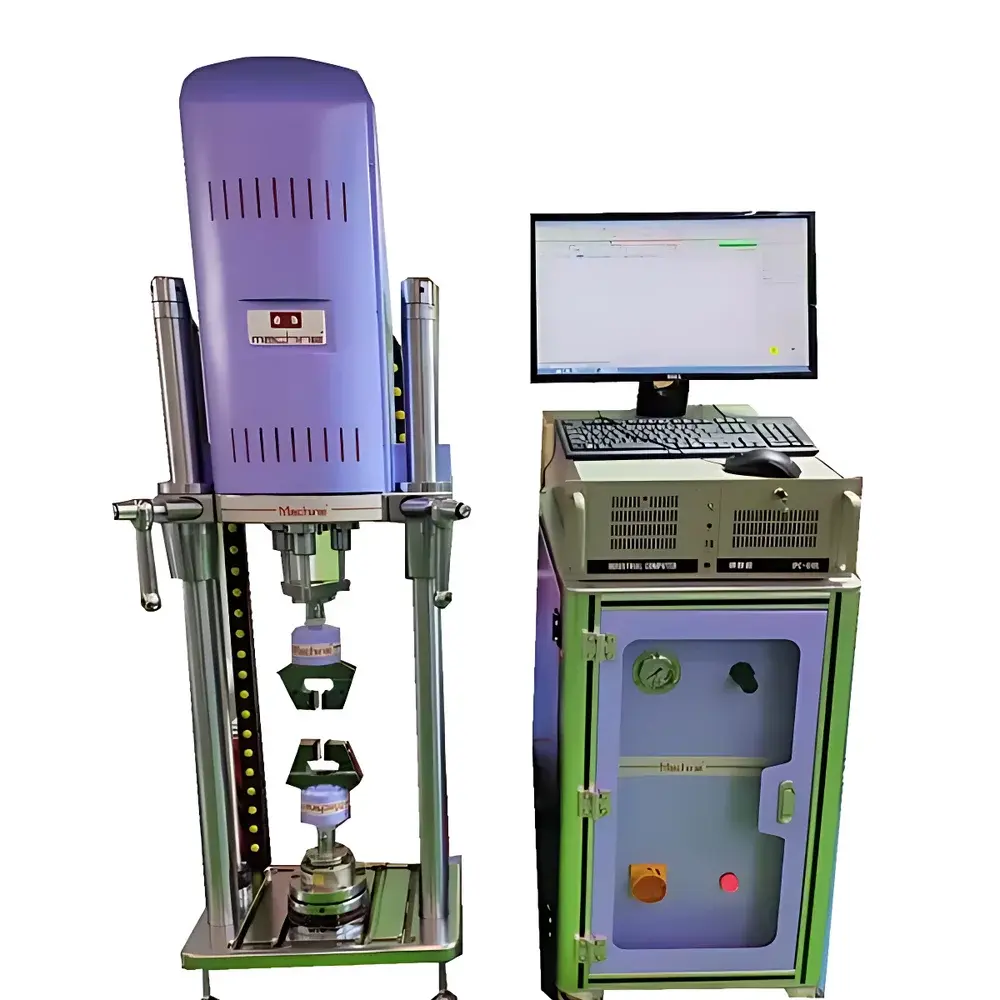
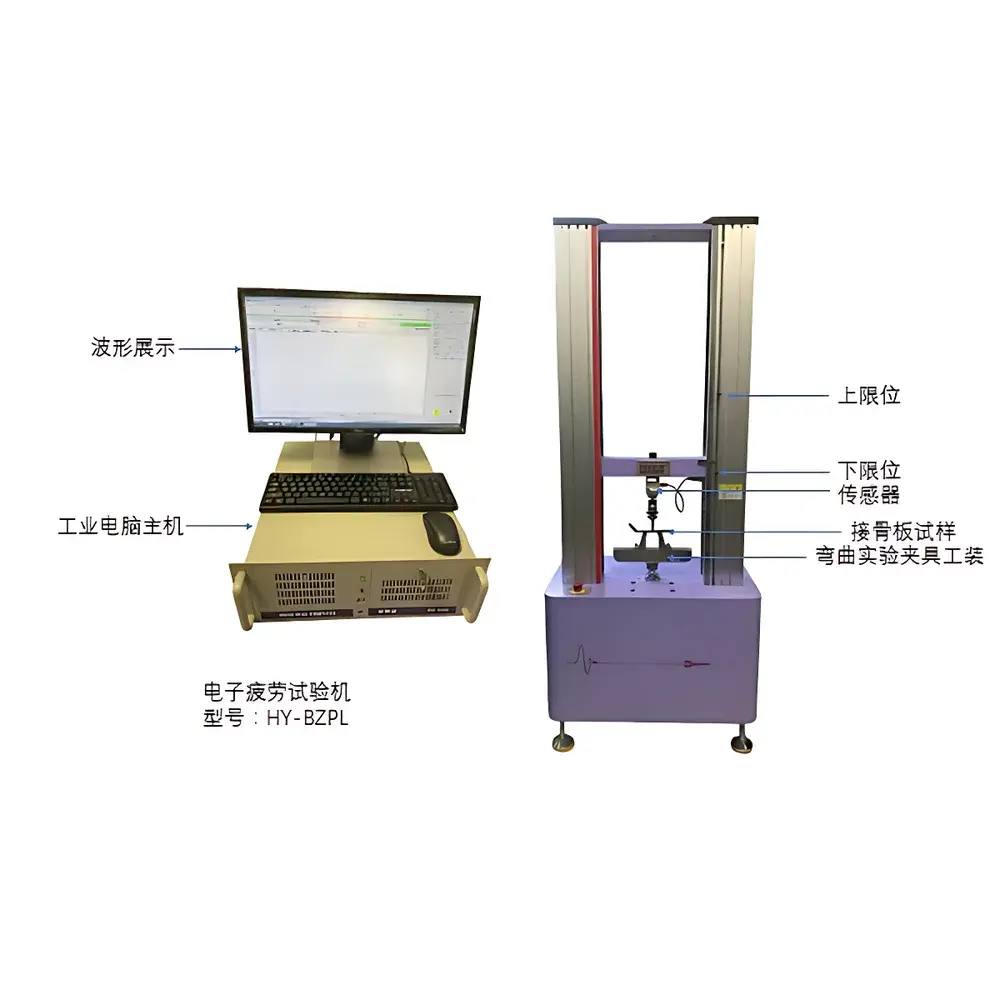
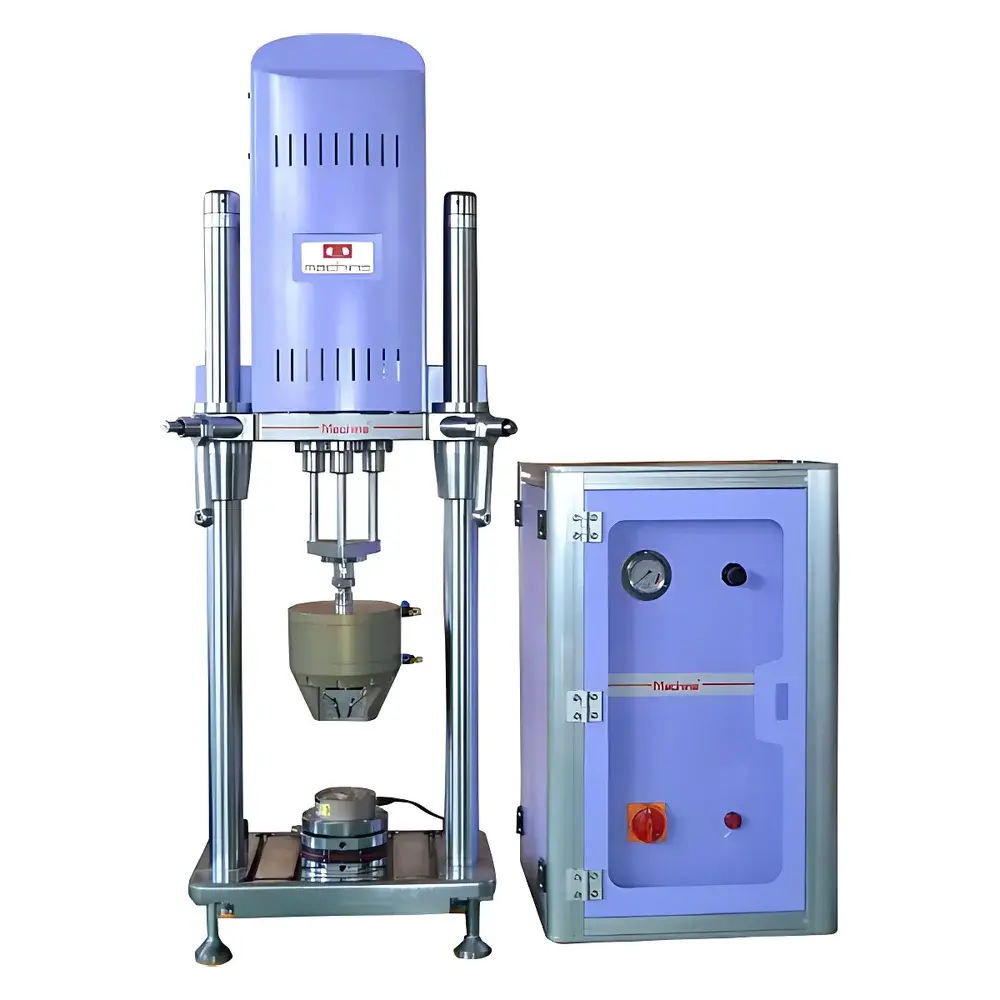
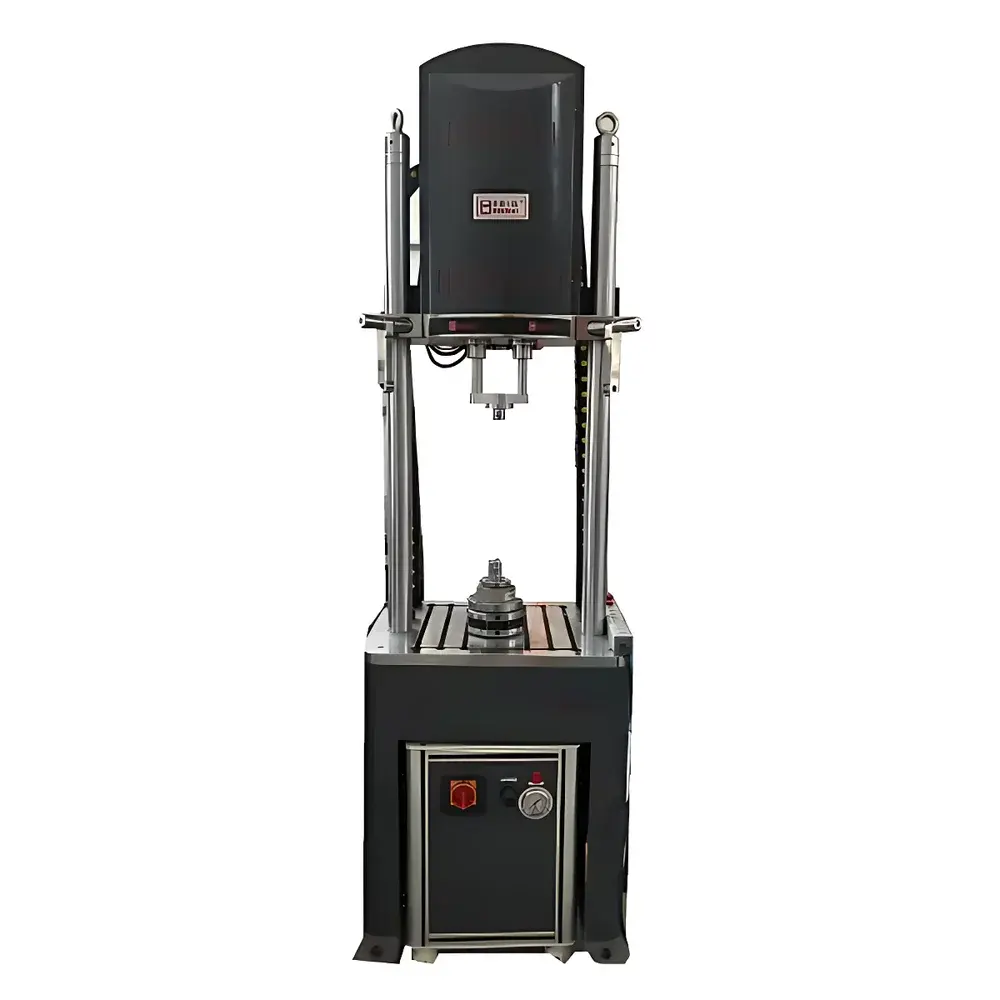
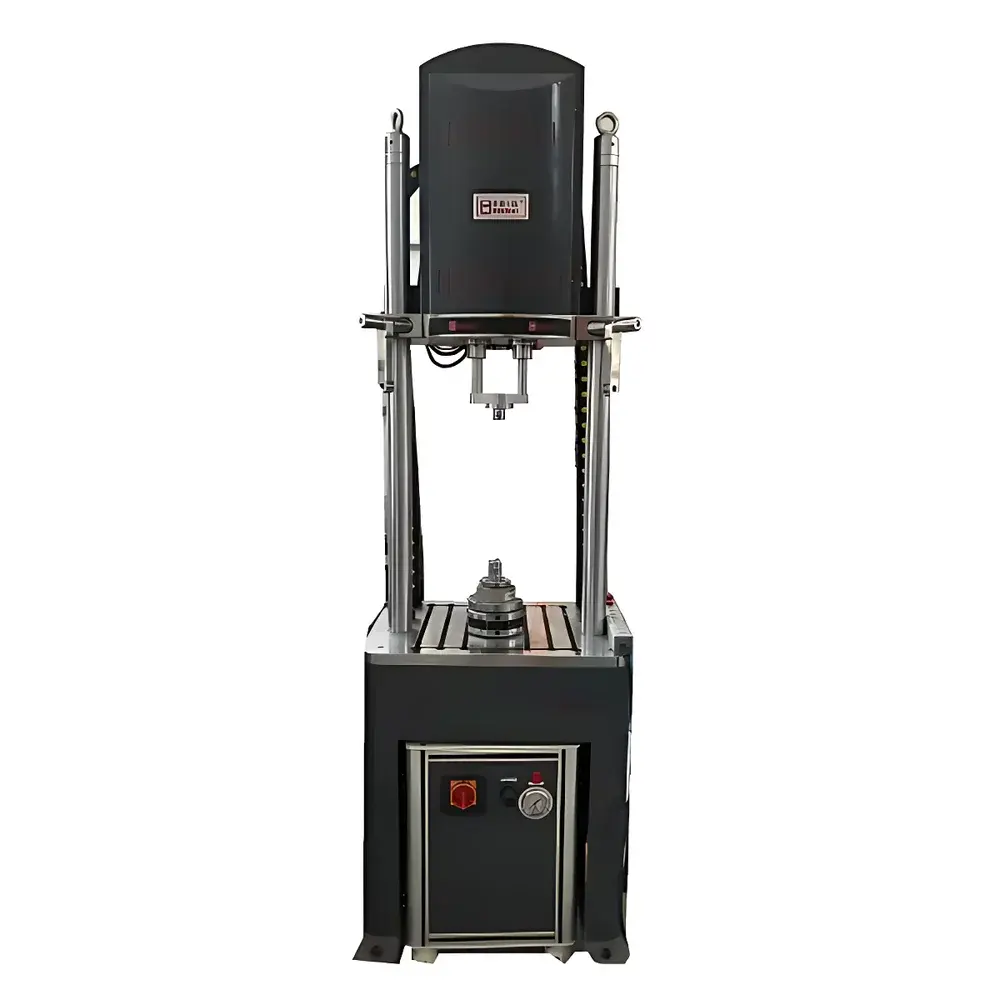
Hengyi HY(DP)-1020 Microcomputer-Controlled Electromechanical Biomechanical Fatigue Testing Machine
| Brand | Hengyi (Hengyitest) |
|---|---|
| Origin | Shanghai, China |
| Manufacturer Type | Direct Manufacturer |
| Product Category | Domestic |
| Model | HY(DP)-1020 |
| Max Test Load | ±1000 N |
| Frequency Range | 0.1–20 Hz |
| Actuator Displacement | ±100 mm |
| Force Resolution | 0.01 N |
| Force Accuracy | Class 1 (±1% FS) |
| Displacement Accuracy | Class 1 |
| Control Accuracy | ±1% |
| Waveform Options | Sine, Cosine, Square, Triangle, Sawtooth, Random, S–N Profile |
| Test Space (Tension/Compression) | 300/500 mm |
| Overall Dimensions (L×W×H) | 680 × 700 × 2500 mm |
| Weight | 600 kg |
| Power Supply | 380 V, 5 kW |
Overview
The Hengyi HY(DP)-1020 is a high-precision electromechanical fatigue testing system engineered for rigorous biomechanical evaluation of medical devices, biomaterials, and small-scale structural components. It operates on closed-loop servo-controlled actuation principles, delivering dynamic loading profiles with programmable waveforms—including sine, triangle, square, sawtooth, and user-defined S–N sequences—across a frequency range of 0.1 to 20 Hz. Unlike hydraulic or resonant systems, this machine employs a brushless AC servo motor coupled with precision ball-screw transmission, ensuring zero hydraulic fluid maintenance, minimal thermal drift, and repeatable force control under both tension and compression modes. Its architecture complies with the mechanical and control requirements defined in ISO 7886-2 (hypodermic needles), ASTM F1717 (spinal implant fixation systems), ASTM F2118 (bone cement fatigue), and YY/T 0591 (orthopedic implants), making it suitable for GLP-compliant preclinical validation and regulatory submission support.
Key Features
- Electromechanical servo-driven actuation with ±1000 N load capacity and 0.01 N force resolution
- Programmable waveform generation: sine, cosine, square, triangle, sawtooth, random, and custom S–N fatigue profiles
- High-fidelity displacement control: ±100 mm stroke with 0.01 mm resolution and ±1% accuracy
- Dual-mode operation: tensile fatigue, compressive fatigue, three-point bending, four-point bending, creep, and stress relaxation
- Modular environmental integration: compatible with temperature-controlled water baths (±5 °C to 80 °C), environmental chambers (−40 °C to +150 °C), and saline immersion fixtures
- Robust mechanical frame with 450 mm lateral clearance and 500 mm vertical test height—optimized for orthopedic implant fixtures and tissue scaffolds
- Real-time data acquisition at up to 10 kHz sampling rate, synchronized with load, displacement, and optional extensometry or acoustic emission inputs
Sample Compatibility & Compliance
The HY(DP)-1020 accommodates specimens ranging from micro-scale polymer fibers (<0.1 mm diameter) to full-size orthopedic implants (e.g., intramedullary nails, interbody fusion cages, hip stems). Its standardized fixture interface supports ASTM F2193-compliant four-point bending jigs for locked intramedullary nail fatigue per ISO 14879-1, as well as three-point bending configurations for dental abutments and bone cement specimens. The system meets mechanical performance criteria outlined in GB/T 2611–2007 (general requirements for testing machines), JB/T 9397–2002 (dynamic fatigue testers), and YY/T 0591–2017 (fatigue testing of orthopedic implants). All force and displacement transducers are calibrated traceable to national metrological standards, and test reports include audit trails compliant with FDA 21 CFR Part 11 when used with validated software modules.
Software & Data Management
The proprietary Hengyi TestMaster™ software provides ISO/IEC 17025-aligned test sequencing, real-time parameter monitoring, and automated pass/fail evaluation against user-defined thresholds. It supports multi-step protocols—including ramp-to-load, dwell, cyclic block loading, and staircase (up-and-down) fatigue methods—and exports raw time-series data in ASCII and HDF5 formats for third-party analysis (MATLAB, Python, Minitab). Built-in curve fitting algorithms compute fatigue life (Nf), endurance limit (σe), and crack initiation thresholds using Basquin, Coffin–Manson, or Walker models. Audit logs record operator ID, timestamp, calibration status, and parameter changes—enabling full traceability for ISO 13485 quality system documentation.
Applications
- Fatigue assessment of orthopedic implants: cortical bone plates, spinal pedicle screws, vertebral body replacements, and acetabular cups per ASTM F1717 and ISO 12189
- Mechanical characterization of biomaterials: hydrogels, decellularized tissues, electrospun nanofibers, and bioresorbable polymers under physiological loading conditions
- Dynamic modulus and viscoelastic profiling of elastomers, thermoplastics, and composites per ASTM D4092 and ISO 6721
- Micro-fatigue testing of MEMS components, stent struts, and dental implant abutments under simulated oral or vascular environments
- Accelerated durability validation of suture anchors, ligament grafts, and meniscal repair devices per ISO 15223 and ASTM F2503
- Environmental fatigue studies: saline immersion (ASTM F2129), elevated temperature (ISO 1099), and low-temperature embrittlement screening
FAQ
Does the HY(DP)-1020 meet ISO 14879-1 requirements for intramedullary nail fatigue testing?
Yes—the system’s four-point bending fixture geometry, load resolution, and waveform fidelity satisfy the dimensional and control tolerances specified in ISO 14879-1 Annex A.
Can the system perform tests under physiological saline immersion?
Yes—optional corrosion-resistant fixtures and submersible load cells enable full immersion testing at 37 °C per ASTM F2129 guidelines.
Is the software compliant with FDA 21 CFR Part 11 for electronic records?
When deployed with Hengyi’s validated TestMaster™ v4.2+ and enabled audit trail features, the system supports electronic signatures, role-based access control, and immutable data archiving.
What is the maximum achievable cycle count per test sequence?
The controller supports up to 109 cycles per test step, limited only by hardware service life and thermal management—not firmware constraints.
Can custom夹具 (fixtures) be integrated for non-standard specimen geometries?
Yes—standard M6 and 1/4″-20 threaded mounting interfaces allow rapid integration of customer-designed fixtures, including torsional adapters and multi-axis constraint mounts.



