
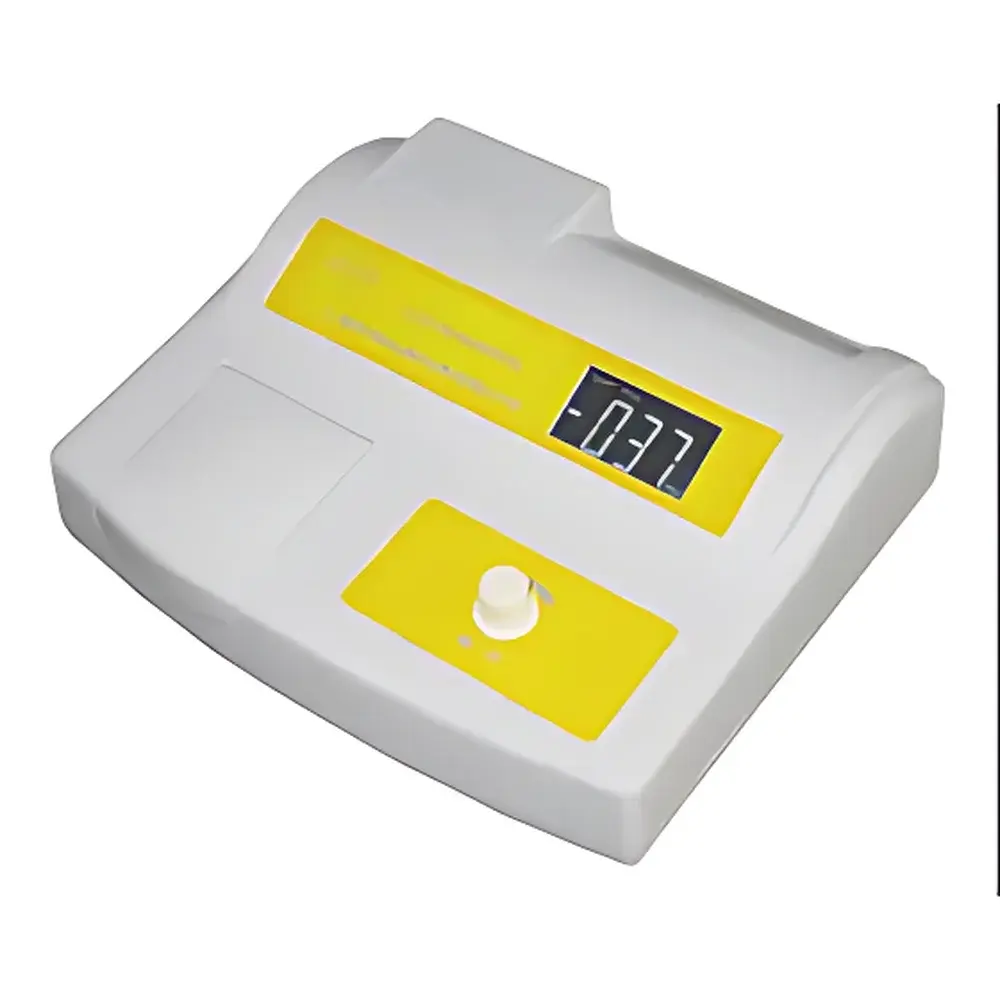
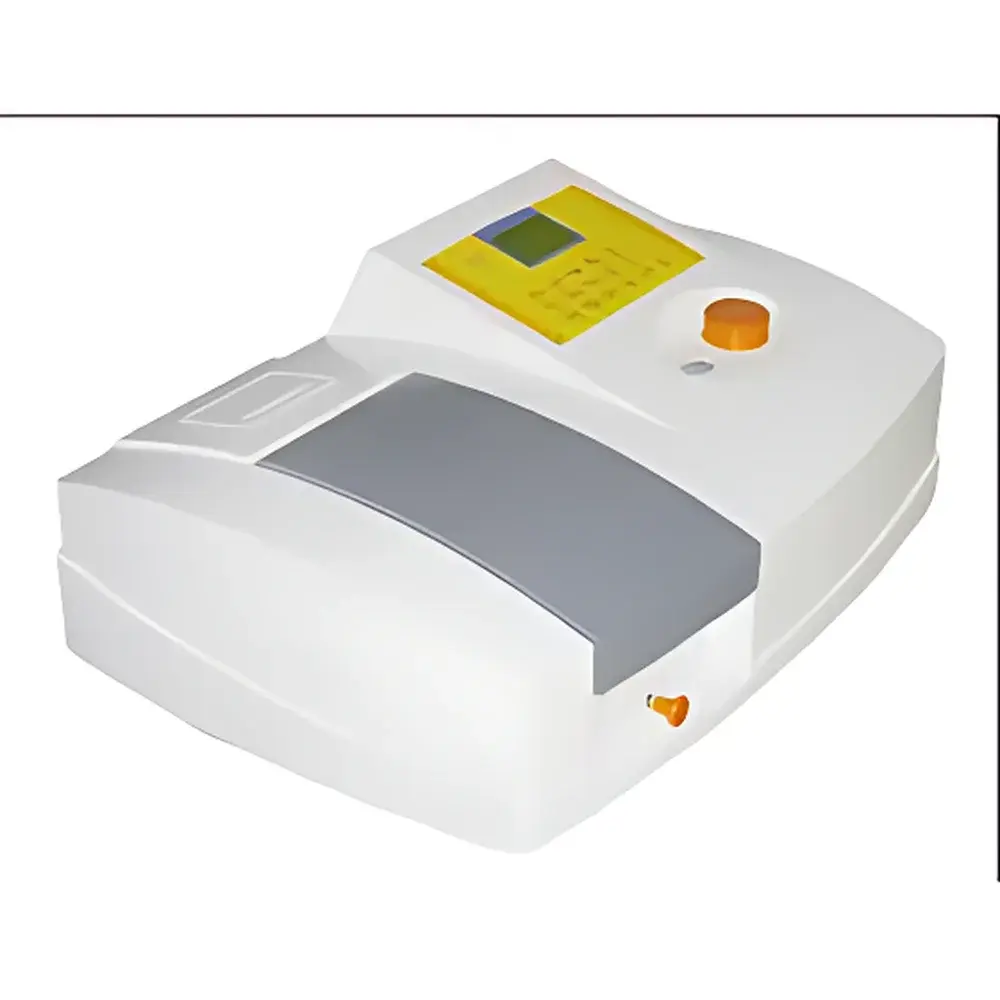
HePu DR6100A Multi-Parameter Water Quality Analyzer
| Brand | HePu |
|---|---|
| Model | DR6100A |
| Origin | Shandong, China |
| Instrument Type | Benchtop Laboratory Water Quality Analyzer |
| Measured Parameters | COD (15–1000 mg/L), Ammonia Nitrogen (0–50 mg/L), Total Phosphorus (0–20 mg/L), Turbidity (3–1000 NTU) |
| Accuracy | ±5% to ±10% (depending on parameter and range) |
| Analysis Time | 15–50 minutes per test |
| Optical System | Dual-beam cold-light narrow-band interference system with 100,000-hour LED light source |
| COD Chloride Interference Tolerance | ≤1000 mg/L Cl⁻ (dilution or high-chloride reagent option available) |
| Compliance | Designed to meet GB/T 11914–1989 (COD), HJ 535–2009 (ammonia nitrogen), GB/T 11893–1989 (total phosphorus), and GB/T 13200–1991 (turbidity) |
| Data Storage | Built-in calibration curve library with non-volatile memory and user-editable curves |
Overview
The HePu DR6100A Multi-Parameter Water Quality Analyzer is a benchtop spectrophotometric instrument engineered for precise, routine analysis of key water quality parameters in municipal, industrial, and environmental laboratories. It operates on the principle of colorimetric photometry—measuring absorbance at specific wavelengths following chemical reactions between analytes and proprietary reagents. The system employs a dual-optical-path design with temperature-stabilized cold-light LEDs (peak emission at 420 nm, 470 nm, 620 nm, and 850 nm) to eliminate stray-light-induced drift and ensure high photometric reproducibility. Unlike portable or single-parameter meters, the DR6100A integrates standardized digestion protocols, automated wavelength selection, and pre-programmed calibration curves compliant with Chinese national standards (GB and HJ series), enabling traceable, GLP-aligned data generation without external software dependency.
Key Features
- Dual-beam optical architecture with independent reference and sample channels—minimizes baseline drift caused by lamp aging or ambient temperature fluctuation
- Pre-loaded, editable calibration curves stored in non-volatile memory; supports user-defined curve creation and validation per ISO/IEC 17025 requirements
- One-touch parameter selection automatically configures wavelength, reagent protocol, and measurement range—reducing operator error and training time
- Integrated microprocessor-controlled digestion module (optional but standard in full configuration) with adjustable temperature (30–180 °C) and timer (0–120 min); includes over-temperature cut-off and thermal insulation for energy efficiency
- Cold-light LED sources rated for ≥100,000 hours—eliminates warm-up time, spectral shift, and lamp replacement maintenance
- Robust ABS housing with IP20-rated enclosure; designed for continuous operation in controlled laboratory environments (20–30 °C, 30–80% RH, non-condensing)
Sample Compatibility & Compliance
The DR6100A accepts standard 16-mm round glass or quartz cuvettes (10–50 mL volume) and accommodates both filtered and unfiltered samples within defined turbidity limits (≤1000 NTU). It supports analysis of surface water, reclaimed water, municipal wastewater, and industrial effluents after appropriate pretreatment (e.g., centrifugation or filtration for suspended solids). All analytical methods are aligned with nationally recognized procedures: COD determination follows GB/T 11914–1989 (potassium dichromate oxidation); ammonia nitrogen quantification complies with HJ 535–2009 (Nessler reagent method); total phosphorus adheres to GB/T 11893–1989 (ammonium molybdate spectrophotometry); and turbidity measurements conform to GB/T 13200–1991 (formazin-based calibration). While not certified to ISO/IEC 17025 out-of-the-box, the instrument’s traceable calibration routines, audit-ready curve logs, and stable photometric performance support internal validation and third-party accreditation workflows.
Software & Data Management
Data handling is performed via an embedded 4.3-inch TFT-LCD touchscreen interface with intuitive icon-driven navigation. Measurement results—including raw absorbance, calculated concentration, date/time stamp, operator ID (optional), and digestion batch ID—are stored internally (≥1000 records) with automatic timestamping and non-volatile retention. Export is supported via USB 2.0 to CSV-formatted files compatible with LIMS platforms and spreadsheet applications. The system does not require proprietary PC software for routine operation; however, optional firmware updates and advanced curve management tools are distributed as standalone Windows-compatible utilities. Audit trail functionality includes modification timestamps for calibration curves and password-protected administrator mode—supporting basic 21 CFR Part 11 readiness when deployed with supplementary procedural controls.
Applications
The DR6100A serves as a primary analytical tool in municipal water treatment plants for process control (e.g., monitoring influent/effluent COD and NH₃-N), in electroplating and textile manufacturing facilities for regulatory discharge compliance, and in environmental testing labs performing routine surveillance of rivers, lakes, and groundwater. Its modular digestion capability enables simultaneous processing of up to 12 samples, making it suitable for batch analysis under ISO 5667-3 sampling protocols. The instrument is also widely adopted in vocational training centers and university teaching labs due to its operational transparency, repeatable methodology, and alignment with standard textbook analytical chemistry curricula.
FAQ
What sample preparation is required prior to analysis?
Samples must be homogenized and, if visibly turbid (>100 NTU), centrifuged or filtered through 0.45-µm membrane filters. High-chloride samples (>1000 mg/L Cl⁻) require dilution or use of high-chloride COD reagent kits.
Can the DR6100A be used for field deployment?
No—it is designed exclusively for laboratory use with AC power input (220 V ±10%, 50 Hz) and requires stable benchtop conditions; no battery or ruggedized housing is provided.
Is method validation documentation included?
Yes—each unit ships with a factory calibration report, national standard method references, and a certificate of conformance to GB/T 19001–2016 (ISO 9001:2015 equivalent). Full validation packages (including LOD/LOQ, precision, and spike recovery data) are available upon request.
How often does the optical system require recalibration?
Photometric zero and span checks are recommended before each analytical session using deionized water and certified standard solutions; full wavelength verification is advised annually or after major maintenance.
Are reagents supplied by HePu compatible with other spectrophotometers?
HePu’s rapid-digestion reagent kits are optimized for DR-series instruments and validated against GB-method chemistries; cross-platform use is not guaranteed and may affect accuracy or compliance claims.
Related Products







