
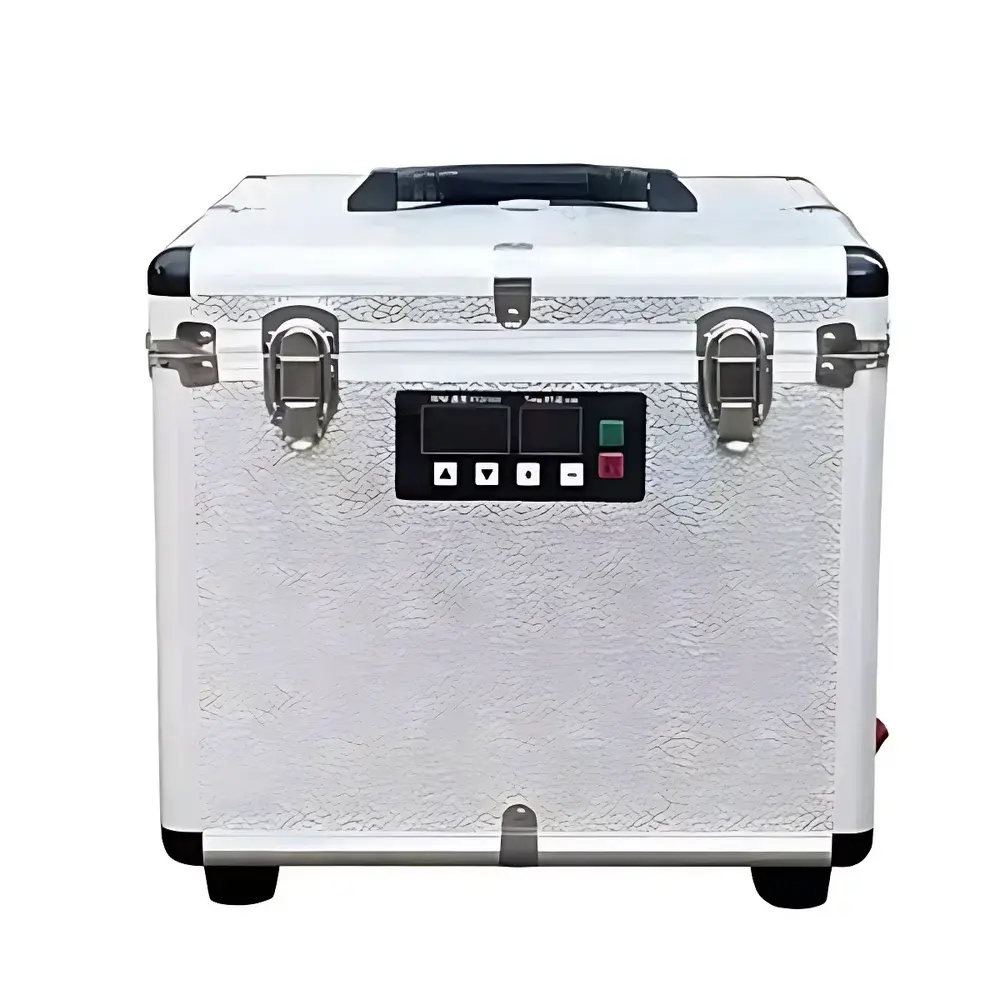
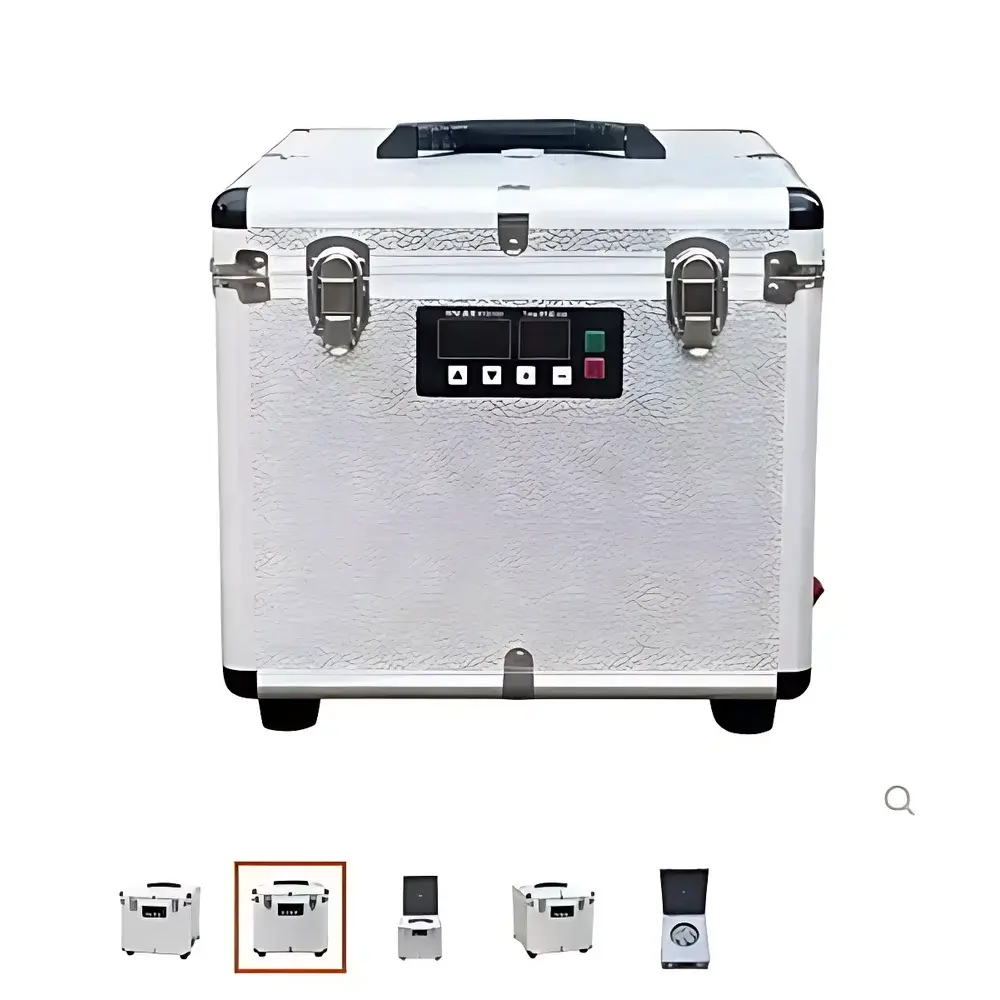
HEPU HL-02 Portable Field Centrifuge for Water Quality Analysis
| Brand | HEPU |
|---|---|
| Origin | Shandong, China |
| Manufacturer | HEPU Instruments Co., Ltd. |
| Type | Benchtop Centrifuge |
| Function | General-purpose Centrifuge |
| Max Capacity | 4 × 450 mL |
| Max Speed | 2500 rpm |
| Max RCF | 1091 × g |
| Power Supply | Dual-mode (Li-ion battery + AC adapter) |
| Compliance | HJ 91.2–2022 Annex A, GB/T 4774–2004, GB 19815–2005, GB 19814–2005 |
Overview
The HEPU HL-02 Portable Field Centrifuge is an engineered solution for on-site pretreatment of surface water samples in environmental monitoring campaigns—specifically designed to meet the operational and regulatory requirements outlined in China’s HJ 91.2–2022 Technical Specification for Surface Water Environmental Quality Monitoring, Annex A: “On-Site Pretreatment Method for Total Phosphorus Determination.” Unlike conventional laboratory centrifuges, the HL-02 operates under field-deployable constraints: it delivers consistent sedimentation performance across variable turbidity regimes (e.g., >500 NTU in non-tidal rivers; >200 NTU in tidal reaches), enabling compliant solid–liquid separation prior to spectrophotometric or ICP analysis. Its rotor geometry (25° fixed-angle configuration), balanced four-point rotor design, and calibrated speed control (2000 rpm ±15 rpm, with 1-minute minimum runtime) ensure reproducible phase separation of suspended particulates—including clay, silt, and organic colloids—without compromising sample integrity or introducing mechanical artifacts.
Key Features
- Field-optimized form factor: Compact footprint (W × D × H ≤ 360 × 320 × 300 mm) with integrated shock-absorbing portable case compliant with IP54-rated transport standards.
- Dual-power architecture: Rechargeable lithium-ion battery pack supports ≥100 consecutive 1-minute centrifugation cycles at 2000 rpm; also compatible with universal AC input (100–240 V, 50/60 Hz).
- Real-time operational feedback: LED display shows instantaneous rotational speed (rpm), countdown timer, and battery status—no external software required for basic operation.
- Corrosion-resistant rotor assembly: Anodized aluminum rotor with chemically inert polypropylene centrifuge buckets (450 mL nominal volume, ASTM D4169-compliant stacking strength).
- Structural stability enhancements: Precision-machined counterbalanced base housing; internal waterproof compartmentalization prevents electrolyte ingress from accidental spillage during field handling.
- Regulatory alignment: Rotor angle (25°) and capacity configuration satisfy HJ 91.2–2022 requirement for ≥1 L single-batch processing—achievable via sequential loading of two 450 mL tubes per run without exceeding maximum load imbalance tolerance.
Sample Compatibility & Compliance
The HL-02 accepts standard conical-bottom polypropylene centrifuge tubes (Ø30 × 115 mm) and is validated for aqueous matrices with total suspended solids (TSS) up to 2500 mg/L and turbidity exceeding 1000 NTU. It complies with national safety and terminology standards for separation machinery: GB 19815–2005 (safety requirements for centrifuges), GB 19814–2005 (general safety for separators), and GB/T 4774–2004 (standardized definitions for centrifugal force, RCF, and angular velocity). Its operational parameters are traceable to HJ 91.2–2022 Annex A, which mandates centrifugal pretreatment for total phosphorus analysis when turbidity thresholds are exceeded—ensuring analytical consistency across monitoring networks and supporting GLP-aligned data reporting frameworks.
Software & Data Management
The HL-02 operates as a standalone instrument with no embedded firmware-based data logging. However, its deterministic timing and speed control support integration into auditable field workflows under ISO/IEC 17025 and EPA Method 365.3–compliant protocols. Optional Bluetooth-enabled external loggers (sold separately) can capture timestamped rpm and duration metadata for inclusion in LIMS or electronic lab notebooks. All calibration records—including rotor balance verification and speed validation using NIST-traceable tachometers—are retained per manufacturer-recommended maintenance intervals (every 500 operating hours or annually, whichever occurs first).
Applications
- On-site pretreatment of surface water for total phosphorus, total nitrogen, and chlorophyll-a analysis per HJ 91.2–2022 and US EPA Method 365.3.
- Rapid clarification of high-turbidity estuarine and riverine samples prior to filtration or digestion steps.
- Field-based validation of in-situ sensor drift by comparing centrifuged vs. uncentrifuged filtrate absorbance profiles.
- Mobile laboratory deployment in remote catchments where grid power is unavailable and sample degradation must be minimized pre-transport.
- Training platforms for environmental science students conducting standardized sedimentation experiments under real-world ambient conditions.
FAQ
Does the HL-02 meet international centrifuge safety standards such as IEC 61010-2-020?
The HL-02 conforms to GB 19815–2005 and GB 19814–2005, which are technically harmonized with IEC 61010-2-020 for mechanical and electrical safety. Full IEC certification documentation is available upon request for export compliance review.
Can the centrifuge accommodate 500 mL tubes?
No—the rotor is dimensionally optimized for 450 mL conical tubes (max fill height 110 mm). Use of oversized tubes may exceed radial load limits and void warranty.
Is rotor balancing required before each run?
No—four-point dynamic balancing ensures stable operation across all speed ranges; however, visual inspection for tube symmetry and equal mass distribution remains a mandatory step per HJ 91.2–2022 procedural guidance.
What is the battery service life under continuous field use?
Rated for 300 charge/discharge cycles with ≥80% capacity retention; typical field service life exceeds 24 months with biweekly usage and proper storage at 20–25°C.
Is the device suitable for saline or brackish water samples?
Yes—rotor and bucket materials resist chloride-induced pitting corrosion; however, post-run rinsing with deionized water is recommended to prevent salt crystallization on sealing surfaces.
Related Products



