
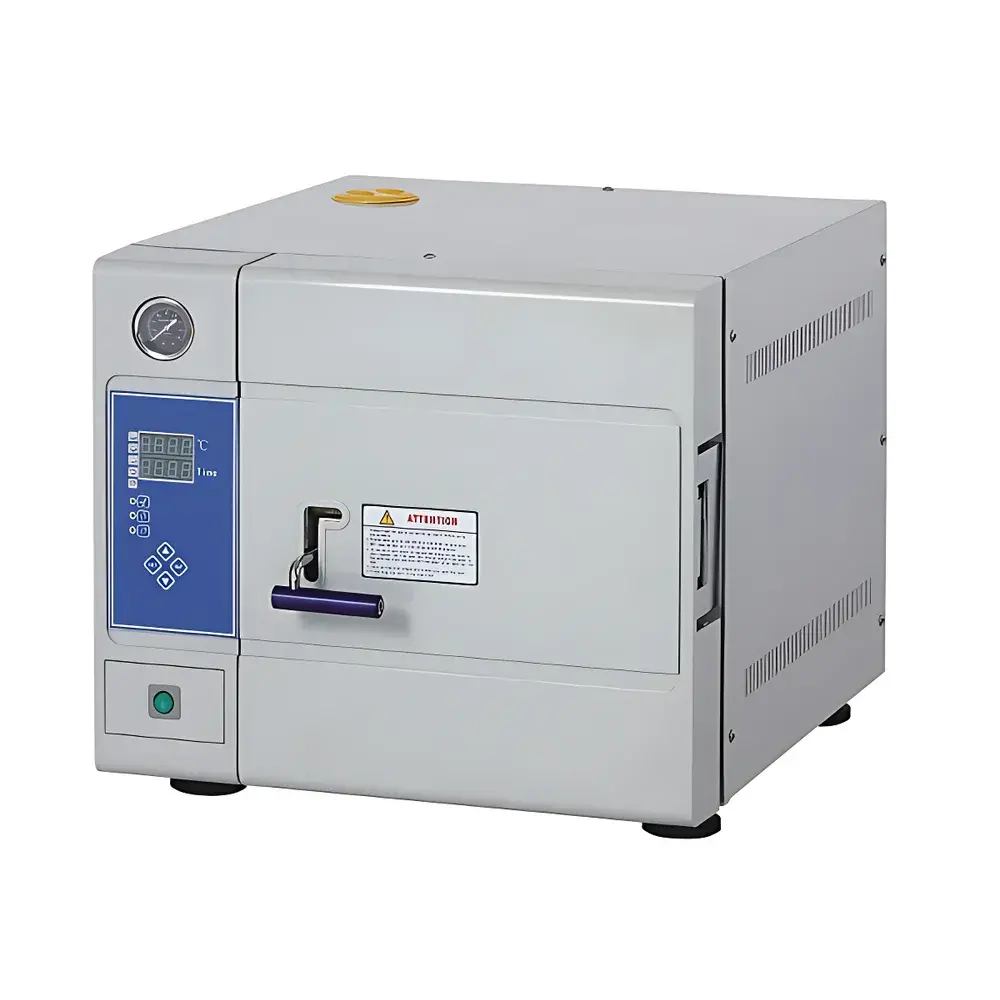
HePu TM-XD50D Benchtop Rapid Steam Sterilizer
| [Brand | HePu (Jihepu) |
|---|---|
| Origin | Shandong, China |
| Model | TM-XD50D |
| Sterilization Chamber Volume | 50 L |
| Max Operating Temperature | 134 °C |
| Max Working Pressure | 0.22 MPa |
| Chamber Dimensions | Ø340 × 550 mm |
| External Dimensions | 770 × 600 × 754 mm |
| Power Supply | 2700 W / AC 220 V, 50 Hz |
| Temperature Uniformity | ≤ ±1 °C |
| Sterilization Temp Range | 103–134 °C |
| Timer Range | 0–99 min 59 sec |
| Stainless Steel Tray | 500 × 250 × 30 mm (4 pcs) |
| Net Weight | 86 kg |
| Gross Weight | 105 kg] |
Overview
The HePu TM-XD50D Benchtop Rapid Steam Sterilizer is a microprocessor-controlled, fully automated Class B small-volume steam sterilization system designed for laboratories, clinical settings, pharmaceutical R&D facilities, and research institutions requiring reliable, repeatable, and time-efficient sterilization of heat- and moisture-stable materials. It operates on the principle of saturated steam under pressure—leveraging validated thermodynamic conditions to achieve microbial inactivation through protein denaturation and coagulation. Compliant with core principles outlined in ISO 17665-1 (Sterilization of health care products — Moist heat), EN 13060 (Small steam sterilizers), and aligned with FDA-recommended validation practices for low-volume sterilization cycles, the TM-XD50D delivers rapid, reproducible sterilization at temperatures up to 134 °C and pressures up to 0.22 MPa. Its compact footprint and integrated water reservoir enable up to five consecutive sterilization cycles without manual refilling—making it especially suitable for high-throughput preparation of surgical instruments, ophthalmic and dental tools, glassware, culture media, textiles, and pre-packaged medical devices.
Key Features
- Microprocessor-based control system with real-time LED display of temperature, pressure, elapsed time, and cycle phase—supporting full programmability of sterilization parameters (103–134 °C; 0–99 min 59 sec)
- Integrated 1.2 L distilled water reservoir enabling 4–5 consecutive sterilization cycles without operator intervention
- Automated air removal via gravity displacement and dynamic vacuum-assisted purge—ensuring complete cold air evacuation prior to steam saturation
- Dual-stage drying function with controlled post-sterilization cooling and residual moisture extraction
- Self-contained steam recirculation system—eliminates external steam venting, maintaining ambient lab humidity and reducing facility exhaust load
- Triple-layer safety architecture: overpressure relief valve (activates at >0.24 MPa), overtemperature cutoff (>138 °C internal chamber), and dry-run protection (>150 °C heating element)
- Stainless steel sterilization chamber constructed from SUS304 grade stainless steel (≥2.5 mm wall thickness), corrosion-resistant and compliant with ISO 8536-4 material specifications for sterilizer vessels
- Ergonomic insulated door with thermal shield and mechanical interlock—prevents accidental opening during pressurized operation and mitigates surface burn risk
Sample Compatibility & Compliance
The TM-XD50D accommodates a broad range of sterilizable loads including wrapped/unwrapped surgical and dental instruments, borosilicate glassware, silicone tubing, cotton gauze, non-woven textile packs, liquid culture media (in vented containers), and pre-sterilized packaging formats compatible with Class B cycle definitions per EN 13060. All cycles are traceable and repeatable within ≤±1 °C thermal uniformity across the 50 L chamber volume (Ø340 × 550 mm). The system supports routine validation per IQ/OQ/PQ protocols and meets baseline requirements for GLP-compliant environments. While not certified for terminal sterilization of implantables or large-scale production batches, it fulfills essential validation prerequisites for laboratory-scale process development, QC sample preparation, and pre-clinical device reprocessing in accordance with ISO 11135 (for ethylene oxide) and ISO 11137 (for radiation) reference frameworks.
Software & Data Management
The TM-XD50D features an embedded firmware platform supporting audit-trail-capable operation logs—including date/time stamps, user ID (via optional password entry), cycle type, setpoints, actual chamber temperature/pressure profiles, and fault codes. Cycle data can be exported via USB interface for archival in LIMS or electronic quality records systems. Though lacking network connectivity or remote monitoring, its logging structure conforms to foundational elements of FDA 21 CFR Part 11 Annex A expectations for electronic record integrity, including immutable timestamping and event-driven error flagging. Optional calibration certificate documentation (traceable to NIST or CNAS-accredited standards) is available upon request for regulatory submissions.
Applications
- Routine sterilization of reusable stainless-steel instruments in university teaching labs and outpatient clinics
- Preparation of sterile culture media and buffers for microbiology and cell culture workflows
- Reprocessing of ophthalmic lens-handling tools and dental handpieces between patient procedures
- Validation support for autoclave cycle development and comparative studies against larger floor-standing units
- Emergency sterilization of critical components in field-deployable diagnostic kits and mobile health units
- Compliance-driven sterilization of test samples prior to ISO 11737-1 bioburden testing or ASTM E2315 efficacy assays
FAQ
What sterilization cycle types does the TM-XD50D support?
It executes gravity-displacement and vacuum-assisted (pre-vacuum) cycles conforming to EN 13060-defined Class B performance criteria—including B, N, and S-type load categories.
Is the unit suitable for sterilizing liquids?
Yes—when loaded in vented containers (e.g., screw-cap bottles with loosened caps or specialized liquid sterilization bags) and programmed using extended slow-cool cycles to prevent boil-over and container rupture.
Does it meet international regulatory requirements for GMP environments?
While not independently certified for GMP manufacturing lines, its design, documentation, and operational repeatability align with foundational GMP Annex 1 expectations for sterilization equipment used in supporting lab operations.
Can cycle data be exported for quality audits?
Yes—via USB port, users may retrieve timestamped cycle reports containing temperature/pressure curves, start/end times, and fault history for inclusion in QA documentation.
What maintenance is required to sustain performance verification?
Quarterly verification of temperature sensors (with calibrated reference probe), annual pressure transducer calibration, and routine inspection of door gasket integrity and drain filter cleanliness are recommended per manufacturer guidelines.



