
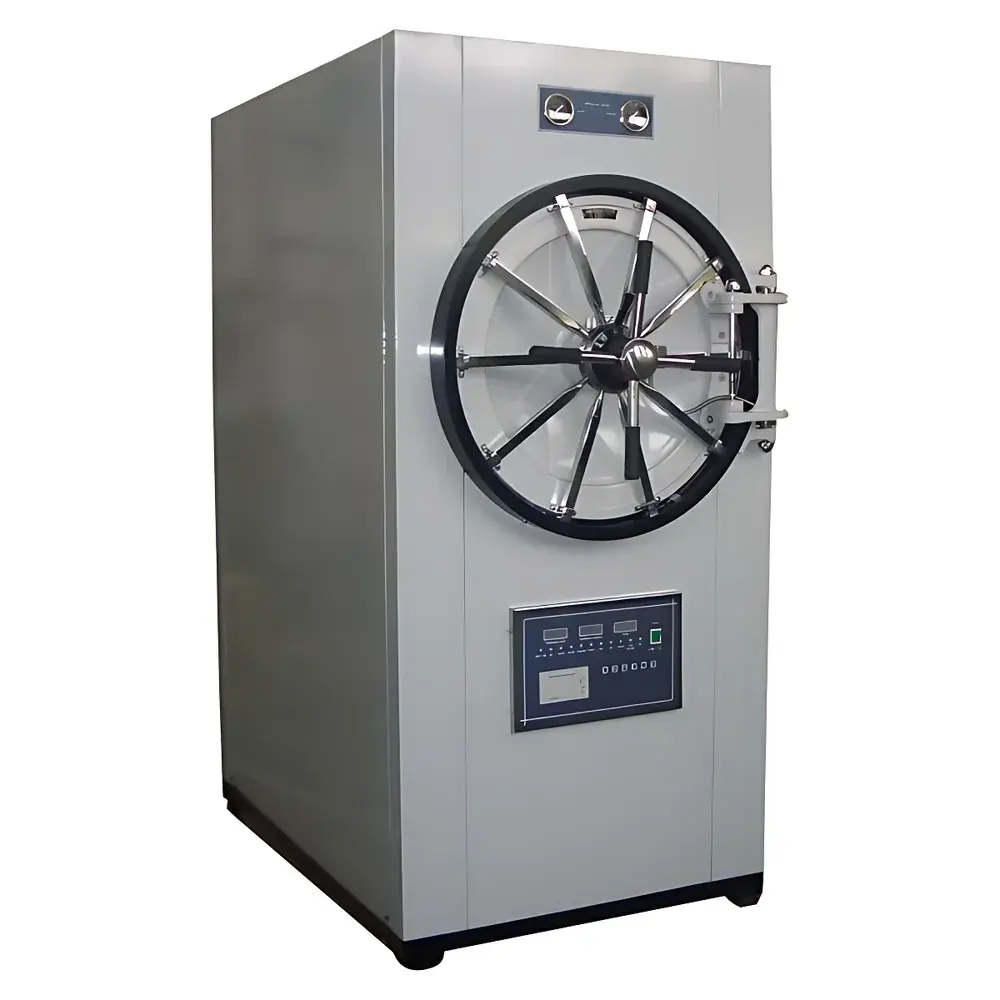
HePu WS-150YDB Horizontal Autoclave
| Key Features | Horizontal configuration |
|---|---|
| Max operating temperature | 134 °C |
| Max working pressure | 0.22 MPa |
| Temperature uniformity | ≤ ±2 °C |
| Sterilization temperature range | 105–134 °C |
| Timer range | 0–99 min |
| Drying time range | 0–99 min |
| Power supply | 9 kW / AC 380 V, 50 Hz |
| Safety interlock | door remains locked when chamber pressure > 0.027 MPa |
| Protection systems | overpressure, overheating, low-water-level, and overcurrent protection |
Overview
The HePu WS-150YDB Horizontal Autoclave is a fully automated, Class B (EN 13060-compliant) steam sterilization system engineered for high-reliability terminal sterilization in laboratory, pharmaceutical, clinical, and industrial environments. It operates on the principle of saturated steam under controlled pressure—leveraging the thermodynamic property that condensing saturated steam releases latent heat efficiently, ensuring rapid and uniform thermal energy transfer to load surfaces and internal microstructures. At 134 °C and 0.22 MPa, the unit achieves a minimum F0 value of ≥15 minutes (per ISO 17665-1), sufficient to inactivate all known microbial life forms, including highly resistant bacterial spores such as Geobacillus stearothermophilus. Its horizontal orientation enables optimal loading flexibility for long instruments, trays, glassware, culture media bottles, and porous loads—including wrapped surgical packs and textile-based materials—while maintaining strict adherence to EN 285 and ANSI/AAMI ST79 validation requirements.
Key Features
- Microprocessor-controlled cycle management with real-time LED digital display showing phase status (pre-vacuum, heating, sterilization, exhaust, drying), chamber temperature, pressure, and elapsed time.
- Programmable sterilization parameters: selectable temperature setpoints between 105 °C and 134 °C; adjustable exposure time from 0 to 99 minutes; independent drying duration control up to 99 minutes.
- Dual-stage vacuum system (optional pre-vacuum mode) ensures effective air removal from porous and lumened loads—critical for achieving sterility assurance level (SAL) of 10−6.
- Integrated safety architecture compliant with IEC 61010-1:2010 and PED 2014/68/EU: automatic door interlock prevents opening when internal pressure exceeds 0.027 MPa; redundant overpressure relief valve (set at 0.25 MPa); PT100-class temperature sensors with dual-channel monitoring; low-water-level cutoff and auto-refill function; thermal cut-off and circuit breaker protection against overcurrent conditions.
- Optional built-in thermal printer provides auditable hard-copy records of cycle start/end timestamps, peak temperature/pressure values, dwell times, and fault logs—supporting GLP, GMP, and FDA 21 CFR Part 11 data integrity expectations when paired with secure user access controls.
Sample Compatibility & Compliance
The WS-150YDB accommodates a broad spectrum of sterilizable materials: stainless-steel surgical instruments, silicone tubing, autoclavable plastics (e.g., polypropylene, polycarbonate), cotton gauze, linen wraps, agar and broth media in sealed containers, and pre-packaged disposable devices. Chamber dimensions (Φ440 mm × 1000 mm) support standard ISO 15883-compliant instrument trays and stacked rack configurations. All operational parameters align with international standards including ISO 17665-1 (moist heat sterilization), EN 13060 (small steam sterilizers), EN 285 (large sterilizers), and USP environmental control requirements for compounding sterile preparations. The unit is designed for routine validation per VDA Volume 3 or ISO 14971 risk management protocols.
Software & Data Management
While the base model features embedded firmware without external PC connectivity, the optional RS-232 or USB interface enables integration with laboratory information management systems (LIMS) or centralized sterilization monitoring platforms. Cycle data—including temperature-pressure profiles, phase transitions, alarm events, and operator ID—is timestamped and stored in non-volatile memory (retention ≥10,000 cycles). When equipped with the thermal printer, each record includes machine ID, cycle number, date/time stamp, operator code, and pass/fail status—facilitating traceability during internal audits or regulatory inspections (e.g., Joint Commission, ANVISA, or MHRA).
Applications
- Hospital central sterile supply departments (CSSD) for reprocessing surgical kits and endoscopic accessories.
- Pharmaceutical R&D labs performing sterilization validation of excipients, buffers, and final drug product containers.
- Academic and industrial microbiology laboratories preparing sterile culture media, glassware, and reusable labware.
- Food safety testing facilities sterilizing sampling tools and nutrient agar plates prior to pathogen isolation.
- Bio-manufacturing cleanrooms requiring validated depyrogenation of stainless-steel components and process filters.
FAQ
What is the maximum validated load configuration for this autoclave?
The chamber supports full-load validation per EN 285 Annex C using standardized biological indicators and thermocouple mapping—up to 150 L volume with ≥90% chamber fill ratio.
Does the unit comply with FDA or EU MDR requirements for medical device reprocessing?
Yes—it meets essential requirements of the EU Medical Device Regulation (MDR 2017/745) Annex I, Chapter III, and supports compliance with AAMI TIR34 and ISO 17664 for cleaning and sterilization instructions.
Can it be used for liquid sterilization cycles?
Yes—programmable slow-cool and pressure-balanced exhaust modes prevent boil-over during sterilization of liquids in sealed vessels.
Is third-party IQ/OQ/PQ documentation available?
Factory-provided qualification templates and test protocols are supplied; certified field validation services can be arranged through authorized HePu service partners.
What maintenance intervals are recommended?
Daily: water quality check and chamber wipe-down. Weekly: gasket inspection and door seal cleaning. Annually: safety valve calibration, vacuum pump oil change, and sensor verification per ISO 13485 preventive maintenance schedule.



