
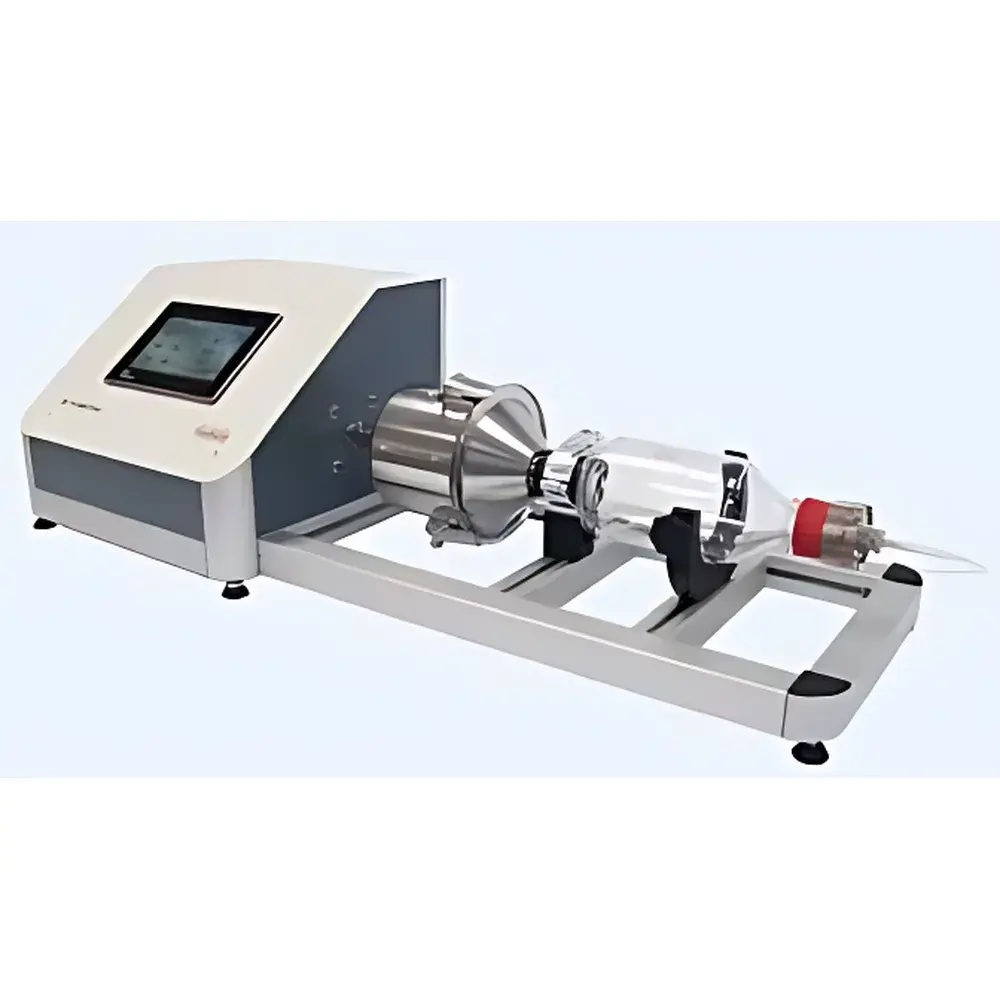
Heubach Dustmeter Seed Coating Abrasion Tester
| Brand | Heubach |
|---|---|
| Origin | Germany |
| Model | Dustmeter |
| Instrument Type | Seed Coating Dust Release Tester |
| Dust Measurement Principle | Controlled-Abrasion Air-Flow Filtration |
| Sample Rotation Speed | Adjustable (0–60 rpm) |
| Airflow Control | Programmable Volume (L) or Duration (s) |
| Filtration Efficiency | Standard Glass Fiber Filter (99.97% @ 0.3 µm) |
| Sample Mass Range | 1–100 g |
| Balance Resolution | 0.1 g |
| Operating Temperature Range | Ambient to 80 °C |
| Compliance | EN 15203, EU Directive 85/157/EEC (Feed Additives), ISO 17025-Compliant Testing Environment |
| Upgrade Path | Modular I → II → III Configuration |
Overview
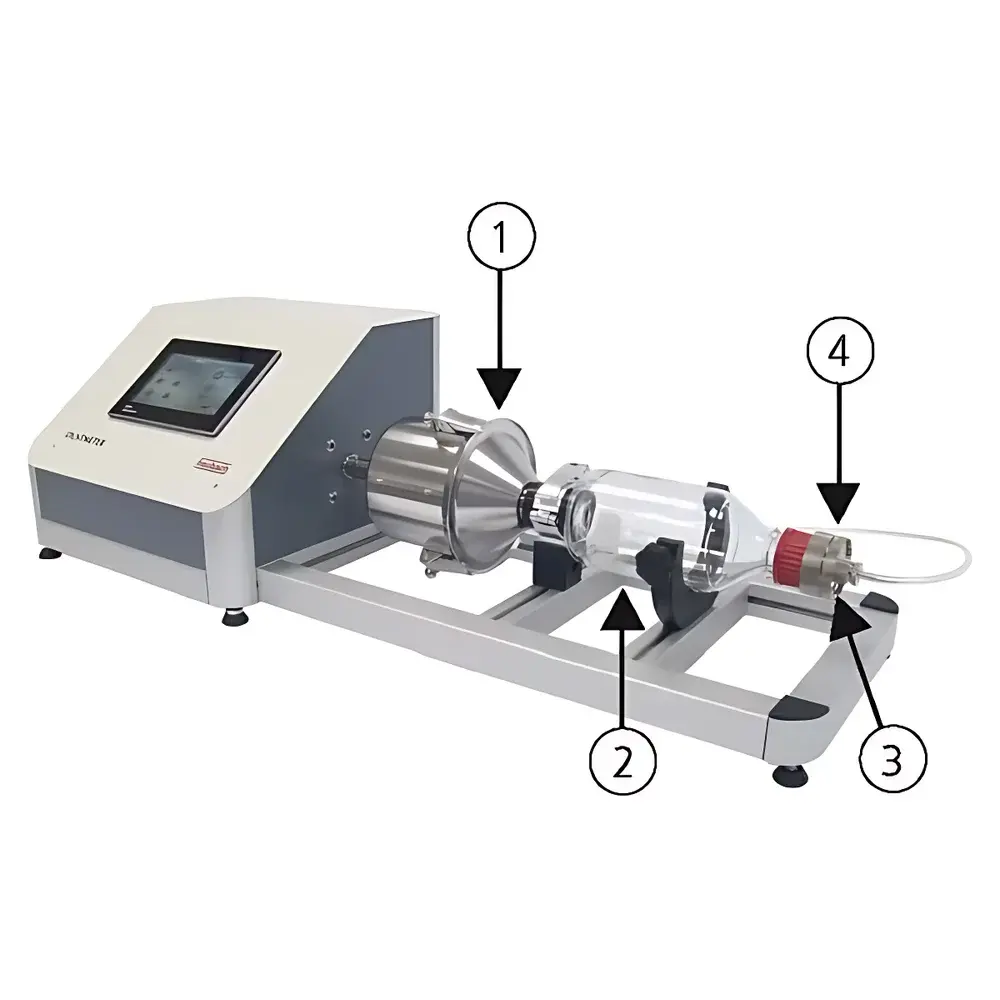
The Heubach Dustmeter is a precision-engineered seed coating abrasion and dust release tester designed for quantitative assessment of particulate detachment from treated seeds, granular agrochemicals, and coated agricultural formulations. Unlike empirical methods such as the traditional “fall-tube” test—whose results are highly sensitive to operator technique and environmental variability—the Dustmeter applies standardized mechanical agitation coupled with controlled laminar airflow to simulate realistic handling, conveying, and packaging conditions. Its core measurement principle relies on gravimetric quantification of airborne dust collected on certified high-efficiency filters after defined mechanical stress and air-volume exposure. The system operates across three configurable test modes (Type I, II, and III), each aligned with distinct regulatory frameworks and material behavior profiles, enabling laboratories to meet traceability, reproducibility, and audit readiness requirements under GLP and ISO/IEC 17025 accreditation.
Key Features
- Modular test chamber architecture supporting seamless upgrade from Type I to Type II or Type III configurations without hardware replacement.
- Microprocessor-controlled touchscreen interface with preloaded standard protocols (e.g., EN 15203 Annex A, EU 85/157/EEC Annex II) and customizable parameter sets (rotation speed, airflow volume, duration, temperature).
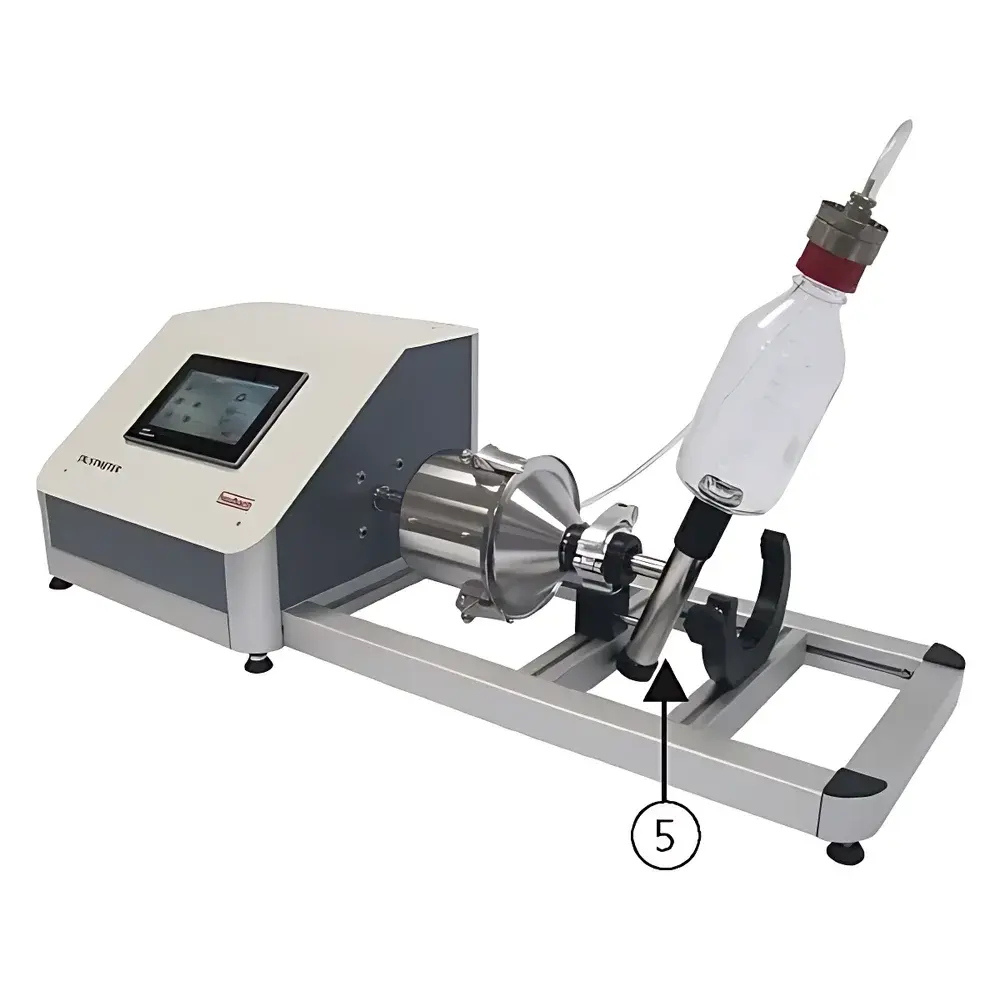
- Motor-driven sample drum with adjustable rotational speed (0–60 rpm) and interchangeable internal baffles to replicate bulk handling dynamics—including tumbling, pneumatic conveying, and hopper discharge.
- Precisely regulated airflow system delivering constant volumetric flow (±1.5% accuracy) over user-defined durations or total volumes (10–1000 L), with integrated mass flow sensor and digital feedback control.
- Three-stage particle capture path: coarse pre-separator → calibrated glass fiber filter (Whatman GF/A or equivalent, 99.97% efficiency ≥0.3 µm) → optional secondary filter for fine-fraction analysis.
- Integrated analytical balance interface (0.1 g resolution) compliant with USP and ASTM E898-22 weighing guidelines; supports tare synchronization and automatic dust mass calculation.
- Robust stainless-steel housing with IP54-rated enclosure, CE-marked electrical safety, and thermal management for stable operation up to 80 °C ambient.
Sample Compatibility & Compliance
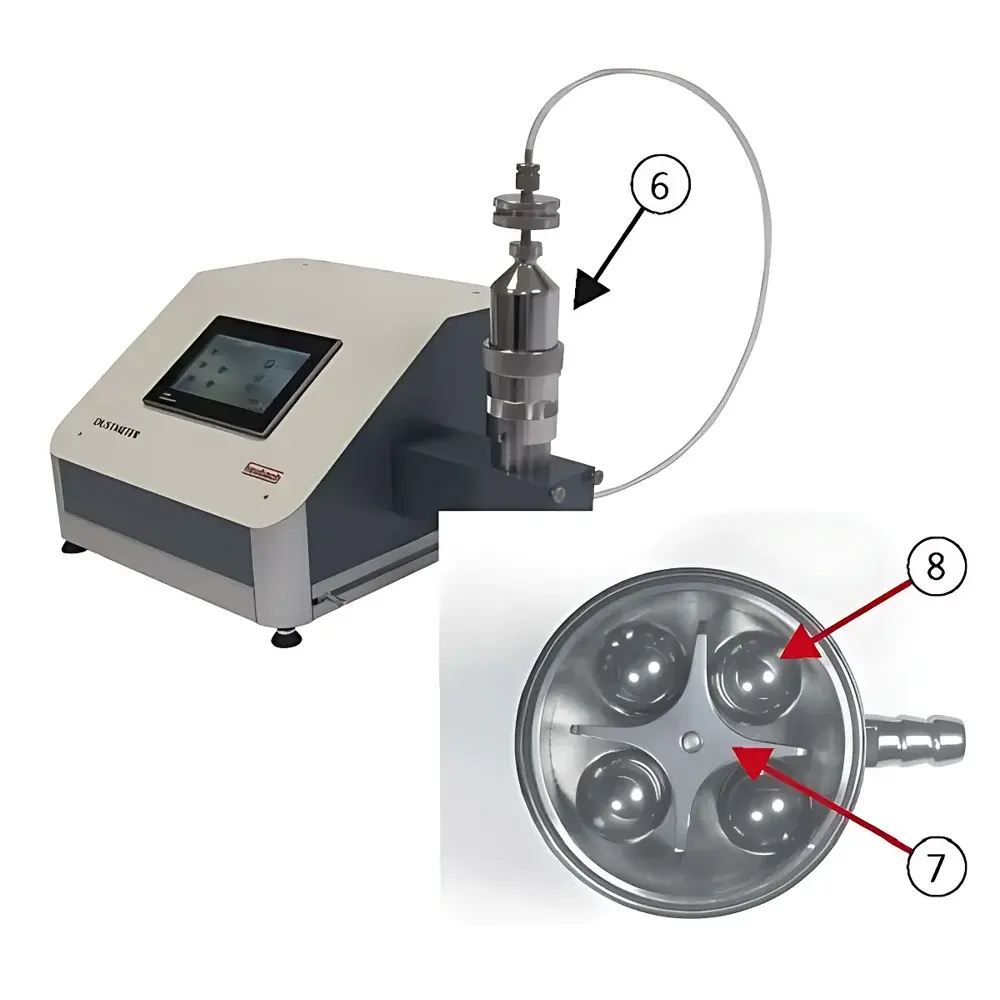
The Dustmeter accommodates dry, free-flowing particulates in the 0.5–8 mm size range, including pelleted feed additives, insecticidal seed treatments, micronutrient granules, and polymer-coated microspheres. Type I is validated for broad-spectrum screening of coated seeds and granular fertilizers. Type II incorporates a vertically oriented cyclonic separator optimized for low-mass dust fractions (<10 mg), fulfilling the sensitivity requirements of EU Directive 85/157/EEC for animal feed additive registration. Type III introduces a friction-enhanced dust generation chamber—featuring a rotating impeller and four steel beads—to quantify abrasion-induced dust from fragile microgranules or film-coated pellets, aligning with OECD Test Guideline 117 (Dustiness Assessment) and CEN/TS 16435:2013. All configurations support full traceability via timestamped test logs, operator ID tagging, and electronic signature capability compatible with FDA 21 CFR Part 11–compliant data management systems.
Software & Data Management
Heubach DustControl™ software (v3.2+) provides full instrument control, real-time airflow and rotation monitoring, and automated report generation per ISO 17025 clause 7.8. Data files are stored in encrypted SQLite format with immutable audit trails, including calibration history, maintenance records, and parameter change logs. Export options include CSV (for LIMS integration), PDF (signed test certificates), and XML (for ELN ingestion). Software modules support statistical process control (SPC) charting, inter-laboratory comparison dashboards, and uncertainty budgeting per GUM (JCGM 100:2008). Firmware updates are delivered via secure HTTPS with SHA-256 verification and rollback capability.
Applications
- Formulation development: Screening binder efficacy, polymer coating integrity, and anti-dust additive performance during early-stage R&D.
- Regulatory submission: Generating dust release data required for EFSA dossiers, EPA Pesticide Registration (PRN), and FAO/WHO Joint Meeting on Pesticide Specifications (JMPS).
- Batch release testing: Routine QC of commercial seed lots against internal specifications or customer dust thresholds (e.g., ≤5 mg/100 g).
- Supply chain optimization: Benchmarking dust generation across different packaging lines, conveyor speeds, or storage conditions.
- Environmental risk assessment: Quantifying respirable fraction potential for occupational exposure modeling (ISO/TS 19831:2021).
FAQ
What distinguishes Type II from Type I operation?
Type II adds a vertical inertial separator upstream of the main filter, enhancing discrimination of sub-10 µm particles and improving detection limits for low-dust formulations governed by EU Directive 85/157/EEC.
Can the Dustmeter be used for non-agricultural powders?
Yes—provided samples are free-flowing, non-hygroscopic, and within the 0.5–8 mm size range; validation per ISO 16234:2016 is recommended for pharmaceutical or industrial applications.
Is calibration traceable to national standards?
Airflow sensors are factory-calibrated against NIST-traceable rotameters; rotational speed verified via optical tachometer; mass measurements referenced to OIML R111 Class E2 weights.
How is dust recovery efficiency validated?
Via gravimetric spiking experiments using certified reference dust (e.g., Arizona Road Dust, A2 test dust) with recovery rates documented between 94.2% and 98.7% across three independent labs.
Does the system support remote diagnostics?
Yes—via optional Ethernet/Wi-Fi module enabling secure VNC access, firmware OTA updates, and predictive maintenance alerts based on motor current profiling and thermal drift analytics.
Related Products






