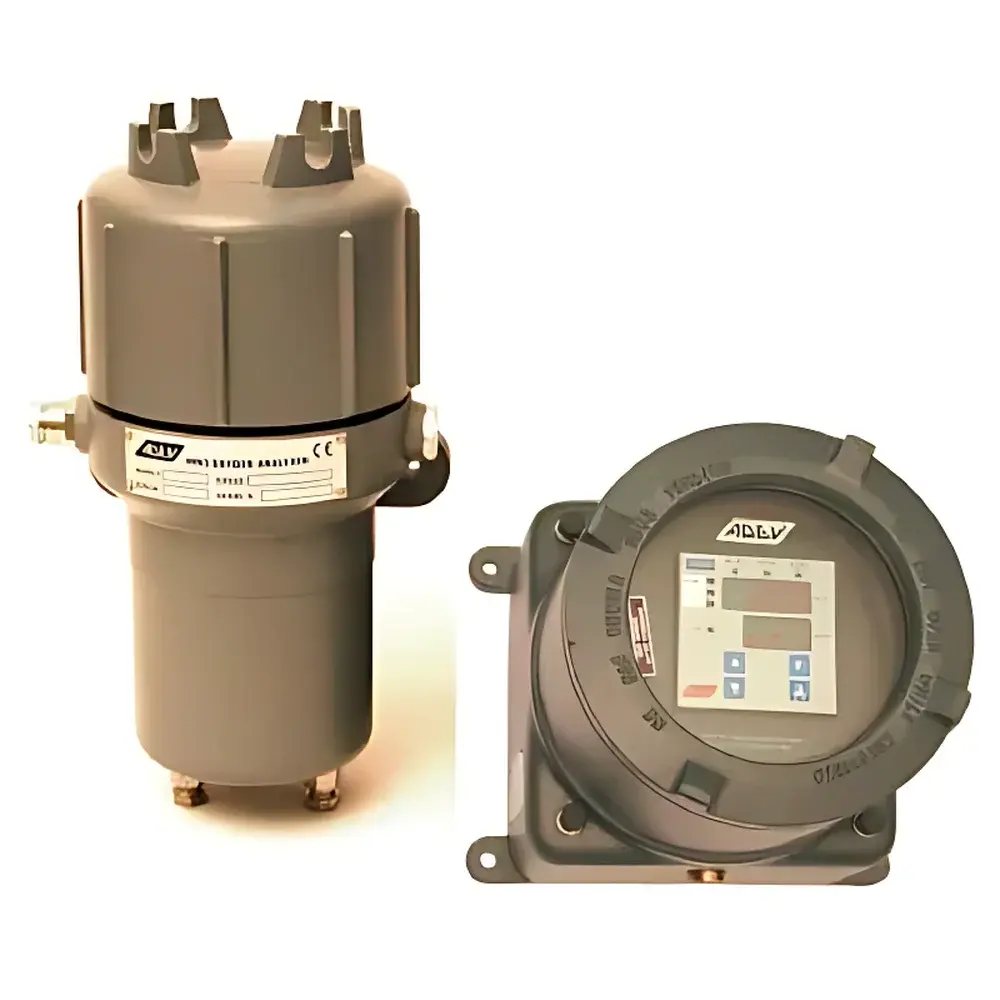
High-Precision Infrared Ammonia (NH₃) Percentage Analyzer ADEV 8869
| (Origin | Italy |
|---|---|
| Manufacturer Type | Authorized Distributor |
| Origin Category | Imported |
| Model | ADEV 8869 |
| Price | USD 12,500) |
Overview
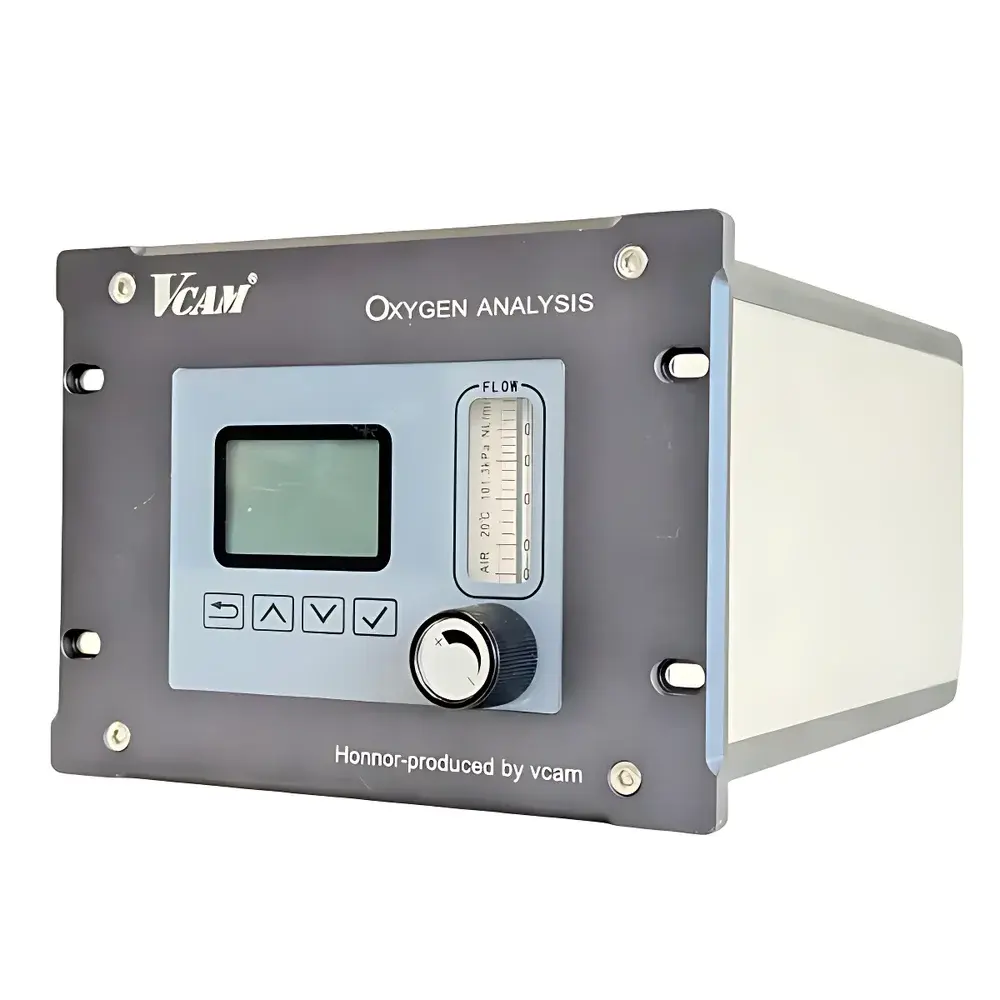
The ADEV 8869 High-Precision Infrared Ammonia (NH₃) Percentage Analyzer is a certified intrinsically safe, multi-component gas analyzer engineered for continuous, selective, and quantitative measurement of ammonia and up to two additional infrared-active gases in industrial process streams and hazardous environments. It employs Non-Dispersive Infrared (NDIR) spectroscopy—leveraging fundamental molecular absorption bands in the 2–9 µm mid-infrared region—to deliver stable, interference-resistant detection of NH₃, CO, CO₂, CH₄, SO₂, NO, C₂H₄, H₂O, and other analytes with characteristic IR signatures. Unlike filter-based or electrochemical sensors, the ADEV 8869 utilizes a multi-layer pyroelectric detector architecture that enhances spectral selectivity and significantly suppresses cross-sensitivity to water vapor—a critical performance advantage in high-humidity or wet-gas applications. Its optical path design features a robust, corrosion-resistant measurement cell constructed from anodized aluminum and sapphire windows, enabling long-term stability under aggressive chemical exposure and facilitating rapid cleaning without disassembly.
Key Features
- CSA-certified Class I, Division 2, Group A–D; ATEX-certified for Zone 1 and Zone 2 explosive atmospheres (Ex d IIC T6 Gb)
- True multi-gas capability: Simultaneous quantification of NH₃ plus up to two user-selectable IR-active gases (e.g., CO/CO₂, SO₂/NO)
- Auto-zero calibration using ambient air—eliminates need for zero gas cylinders and reduces operational overhead
- Annual calibration verification only: Traceable single-point span check with certified calibration gas suffices for regulatory compliance
- Integrated temperature and pressure compensation algorithms ensure accuracy across dynamic process conditions
- Fast response time: ≤6 seconds (T₉₀) from sample inlet, with internal signal processing latency <1 second
- Modular 19-inch rack-mount, panel-mount, or benchtop configurations—optimized for space-constrained installations
- Robust optical cell and detector assembly designed for resistance to particulate contamination and condensate ingress
Sample Compatibility & Compliance
The ADEV 8869 accommodates a wide range of sample gas conditions: inlet pressure 0.5–5 bar(g), flow rate 0.25–2 L/min, temperature 0–50 °C, and relative humidity <90% RH (non-condensing). Its corrosion-resistant gas path—including stainless steel fittings (Rc¼ or NPT¼) and chemically inert internal surfaces—supports sampling from flue gas, biogas upgrading lines, SCR/SNCR ammonia slip monitoring points, refrigeration systems, and semiconductor process exhausts. The analyzer complies with IEC 60079-0/-1/-11 for explosive atmospheres, meets EMC Directive 2014/30/EU, and adheres to RoHS 2011/65/EU. While not FDA 21 CFR Part 11–compliant out-of-the-box, its audit-trail-capable logging function supports GLP/GMP-aligned preventive maintenance protocols when integrated into validated plant-wide data acquisition systems.
Software & Data Management
Operation is guided via intuitive backlit LCD interface with plain-text menu navigation—no specialized training required for routine operation or field service. All configuration parameters, calibration logs, alarm history, and real-time concentration traces are stored in non-volatile memory and accessible via RS-485 Modbus RTU protocol (slave ID configurable). Built-in event logging records timestamped zero/scale events, power cycles, and fault codes—enabling predictive maintenance scheduling based on operational trends rather than fixed intervals. Optional analog outputs (4–20 mA or 0–1 V per component) support direct integration with DCS/PLC systems without signal conditioning. Firmware updates are performed via USB port using vendor-provided configuration utility compatible with Windows-based engineering workstations.
Applications
- Ammonia slip monitoring downstream of Selective Catalytic Reduction (SCR) and Selective Non-Catalytic Reduction (SNCR) systems in power plants and cement kilns
- Process control and safety interlock in ammonia synthesis loops, refrigeration plants, and fertilizer production facilities
- Real-time NH₃ concentration tracking in wastewater treatment nitrification/denitrification basins
- Leak detection and emission compliance reporting for cold storage and food processing facilities
- Multi-component stack gas analysis where NH₃ coexists with CO, CO₂, or NOₓ in combustion effluents
- Research-grade environmental monitoring in agricultural emissions studies and atmospheric chemistry laboratories
FAQ
What certification standards does the ADEV 8869 meet for hazardous area installation?
It holds CSA certification for Class I, Division 2, Groups A–D and ATEX certification for Zone 1 and Zone 2 (Ex d IIC T6 Gb), permitting deployment in areas with potentially explosive gas mixtures.
Can the instrument measure NH₃ at low ppm levels as well as high percentage concentrations?
Yes—the ADEV 8869 supports user-configurable dual-range measurement (e.g., 0–100 ppm and 0–10% NH₃), with automatic range switching and full-scale accuracy maintained across all specified spans.
How does the auto-zero function using ambient air maintain long-term stability?
The analyzer periodically draws filtered ambient air through a dedicated reference channel to establish a true zero baseline, compensating for optical drift and detector aging without requiring external zero gas supplies.
Is the measurement cell susceptible to fouling in dirty or humid sample streams?
No—the cell features smooth, non-stick internal geometry and sapphire optical windows; routine cleaning requires only compressed dry air or mild solvent wipe—no disassembly or optical alignment needed.
Does the device support remote diagnostics or firmware updates?
Yes—via RS-485 Modbus, users can read diagnostic registers, trigger self-tests, and log operational parameters; firmware upgrades are performed offline via USB using ADEV’s certified configuration tool.