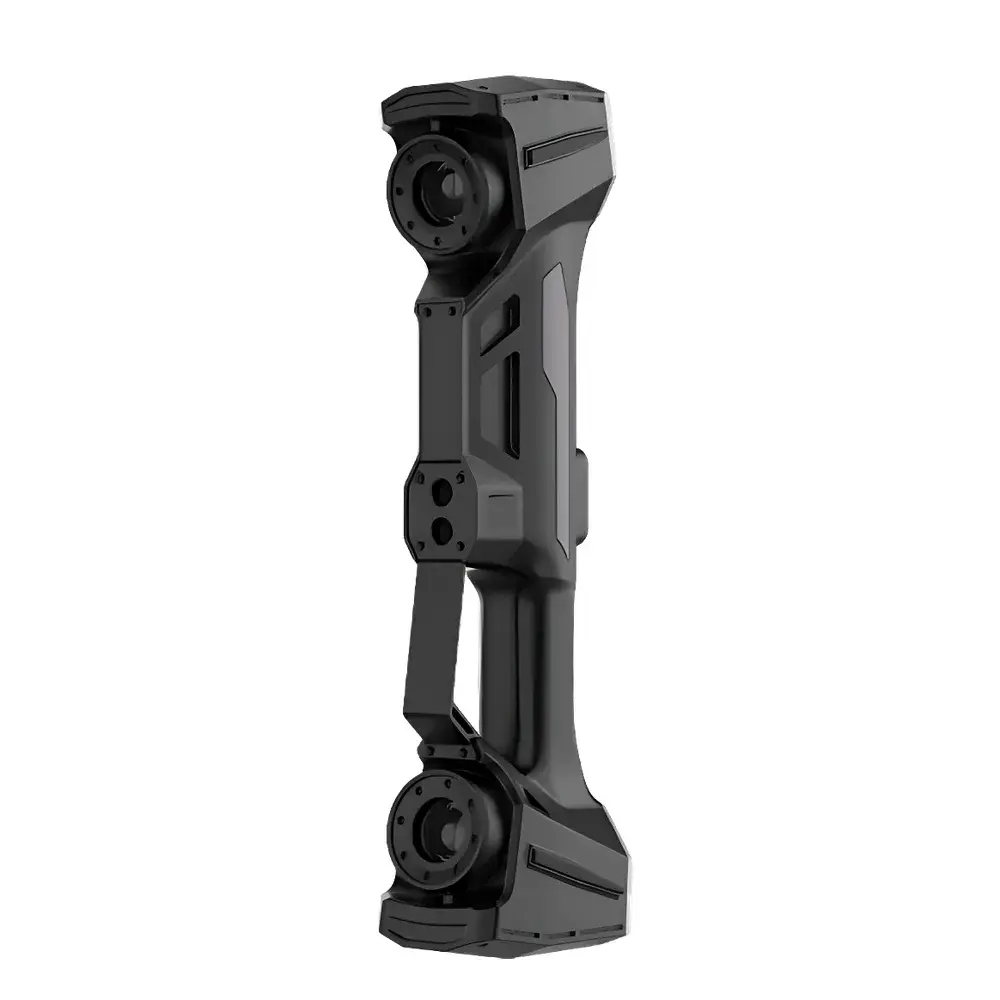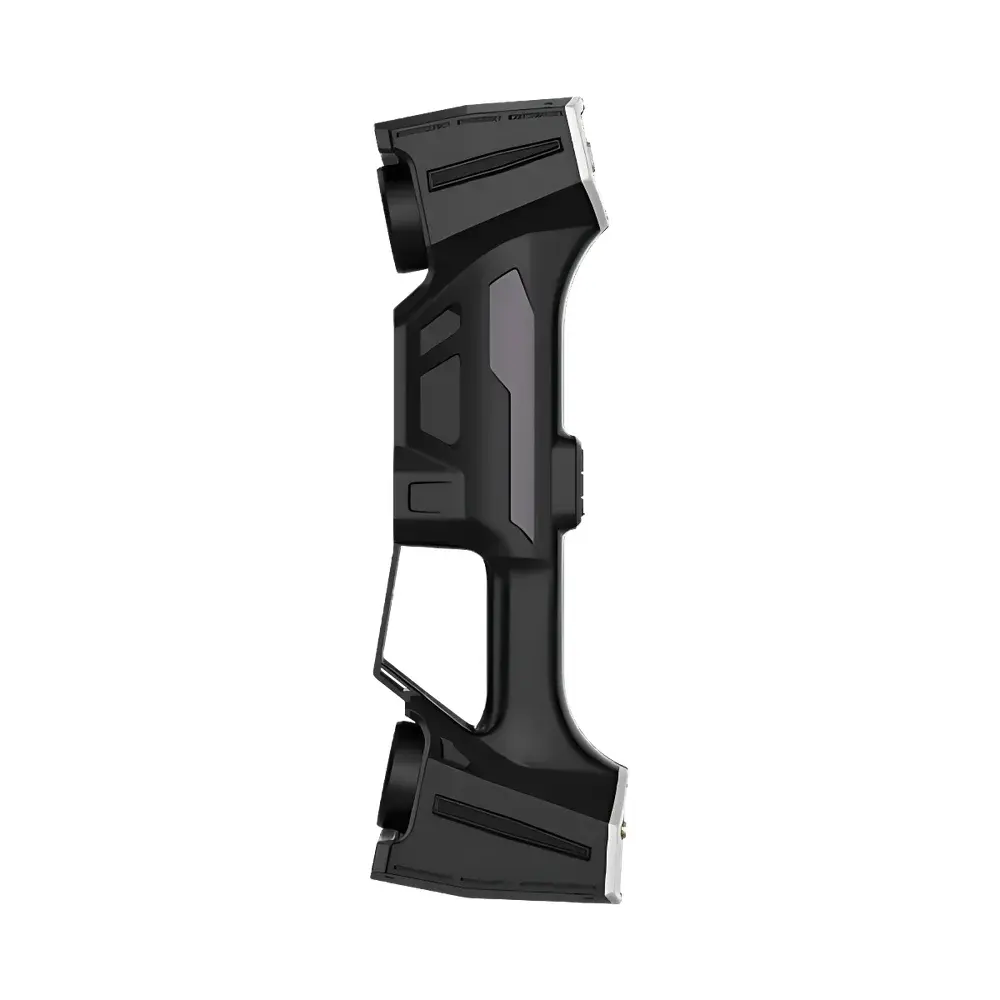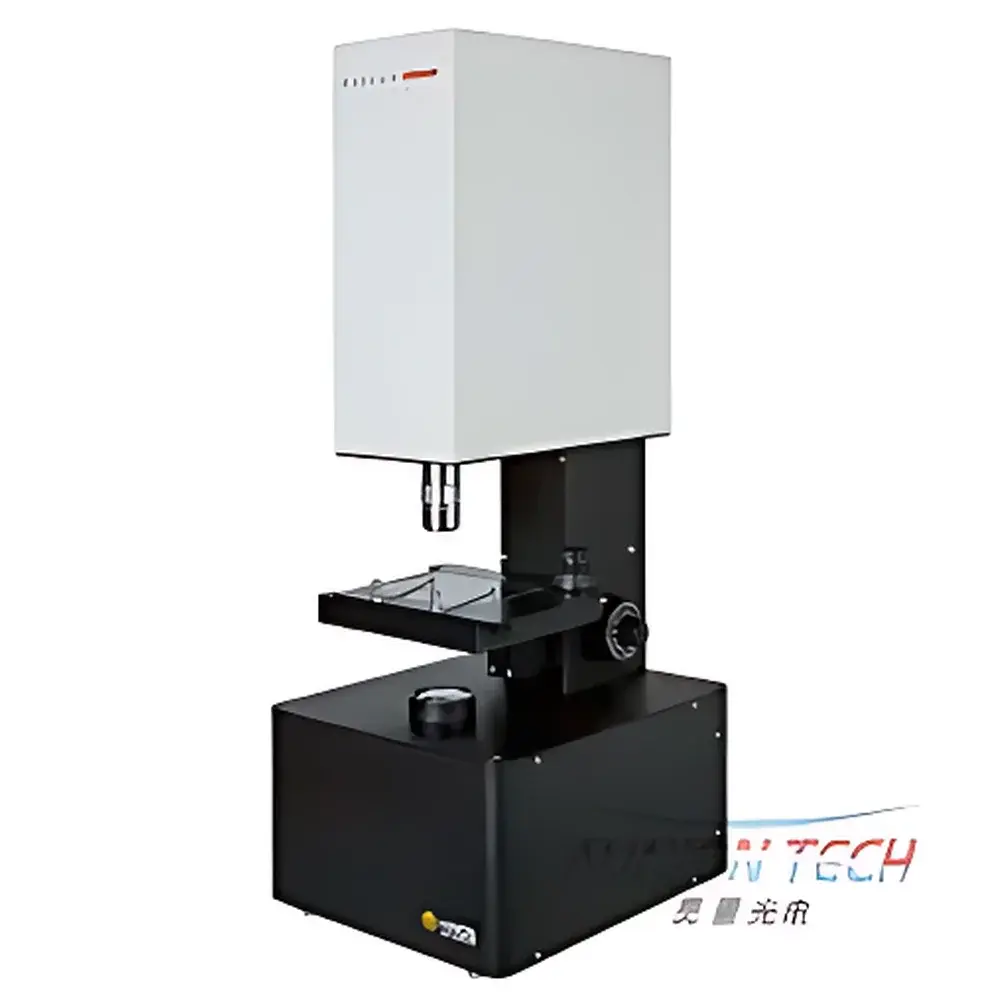
Hinds Instruments Birefringence Imaging Microscope
| Brand | Hinds Instruments |
|---|---|
| Origin | USA |
| Model | Birefringence_imaging_microscope |
| Wavelength Range | 350–3500 nm (configurable multi-band) |
| Detection Mode | Full-field Mueller matrix polarimetry |
| Output Data | Pixel-resolved retardance (nm), orientation angle (°), diattenuation, depolarization |
| Imaging Format | CCD/CMOS-based quantitative polarimetric imaging |
| Customization | Spectral band selection (3-band up to 2400 nm |
Overview
The Hinds Instruments Birefringence Imaging Microscope is a quantitative full-field polarimetric imaging system engineered for non-invasive, label-free characterization of optical anisotropy in biological tissues and advanced materials. It operates on the principle of Mueller matrix polarimetry—capturing the complete polarization transformation induced by a sample across spatially resolved pixels. Unlike conventional brightfield or fluorescence microscopy, this system measures intrinsic birefringence (retardance) and fast-axis orientation at sub-micron spatial resolution without exogenous contrast agents. By sequentially illuminating the sample with precisely controlled polarization states and analyzing the output Stokes vector via high-dynamic-range CCD detection, the instrument reconstructs pixel-wise maps of retardance (in nanometers), azimuthal orientation (in degrees), diattenuation, and depolarization. Its design enables rigorous quantification under controlled illumination conditions, making it suitable for longitudinal studies in structural biology, ophthalmology, polymer science, and pharmaceutical solid-state analysis.
Key Features
- Label-free, non-destructive birefringence mapping—eliminates reliance on fluorescent dyes or chemical staining
- Multi-wavelength capability: configurable 3-band configuration (up to 2400 nm) or 4-band configuration (up to 3500 nm), supporting IR-transparent sample analysis
- Full-field Mueller matrix acquisition with real-time polarization state generation and detection
- Simultaneous co-registered imaging of retardance distribution, intensity transmission, and fast-axis orientation within a single field of view
- Flexible acquisition modes: point-scan, line-scan, or area-scan—adaptable to heterogeneous sample geometries and throughput requirements
- Modular optical architecture compatible with standard inverted or upright microscope frames (e.g., Nikon Eclipse, Zeiss Axio)
- High-stability electro-optic polarization modulators enabling kHz-rate modulation for motion artifact suppression
Sample Compatibility & Compliance
The system accommodates a broad range of transparent and semi-transparent specimens—including unstained histological sections, corneal tissue slices, collagen gels, liquid crystal films, stretched polymer foils, and pharmaceutical crystalline compacts. Sample mounting follows standard microscopy protocols using glass slides, quartz substrates, or custom flow cells. All optical components comply with ISO 10110 surface quality standards, and mechanical stages meet ISO 9283 repeatability specifications. The instrument supports GLP-compliant operation through audit-trail-enabled software logging (including user ID, timestamp, calibration status, and raw Stokes data archive). While not FDA-cleared as a medical device, its measurement traceability aligns with ASTM E2847 (Standard Practice for Polarimetric Measurement of Retardance) and ISO 15529 (Optics and photonics — Polarization-maintaining components — Test methods).
Software & Data Management
Acquisition and analysis are managed via Hinds’ proprietary PolarView™ software suite, built on a deterministic real-time acquisition engine. The software provides automated calibration routines (including depolarization correction and retarder alignment compensation), batch processing pipelines for multi-sample datasets, and export options compliant with HDF5 and TIFF formats—including embedded metadata per MIAME/MINSEQE guidelines. Quantitative outputs include ASCII-compatible matrices for retardance (nm), orientation (°), and confidence metrics per pixel. For regulated environments, optional 21 CFR Part 11 compliance packages are available, delivering electronic signatures, role-based access control, and immutable audit logs. Raw Stokes vector time-series data can be exported for third-party analysis in MATLAB, Python (via scikit-learn or PyMueller), or LabVIEW.
Applications
- Ocular diagnostics: Quantitative mapping of corneal stromal birefringence for keratoconus staging and post-refractive surgery monitoring
- Neuroscience: Visualization of myelin sheath integrity in fixed brain sections without lipid-specific stains
- Materials science: In-process evaluation of stress-induced birefringence in injection-molded polymers and fiber-reinforced composites
- Pharmaceutical development: Polymorph identification and crystallinity assessment in active pharmaceutical ingredients (APIs) and tablet coatings
- Biomechanics: Time-resolved strain mapping in tendon and ligament tissue under uniaxial loading
- Quality control: Automated defect detection in optical films, LCD panels, and adhesive laminates based on localized retardance anomalies
FAQ
Does this system require sample staining or labeling?
No. It performs quantitative birefringence imaging entirely label-free by measuring intrinsic polarization interactions.
Can I integrate this into my existing microscope platform?
Yes—the optical module is designed for modular integration with major OEM microscope stands via C-mount or infinity-corrected tube lens interfaces.
What spectral ranges are supported out-of-the-box?
Standard configurations cover visible to SWIR: 3-band (e.g., 532/633/1064 nm) or 4-band (e.g., 405/532/1310/3300 nm), with custom band selection available.
Is real-time imaging possible?
Frame rates depend on exposure and modulation depth; typical full-field Mueller acquisition ranges from 0.1 to 5 Hz. High-speed variants support >50 Hz for limited-parameter subsets (e.g., retardance-only mode).
How is calibration maintained over time?
The system includes automated daily calibration routines using NIST-traceable reference retarders and polarization standards, with drift-compensation algorithms embedded in the acquisition firmware.