
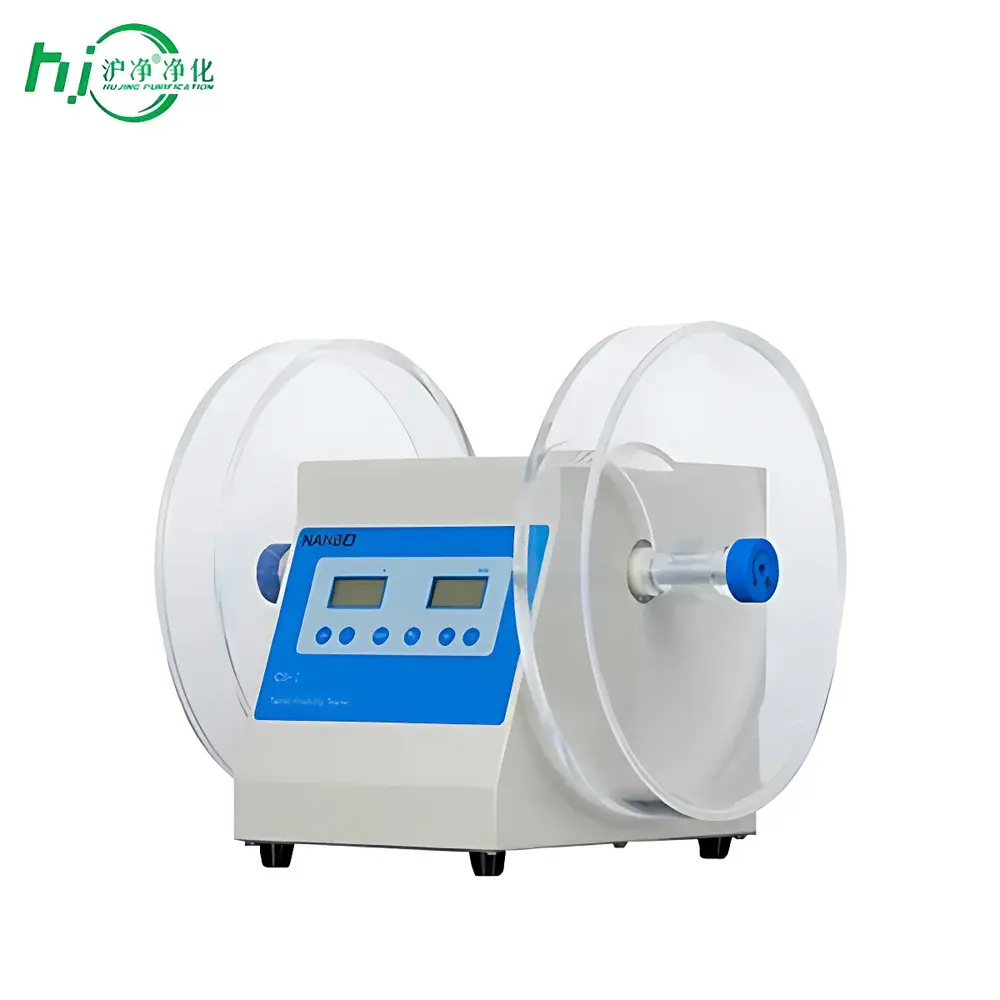
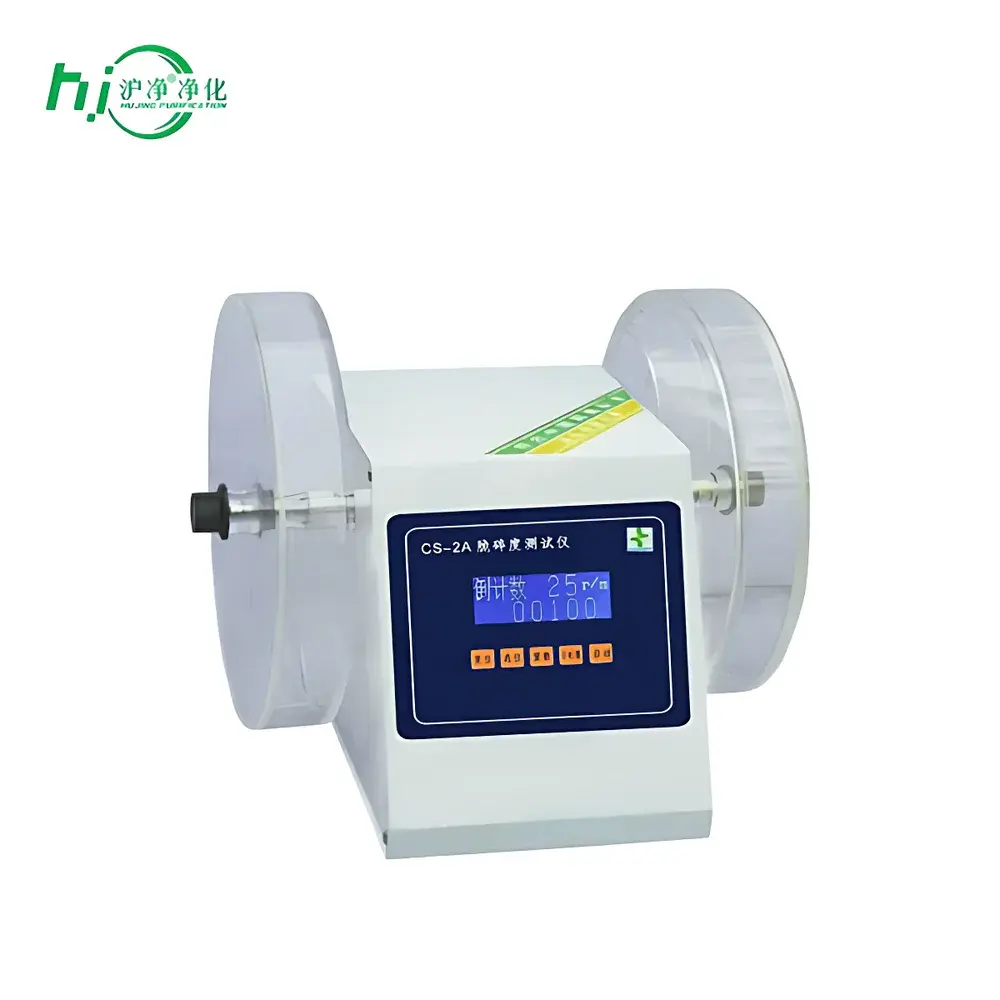
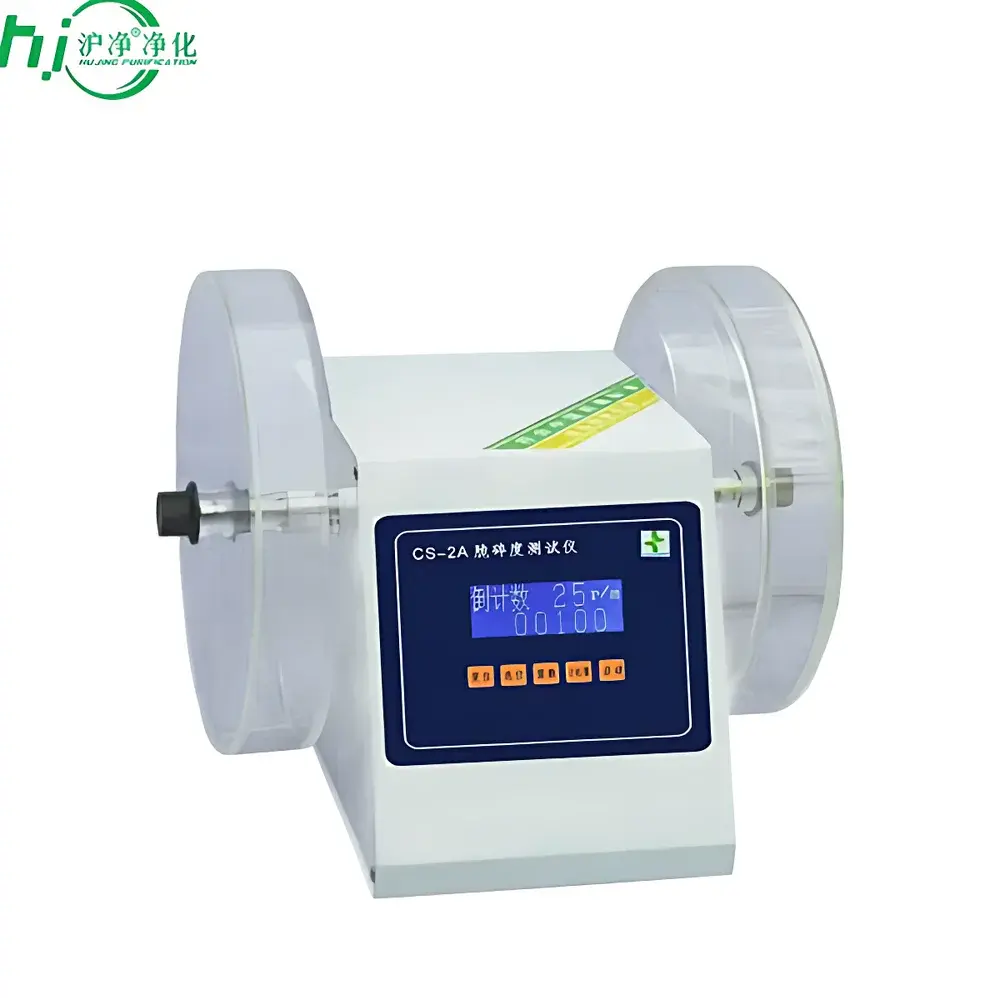
HJ CS-2/2A/2A+ Friability Tester
| Brand | HJ |
|---|---|
| Origin | Shanghai, China |
| Manufacturer Type | Manufacturer |
| Product Category | Domestic |
| Model | CS-2 / CS-2A / CS-2A+ |
| Price | Upon Request |
| Drum Diameter | 286 mm |
| Drum Depth | 39 mm |
| Drop Height | 156 mm |
| Rotation Speed | CS-2: 25 rpm ±1 rpm |
| CS-2A | 25 rpm ±1 rpm (fixed) |
| CS-2A+ | 20–90 rpm adjustable |
| Rotation Count Range | CS-2: 10–990 revolutions (default 100) |
| CS-2A & CS-2A+ | 0–99,999 cycles (forward/reverse count mode) |
| Timing Range | 0–9 h 59 min 59 s (forward/reverse timer mode) |
| Power Supply | 220 V ±10%, 50 Hz |
| Power Consumption | CS-2: 20 W |
| CS-2A | 18 W |
| CS-2A+ | 15 W |
| Dimensions (W×D×H) | 370 × 300 × 340 mm |
| Weight | 15 kg |
| Operating Temperature | 5–35 °C |
| Relative Humidity | <80 % RH |
Overview
The HJ CS-2/2A/2A+ Friability Tester is a precision-engineered pharmaceutical testing instrument designed to quantitatively assess the mechanical robustness of uncoated and coated tablets under controlled tumbling stress. It operates on the principle of rotational abrasion—where tablets are subjected to repeated free-fall impacts inside a rotating cylindrical drum (also referred to as a “tumble drum” or “rotating wheel”)—mimicking mechanical stresses encountered during packaging, transportation, and handling. The test complies with internationally recognized pharmacopoeial standards including USP <1216>, EP 2.9.7, and JP 6.07, which define friability as the percentage weight loss after a specified number of drum rotations at defined speed and geometry. This instrument delivers high reproducibility in weight-loss measurement, enabling QC laboratories to verify tablet integrity prior to release and support formulation development for improved tablet hardness and coating durability.
Key Features
- Three configurable models (CS-2, CS-2A, CS-2A+) offering progressive functionality—from fixed-speed operation to fully programmable rotation speed and cycle/timing control.
- Robust all-gear mechanical transmission system eliminates belt-driven wear, ensuring long-term dimensional stability and zero maintenance of drive components.
- Microcontroller-based digital control architecture provides precise regulation of rotation speed (±1 rpm accuracy), real-time cycle counting, and dual-mode operation (count mode / timer mode) with forward or reverse sequencing.
- CS-2A model integrates a large LCD display for intuitive parameter visualization and status feedback; CS-2A+ adds continuous speed adjustability from 20–90 rpm, supporting method development beyond standard pharmacopoeial conditions.
- Drum dimensions conform to pharmacopoeial requirements: internal diameter ≈286 mm, depth 39 mm, and standardized tablet drop height of 156 mm—ensuring compliance with USP-defined geometry for valid friability assessment.
- Low power consumption (15–20 W), compact footprint (370 × 300 × 340 mm), and lightweight design (15 kg) facilitate integration into regulated lab environments without dedicated utility infrastructure.
Sample Compatibility & Compliance
The tester accommodates standard tablet sizes up to 20 mm in diameter and ≤10 mm thickness, with typical sample loads ranging from 6.5 g (for small tablets) to 10 g (per USP guidelines). It supports both single-batch and comparative multi-batch testing protocols. All models meet essential electrical safety and electromagnetic compatibility requirements per IEC 61010-1 for laboratory equipment. While the instrument itself does not include integrated audit trail or user access control, its deterministic mechanical design and repeatable operational parameters make it suitable for use within GLP- and GMP-compliant workflows when paired with documented SOPs, calibrated analytical balances (e.g., 0.1 mg resolution), and manual data recording or external LIMS integration.
Software & Data Management
The HJ CS-2 series operates via embedded firmware with no proprietary PC software dependency. All operational parameters—including speed, count, time, direction, and run status—are displayed locally on the CS-2A and CS-2A+ LCD interface. Data output is manual: users record start/end times, initial/final tablet weights, and calculated friability (%) using standardized laboratory notebooks or electronic records. For regulatory traceability, laboratories may implement supplementary documentation controls such as timestamped log entries, balance calibration certificates, and instrument usage logs—aligning with FDA 21 CFR Part 11 principles where electronic records are employed. No firmware updates or cloud connectivity are provided; firmware remains static to ensure method consistency across validation lifecycles.
Applications
- Quality control release testing of solid oral dosage forms per USP <1216> and other pharmacopoeial monographs.
- Formulation optimization studies evaluating excipient effects on tablet cohesion and coating adhesion.
- Stability program monitoring—tracking friability changes over accelerated or long-term storage conditions.
- Process validation support for compression and film-coating unit operations.
- Educational use in pharmacy and pharmaceutics laboratories for teaching tablet mechanical property fundamentals.
FAQ
What pharmacopoeial standards does this instrument comply with?
It meets the physical geometry and operational parameters specified in USP <1216>, European Pharmacopoeia 2.9.7, and Japanese Pharmacopoeia 6.07 for friability testing.
Can the CS-2 model be upgraded to CS-2A or CS-2A+ functionality?
No—hardware and firmware differ across models; upgrade requires replacement of the complete unit.
Is calibration required, and what parameters are verifiable?
Speed accuracy (±1 rpm), rotation count (±1 cycle), and timer accuracy (±0.1 s) can be verified using external metrology tools; drum dimensions should be confirmed periodically with calipers per preventive maintenance SOPs.
Does the instrument include a built-in balance or weight measurement capability?
No—friability calculation requires external analytical weighing before and after testing; the instrument only performs mechanical tumbling.
What maintenance is recommended for long-term reliability?
Annual inspection of gear meshing, drum mounting integrity, and motor coupling alignment; no lubrication or consumable parts are required due to the gear-only drive architecture.






