
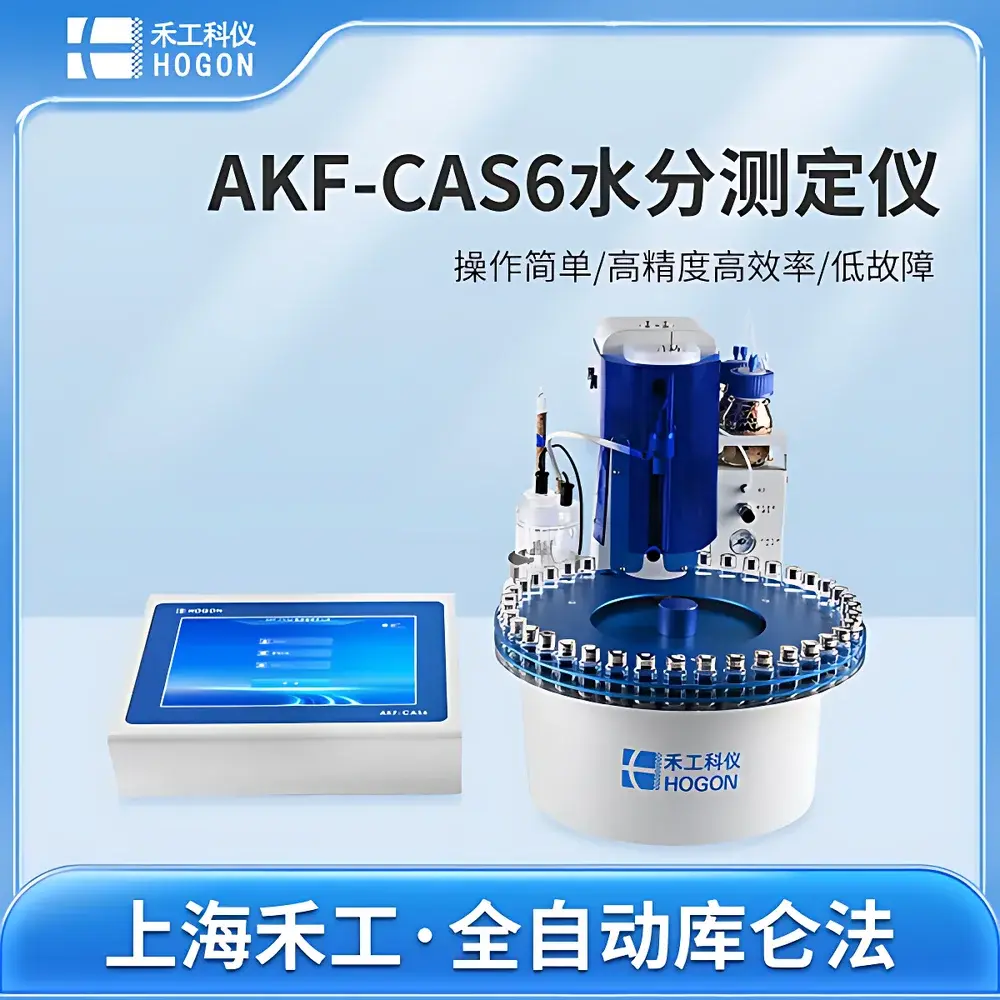
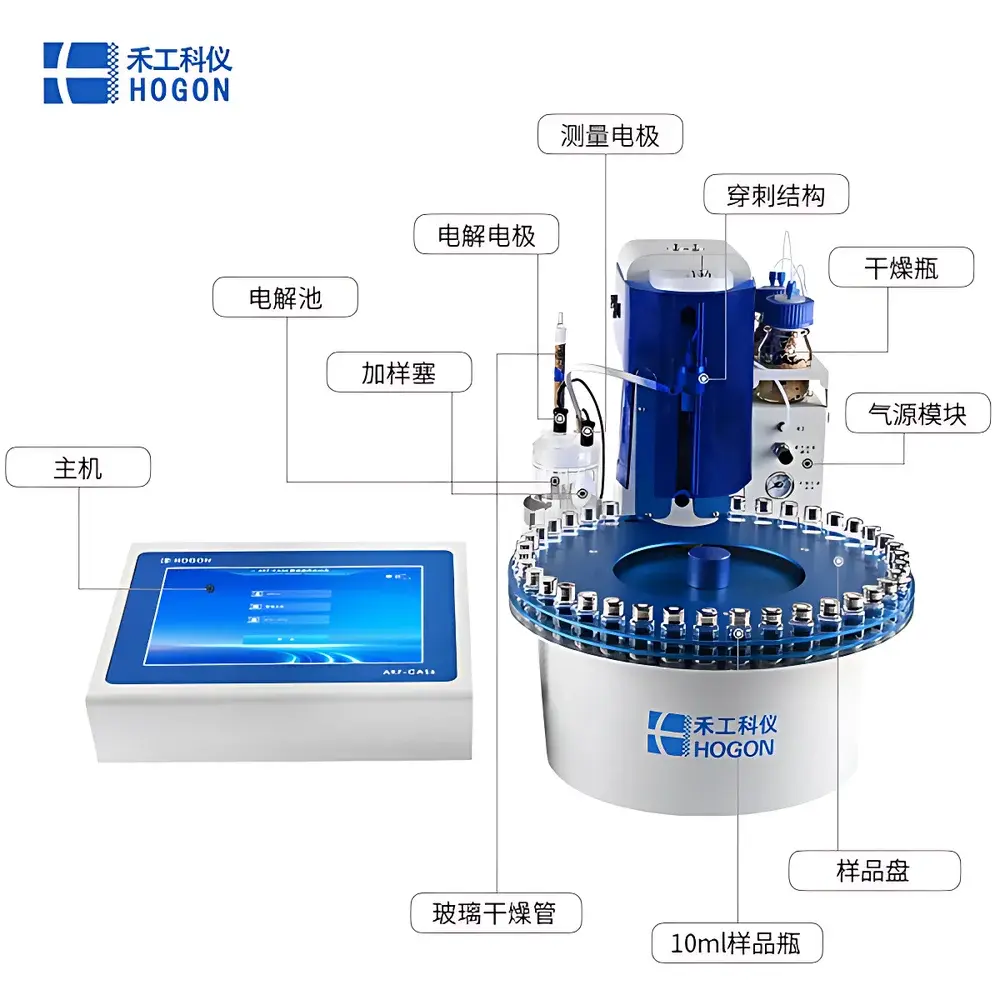
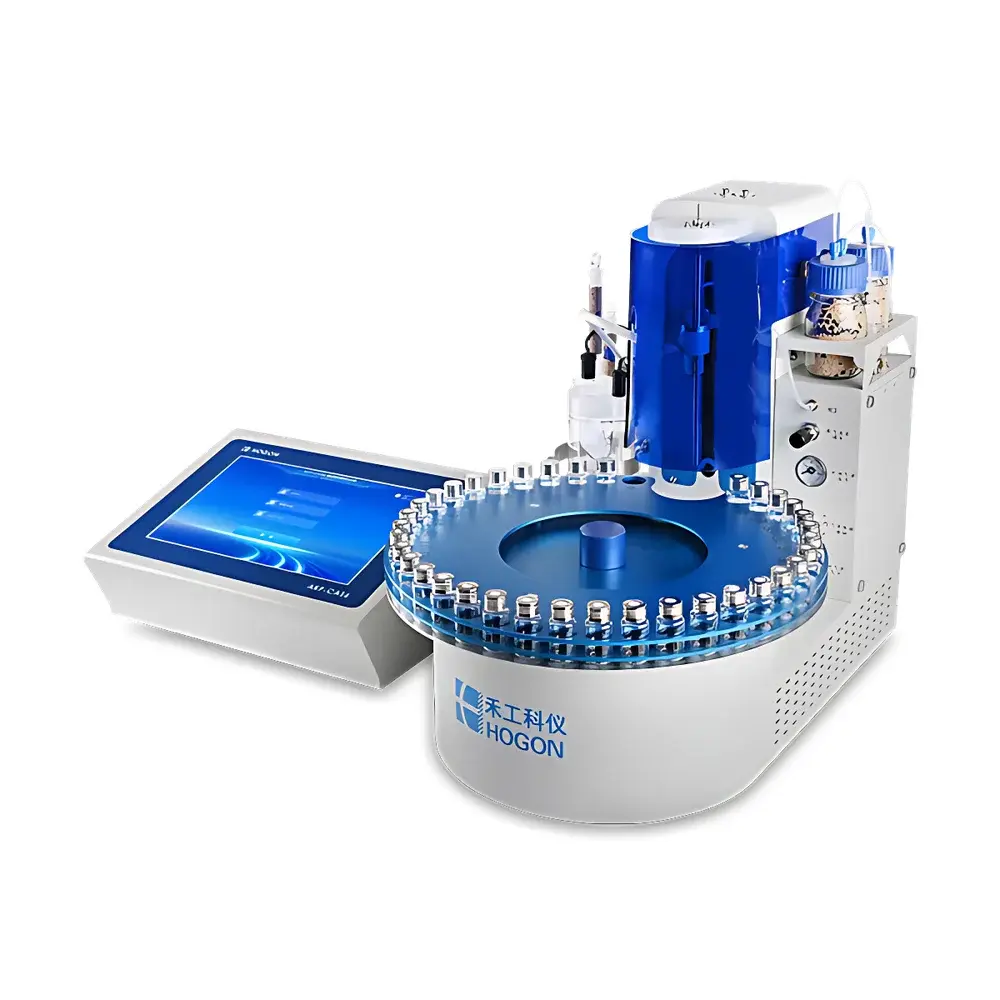
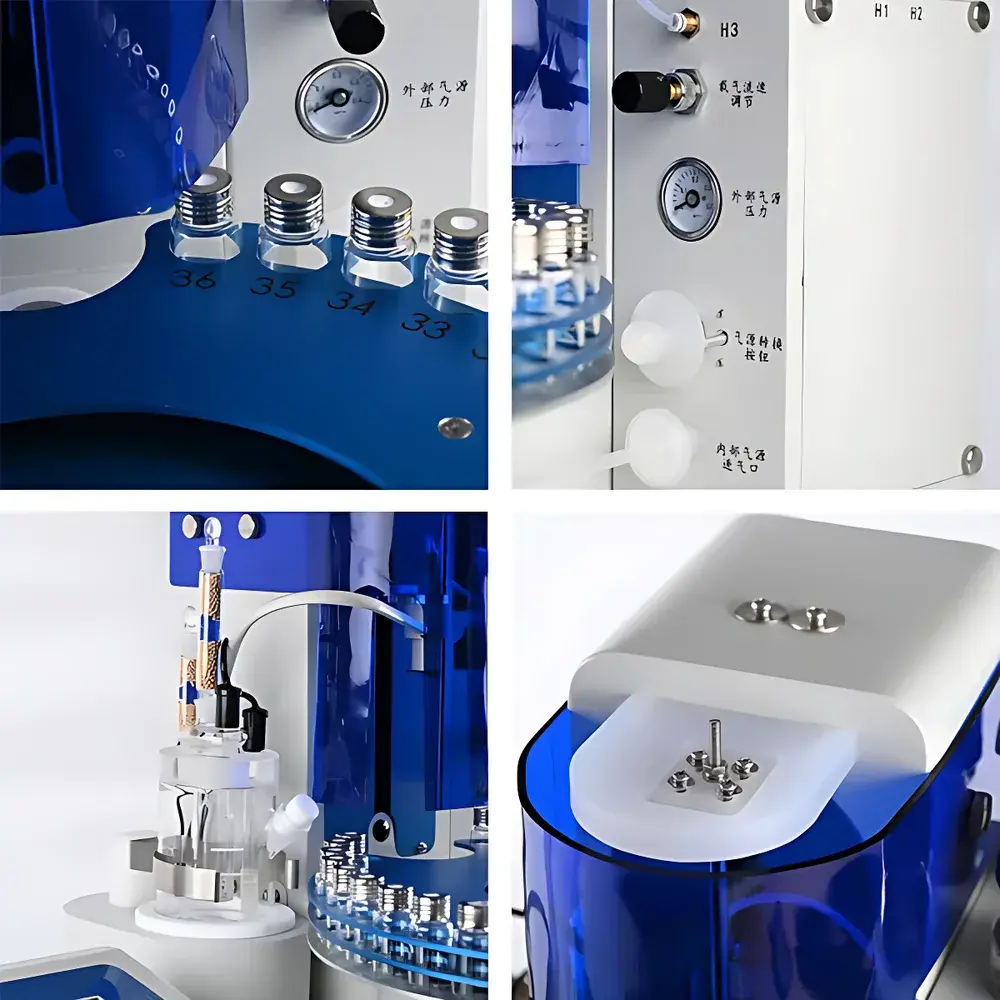
HOGON AKF-CAS6 Multi-Position Fully Automated Coulometric Karl Fischer Moisture Titrator
| Brand | HOGON |
|---|---|
| Origin | Shanghai, China |
| Manufacturer Type | Direct Manufacturer |
| Instrument Type | Coulometric Karl Fischer Moisture Titrator |
| Model | AKF-CAS6 |
| Titration Method | Fully Automated Coulometric Titration |
| Measurement Resolution | 0.01 µg / 0.1 ppm |
| Water Content Range | 3 µg – 199 mg (1 ppm – 100% w/w) |
| Accuracy | ≤0.3% RSD |
| Minimum Dispensing Increment | 1/2000 of Burette Volume |
| Repeatability | ≥99.7% RSD |
| Linearity Correlation Coefficient | ≥0.999 |
| Electrode System | Dual Platinum Electrolysis Electrode |
| Titration Control Precision | 0.01 µg |
| Power Supply | 110–240 V AC, 50–62 Hz |
| Data Storage Capacity | Unlimited (Internal SSD + Optional Network Backup) |
Overview
The HOGON AKF-CAS6 is a multi-position, fully automated coulometric Karl Fischer (KF) moisture titrator engineered for high-throughput, trace-level water quantification in regulated and industrial laboratories. It operates on the fundamental electrochemical principle of coulometric KF titration: water in the sample reacts stoichiometrically with iodine generated *in situ* via controlled electrolysis of iodide ions (2I⁻ → I₂ + 2e⁻) in a methanol-based KF reagent matrix. As defined by Faraday’s law, 10.72 mC of charge corresponds precisely to 1 µg of H₂O—enabling absolute, reagent-free quantification without volumetric calibration. This method eliminates drift associated with reagent aging and delivers superior precision for low-moisture samples (<100 ppm), particularly critical in lithium-ion battery materials, pharmaceutical excipients, petrochemical intermediates, and hygroscopic polymers where residual moisture directly impacts stability, safety, and performance.
Key Features
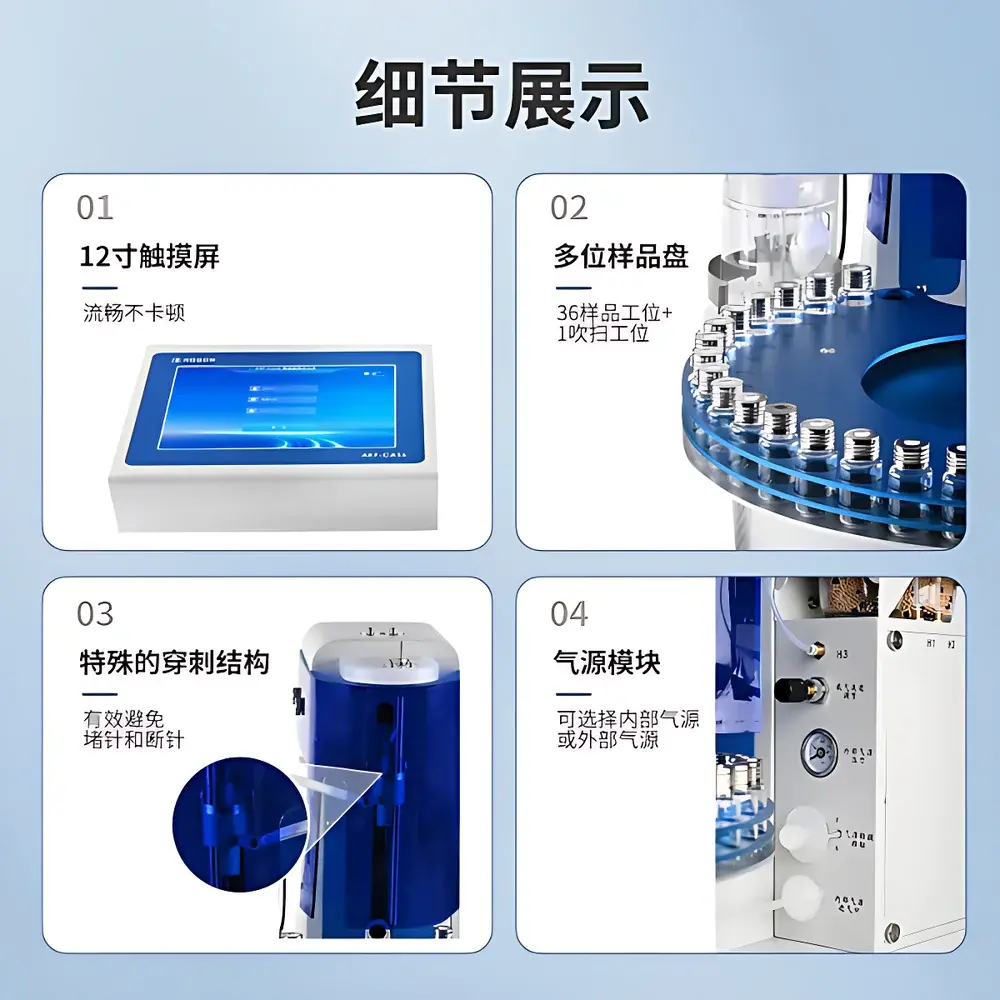
- Fully automated 6-position sample handling with intelligent vial detection: the system skips unoccupied positions and prevents needle clogging or breakage through optimized piercing geometry and pressure-sensing feedback.
- HOGON Smart Detection Technology: real-time adaptive compensation for ambient humidity drift, solvent evaporation, and electrode polarization—ensuring consistent endpoint recognition across environmental fluctuations.
- Auto-adjusting coulometric current control (1–400 mA range) with 0.1 mA resolution; enables rapid electrolysis for high-water samples and ultra-fine current modulation for sub-µg quantification.
- Integrated headspace evaporator with programmable multi-stage temperature ramping, precise ±0.5 °C thermal stability, and overtemperature cut-off—optimized for volatile, viscous, or thermally labile solids and pastes.
- Four selectable titration curve modes (linear, logarithmic, derivative, and adaptive slope) with synchronized real-time display of heating profile, moisture evolution curve, and coulometric charge integration.
- Comprehensive hardware protection suite: automatic fault detection, emergency stop logic, timed assay termination, and self-diagnostic status monitoring to extend system longevity and reduce unscheduled downtime.
Sample Compatibility & Compliance
The AKF-CAS6 accommodates gases (via gas-tight syringe or flow-through cell), liquids (neat or diluted), and solids (powders, films, granules, electrodes) without manual intervention. Its headspace evaporator supports ASTM E203–22 and ISO 15512 compliant sample introduction for non-soluble or reactive matrices. The instrument meets essential requirements for GLP/GMP environments: full audit trail capability (user actions, method parameters, raw data, calibration logs), electronic signature support, and 21 CFR Part 11–ready software architecture (when deployed with validated HOGON Windows OS configuration). All measurement records—including blank subtraction, sequence metadata, and environmental timestamps—are stored with immutable integrity on internal encrypted storage.
Software & Data Management
The native Windows-based HOGON Titration Suite provides intuitive workflow management: editable and reusable analysis sequences, priority-based sample queuing, automated blank determination and correction, and customizable report templates (PDF/CSV/XLSX). The software supports protocol extension via open communication protocols (TCP/IP, Modbus RTU), enabling integration into LIMS, MES, or centralized QC dashboards. Data export includes raw coulombic charge curves, endpoint detection logic flags, and uncertainty estimates derived from repeatability statistics. Unlimited local storage ensures full retention of all assays—no data compression or auto-purge—and optional network backup preserves continuity during extended validation campaigns.
Applications
This system is routinely deployed in quality control laboratories for moisture verification of cathode/anode active materials (e.g., LiCoO₂, NMC, graphite), electrolyte solvents (EC, DMC, FEC), polymer separators (PVDF, PE/PP), and pharmaceutical APIs where water content governs crystallinity, hydrolytic degradation, and tablet compressibility. It also serves R&D teams evaluating drying kinetics, packaging barrier efficacy, and solvent residue profiles per USP , Ph. Eur. 2.5.12, and JP 2.05. In petrochemical QA, it quantifies trace water in lubricants, fuels, and catalysts—ensuring compliance with ASTM D6304 and ISO 8533.
FAQ
What distinguishes coulometric from volumetric Karl Fischer titration?
Coulometric KF generates iodine electrochemically within the titration cell, offering superior sensitivity (down to 0.1 ppm) and eliminating reagent standardization errors—ideal for samples containing <100 µg water.
Can the AKF-CAS6 analyze samples that do not dissolve in standard KF reagents?
Yes—its heated headspace evaporator volatilizes bound water from insoluble matrices (e.g., metal oxides, ceramics, battery electrodes) prior to coulometric detection, avoiding direct dissolution requirements.
Is method validation support available for regulated industries?
HOGON provides IQ/OQ documentation templates, system suitability test protocols, and traceable calibration certificates aligned with ISO/IEC 17025 and FDA guidance for analytical instrument qualification.
How is data integrity maintained during long-term operation?
All measurements are timestamped, digitally signed, and stored with checksum verification; software enforces write-once-read-many (WORM) behavior for audit-ready archival.
What maintenance intervals are recommended for routine operation?
Electrode cleaning every 50–100 assays; reagent replacement every 3–6 weeks depending on usage; annual verification of coulombic efficiency and temperature calibration using certified standards (e.g., sodium tartrate dihydrate).




