
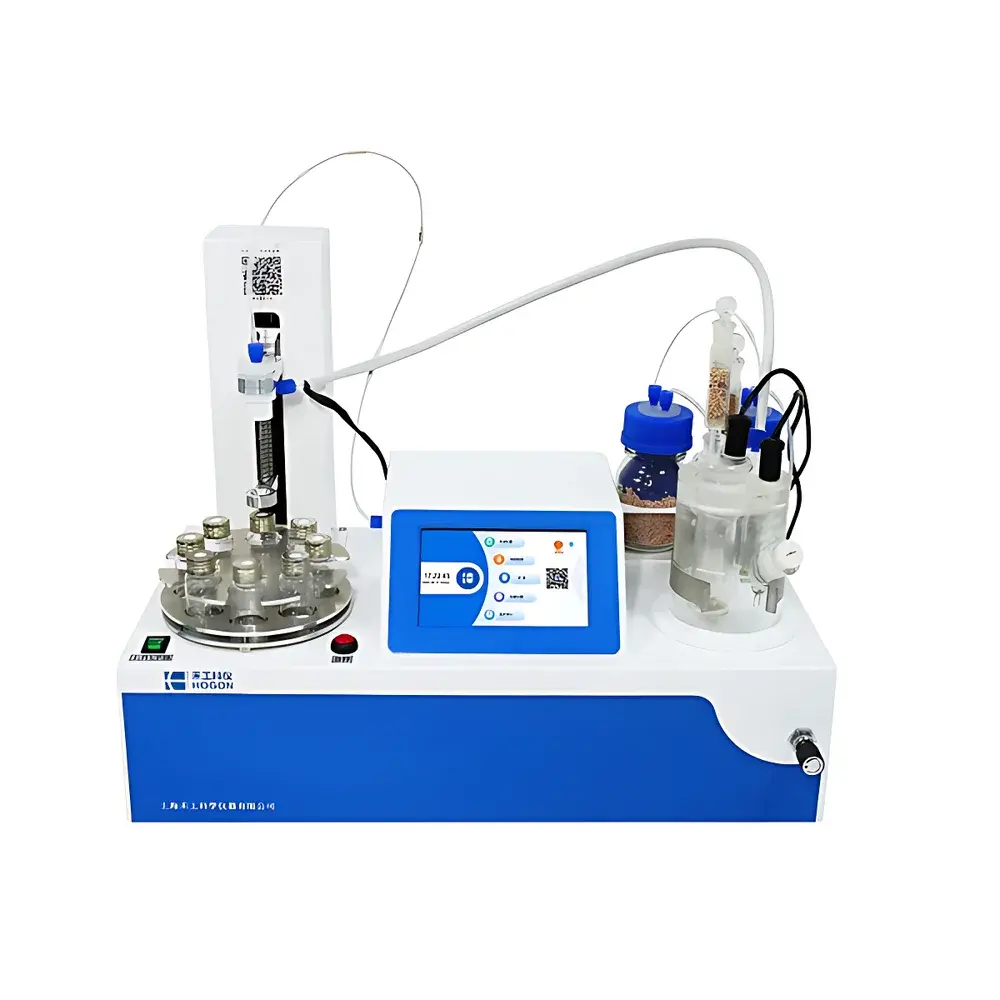
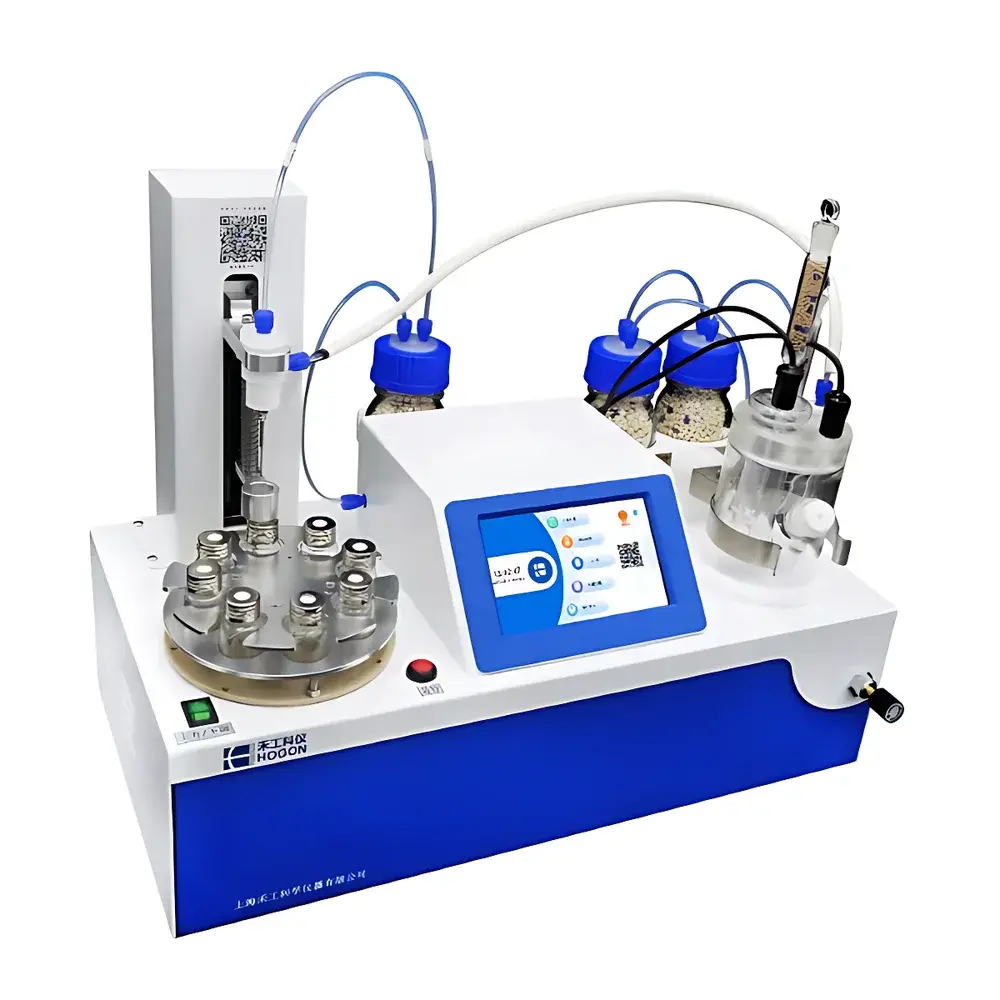
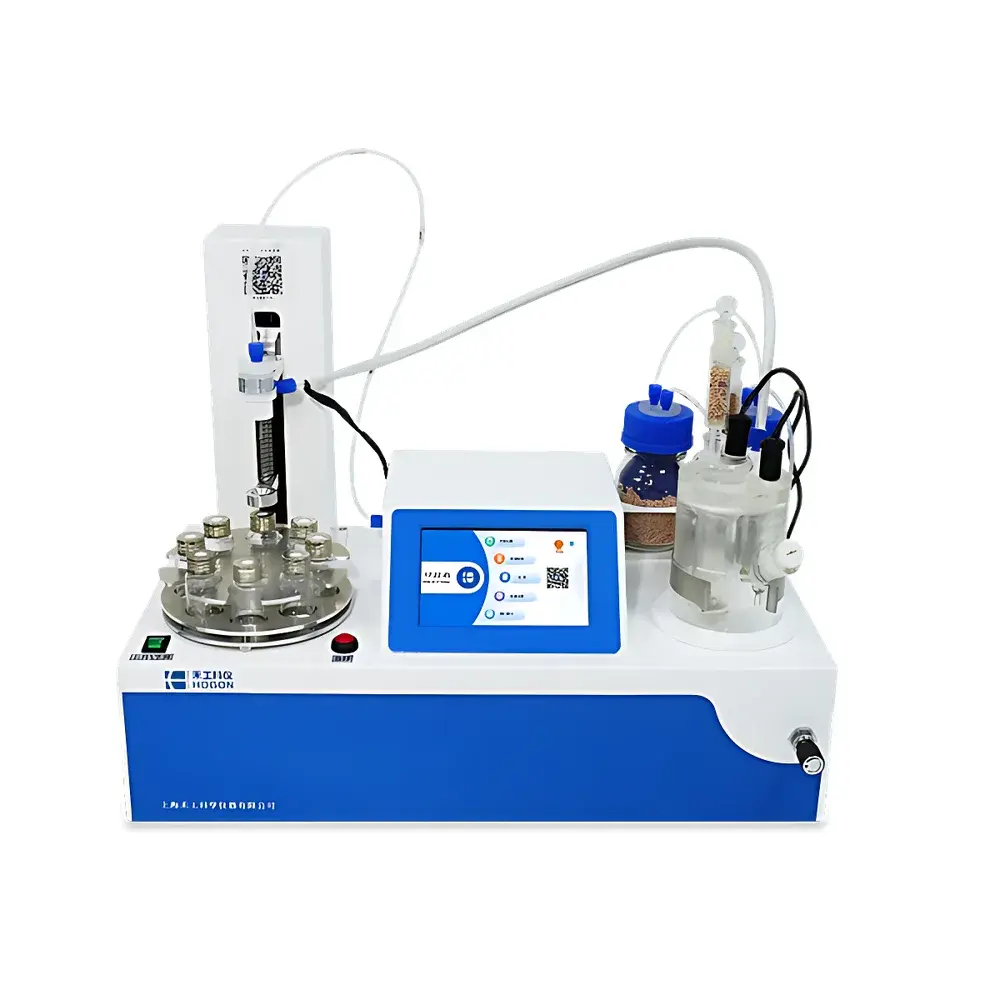
HOGON AKF-CH7 Coulometric Karl Fischer Moisture Titrator for Water-Atomized Iron Powder
| Brand | HOGON |
|---|---|
| Origin | Jiangsu, China |
| Manufacturer Type | Direct Manufacturer |
| Instrument Type | Coulometric Karl Fischer Moisture Analyzer |
| Method | Coulometric Titration (Karl Fischer) |
| Detection Principle | Electrochemical generation of iodine via constant-current electrolysis |
| Detection Range | 1 µg – 200 mg H₂O |
| Resolution | 0.1 µg |
| Accuracy | ±2 µg (for <100 µg), ±0.2% (for >100 µg) |
| Sample Introduction | Heated oven coupling with carrier gas (N₂ or dry air) |
| Temperature Control | 50–300 °C (adjustable in 1 °C increments) |
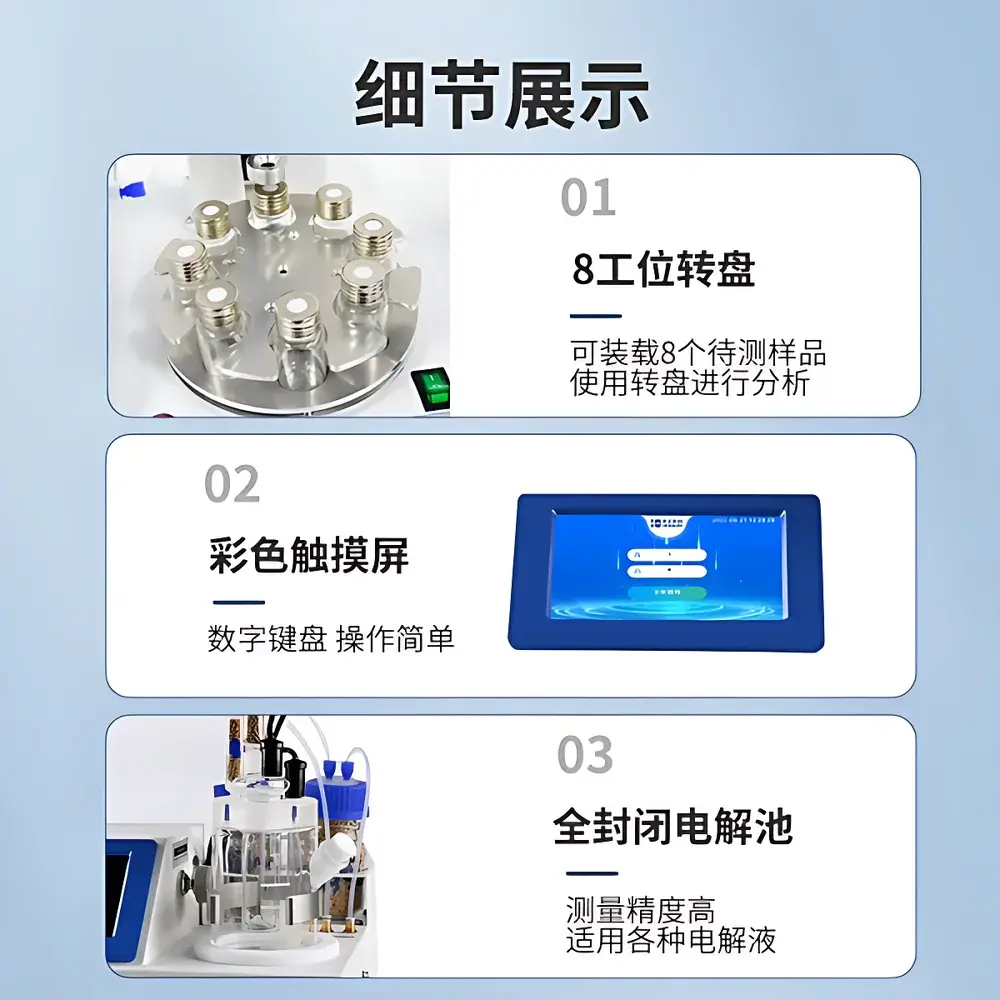
| Electrolytic Cell | Dual-platinum electrode, sealed glass cell with molecular sieve drying tube |
| Compliance | ASTM E203, ISO 760, ISO 15512, USP <921>, EP 2.5.12, GLP-compliant data integrity features |
Overview
The HOGON AKF-CH7 is a dedicated coulometric Karl Fischer moisture titrator engineered for precise, trace-level water quantification in thermally stable but hygroscopic solid materials—particularly water-atomized iron powder used in powder metallurgy. Unlike volumetric KF systems, the AKF-CH7 employs coulometric titration: water reacts stoichiometrically with iodine generated *in situ* via controlled electrolysis of iodide at the anode. The total charge passed (Q, in coulombs) is directly proportional to water mass via Faraday’s law (1 mole H₂O ≡ 2 × 96,485 C), enabling absolute quantification without reagent standardization. This principle delivers inherent accuracy, high reproducibility (<2% RSD at 10–50 ppm), and detection capability down to 0.1 µg H₂O—critical for monitoring residual moisture in metal powders where even sub-100 ppm levels impact green strength, sintering behavior, and final part density.
Key Features
- Integrated heated oven module (50–300 °C) with programmable ramp/soak profiles and inert carrier gas (N₂ or dried air) purging—ensures complete water release from dense, low-surface-area iron powder without oxidation or decomposition.
- Sealed dual-platinum coulometric cell with desiccant-dried inlet gas path and integrated molecular sieve trap—minimizes ambient moisture ingress, extends electrolyte lifetime (>6 months under routine use), and maintains baseline stability.
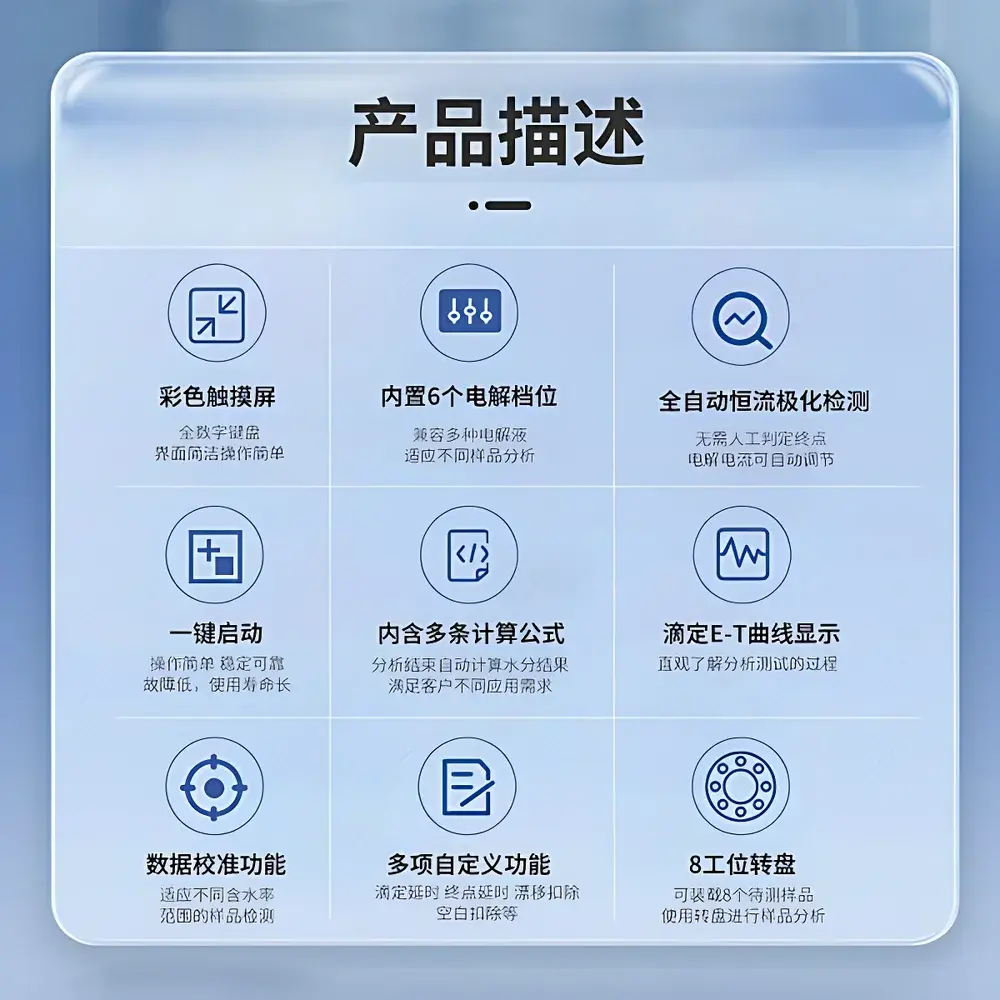
- Real-time electrochemical endpoint detection with adaptive current control—automatically adjusts electrolysis current to match water evolution rate, preventing over-titration and ensuring sharp, unambiguous endpoints.
- GLP-compliant embedded software with audit trail, user access levels (admin/operator), electronic signatures, and 21 CFR Part 11–ready data export (CSV, PDF, XML) for regulated environments.
- Modular design with quick-release cell assembly and tool-free oven access—enables rapid maintenance, cleaning, and method reconfiguration between powder, granule, and solid polymer samples.
Sample Compatibility & Compliance
The AKF-CH7 is validated for direct analysis of water-atomized iron powder (particle size: 10–150 µm, apparent density: 2.8–3.2 g/cm³) per ASTM B855–22 (Standard Test Method for Moisture Content of Metal Powders). Its oven-coupled configuration eliminates solvent extraction artifacts and avoids interference from transition metal ions (Fe²⁺/Fe³⁺), which do not participate in the KF reaction under optimized anhydrous conditions. The system complies with ISO 760 (General principles of KF titration), ISO 15512 (Plastics—Determination of water content), and USP <921> for pharmaceutical excipients. All measurement records include full metadata: sample ID, operator, timestamp, oven parameters, cell status, raw coulombic integrals, and calibration history—supporting internal QA audits and external regulatory inspections (e.g., IATF 16949, ISO 9001).
Software & Data Management
The AKF-CH7 runs HOGON’s proprietary TitraSoft™ v3.2 firmware, featuring a responsive touchscreen interface with multilingual support (English default). Methods are stored as encrypted templates with locked critical parameters (e.g., temperature setpoint, gas flow rate, endpoint sensitivity). Each analysis generates a tamper-evident digital report containing chromatographic-like coulombic current vs. time plots, integral calculations, statistical summaries (n=2–5 replicates), and automatic outlier flagging per Grubbs’ test. Data exports meet FDA 21 CFR Part 11 requirements: digitally signed, time-stamped, and archived with immutable audit logs tracking all user actions—including method edits, calibration events, and report deletions.
Applications
Beyond water-atomized iron powder (typical specification: ≤150 ppm H₂O), the AKF-CH7 supports moisture analysis across diverse industrial matrices: cobalt/nickel powders, ceramic precursors (e.g., alumina, zirconia), polymer resins (PA6, PEEK), lithium battery cathode materials (NMC, LFP), and pharmaceutical APIs. Its robust thermal desorption capability enables accurate quantification in samples with bound water (e.g., hydrates, surface-adsorbed layers) without requiring derivatization or solubilization. Laboratories routinely deploy it for incoming raw material inspection, in-process control during powder drying/sieving, and final product release testing—replacing multiple dedicated instruments with a single platform validated across solid-state, semi-solid, and low-volatility liquid samples.
FAQ
What sample mass is recommended for water-atomized iron powder analysis?
Typical range: 2.5–5.0 g, adjusted to yield 10–150 µg H₂O per injection—ensuring optimal signal-to-noise ratio and minimizing electrode polarization effects.
Does the AKF-CH7 require daily re-standardization?
No. Coulometric systems are absolute methods; calibration is verified monthly using certified 1.00 mg/g water standard (e.g., Merck Hydranal® Solid Standard), with drift correction applied only if deviation exceeds ±3% of theoretical value.
Can the instrument handle oxidizing atmospheres during heating?
No. The oven uses inert N₂ or purified dry air only; O₂ exposure would accelerate iron oxidation and generate erroneous high readings due to side reactions.
Is method validation documentation available?
Yes—HOGON provides IQ/OQ protocols, system suitability test procedures, and a pre-validated method package for iron powder per ASTM B855, including precision, accuracy, LOD/LOQ, and ruggedness data.
What maintenance intervals are recommended for routine operation?
Cell electrolyte replacement every 6 months (or after 500 injections); molecular sieve regeneration every 3 months; oven quartz tube inspection quarterly; full performance verification annually per ISO/IEC 17025 guidelines.




