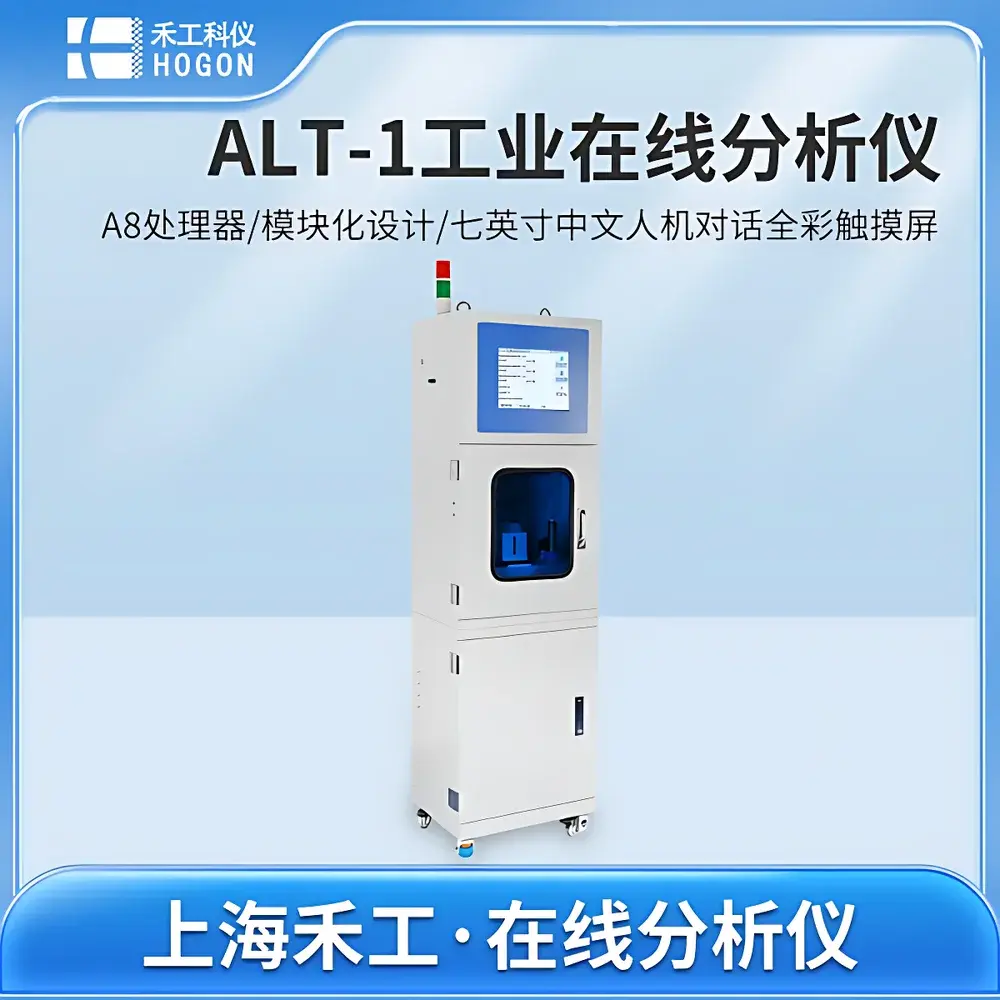
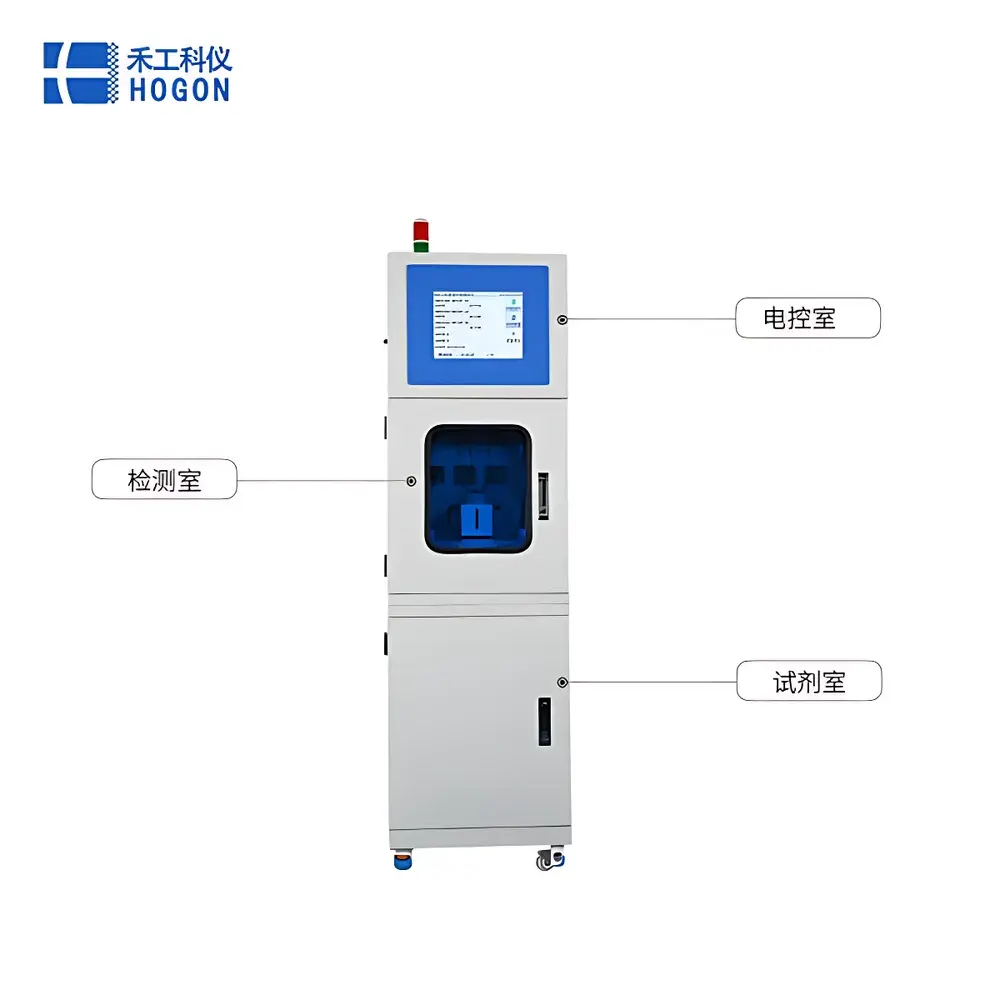
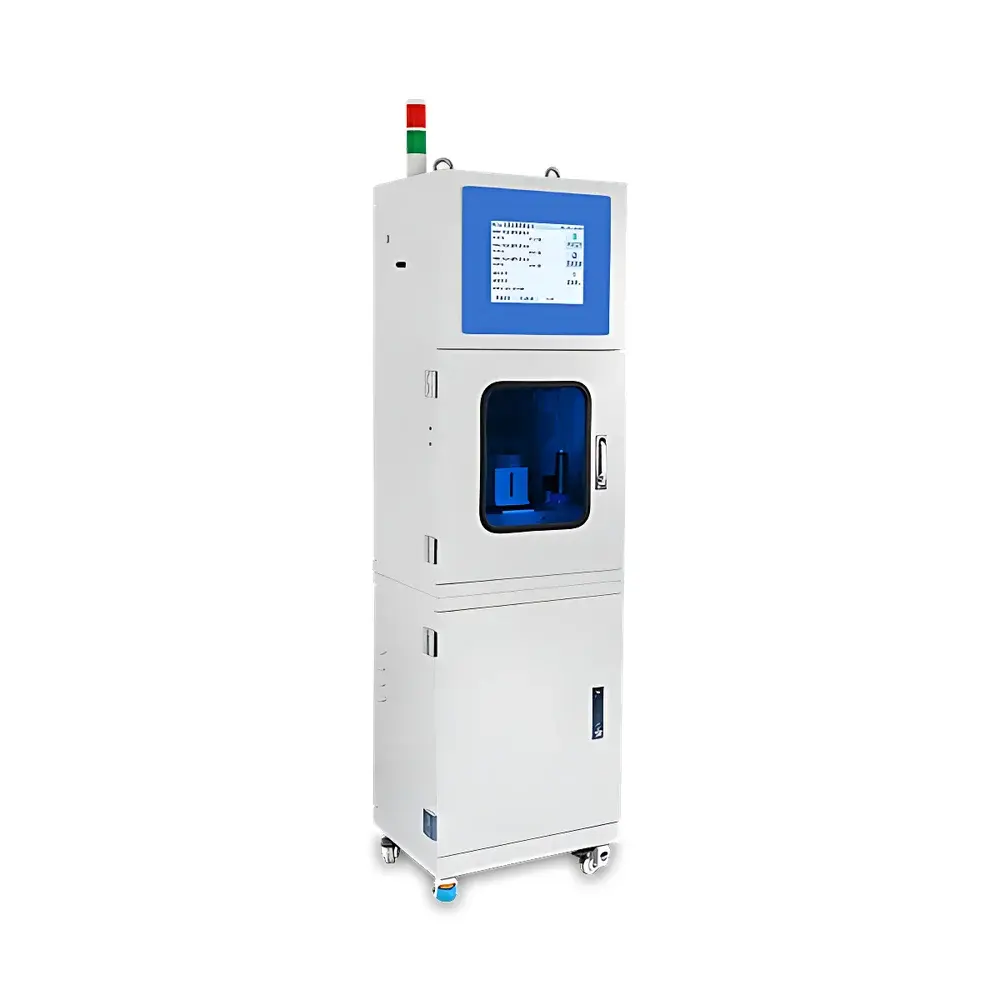
HOGON ALT-1 Industrial Online Analyzer for Free Acid, Total Acid and Aluminum Ion in Pickling Liquor
| Brand | HOGON |
|---|---|
| Origin | Shanghai, China |
| Manufacturer Type | Direct Manufacturer |
| Country of Origin | China |
| Model | ALT-1 |
| Output Signals | Modbus TCP, RS-232/485, CAN, 4–20 mA |
| Ambient Operating Conditions | ≤90% RH, 10 °C minimum (non-condensing) |
| Resolution | Potentiometric: 0.1 mV (−2000 to +2000 mV) |
| pH | 0.001 pH (0–20 pH) |
| Photometric | 0.003 Abs (0–1 Abs) |
| Protection Rating | IP55/IP65 (achieved when enclosure door is closed and latched) |
| Titration Precision | ±1 µL (using 20 mL burette) |
Overview
The HOGON ALT-1 Industrial Online Analyzer is a fully automated, process-integrated analytical system engineered for continuous, real-time quantification of free acid, total acid, and aluminum ion (Al³⁺) concentrations in industrial pickling liquors—primarily hydrochloric (HCl) or sulfuric (H₂SO₄) acid baths used in steel and aluminum surface treatment. It operates on validated wet-chemistry principles: potentiometric acid–base titration for acid speciation, and complexometric EDTA titration with back-titration for aluminum determination. Unlike optical or ion-selective sensor-based systems, the ALT-1 delivers reference-grade accuracy by replicating standardized laboratory titrimetric methods under controlled process conditions—ensuring traceability to ISO 8289, ASTM E2087, and USP . Designed for 24/7 operation in harsh metal finishing environments, it eliminates manual sampling errors, reduces reagent consumption by >60% versus batch analysis, and supports closed-loop process control via native industrial protocols.
Key Features
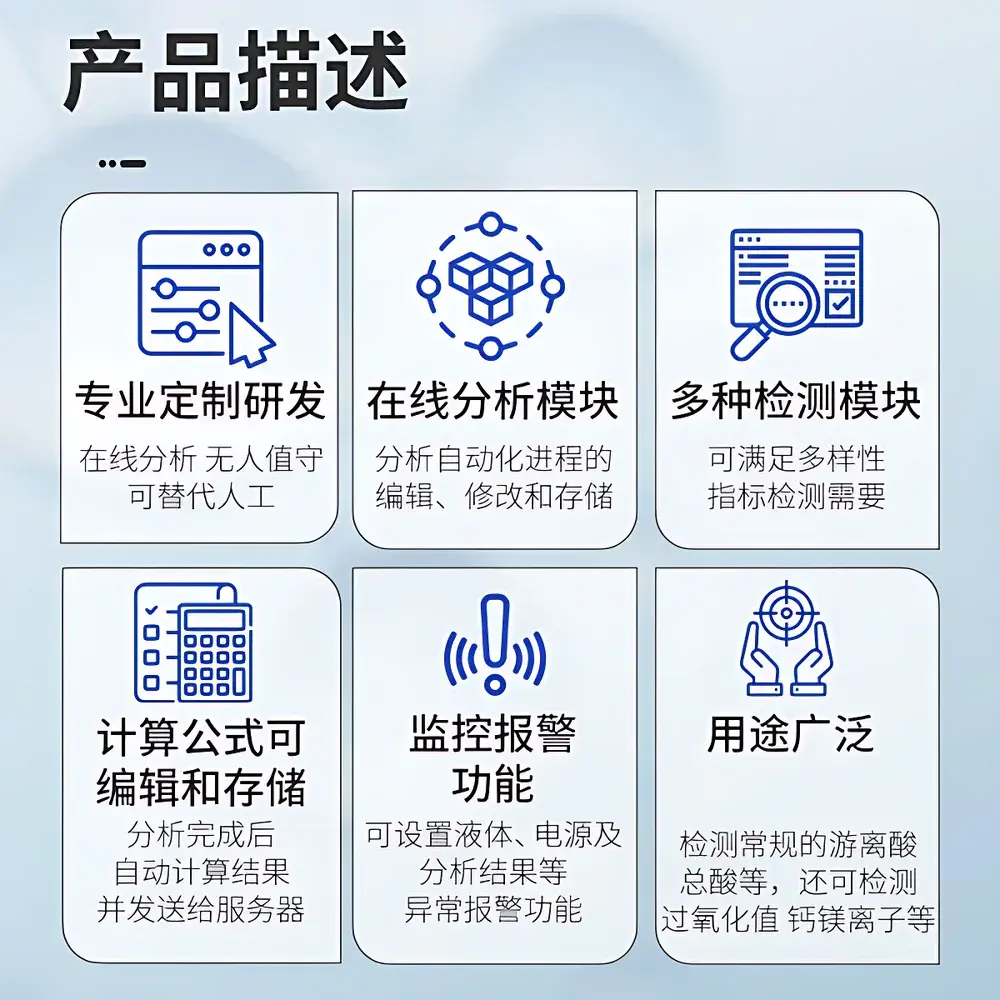
- Triple-parameter autonomous analysis: Simultaneous or sequential measurement of free acid (as HCl or H₂SO₄), total acid (including acid consumed by dissolved metal salts), and Al³⁺ (from substrate dissolution) — all within a single platform.
- Modular titration architecture: Independent fluidic paths with corrosion-resistant PTFE/PFA tubing, ceramic syringe pumps (±1 µL precision), and auto-calibrating burettes ensure long-term volumetric reliability under thermal drift and particulate load.
- Multi-mode electrode integration: pH-composite electrodes (for acid endpoints), calcium-selective electrodes (for Al³⁺ complexometric detection), and photometric modules (for colorimetric verification where required) are software-switchable and self-diagnostic.
- Ruggedized process interface: IP65-rated enclosure with purge-compatible design; inlet/outlet ports compliant with DIN 11851 for sanitary process connection; integrated temperature-compensated sample conditioning (dilution, filtration, degassing).
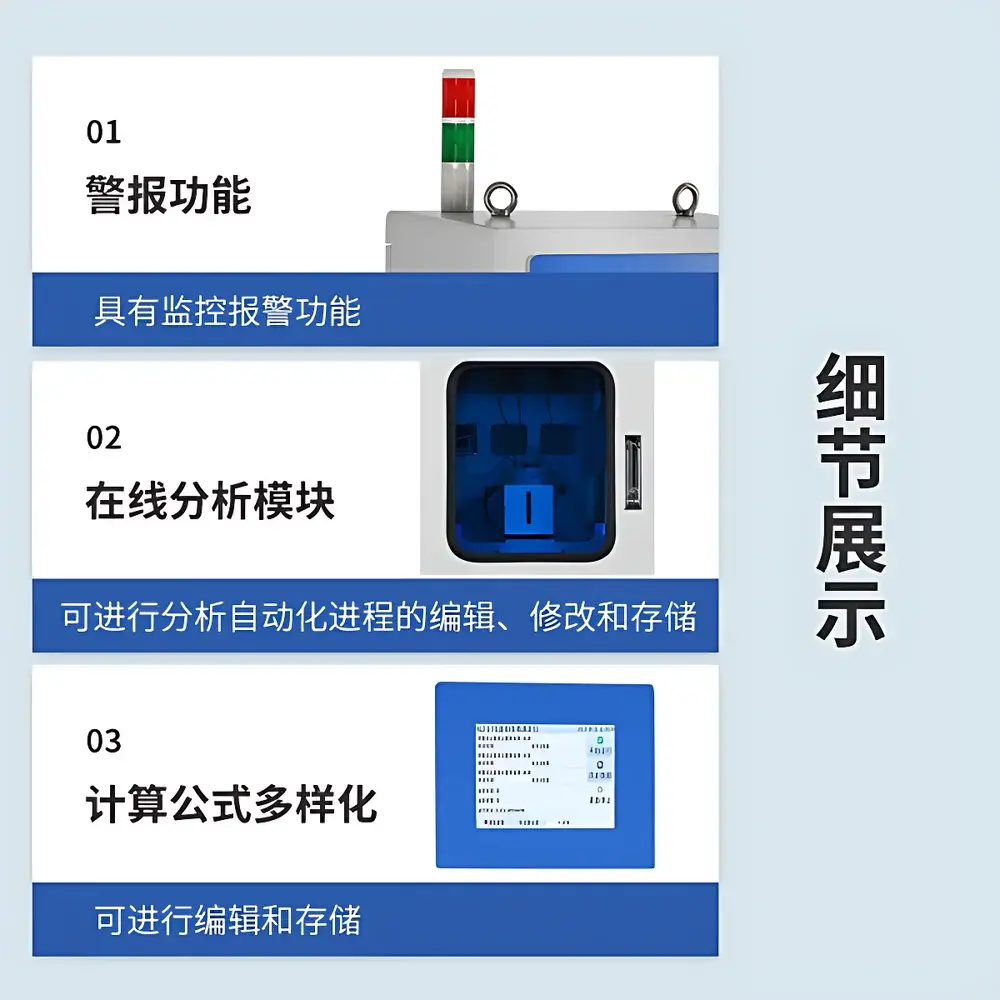
- Self-maintaining operation: Automated electrode cleaning cycles, reagent level monitoring with low-volume alarm, and scheduled calibration using certified standard solutions (NIST-traceable NaOH, EDTA, Zn²⁺).
Sample Compatibility & Compliance
The ALT-1 is validated for use with hot (up to 60 °C), turbid, high-salinity pickling baths containing Fe²⁺/Fe³⁺, Ni²⁺, Cr³⁺, and suspended metal hydroxides. Sample handling includes inline filtration (5 µm stainless-steel filter), thermostatic dilution (1:1 to 1:10), and pH stabilization prior to titration. All measurement procedures align with ISO 9001:2015 quality management requirements and support GLP/GMP documentation workflows. Data integrity complies with FDA 21 CFR Part 11 through electronic audit trails, user-level access control, and immutable result logging—including raw titration curves, endpoint detection algorithms (first derivative, Gran plot), and uncertainty propagation per GUM (JCGM 100:2008).
Software & Data Management
The embedded HOGON Process Analytics Suite (v4.2+) provides web-based configuration, real-time trend visualization, and predictive maintenance alerts. It natively exports time-stamped results (free acid g/L, total acid g/L, Al³⁺ mg/L) via Modbus TCP to DCS/SCADA systems (e.g., Siemens PCS7, Rockwell FactoryTalk). Historical datasets are stored in encrypted SQLite databases with configurable retention (default: 180 days), exportable as CSV or PDF reports compliant with ISO/IEC 17025 Annex A. Optional cloud synchronization enables remote diagnostics and multi-site fleet monitoring without compromising OT network security.
Applications
- Continuous optimization of steel pickling lines: Maintaining optimal free/total acid ratio prevents under-pickling (residual scale) and over-pickling (excessive metal loss), extending bath life by up to 35%.
- Aluminum coil processing: Real-time Al³⁺ monitoring detects saturation thresholds before sludge precipitation occurs, triggering automatic bath replacement or electrodialysis regeneration.
- Regulatory reporting: Automated generation of daily acid consumption logs, metal dissolution rates, and waste stream characterization data for EPA 40 CFR Part 426 compliance.
- Quality gate enforcement: Integration with MES systems to block downstream processes (e.g., galvanizing, painting) if acid parameters fall outside validated operating ranges.
FAQ
What titration methods does the ALT-1 implement for each parameter?
Free acid and total acid are determined by potentiometric acid–base titration using standardized NaOH; aluminum ion is quantified via EDTA complexometric titration with Zn²⁺ back-titration and xylenol orange endpoint detection.
Can the ALT-1 operate in highly conductive or oxidizing pickling baths?
Yes — fluidic components are constructed from Hastelloy C-276 and PFA; electrodes feature double-junction reference systems with KNO₃ electrolyte to mitigate junction potential drift in high-ionic-strength media.
How frequently can measurements be performed?
Standard cycle time is 15–30 minutes per full three-parameter analysis; cycle frequency is programmable and adjustable based on bath stability and process criticality.
Is method validation documentation provided?
Each unit ships with a Factory Acceptance Test (FAT) report, including linearity (R² ≥ 0.999), repeatability (RSD ≤ 0.8%), and spike recovery data (95–102%) across the operational range.
Does the system support integration with legacy PLCs?
Yes — native RS-485 Modbus RTU, CANopen, and 4–20 mA analog outputs enable seamless connectivity with Allen-Bradley, Siemens S7, and Mitsubishi Q-series controllers without gateway hardware.