
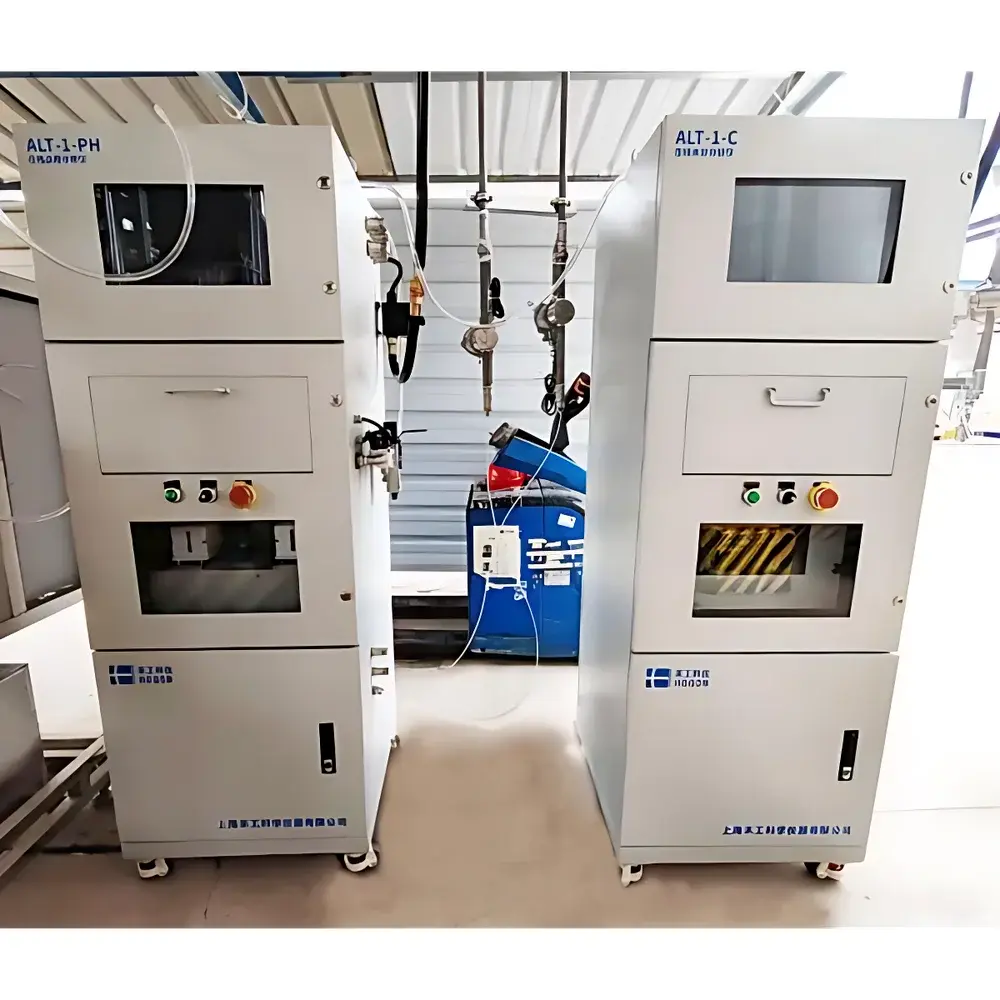
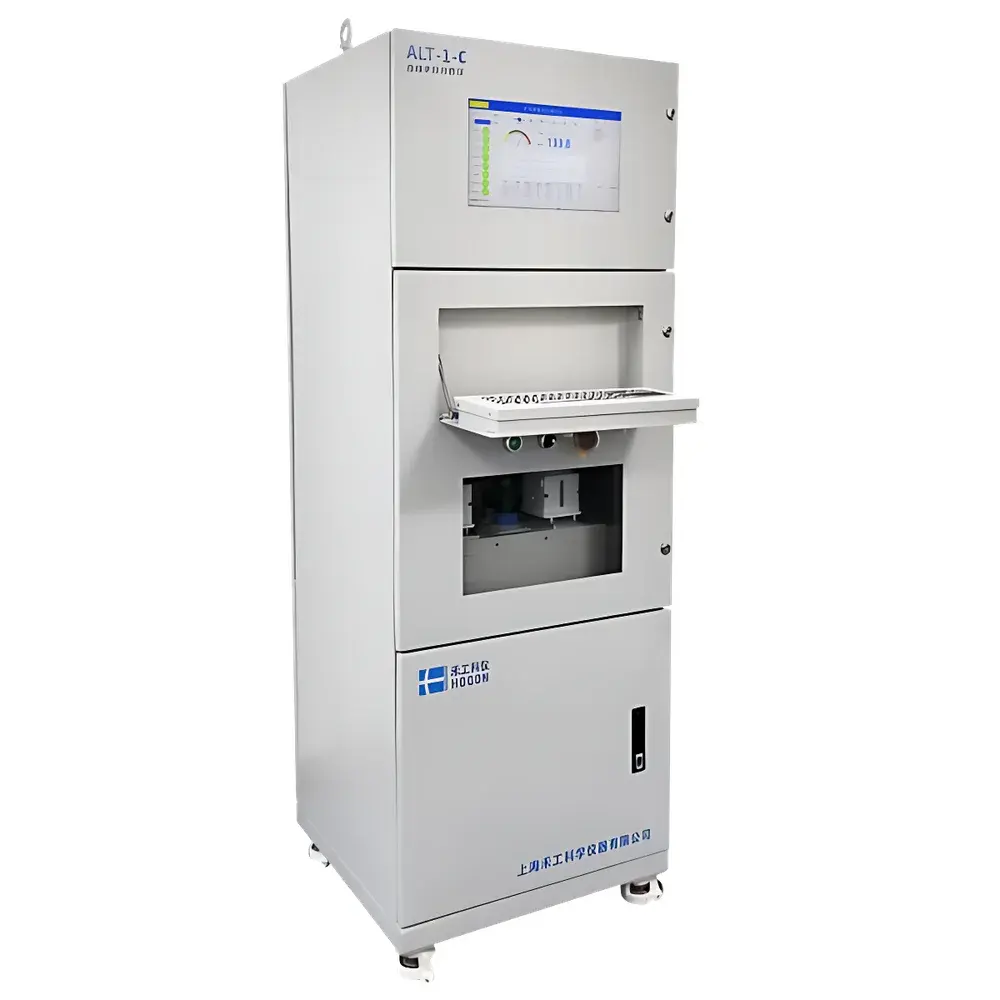
HOGON ALT-1 Online Automatic Potentiometric Titrator
| Brand | HOGON |
|---|---|
| Origin | Shanghai, China |
| Manufacturer | HOGON Scientific Instruments Co., Ltd. |
| Model | ALT-1 |
| Instrument Type | Universal Potentiometric Titrator |
| Application Scope | Dedicated Industrial Process Monitoring |
| pH Range | 0–20 |
| mV Range | −2000 to +2000 mV |
| pH Resolution | 0.001 |
| mV Resolution | 0.1 mV |
| Absorbance Resolution | 0.003 Abs |
| Titration Precision | ±1 µL (using 20 mL burette) |
| Analysis Interval | 15–999 minutes adjustable |
| Output Signals | 4–20 mA, Modbus TCP, CAN |
Overview
The HOGON ALT-1 Online Automatic Potentiometric Titrator is an industrial-grade, in-line analytical instrument engineered for continuous, unattended monitoring and closed-loop control of critical chemical parameters in process streams. Based on potentiometric titration principles—measuring the potential difference between a reference electrode and an indicator electrode as titrant is incrementally added—the ALT-1 delivers real-time quantification of acid/base concentration, metal ion content (e.g., Cu²⁺, Ni²⁺, Cr⁶⁺), water activity, and other electrochemically active species. Unlike benchtop titrators, the ALT-1 integrates directly into production infrastructure, operating under dynamic flow conditions across temperature ranges of 5–60 °C. Its design adheres to fundamental requirements of process analytical technology (PAT) as defined in ICH Q8/Q9 frameworks, enabling consistent compliance with quality-by-design (QbD) strategies in regulated manufacturing environments.
Key Features
- Multi-mode endpoint detection: Simultaneous support for potentiometric, photometric (absorbance at selectable wavelengths), and colorimetric endpoint recognition—enabling accurate titration of acid-base, complexometric (e.g., EDTA-based metal ion analysis), redox, and precipitation reactions.
- Triple-sampling architecture: Combines overflow volumetric sampling, titration loop recirculation, and high-precision syringe-driven metering (±1 µL accuracy per delivery) to ensure representative sample acquisition from agitated or stratified process tanks.
- Industrial-hardened construction: IP65-rated enclosure with optional ATEX-compliant explosion-proof configuration (IICT4); wetted components fabricated from chemically resistant polymers (e.g., PTFE, PFA, PVDF) to withstand prolonged exposure to strong acids, alkalis, and oxidants commonly found in electroplating baths, transformer oil systems, and wastewater effluents.
- Closed-loop process integration: Native Modbus TCP and 4–20 mA analog output interfaces enable direct communication with DCS/SCADA platforms; real-time titration results trigger proportional-integral (PI) control of dosing pumps for automatic reagent replenishment.
- Modular sensor expansion: Field-upgradable plug-in modules for pH, UV-Vis absorbance (190–850 nm), and ion-selective electrode (ISE) measurement—supporting application-specific configurations such as sulfuric acid concentration in PCB etching lines or moisture determination in lithium-ion battery electrolytes.
Sample Compatibility & Compliance
The ALT-1 accommodates aqueous and low-viscosity non-aqueous matrices typical in electroplating, petrochemical refining, battery manufacturing, and environmental effluent treatment. It complies with ISO/IEC 17025 method validation prerequisites for automated titration systems and supports audit-ready data integrity through configurable electronic signatures, user-level access controls (three-tier permission system), and full GLP/GMP-aligned audit trails—including timestamped records of calibration events, reagent lot tracking, and operator actions. All measurement outputs meet the traceability requirements of ISO/IEC 17025 and are compatible with FDA 21 CFR Part 11 compliant software extensions when deployed with validated HOGON LIMS interface modules.
Software & Data Management
The embedded firmware runs on a real-time Linux OS with deterministic scheduling for repeatable titration timing and signal acquisition. The HOGON TitrOS™ software suite provides remote configuration via web browser (HTTPS), graphical titration curve visualization, customizable report templates (PDF/CSV), and automated generation of QC metrics including RSD, spike recovery, and drift correction logs. Data export supports OPC UA and MQTT protocols for seamless ingestion into MES or cloud-based analytics platforms. Optional validation packages include IQ/OQ documentation, cybersecurity hardening (TLS 1.2+, firewall rules), and electronic record retention aligned with EU Annex 11 and USP guidelines.
Applications
- Battery Electrolyte Quality Control: Quantitative Karl Fischer-type water determination in LiPF₆-based electrolytes; maintains ±5 ppm moisture stability, reducing cell formation defects by 18%.
- PCB Manufacturing: Real-time monitoring of Cu²⁺ and H₂SO₄ concentrations in acidic copper plating baths; achieves ≤0.5% relative error vs. certified reference materials (CRMs).
- Transformer Oil Maintenance: Trace moisture analysis per ASTM D6304 and IEC 60814; eliminates manual lab turnaround delays and improves predictive maintenance scheduling.
- Wastewater Compliance Monitoring: On-line hexavalent chromium (Cr⁶⁺) and nickel ion quantification per GB/T 7600–2014 and EPA Method 7196A; ensures continuous regulatory reporting readiness.
FAQ
What titration methods does the ALT-1 support?
The ALT-1 supports potentiometric, photometric, and colorimetric titration modes—covering acid-base, redox, complexometric, and precipitation reactions.
Can the ALT-1 operate in hazardous areas?
Yes—optional ATEX-certified IICT4 explosion-proof housing and intrinsically safe I/O modules are available for Zone 1/2 installations.
How is calibration traceability ensured?
All internal calibrations use NIST-traceable reference standards; certificate of calibration includes uncertainty budgets per ISO/IEC 17025 Annex A.3.
Is remote diagnostics supported?
Yes—built-in SSH and VNC interfaces allow secure remote troubleshooting; firmware updates are delivered via signed OTA packages with SHA-256 verification.
What is the minimum sample volume required per analysis?
The system operates with as little as 3 mL of process fluid per cycle, minimizing waste and enabling deployment in low-flow or recirculated loops.
Related Products





