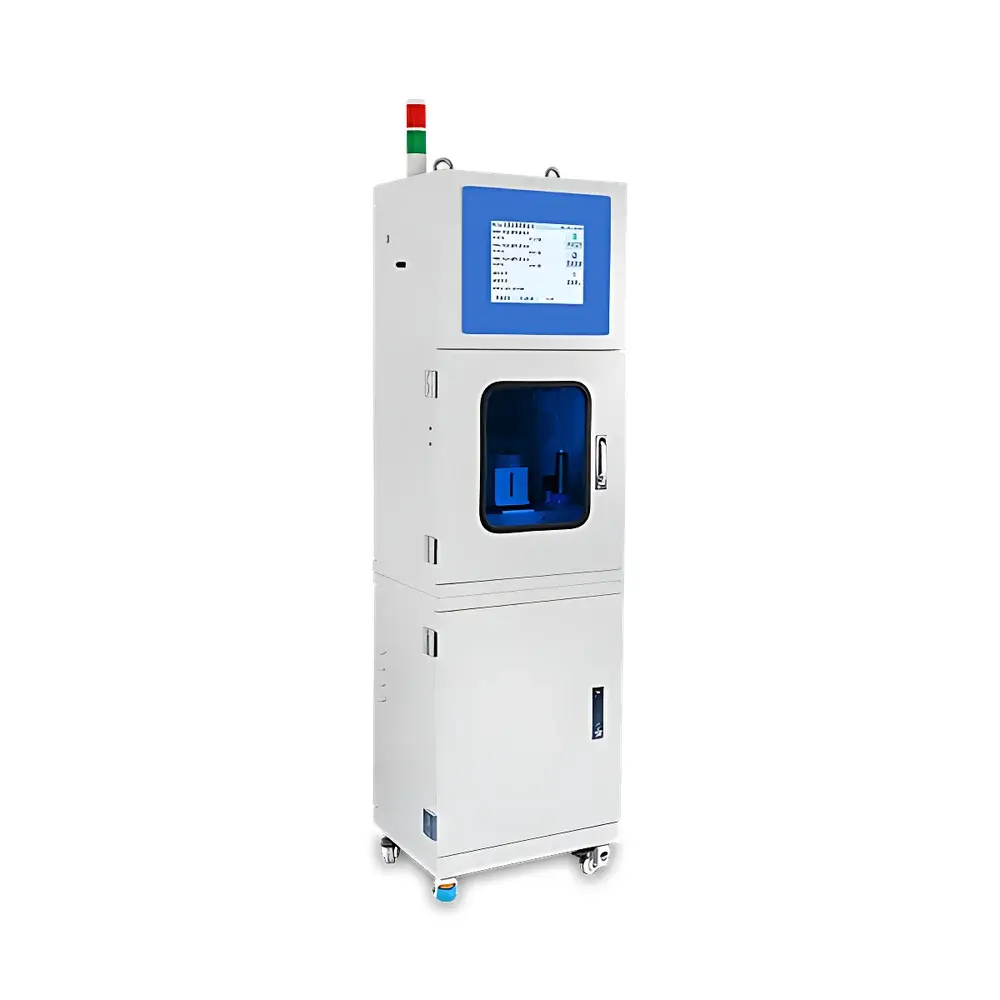
HOGON ALT-1 Online Free Alkalinity, Total Alkalinity & pH Analyzer for Metal Cleaning Process Control
| Brand | HOGON |
|---|---|
| Origin | Shanghai, China |
| Manufacturer Type | Direct Manufacturer |
| Country of Origin | China |
| Model | ALT-1 |
| Output Signals | Modbus TCP, RS-232/485, CAN, 4–20 mA |
| Environmental Operating Conditions | ≤90% RH, 10 °C minimum (non-condensing) |
| Resolution | Potentiometric: 0.1 mV (−2000 to +2000 mV) |
| pH | 0.001 pH (0–20 pH) |
| Photometric | 0.003 Abs (0–1 Abs) |
| Enclosure Rating | IP55/IP65 (with door locked), optional higher ratings available |
| Titration Precision | ±1 µL (using 20 mL burette) |
Overview
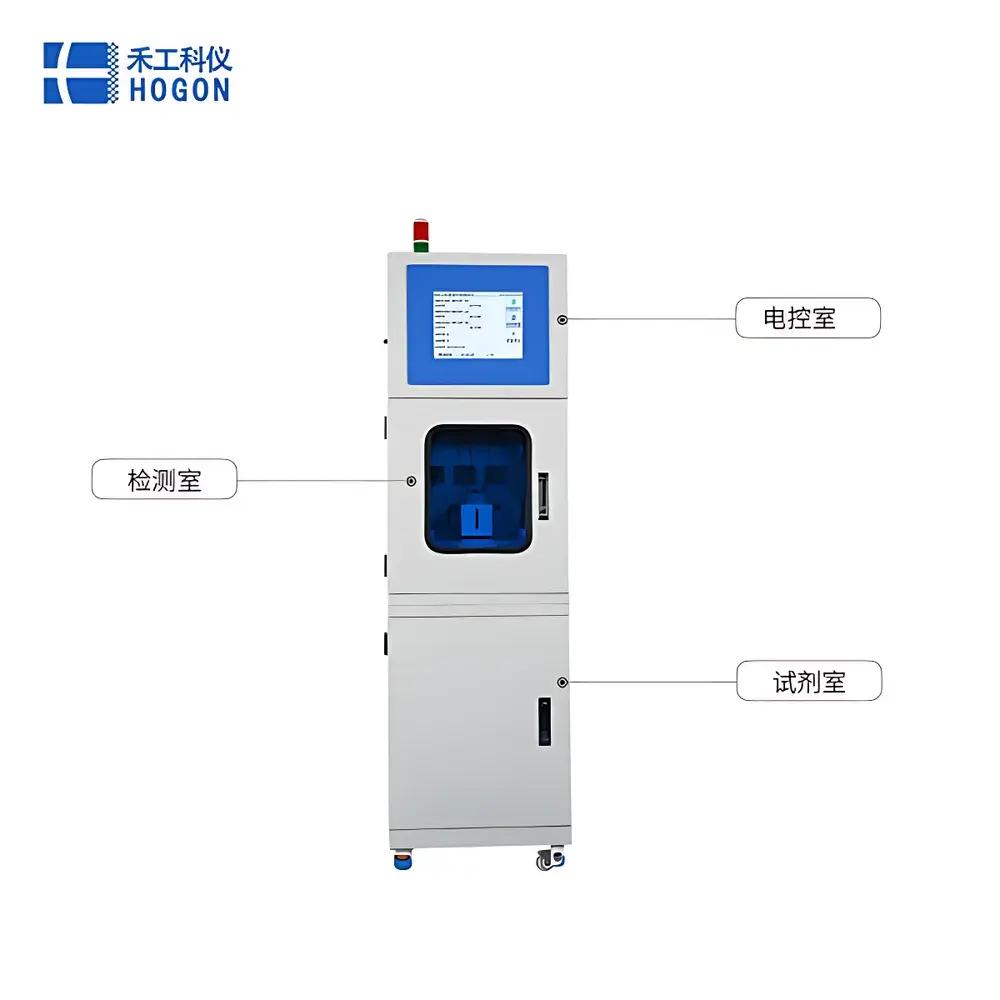
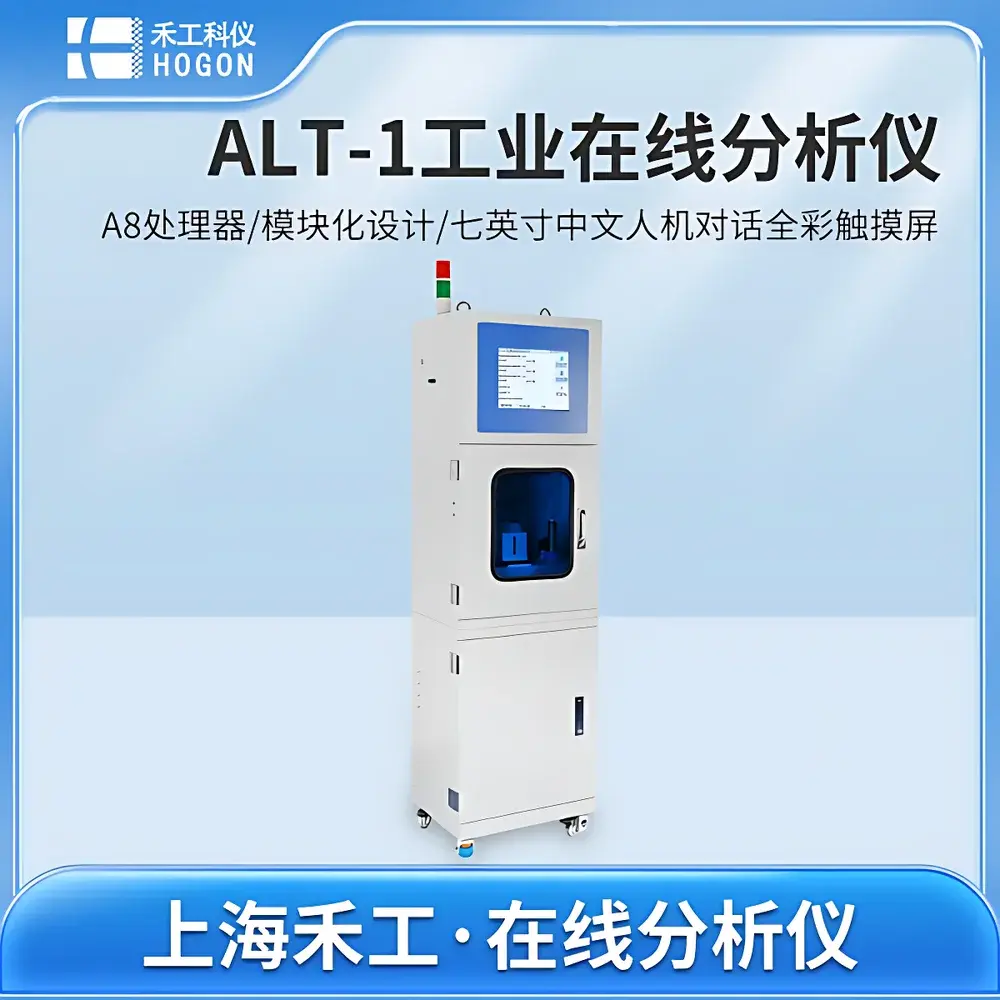
The HOGON ALT-1 Online Free Alkalinity, Total Alkalinity & pH Analyzer is an industrial-grade process analytical instrument engineered for continuous, unattended monitoring of critical chemical parameters in alkaline metal cleaning baths—specifically designed for pretreatment stages in phosphating, electroplating, and painting lines. It operates on the principle of automated potentiometric titration coupled with high-stability pH potentiometry, enabling simultaneous quantification of free alkalinity (FA), total alkalinity (TA), and real-time pH. Unlike manual or semi-automated lab methods, the ALT-1 integrates sampling, reagent dosing, endpoint detection, electrode calibration, system rinsing, and data logging into a single robust architecture. Its deployment ensures consistent bath chemistry control, minimizes downtime from manual testing errors, and supports closed-loop chemical dosing via programmable logic controller (PLC) integration. The analyzer conforms to fundamental metrological requirements outlined in ISO 8655 (volumetric apparatus), ASTM D1126 (alkalinity in water), and ISO 7888 (pH measurement of aqueous solutions), and its operational traceability aligns with GLP-compliant data integrity practices.
Key Features
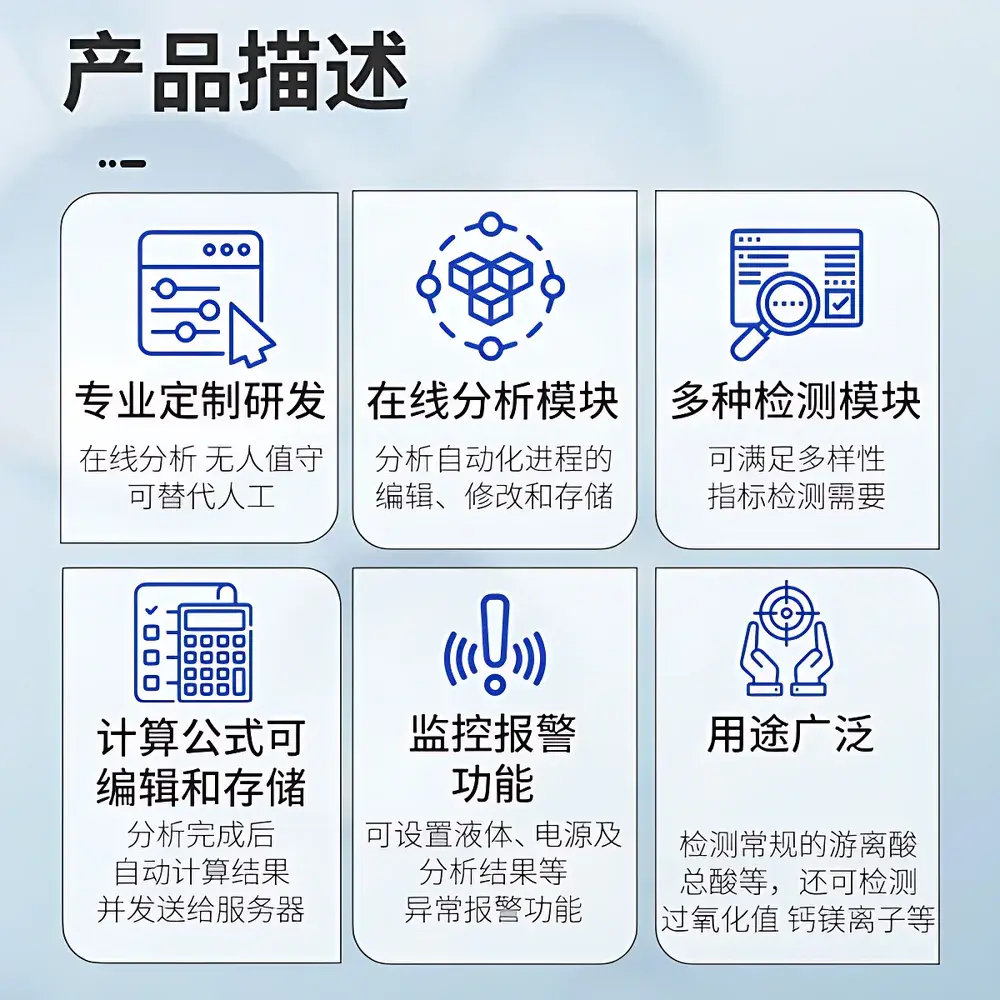
- Triple-parameter autonomous analysis: Simultaneous determination of free alkalinity (phenolphthalein endpoint, pH ≈ 8.5), total alkalinity (bromocresol green/bromophenol blue endpoint, pH ≈ 4.0), and direct pH measurement—all within a single cycle.
- High-precision volumetric delivery: Dual syringe pumps with 1 µL resolution (20 mL burette), calibrated per ISO 8655-3, ensuring reproducible titrant dispensing under varying temperature and viscosity conditions.
- Integrated temperature-compensated pH sensing: Uses a ruggedized, double-junction pH electrode with automatic temperature compensation (ATC) based on Pt1000 sensor input, minimizing drift during extended operation in hot, humid environments.
- Modular fluidic path with self-cleaning protocol: Peristaltic sampling pump, chemically resistant PTFE/PFA tubing, and programmable rinse cycles using deionized water prevent cross-contamination between samples and extend component service life.
- Industrial communication suite: Native support for Modbus TCP (Ethernet), RS-232/485 (serial), CAN bus, and analog 4–20 mA outputs enables seamless integration into DCS, SCADA, or MES platforms without gateway dependency.
- IP55/IP65-rated enclosure (door-locked configuration): Designed for mounting directly on production line walls or near cleaning tanks; optional NEMA 4X or ATEX-certified variants available upon request.
Sample Compatibility & Compliance
The ALT-1 is validated for use with standard alkaline degreasing solutions containing sodium hydroxide, sodium carbonate, sodium silicate, and surfactant blends typical of cold or heated immersion cleaning processes. It accommodates suspended solids up to 50 mg/L and oil content ≤100 ppm without filter clogging, provided inline particulate filtration (e.g., 50 µm mesh) is installed upstream. All wetted materials—including sample probe, flow cell, and titration manifold—are constructed from chemically inert polymers (PTFE, PFA, PVDF) and 316 stainless steel, ensuring long-term compatibility with caustic media (pH 10–14). The system meets CE marking requirements for electromagnetic compatibility (EN 61326-1) and low-voltage safety (EN 61010-1). Data handling complies with FDA 21 CFR Part 11 principles through configurable audit trail logging, electronic signature support, and role-based user access control.
Software & Data Management
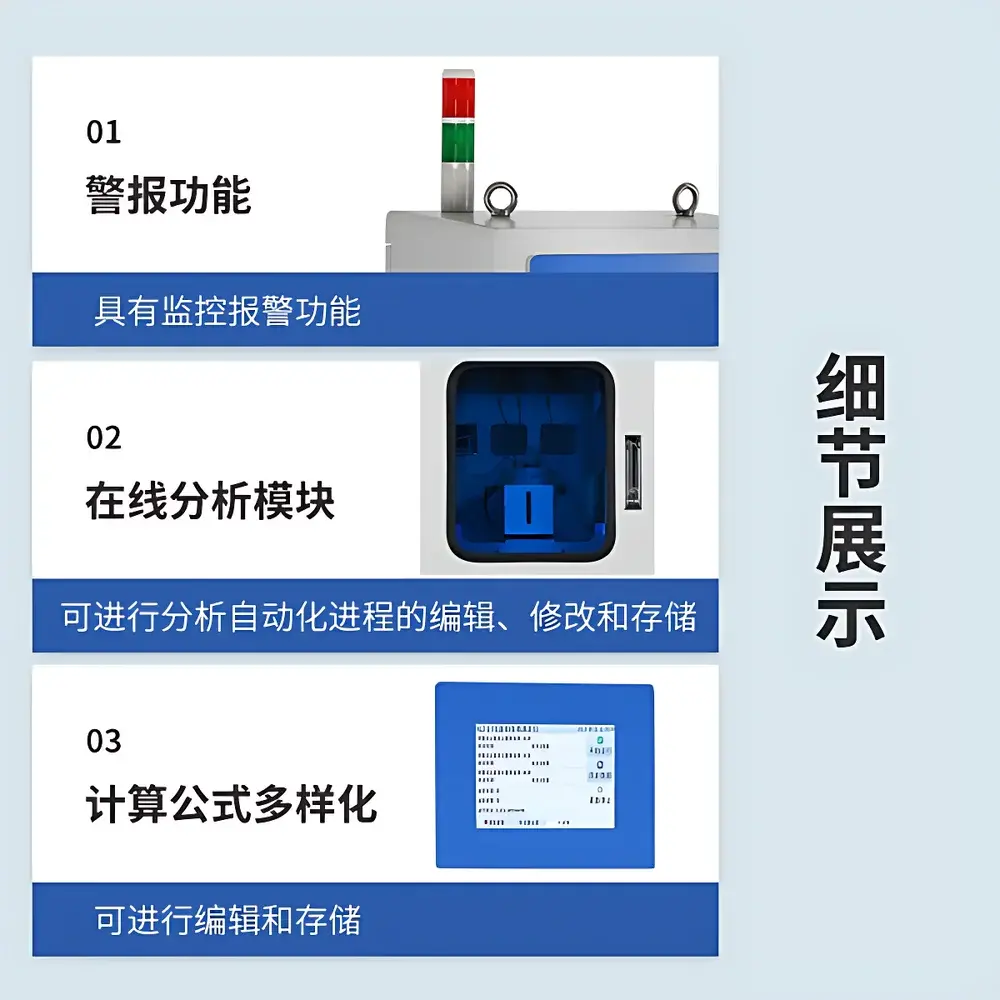
The embedded Linux-based controller runs proprietary firmware supporting scheduled analysis cycles (1–240 min intervals), multi-point calibration routines (pH 4.01/7.00/10.01 buffers; titrant standardization), and adaptive endpoint detection algorithms that distinguish true inflection points from noise in turbid or colored samples. All raw sensor data, titration curves, calibration logs, and alarm events are timestamped and stored locally on industrial-grade microSD (≥32 GB) with automatic rollover. Historical datasets export in CSV or XML format via USB or Ethernet. Remote access is enabled through secure HTTPS interface with TLS 1.2 encryption; no cloud dependency or vendor-hosted infrastructure is required. Audit trails record operator actions, parameter changes, and calibration events with immutable timestamps—fully traceable for internal quality audits or regulatory inspections.
Applications
- Real-time control of alkaline soak cleaners in automotive body shop pretreatment lines.
- Automated replenishment of NaOH and Na₂CO₃ in zinc phosphate activation baths.
- Monitoring of detergent stability in aerospace aluminum etching processes (MIL-DTL-5541 compliant).
- Preventive maintenance alerts triggered by declining FA/TA ratio trends, indicating organic soil loading or carbonate buildup.
- Integration with digital twin models for predictive bath lifetime estimation and chemical consumption forecasting.
- Supporting IATF 16949 and ISO 14001 compliance through documented, repeatable analytical performance.
FAQ
What sample volume is required per analysis cycle?
Each full FA/TA/pH cycle consumes 10 mL of process solution, diluted 1:4 with deionized water prior to titration.
Can the ALT-1 operate in high-temperature tank environments (>50 °C)?
Yes—the external sampling probe and tubing are rated to 80 °C; however, the analyzer enclosure must be installed in ambient conditions ≥10 °C and <90% RH (non-condensing). Heat shielding or remote mounting is recommended for proximity to steam-heated tanks.
How often does the system require recalibration?
pH electrode calibration is recommended daily or per shift; titrant standardization every 72 hours or after reagent refill. Automated verification checks run before each analysis.
Is third-party validation support available for GMP or AS9100 environments?
Yes—HOGON provides IQ/OQ documentation templates, calibration certificates traceable to NIST standards, and on-site installation qualification services.
Does the system support custom titration methods beyond standard FA/TA protocols?
Yes—firmware allows user-defined titration curves, endpoint thresholds, indicator selection, and multi-step reagent addition sequences via configuration file upload.
Related Products