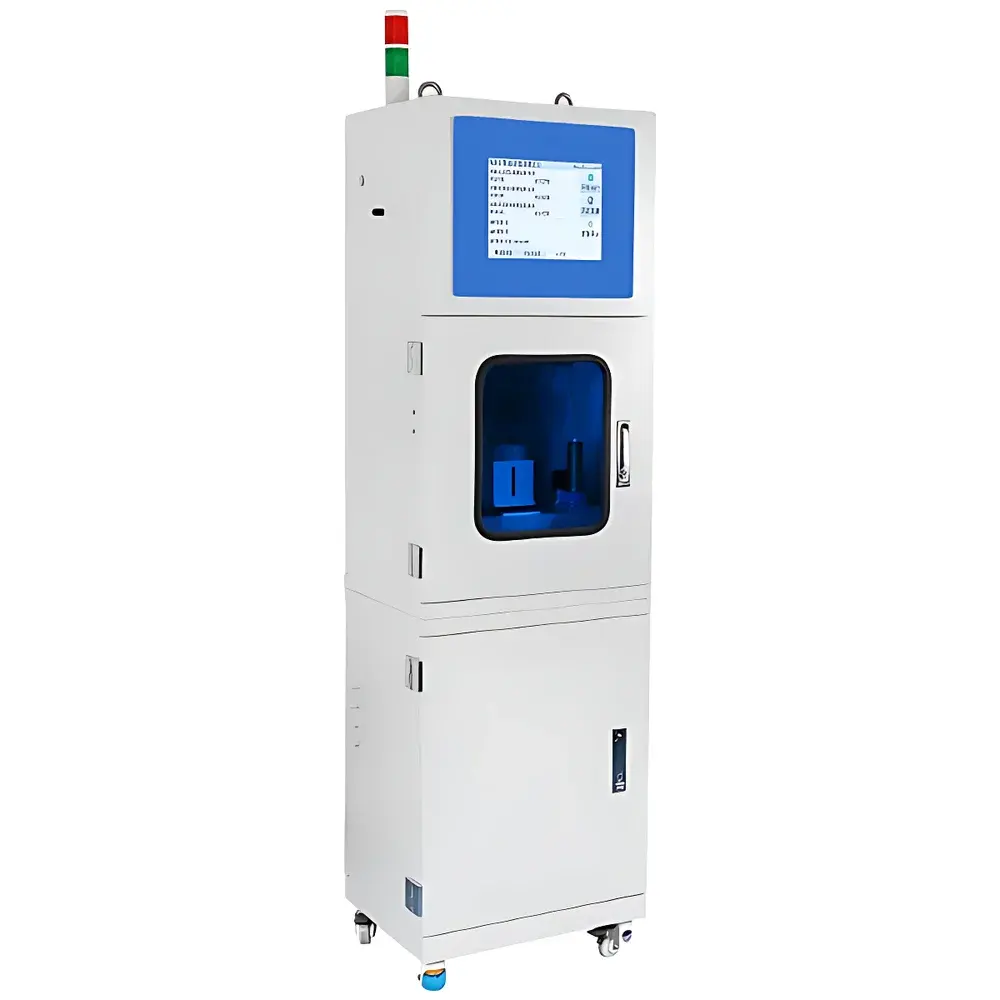
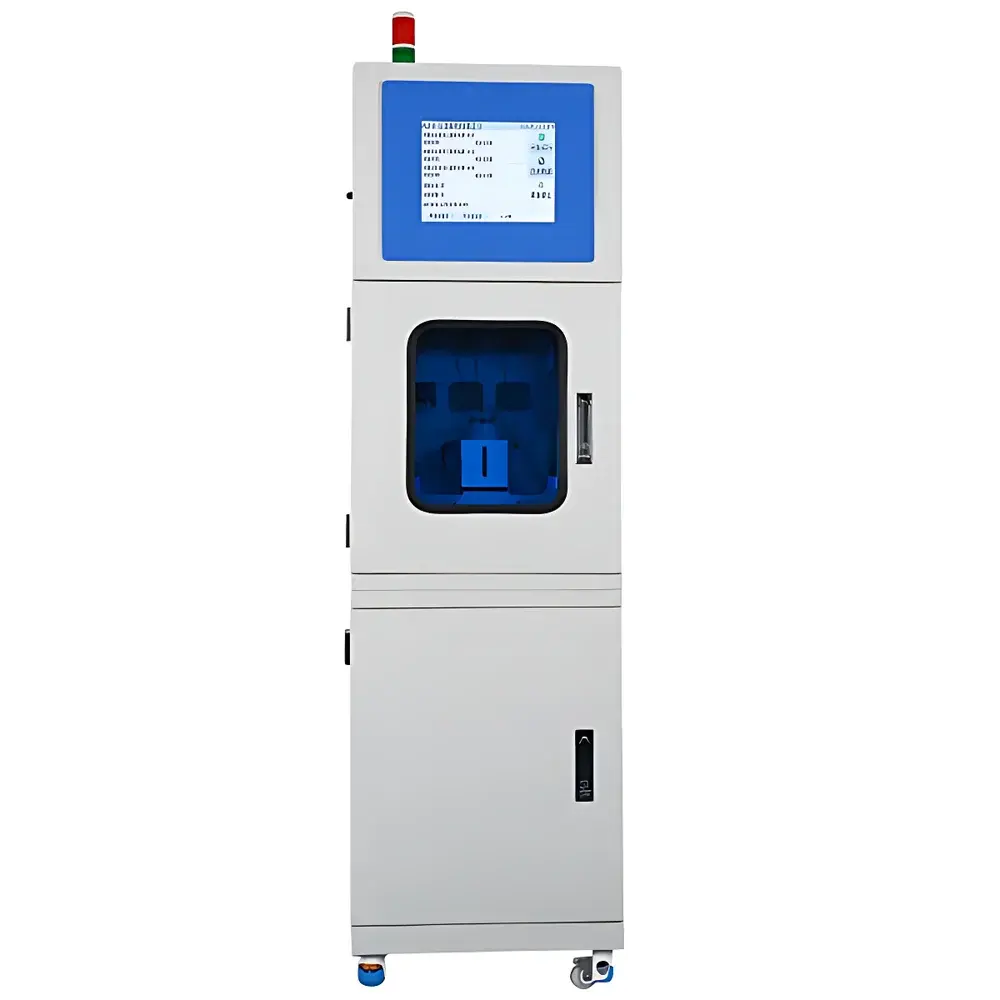
HOGON ALT-1 Online Potentiometric Titration Analyzer for Electroplating Process Control
| Brand | HOGON |
|---|---|
| Origin | Shanghai, China |
| Manufacturer | HOGON Scientific Instruments Co., Ltd. |
| Product Type | Online Potentiometric Titration Analyzer |
| Model | ALT-1 |
| Compliance | Designed for ISO/IEC 17025-aligned laboratory equivalence and GLP-compliant industrial deployment |
| Measurement Principle | Automatic potentiometric titration (pH and redox endpoint detection) |
| Accuracy | ±3% relative deviation vs. reference manual titration |
| Sampling Frequency | Configurable up to once every 30 minutes |
| Output Interface | 4–20 mA, Modbus RTU/TCP, Ethernet/IP |
| Environmental Rating | IP65 enclosure |
| Power Supply | 220 VAC ±10%, 50/60 Hz |
Overview
The HOGON ALT-1 Online Potentiometric Titration Analyzer is an industrial-grade, fully automated process analytical instrument engineered specifically for real-time chemical monitoring and closed-loop control in electroplating and metal surface treatment lines. Unlike conventional grab-sample lab titrations or generic ion-selective sensors, the ALT-1 implements standardized potentiometric titration—identical in principle to ASTM E2087 and ISO 8289-1 methodologies—directly within the production environment. It continuously quantifies critical bath parameters including free acid concentration, total acid value, accelerator (promoter) activity, inhibitor levels, and complexing agent stoichiometry across pretreatment stages (e.g., degreasing, pickling, activation, passivation). By embedding titration chemistry into the process stream—not merely inferring composition via proxy signals—the ALT-1 delivers laboratory-equivalent accuracy (±3% relative error vs. certified reference methods) under dynamic industrial conditions. Its architecture eliminates manual intervention while maintaining traceability to SI units and enabling full audit readiness per FDA 21 CFR Part 11 and EU Annex 11 requirements for electronic records and signatures.
Key Features
- True potentiometric endpoint detection using dual-sensor electrode arrays (pH + redox), eliminating drift-related inaccuracies common in single-parameter probes
- Integrated peristaltic sampling system with temperature-compensated flow control to ensure representative, bubble-free sample acquisition from active plating baths
- Self-cleaning titration cell with programmable rinse cycles and waste neutralization module compliant with local discharge regulations
- Modular reagent delivery subsystem supporting up to four independent titrant channels (e.g., NaOH, HCl, EDTA, KIO₃), each with gravimetric calibration verification
- Embedded PLC-level control logic enabling direct integration with existing SCADA/MES platforms via native Modbus TCP and OPC UA support
- IP65-rated stainless-steel housing rated for continuous operation in high-humidity, chemically aggressive environments (up to 40°C ambient, 85% RH)
Sample Compatibility & Compliance
The ALT-1 is validated for direct analysis of aqueous process solutions typical in zinc, nickel, chromium, copper, and aluminum electroplating lines—including acidic sulfate, alkaline cyanide-free, and trivalent chromium chemistries. It accommodates suspended solids ≤50 mg/L and chloride concentrations up to 200 g/L without filtration. All wetted materials (PFA tubing, Hastelloy C-276 electrodes, ceramic titration nozzles) conform to USP Class VI biocompatibility and ISO 10993-5 cytotoxicity standards. System validation documentation includes IQ/OQ/PQ protocols aligned with ISO 9001:2015 and IATF 16949 process control requirements. Data integrity safeguards include time-stamped audit trails, user role-based access control, and encrypted local database storage meeting GDPR and CCPA retention policies.
Software & Data Management
The ALT-1 runs HOGON ProcessTitrate™ v3.2 firmware—a deterministic, real-time operating system certified to IEC 62443-4-1 SL2 security level. The embedded web interface provides live titration curves, endpoint confirmation overlays, and statistical process control (SPC) charts (X-bar/R, Cpk). Historical data is archived in .csv and SQL-compatible formats with SHA-256 hash logging for tamper evidence. Remote access supports TLS 1.3-encrypted connections to cloud dashboards or on-premise historian servers (e.g., OSIsoft PI, Emerson DeltaV). All reports comply with ISO/IEC 17025 clause 7.8.2 for result reporting, including uncertainty budgets derived from volumetric repeatability (≤0.2% RSD) and electrode response hysteresis (<1 mV).
Applications
- Real-time optimization of zinc phosphate conversion coating baths—maintaining Fe²⁺/Fe³⁺ ratio and free acidity within ±0.1 point of target
- Automated replenishment control in alkaline non-cyanide copper strike baths to prevent organic breakdown byproducts
- Monitoring nitric acid concentration in stainless steel passivation tanks per ASTM A967 requirements
- Quantifying accelerator depletion rates in acid copper plating electrolytes to extend bath life beyond 5,000 AH/L
- Supporting AI-driven predictive maintenance models through high-frequency titration-derived trend vectors (e.g., titrant consumption slope, endpoint sharpness decay)
FAQ
Does the ALT-1 require daily calibration like benchtop titrators?
No. It performs automatic multi-point standardization using NIST-traceable reference solutions at user-defined intervals (e.g., every 8 or 24 hours), with results logged to the audit trail.
Can it interface with legacy PLCs lacking Ethernet capability?
Yes—via optional RS-485 Modbus RTU gateway modules with galvanic isolation and surge protection.
How is reagent consumption tracked for cost accounting?
Each titrant channel logs dispensed volume with 0.01 mL resolution; data exports directly to ERP systems via CSV or REST API.
Is remote firmware update supported?
Yes, over secure HTTPS with digital signature verification and rollback capability to previous stable versions.
What maintenance is required beyond routine electrode cleaning?
Annual verification of pump tubing elasticity, titration cell seal integrity, and gravimetric reagent dosing accuracy—documented in the included PM checklist.
Related Products