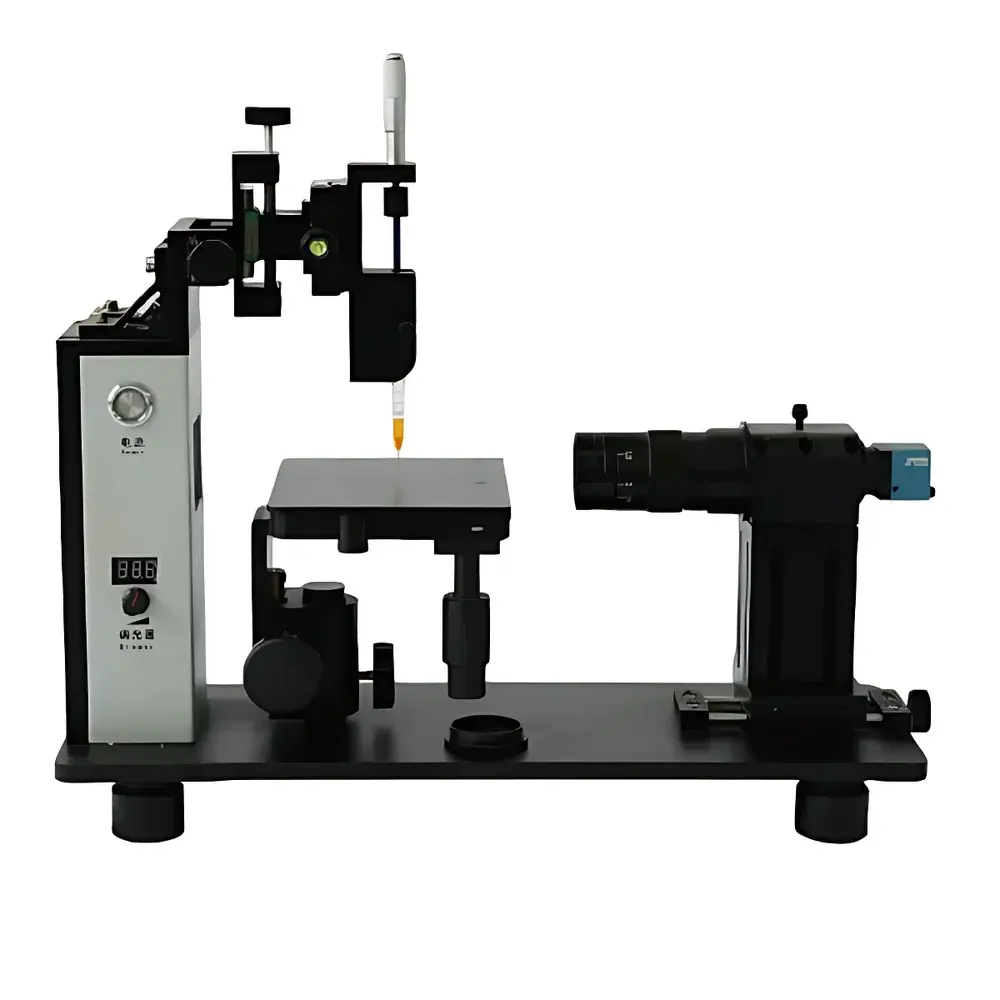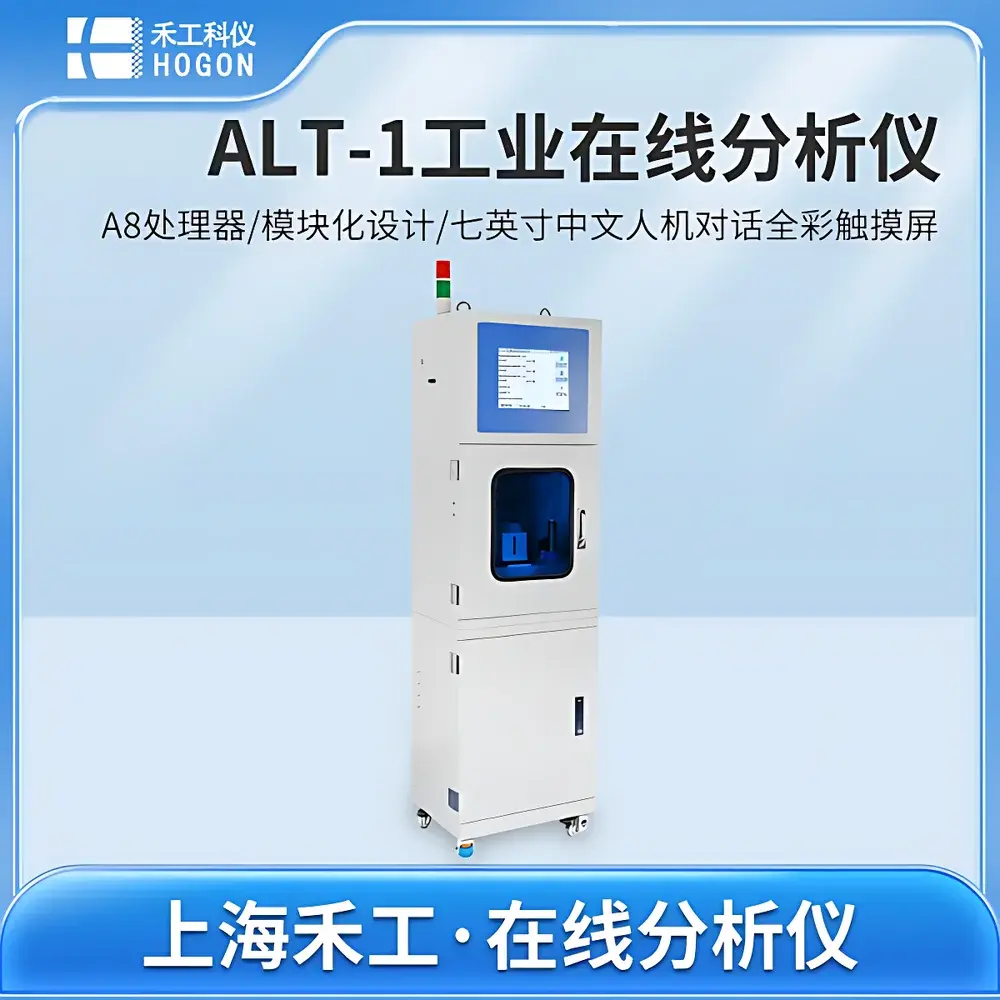
HOGON ALT-1 Online Sulfuric Acid Concentration Analyzer for Pickling Tanks
| Brand | HOGON |
|---|---|
| Origin | Shanghai, China |
| Manufacturer Type | Direct Manufacturer |
| Regional Category | Domestic (China) |
| Model | ALT-1 |
| Output Signals | Modbus TCP, RS-232/485, CAN, 4–20 mA |
| Environmental Operating Conditions | ≤90% RH, 10 °C minimum (non-condensing) |
| Resolution | Potentiometric: 0.1 mV (−2000 to +2000 mV) |
| pH | 0.001 pH (0–20 pH) |
| Photometric | 0.003 Abs (0–1 Abs) |
| Ingress Protection | IP55 / IP65 (achieved when enclosure door is closed and latched) |
| Titration Accuracy | ±1 µL volumetric control (20 mL burette) |
Overview
The HOGON ALT-1 Online Sulfuric Acid Concentration Analyzer is an industrial-grade, process-integrated titrimetric analyzer engineered for continuous, real-time quantification of sulfuric acid (H₂SO₄) concentration in pickling tanks used across metal finishing, electronics manufacturing, and semiconductor wafer processing lines. It operates on the principle of potentiometric acid–base titration, utilizing a high-precision syringe-driven burette system and a robust pH composite electrode to detect the stoichiometric endpoint of neutralization between sulfuric acid and standardized sodium hydroxide (NaOH). Unlike optical or conductivity-based proxies, this method delivers chemically specific, matrix-resistant quantification—critical where bath composition drifts due to metal ion accumulation (e.g., Fe²⁺/Fe³⁺), temperature fluctuations, or organic contamination. The analyzer is designed for unattended operation in harsh, high-humidity industrial environments, with all wetted components constructed from chemically resistant PTFE, PVDF, and borosilicate glass to ensure long-term stability and minimal reagent carryover.
Key Features
- Automated sample handling: Integrated peristaltic sampling pump with programmable volume (default 10 mL), followed by precise dilution (e.g., 1:5) using deionized water to maintain linearity and reduce matrix interference.
- High-fidelity titration module: Dual-syringe precision dosing system with ±1 µL volumetric resolution at 20 mL capacity; calibrated against NIST-traceable standards.
- Multi-parameter endpoint detection: Primary potentiometric (pH) endpoint recognition supplemented by second-derivative analysis for robustness against noisy signals or sluggish electrode response.
- Modular architecture: Swappable reagent cartridges (NaOH standard solution, rinse water, cleaning agent); field-replaceable electrode assembly with quick-connect interface.
- Industrial I/O suite: Native support for Modbus TCP (Ethernet), RS-485 (multi-drop), CAN bus, and analog 4–20 mA output—enabling seamless integration into DCS, SCADA, and MES platforms.
- Environmental resilience: IP65-rated enclosure (when latched), operating range up to 90% RH non-condensing at ≥10 °C; optional thermal management for ambient extremes.
Sample Compatibility & Compliance
The ALT-1 is validated for use with acidic pickling solutions containing up to 250 g/L total dissolved iron (as Fe²⁺/Fe³⁺), residual organic additives (e.g., inhibitors, surfactants), and suspended particulates typical of hot-rolled steel or copper alloy processing. It complies with ISO 8655-3 (volumetric apparatus accuracy), ASTM E202–22 (standard test methods for titration), and supports audit-ready data integrity per FDA 21 CFR Part 11 requirements when paired with HOGON’s optional secure logging firmware. All calibration and maintenance events—including electrode recalibration, reagent replacement, and system flush cycles—are timestamped and logged with user ID attribution. The system meets GLP/GMP documentation standards for regulated manufacturing environments requiring traceability of analytical results.
Software & Data Management
The embedded Linux-based controller runs HOGON ProcessLink™ firmware, providing local web interface (HTTPS) and RESTful API access. Measurement data—including raw mV/pH traces, titration curves, calculated H₂SO₄ concentration (mol/L and g/L), reagent consumption, and diagnostic flags—is stored onboard for ≥30 days at 15-minute intervals. Historical datasets export in CSV or OPC UA format. Remote monitoring is supported via MQTT or secure cloud gateway (optional). Alarm thresholds are configurable per parameter (e.g., low/high acid concentration, electrode slope deviation >15%, reagent level <10%), triggering visual alerts on HMI, email notifications, or hardwired relay outputs for interlocked dosing pump activation.
Applications
- Continuous monitoring of sulfuric acid concentration in steel pickling lines (e.g., cold-rolled strip, galvanizing pre-treatment tanks).
- Real-time feedback control of automated acid replenishment systems in printed circuit board (PCB) etching and surface preparation baths.
- Process validation and bath lifetime extension in semiconductor front-end wafer cleaning stations where acid stoichiometry directly impacts oxide removal rate and surface roughness.
- Quality assurance in aerospace aluminum anodizing pretreatment, where consistent H₂SO₄ levels prevent smut formation and ensure uniform pore structure.
- Regulatory compliance reporting for ISO 9001-certified metal fabricators requiring documented chemical control records per batch or shift.
FAQ
What measurement principle does the ALT-1 employ, and why is it preferred over conductivity or UV-Vis methods?
It uses potentiometric acid–base titration with standardized NaOH. This method eliminates interference from conductive metal ions (e.g., Fe²⁺) and colored organics that compromise conductivity and absorbance readings—ensuring specificity and long-term accuracy in complex pickling matrices.
How often does the system require calibration and maintenance?
Electrode calibration is recommended daily or per shift using two-point pH buffer verification; full system performance verification (including burette accuracy and endpoint detection) is performed weekly using certified reference standards. Reagent cartridges last ~30 days at 15-minute cycle intervals.
Can the ALT-1 integrate with existing PLC-based control systems?
Yes—via native Modbus TCP (Ethernet/IP), RS-485 (RTU/ASCII), or discrete 4–20 mA analog output. Configuration files and register maps are provided for Siemens S7, Rockwell Logix, and Mitsubishi Q-series PLCs.
Is remote diagnostics and firmware updates supported?
Yes—through encrypted SSH access and web-based firmware upgrade portal. Diagnostic logs include sensor health metrics, dosing actuator duty cycles, and communication error counters.
What safety certifications does the unit hold for hazardous area installation?
Standard unit carries CE, RoHS, and EMC Directive compliance. For Zone 2 classified areas, ATEX/IECEx-certified variants with intrinsic safety barriers (Ex ia IIC T4 Ga) are available upon request.
Related Products