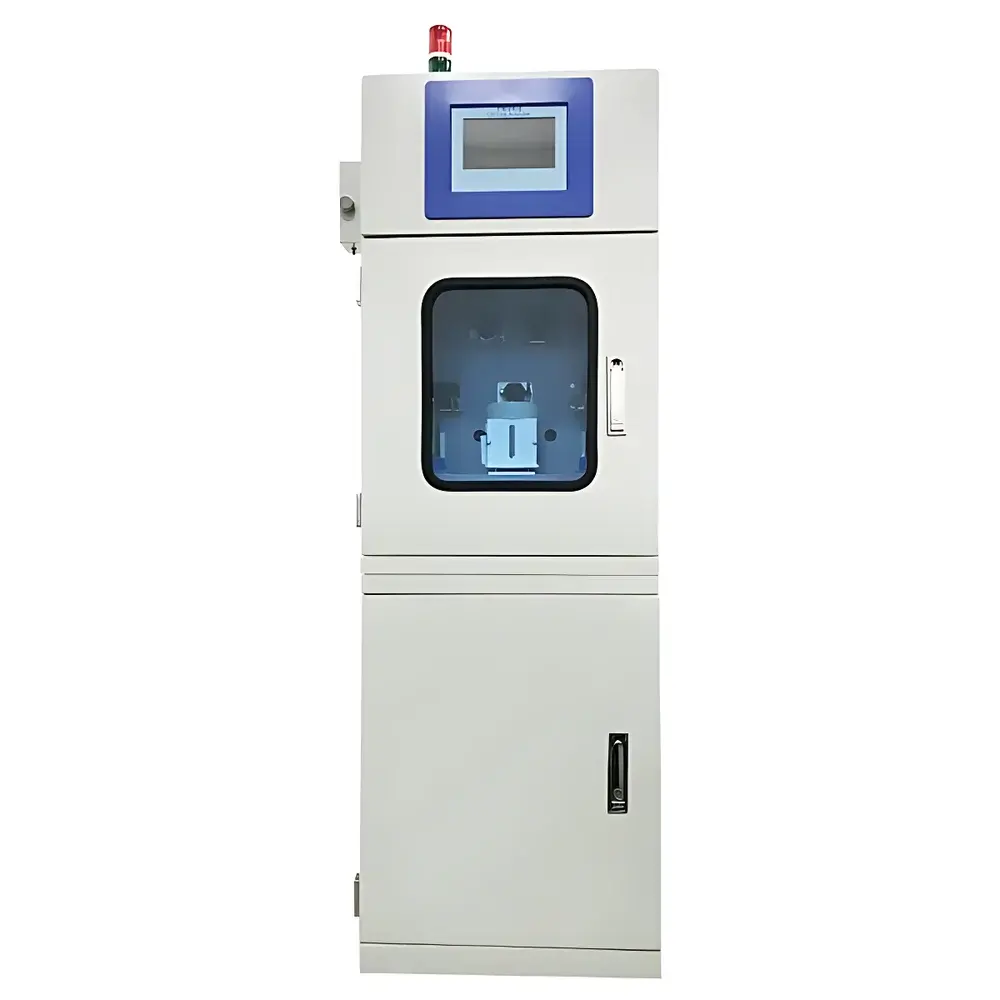
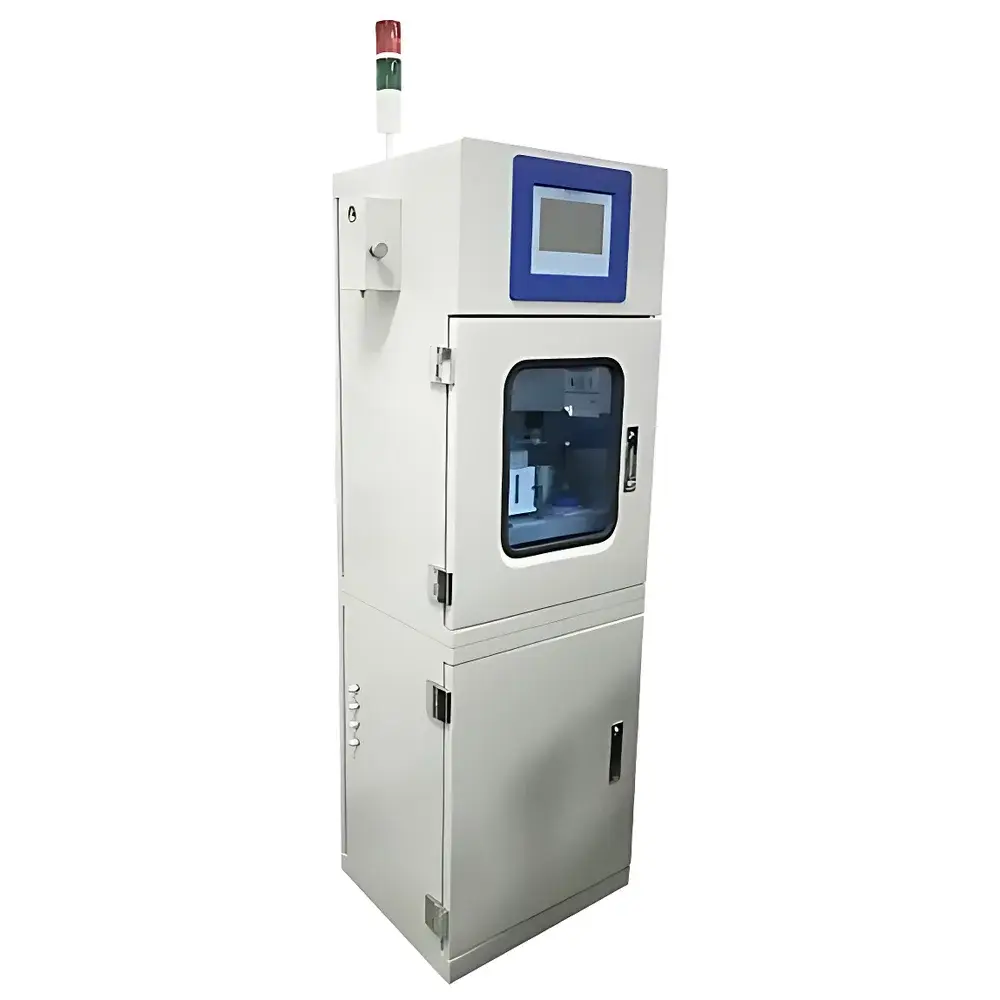
HOGON ALT-EDTA Industrial Online Complexometric Titration Analyzer
| Brand | HOGON |
|---|---|
| Origin | Shanghai, China |
| Manufacturer Type | OEM Manufacturer |
| Regional Category | Domestic (China) |
| Model | ALT-EDTA |
| Pricing | Upon Request |
Overview
The HOGON ALT-EDTA Industrial Online Complexometric Titration Analyzer is an autonomous, process-integrated analytical instrument engineered for continuous, real-time monitoring and control of metal ion concentration—particularly Ca²⁺, Mg²⁺, Ni²⁺, Zn²⁺, Cu²⁺, and other chelatable cations—in industrial aqueous process streams. It operates on the principle of automated potentiometric and photometric endpoint detection during EDTA-based complexometric titration, delivering quantitative results without manual intervention. Designed for 24/7 unattended operation in harsh production environments, the system integrates sample acquisition, reagent delivery, reaction control, endpoint recognition, data computation, and closed-loop dosing feedback into a single robust platform. Its architecture conforms to ISA-88 and ISA-95 modular automation frameworks, enabling seamless integration into DCS, SCADA, or MES systems via standardized communication protocols.
Key Features
- Modular hardware design with A8 ARM-based embedded controller for deterministic real-time task scheduling and low-latency I/O handling
- 7-inch full-color capacitive touchscreen HMI with multilingual interface support (English default), configurable alarm thresholds, and audit-trail-enabled operation logging
- Dual high-precision burettes (±0.1% volumetric accuracy, 0.01 mL resolution) with integrated electromagnetic switching valves and PTFE-coated solenoid-driven solvent pumps (rated for >500,000 cycles)
- Multi-modal endpoint detection: potentiometric (using dual-platinum redox electrodes or combination pH electrodes) and photometric (via 12-bit RGB color-sensing module with ±0.5% absorbance linearity across 400–700 nm)
- Automated sequence programming: customizable method templates for complexometric, acid-base, redox, non-aqueous, and precipitation titrations—including dynamic endpoint interpolation and second-derivative peak detection algorithms
- Integrated process control interface supporting Modbus TCP, RS-232, and Ethernet/IP for bidirectional communication with PLCs and central control servers
- Self-cleaning fluidic pathway with programmable rinse cycles using deionized water or designated cleaning agents to prevent cross-contamination and crystallization buildup
Sample Compatibility & Compliance
The ALT-EDTA analyzer accommodates liquid samples with turbidity ≤ 200 NTU, suspended solids < 50 mg/L, temperature range 5–45 °C, and conductivity 10–2000 µS/cm. It supports direct inline sampling from pressurized loops (up to 6 bar) or gravity-fed bypass streams with optional peristaltic sampling pumps. All wetted materials comply with USP Class VI and FDA 21 CFR 177.2600 specifications. The system meets IEC 61000-6-2 (EMC immunity) and IEC 61000-6-4 (EMC emission) standards. Data integrity functions—including electronic signatures, time-stamped audit trails, and user-level access controls—support compliance with FDA 21 CFR Part 11, EU Annex 11, and ISO/IEC 17025 requirements for accredited testing laboratories.
Software & Data Management
The embedded titration control software (v3.2+) provides method development, calibration management, and result validation workflows compliant with GLP and GMP documentation practices. Each analysis generates a structured XML report containing raw sensor traces, calculated concentrations, uncertainty estimates (based on burette calibration certificates and electrode drift compensation), and metadata (operator ID, timestamp, sample ID). Reports are automatically exported via FTP/SFTP or MQTT to centralized SQL databases or cloud-based LIMS platforms. Optional OPC UA server module enables live tag mapping for historian integration (e.g., OSIsoft PI, Emerson DeltaV). All firmware updates are digitally signed and validated prior to installation.
Applications
- Electroplating bath control: real-time monitoring of free and total nickel, copper, or zinc concentrations in Watts, cyanide, or acid sulfate baths
- Wastewater treatment: automatic dosing control of coagulants and chelating agents based on residual hardness or heavy metal speciation
- Pharmaceutical water systems: periodic verification of metal ion carryover in purified water (PW) and water-for-injection (WFI) distribution loops
- Pulp & paper process streams: tracking calcium and magnesium scaling potential in white water and coating formulations
- Chemical manufacturing: endpoint validation in synthesis reactors where stoichiometric metal catalyst recovery is critical
- Food & beverage processing: quality assurance of chelator (e.g., citrate, phosphate) dosage in preservation systems
FAQ
What titration methods does the ALT-EDTA support out of the box?
It includes preconfigured methods for EDTA complexometric titration (with Eriochrome Black T or Calmagite indicators), pH titration (using standardized HCl/NaOH), redox titration (e.g., KMnO₄ vs Fe²⁺), and argentometric precipitation titration.
Can the system interface with existing PLC-based control infrastructure?
Yes—Modbus RTU/TCP and Ethernet/IP drivers are included; custom protocol adapters (e.g., Profibus DP, BACnet MS/TP) are available upon request.
Is remote diagnostics and firmware update capability supported?
Remote SSH access and secure OTA firmware updates are enabled by default; all sessions require two-factor authentication and leave immutable audit logs.
How often does the system require maintenance or recalibration?
Burettes require volumetric verification every 6 months; electrodes are field-calibratable with NIST-traceable buffers; no routine optical recalibration is needed due to factory-characterized RGB sensor linearity.
Does the analyzer meet explosion-proof certification requirements for hazardous areas?
The base unit is rated IP65; ATEX/IECEx-certified explosion-proof enclosures (Zone 2/22) are available as an optional configuration.