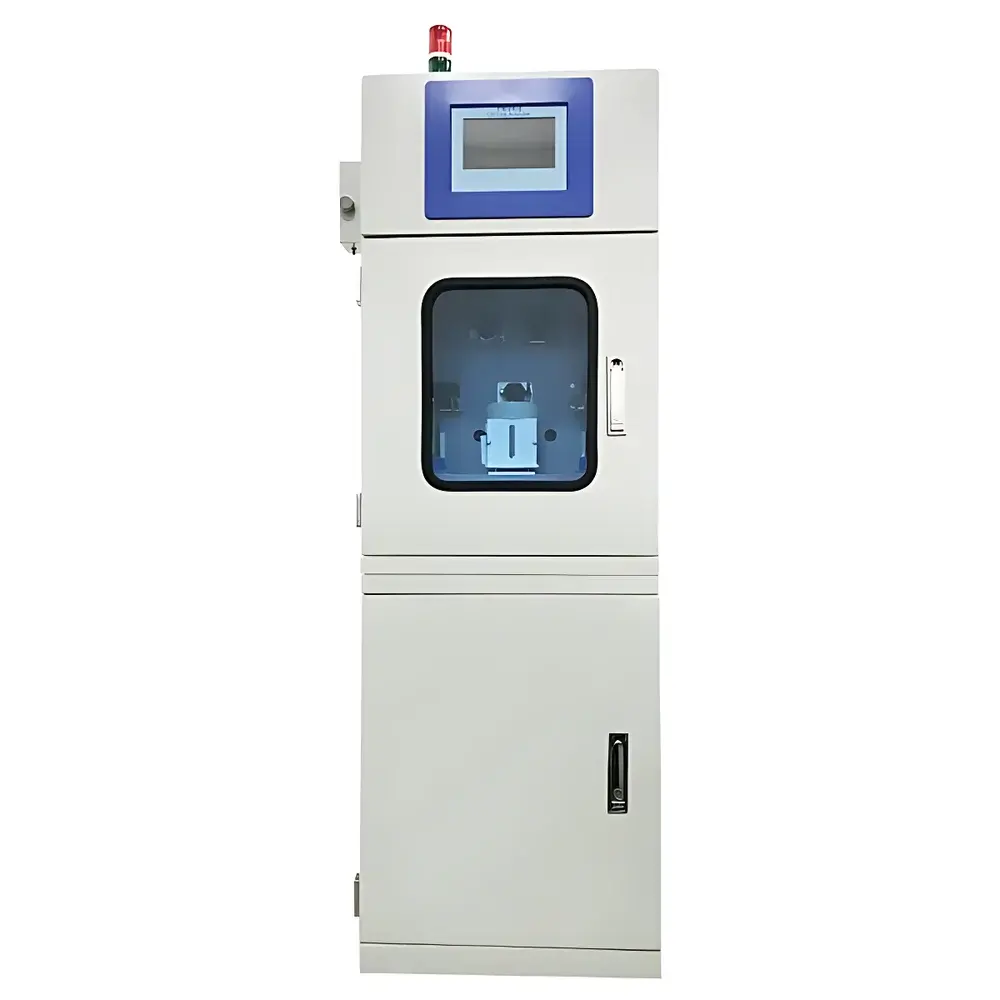
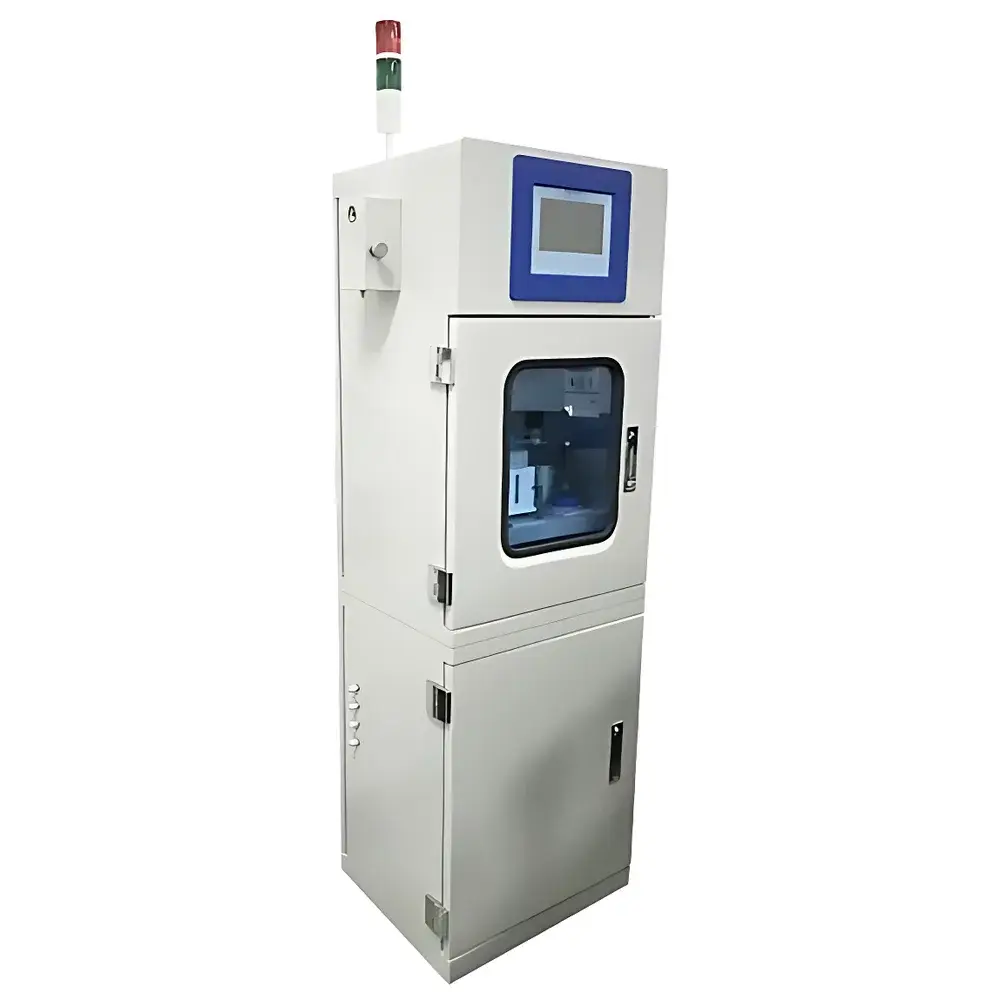
HOGON ALT Online Copper Sulfate and Nickel Ion Analyzer for Electroplating Lines
| Brand | HOGON |
|---|---|
| Origin | Shanghai, China |
| Manufacturer Type | Direct Manufacturer |
| Regional Classification | Domestic (China) |
| Model | ALT Online Copper Sulfate and Nickel Ion Analyzer for Electroplating Lines |
| Pricing | Available Upon Request |
Overview
The HOGON ALT Online Copper Sulfate and Nickel Ion Analyzer is an industrial-grade, fully automated titration-based process analyzer engineered for continuous, unattended monitoring of Cu²⁺ and Ni²⁺ ion concentrations in electroplating bath solutions. It operates on potentiometric and photometric endpoint detection principles—leveraging high-precision electrode potential shifts and real-time colorimetric signal acquisition to determine titration endpoints with high reproducibility. Unlike manual wet-chemistry methods or single-parameter ion-selective sensors, this system performs standardized volumetric titrations (e.g., complexometric EDTA titration for Ni²⁺; iodometric or direct complexometric titration for Cu²⁺), delivering traceable, calibration-verifiable results compliant with ISO 8655 (volumetric instruments) and ASTM D1129 (standard terminology relating to water). Designed for 24/7 operation in harsh production environments, it integrates directly into electroplating line control architecture to close the feedback loop between analysis and chemical dosing.
Key Features
- Embedded ARM-based A8 processor with deterministic real-time control architecture for synchronized sampling, titration, rinsing, and data reporting cycles
- Modular hardware design enabling field-reconfigurable analysis workflows—swapable titration modules support pH, redox, complexometric, precipitation, non-aqueous, and colorimetric titration modes
- 7-inch full-color capacitive touchscreen HMI with multilingual UI (English default), supporting parameter configuration, method editing, and live status visualization without external PC
- Dual high-accuracy burettes (±0.1% volumetric accuracy per ISO 8655–2), electromagnetic multi-port valves (10⁶-cycle lifetime), and solvent-resistant peristaltic pumps with pulse-width modulation flow control
- Multi-spectral color sensing module (400–700 nm, 1 nm resolution) coupled with dual platinum indicator electrodes for hybrid endpoint detection—ensuring robustness against turbidity, matrix interference, and electrode fouling
- Integrated process control interface supporting Modbus TCP, RS-232, and Ethernet/IP protocols for seamless integration with PLCs, SCADA systems, and MES platforms
Sample Compatibility & Compliance
The analyzer is validated for use with acidic sulfate-based electroplating electrolytes (pH 0.5–4.5), including standard acid copper, Watts nickel, and sulfamate nickel baths. It accommodates suspended solids ≤50 mg/L and chloride concentrations up to 150 g/L without performance degradation. All wetted materials—including PTFE-coated tubing, ceramic burette tips, and glass reaction vessels—comply with USP Class VI biocompatibility and FDA 21 CFR 177.2430 (indirect food additives). The system supports audit-ready operation under GLP and GMP frameworks: full electronic records with time-stamped method execution logs, user-access controls, and tamper-evident data encryption meet FDA 21 CFR Part 11 requirements when paired with optional server-side validation software.
Software & Data Management
The embedded titration control software enables creation, storage, and versioning of analytical methods—including custom calculation formulas (e.g., [Cu] = (Vₜᵢₜ × Cₜᵢₜ × F) / Vₛₐₘₚₗₑ), calibration curve management, and dynamic limit checking. All raw sensor data, titration curves, endpoint flags, and final concentration values are timestamped and exported via TCP/IP to SQL-based historian databases or cloud platforms (e.g., AWS IoT Core, Siemens MindSphere). Optional OPC UA server add-on provides interoperability with Industry 4.0 infrastructure. Data retention complies with ISO/IEC 27001-aligned encryption standards; local SD card backup ensures continuity during network outages.
Applications
Primary deployment targets include PCB manufacturing lines, automotive component plating facilities, aerospace fastener finishing plants, and decorative metal finishing operations. Beyond Cu²⁺/Ni²⁺ quantification, the platform supports ancillary measurements such as free acid concentration (via acid-base titration), chloride content (potentiometric argentometry), and brightener degradation index (redox titration). Cross-industry adaptability extends to wastewater treatment (metal recovery optimization), printed electronics (electrolyte stability monitoring), and battery material synthesis (transition metal salt purity verification).
FAQ
What titration methods are pre-validated for copper and nickel in electroplating baths?
Standardized EDTA complexometric titration (ISO 7870-2) for Ni²⁺ and iodometric back-titration (ASTM B656) for Cu²⁺ are factory-loaded and verified across bath matrices with ionic strength up to 5 mol/kg.
Can the system interface with existing PLC-based dosing controllers?
Yes—native Modbus RTU/TCP and analog 4–20 mA output channels allow direct actuation of peristaltic dosing pumps or solenoid valves without intermediary gateways.
How often does the system require maintenance or recalibration?
Burette calibration is recommended every 3 months or after 500 titrations; electrode cleaning and reference junction replacement are scheduled quarterly per preventive maintenance log.
Is remote diagnostics and firmware update supported?
Secure SSH-enabled remote access (with role-based authentication) permits real-time troubleshooting, log retrieval, and over-the-air firmware updates signed with ECDSA-256 cryptographic keys.
Does the analyzer comply with environmental regulations for hazardous chemical handling?
All reagent delivery paths are double-contained; leak detection sensors trigger immediate shutdown and alarm—meeting IEC 61508 SIL2 functional safety requirements for process instrumentation.