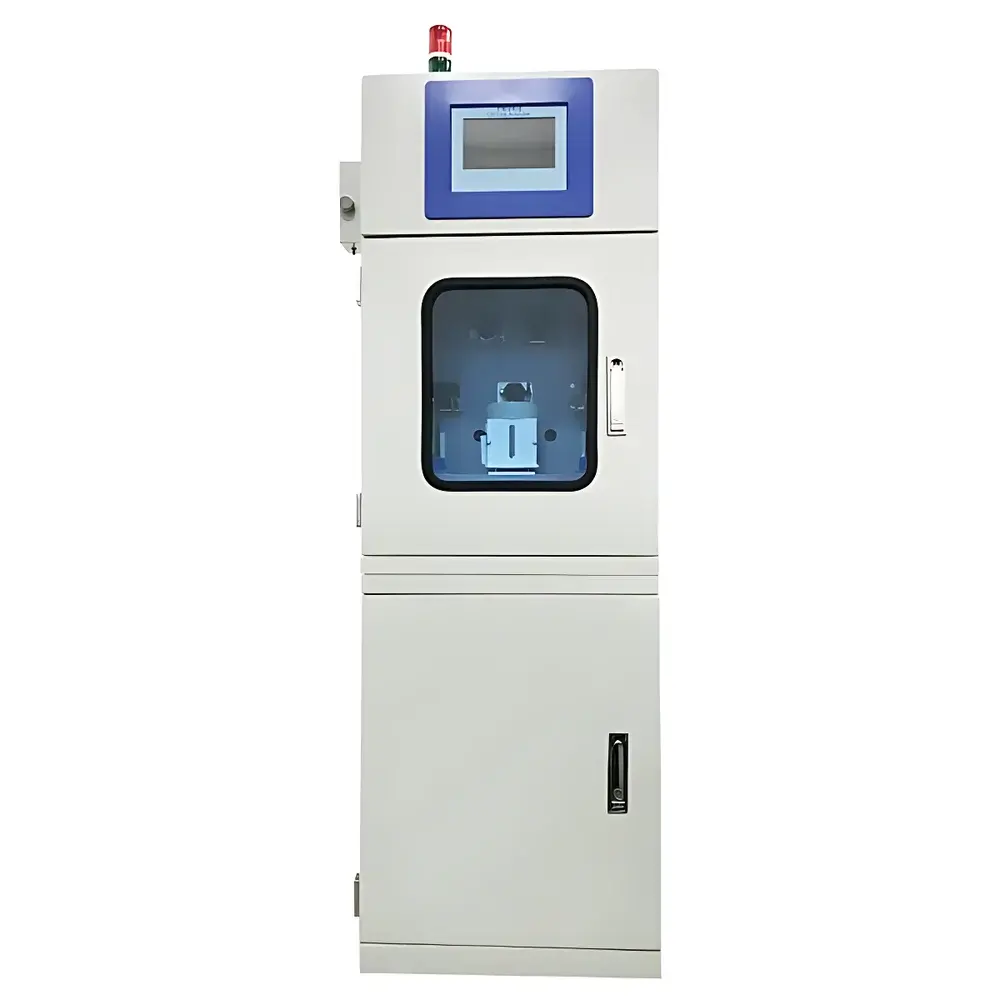
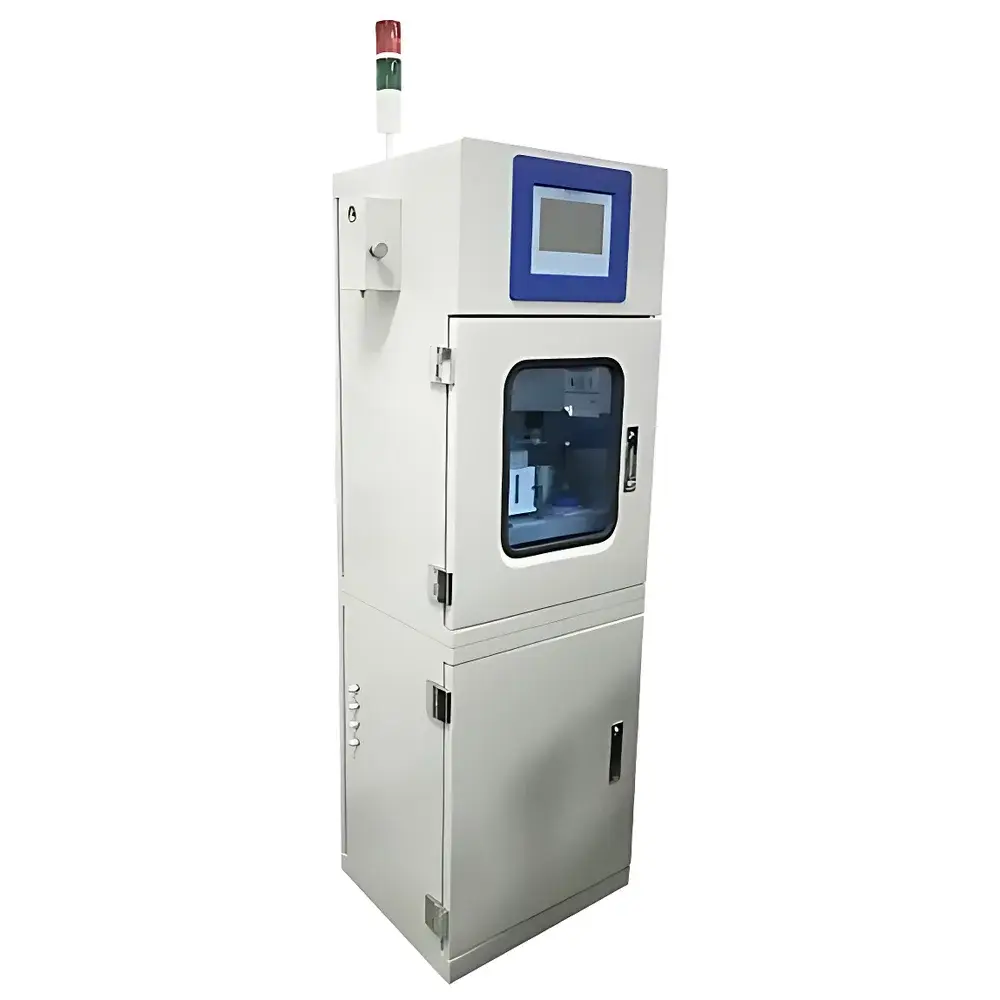
HOGON ALT Online Sulfuric Acid Analyzer for Electroplating Baths
| Brand | HOGON |
|---|---|
| Origin | Shanghai, China |
| Manufacturer Type | Direct Manufacturer |
| Product Category | Domestic |
| Model | ALT Online Sulfuric Acid Analyzer for Electroplating Baths |
| Pricing | Available Upon Request |
Overview
The HOGON ALT Online Sulfuric Acid Analyzer for Electroplating Baths is an industrial-grade, fully automated titration-based process analyzer engineered for continuous, unattended monitoring of sulfuric acid concentration in electroplating electrolytes. It operates on potentiometric and colorimetric endpoint detection principles—leveraging real-time electrode potential shifts (e.g., pH or redox electrodes) and high-resolution optical color transition recognition to determine titration endpoints with high reproducibility. Designed specifically for metal surface treatment lines, the system replaces manual wet-chemistry analysis with a robust, closed-loop control architecture that integrates sampling, reagent delivery, titration, waste handling, cleaning, and data reporting into a single platform. Its core function is to maintain bath chemistry within narrow operational tolerances by triggering precise dosing commands to peristaltic or solenoid metering pumps—ensuring consistent plating quality, reduced scrap rates, and compliance with internal process specifications.
Key Features
- Embedded A8 ARM processor with deterministic real-time control firmware for synchronized multi-step titration sequences
- 7-inch full-color capacitive touchscreen HMI supporting multilingual interface (English default), intuitive workflow configuration, and local event logging
- Dual high-precision burettes (±0.1% volumetric accuracy) with integrated electromagnetic switching valves for cross-contamination-free reagent selection
- Modular detection architecture: supports interchangeable modules for potentiometric (pH, redox, ion-selective), photometric (colorimetric), and conductometric titrations
- Long-life solvent-resistant peristaltic pumps with calibrated flow profiles for accurate sample aspiration, dilution, and waste evacuation
- Automated self-cleaning cycle using programmable rinse protocols with deionized water and optional acid/base wash solutions
- Integrated alarm system with configurable thresholds for critical parameters—including liquid level, power status, electrode response drift, titration timeout, and result deviation from setpoint
- Field-upgradable firmware and modular hardware design enabling future expansion to additional analytes (e.g., nickel, copper, chloride, free acid/total acid ratio)
Sample Compatibility & Compliance
The ALT analyzer is validated for use with acidic aqueous matrices typical of sulfate-based electroplating baths (e.g., Watts nickel, acid copper, zinc sulfate, and tin-lead electrolytes), with operating temperature range of 15–40 °C and conductivity up to 100 mS/cm. It complies with IEC 61000-6-2 (EMC immunity) and IEC 61000-6-4 (EMC emission) standards. All wetted components—including tubing, valves, and electrode housings—are constructed from chemically resistant materials (PTFE, PEEK, borosilicate glass, and 316L stainless steel) to ensure long-term stability in aggressive sulfuric acid environments. The system supports audit-ready operation under GLP and GMP frameworks through timestamped raw data storage, user-access logs, and electronic signature-capable software—fully compatible with FDA 21 CFR Part 11 requirements when deployed with validated network authentication and database encryption.
Software & Data Management
The embedded titration control software provides full lifecycle management of analytical workflows: method creation, sequence programming (sampling → conditioning → titration → cleaning → reporting), formula definition (e.g., H₂SO₄ concentration = (Vₜ × Cₜ × F) / Vₛ), and result validation logic. Analytical outputs—including titrant volume, endpoint potential/color threshold, calculated concentration, and QC flags—are transmitted via RS232, TCP/IP, or MODBUS RTU/TCP protocols to SCADA systems, MES platforms, or centralized SQL databases. Data export formats include CSV, XML, and OPC UA-compliant tags. Remote diagnostics, firmware updates, and secure configuration backup are supported through HTTPS-enabled web interface or dedicated engineering client.
Applications
- Real-time sulfuric acid concentration control in nickel, copper, zinc, and chromium electroplating baths
- Automated acid-to-metal ratio optimization in mixed-acid plating solutions
- Process validation and statistical process control (SPC) for automotive and aerospace plating lines
- Integration with PLC-controlled chemical dosing systems in PCB manufacturing and coil coating facilities
- On-line monitoring of rinse tank acidity to minimize drag-out losses and wastewater neutralization load
- Cross-industry deployment in textile dyeing (acid dye baths), pulp & paper (kraft liquor acidity), and metal pickling lines
FAQ
What titration methods does the ALT analyzer support?
It supports potentiometric (pH, redox, precipitation), colorimetric, and conductometric titrations—configurable via software-selected modules and electrode types.
Can the system operate without human intervention for extended periods?
Yes—designed for 7×24 unattended operation with automatic sample intake, reagent replenishment alerts, self-diagnostic routines, and failure-mode logging.
Is calibration traceable to national standards?
Calibration is performed using NIST-traceable standard solutions; instrument-specific calibration certificates are provided upon commissioning.
How is data integrity ensured during transmission to enterprise systems?
All communications employ TLS 1.2 encryption (for TCP/IP) or CRC-16 checksums (for MODBUS); local data buffers retain records during network outages.
What maintenance intervals are recommended?
Electrode recalibration every 24 hours; tubing and valve inspection every 3 months; full system performance verification annually per ISO/IEC 17025 guidelines.
Related Products