
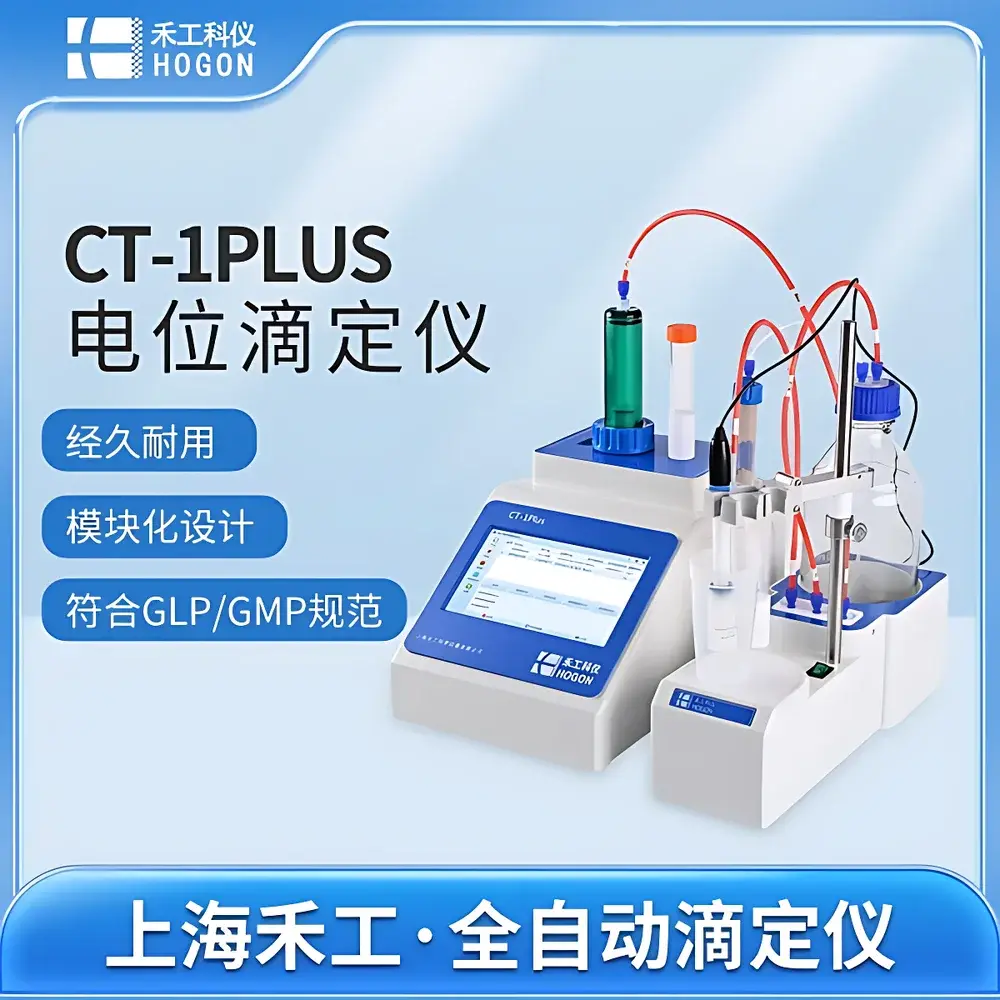
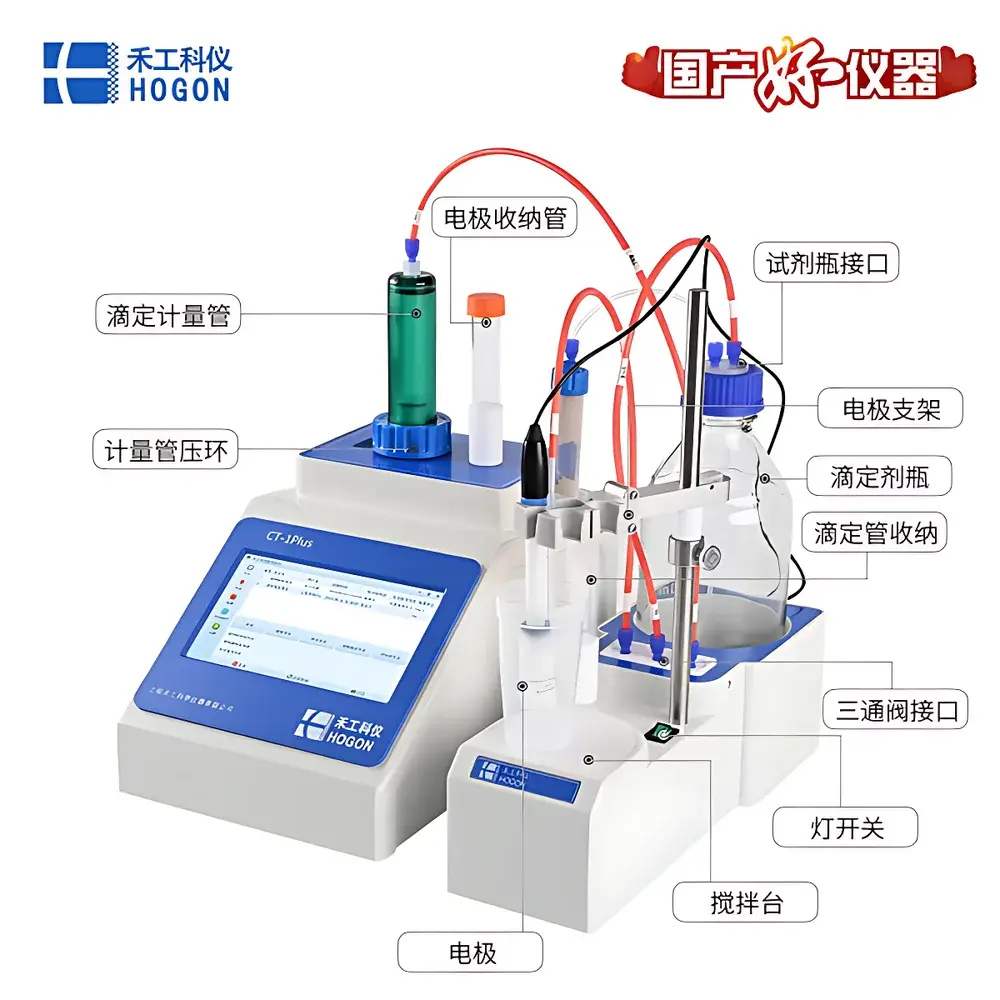
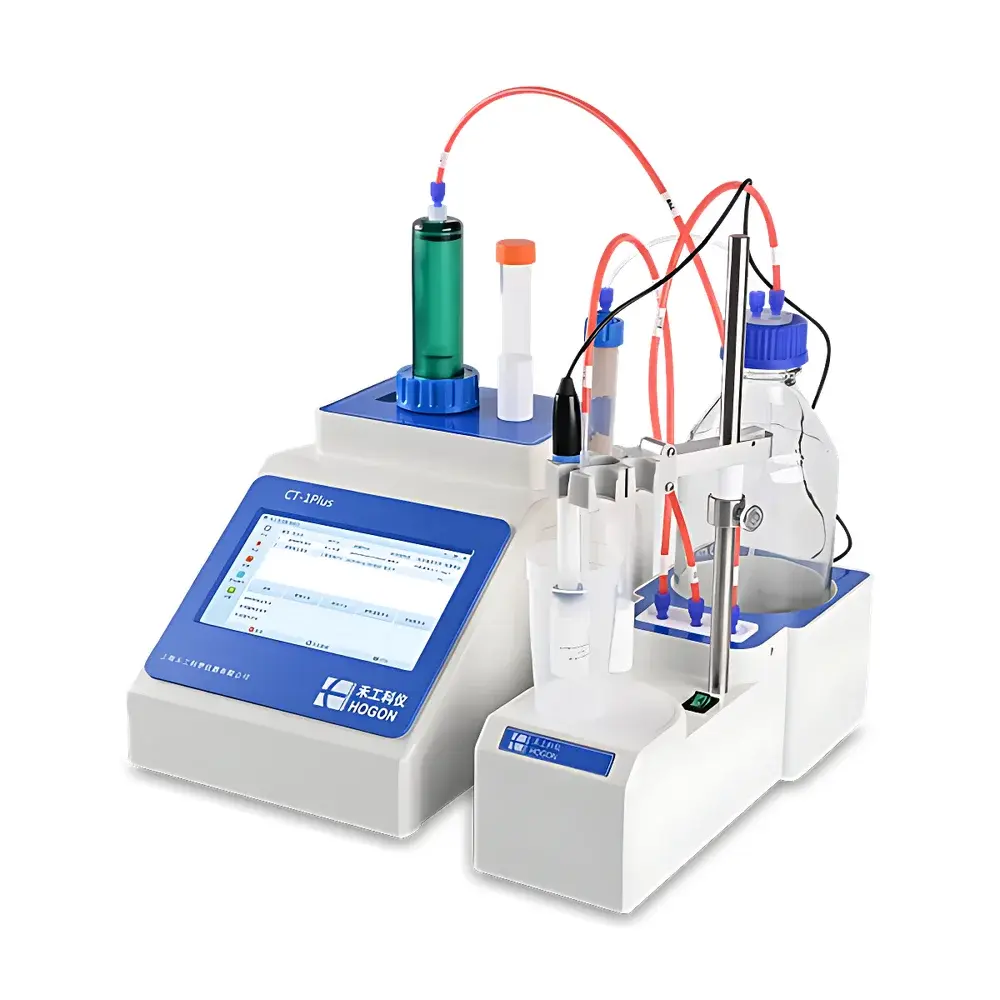
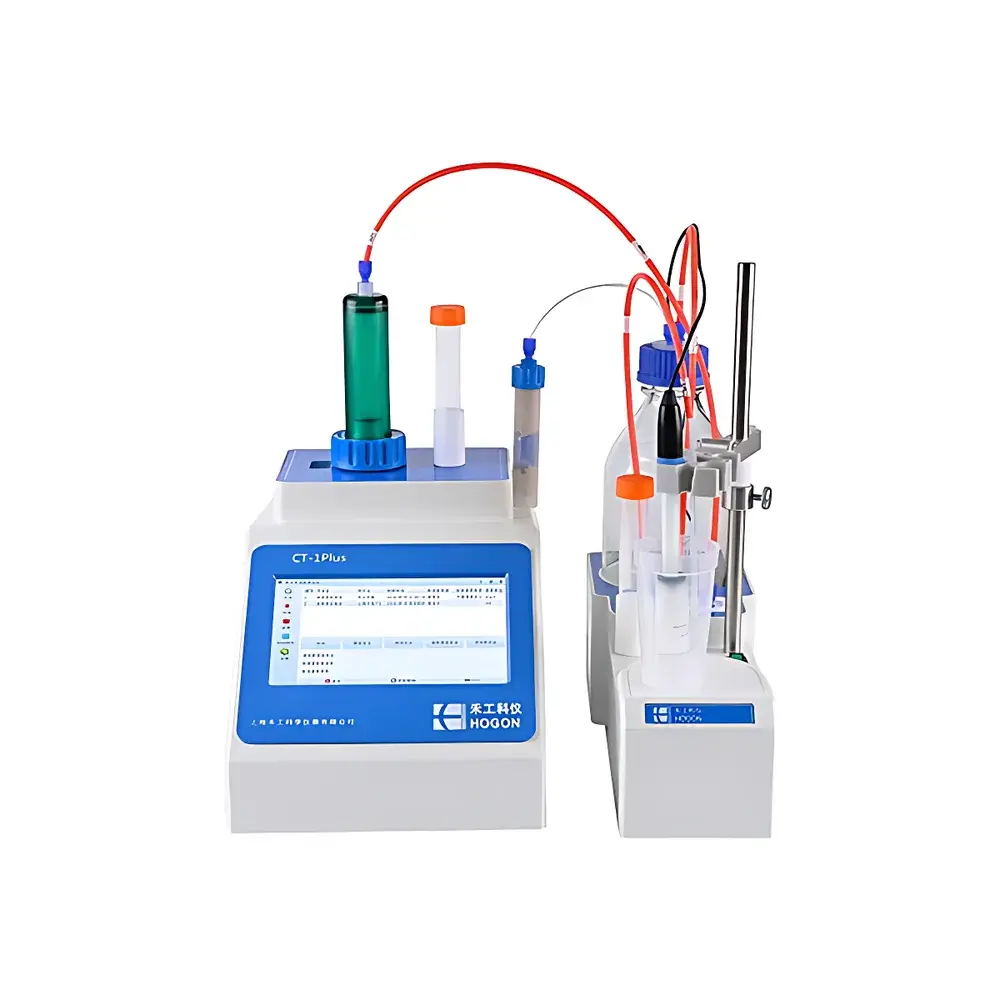
HOGON CT-1Plus Automatic Potentiometric Titrator for Cathode Material Surface Residual Alkali Content Analysis
| Brand | HOGON |
|---|---|
| Origin | Shanghai, China |
| Manufacturer Type | Direct Manufacturer |
| Instrument Type | Universal Potentiometric Titrator |
| Application Scope | General-purpose, optimized for cathode material residual alkali quantification |
| pH Measurement Range | 1–14 |
| Potentiometer Accuracy | ±0.2 mV |
| Potentiometer Resolution | 0.1 mV (within ±2000 mV range) |
| Burette Precision | 0.001 mL (standard 20 mL burette) |
| Burette Resolution | 0.0005 mL (optional 10 mL burette) |
Overview
The HOGON CT-1Plus is a dedicated automatic potentiometric titrator engineered for the precise, reproducible quantification of surface residual alkali (e.g., Li₂CO₃, LiOH) on lithium-ion battery cathode materials—including NMC, NCA, LFP, and high-nickel variants. Residual alkali content directly impacts slurry rheology, gassing behavior during formation cycling, interfacial stability with electrolytes, and long-term cycle life. The CT-1Plus implements potentiometric titration based on pH endpoint detection using a high-stability composite pH electrode. It follows standardized aqueous extraction protocols (per ISO 18563:2022 and internal battery material QC guidelines), where surface alkalis are leached into deionized water, followed by automated titration with standardized hydrochloric acid (e.g., 0.1 mol/L HCl). This method aligns with industry-adopted practices referenced in ASTM D1193 (Type II water), IEC 62620 (secondary lithium cells), and battery-grade material specifications from major OEMs and cell manufacturers.
Key Features
- Micro-differential endpoint detection: Real-time monitoring of dE/dV (first derivative of potential vs. volume) enables unambiguous identification of the stoichiometric equivalence point—eliminating subjectivity inherent in visual or fixed-pH endpoint methods.
- High-resolution volumetric delivery: Standard 20 mL glass burette with 0.001 mL precision; optional 10 mL burette achieves 0.0005 mL resolution—critical for low-alkali samples (< 0.05 wt%) where small titrant increments define measurement sensitivity.
- Controlled sample handling integration: Compatible with external magnetic stirrers (speed programmable from 50–600 rpm) and filtration modules to ensure consistent aqueous extract preparation prior to titration—supporting full SOP traceability from extraction to report generation.
- Robust electrochemical architecture: Dual-channel high-impedance potentiometer (input impedance > 10¹² Ω), temperature-compensated pH measurement, and low-drift reference electrode design ensure long-term baseline stability across multi-hour batch runs.
- Automated sequence execution: Programmable method templates support multi-step protocols—including pre-titration stabilization, dynamic addition intervals (adjustable from 100 ms to 5 s), post-endpoint verification, and auto-zero correction—reducing operator dependency and inter-lab variability.
Sample Compatibility & Compliance
The CT-1Plus is validated for use with cathode powders (5.0 ± 0.1 g per test), slurries, and coated electrode scrap following standardized water-leaching procedures (e.g., 15 min agitation at 25 °C, centrifugation at 8000 rpm, 0.45 µm membrane filtration). It complies with GLP-aligned data integrity requirements: all titration curves, raw mV/volume data, derivative plots, and final reports are timestamped, user-logged, and stored with audit trail capability. While not FDA 21 CFR Part 11 certified out-of-the-box, its software architecture supports configuration for regulated environments—including electronic signatures, role-based access control, and data export in CSV/PDF formats compatible with LIMS integration.
Software & Data Management
The embedded Windows-based TitraSoft™ platform provides intuitive method creation, real-time curve visualization (pH vs. V, dE/dV vs. V), and automated calculation of residual alkali as weight percent (wt%) based on acid normality, sample mass, and stoichiometric factor (e.g., ×1.5 for Li₂CO₃ → 2HCl). All raw data files (.tdf) retain full metadata (electrode ID, ambient temperature/humidity logs if interfaced with environmental sensors, operator ID, calibration history). Export options include ISO/IEC 17025-compliant PDF reports with embedded uncertainty estimates (based on burette tolerance, weighing error, and standard solution certification). Data backups are supported via USB and network share—enabling centralized QC database synchronization.
Applications
- Quality control of incoming cathode active materials (CAM) at battery material suppliers and cell manufacturers
- In-process monitoring during calcination, washing, and surface coating steps to optimize alkali removal efficiency
- Root-cause analysis of gas evolution in half-cell testing and formation cycling
- Supporting DOE studies on precursor composition, sintering profile, and post-synthesis washing parameters
- Reference method validation against ion chromatography (IC) or thermogravimetric analysis (TGA) for method correlation studies
FAQ
What alkali species does this method quantify?
It measures total titratable base—primarily Li₂CO₃ and LiOH—assuming complete dissolution in water and stoichiometric reaction with HCl. Li₂O contribution is negligible under standard aqueous extraction conditions.
Can the system be calibrated for non-aqueous titrations?
No—the CT-1Plus is optimized for aqueous-phase pH-based endpoints. Non-aqueous or redox titrations require different electrode configurations and are outside its validated scope.
Is method transfer between labs feasible?
Yes, provided identical extraction protocols, electrode calibration standards (NIST-traceable pH buffers), and HCl standardization procedures (e.g., using anhydrous sodium carbonate primary standard per ISO 649) are implemented.
How often must the pH electrode be recalibrated?
Daily two-point calibration (pH 4.01 and 7.00 at 25 °C) is recommended; additional checks before critical batches ensure drift remains within ±0.5 mV over 8 hours.
Does the instrument support ASTM D6470 or equivalent battery material standards?
While not explicitly certified to ASTM D6470 (withdrawn), its operational parameters and reporting structure conform to the technical intent of residual alkali assessment outlined in current internal OEM specifications and ISO/IEC 17025-accredited lab practices.
Related Products





