
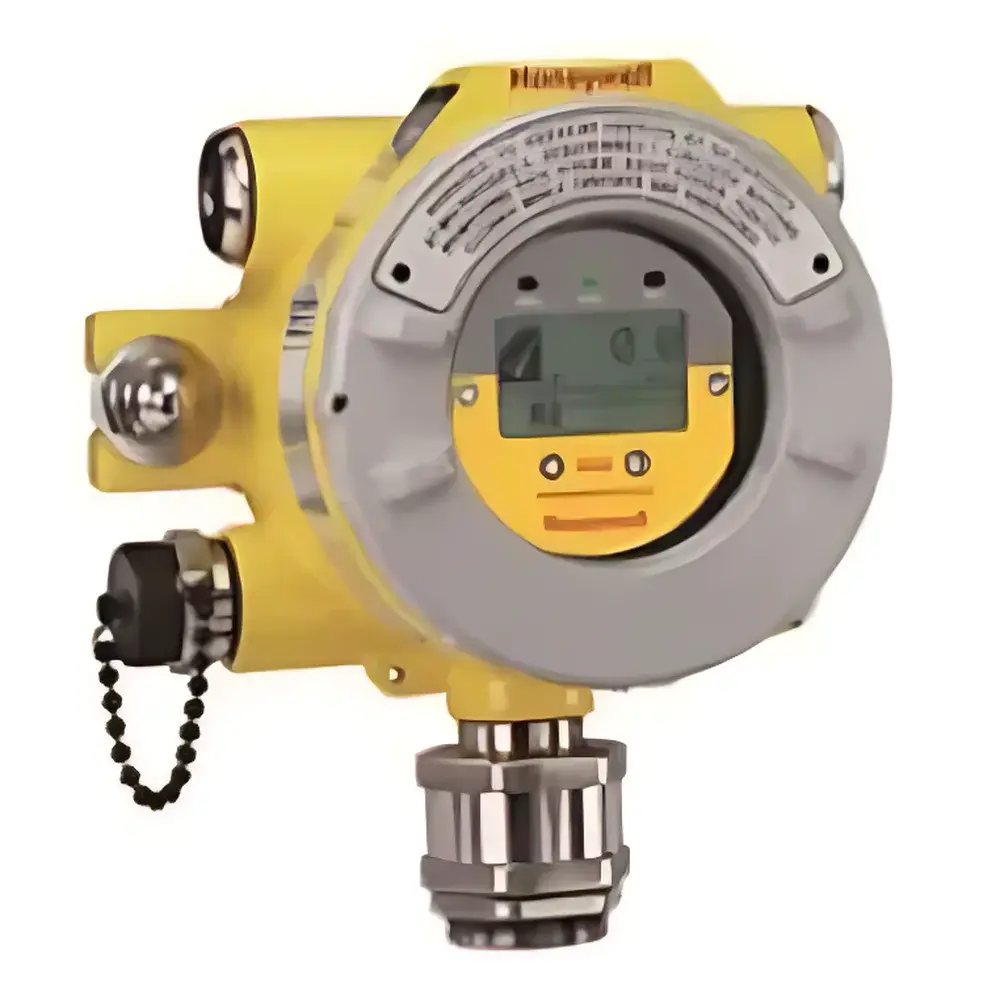
Honeywell XNX Universal Gas Transmitter
| Brand | Honeywell |
|---|---|
| Origin | USA |
| Manufacturer Type | Authorized Distributor |
| Origin Category | Imported |
| Model | XNX |
| Pricing | Upon Request |
Overview
The Honeywell XNX Universal Gas Transmitter is an engineered platform for industrial gas detection systems, designed to interface seamlessly with a wide range of electrochemical (toxic gas and O₂), catalytic bead (combustible gas), and infrared (IR) point detectors. Unlike fixed-output transmitters, the XNX operates on a modular architecture that converts sensor-specific analog outputs into standardized industrial signals—including 4–20 mA, HART® v7, Modbus RTU, and discrete relay outputs—without requiring hardware replacement. Its core function is signal conditioning and protocol translation, enabling interoperability across heterogeneous detector types while maintaining intrinsic safety compliance (e.g., ATEX, IECEx, UL/cUL Class I Div 1/Zone 1). The device employs dual-channel processing for redundancy-critical applications and supports real-time diagnostics via embedded firmware, aligning with process safety management (PSM) frameworks such as OSHA 1910.119 and CCPS guidelines.
Key Features
- Modular input architecture accepting electrochemical, catalytic bead, and IR sensors—each hot-swappable without system shutdown
- Non-contact magnetic programming using a handheld magnet wand, eliminating the need for open enclosures during configuration or calibration
- HART® v7 communication protocol support for remote diagnostics, loop verification, and parameter adjustment via standard control system interfaces
- Configurable output options: isolated 4–20 mA analog output (with optional HART superimposition), discrete relay outputs (source/sink selectable), and Modbus RTU over RS-485
- Integrated mounting provisions—including universal wall-mount flanges and optional pipe-mount kits—for flexible deployment in confined or hazardous locations
- Output suppression mode activated during sensor maintenance to prevent false alarms and maintain SIL 2 integrity per IEC 61508
- Standardized electrical interfaces: five M25 cable entries or 3/4” NPT conduit ports, rated IP66/IP67 for outdoor and washdown environments
- Robust aluminum housing with polyurethane-coated PCBs, rated for continuous operation from −40 °C to +70 °C ambient
Sample Compatibility & Compliance
The XNX platform is compatible with certified third-party and Honeywell-branded gas sensors meeting international performance standards including EN 45544-1 (toxic gases), EN 50194-1 (combustible gases), and ISO 28001 (marine applications). It complies with electromagnetic compatibility requirements per EN 61326-1 and functional safety requirements per IEC 61508 SIL 2 (hardware fault tolerance ≥ 1). For regulated industries, the device supports audit-ready configuration logs and change history tracking, facilitating adherence to FDA 21 CFR Part 11 (when integrated with compliant DCS/SCADA systems) and GLP/GMP documentation workflows. All configurations are traceable via unique device identifiers and firmware version stamps.
Software & Data Management
Configuration and diagnostics are performed using Honeywell’s proprietary Device Configuration Software (DCS), a Windows-based utility supporting offline setup, firmware updates, and HART multi-drop network commissioning. The software generates exportable configuration files (.xnxproj) for version-controlled backup and replication across identical units. When deployed with Honeywell Experion® PKS or third-party DCS platforms, the XNX provides native tag mapping and alarm acknowledgment integration. Event logs—including sensor drift alerts, calibration due notifications, and output fault conditions—are timestamped and stored onboard for up to 30 days; historical data can be retrieved via HART or Modbus for trend analysis in asset management systems (e.g., Meridium, GE Digital APM).
Applications
- Offshore oil & gas platforms requiring SIL-rated, corrosion-resistant gas monitoring in Zone 1/Div 1 areas
- Onshore drilling rigs where rapid reconfiguration between H₂S, CH₄, and O₂ detection is operationally essential
- Refineries and petrochemical plants integrating legacy electrochemical sensors with modern DCS architectures
- Liquefied natural gas (LNG) terminals needing dual-gas (CH₄ + CO) detection with redundant analog outputs
- Power generation facilities monitoring combustion air quality and turbine enclosure gas hazards
- Gas distribution stations requiring scalable, future-proof signal conversion for evolving regulatory reporting formats
FAQ
Can the XNX accept both toxic and combustible gas sensors simultaneously?
Yes—the dual-channel input design allows independent connection and configuration of one electrochemical (e.g., H₂S) and one catalytic bead (e.g., LEL CH₄) sensor on a single unit.
Is field calibration supported without specialized tools?
Yes—zero and span calibration can be executed via magnetic wand or HART communicator; no disassembly or loop power interruption is required.
Does the XNX support cybersecurity protocols such as TLS or secure boot?
No—it operates at the field device layer without IP connectivity; security is maintained through physical access control and HART-only authenticated configuration.
What is the maximum distance for Modbus RTU communication?
Up to 1,200 meters using shielded twisted-pair cable at 9,600 bps, per EIA-485 specifications.
Are replacement modules backward-compatible with older firmware versions?
Module firmware is forward-compatible only; upgrading the main processor board requires coordinated firmware revision alignment per Honeywell Field Device Manager release notes.
Related Products







