
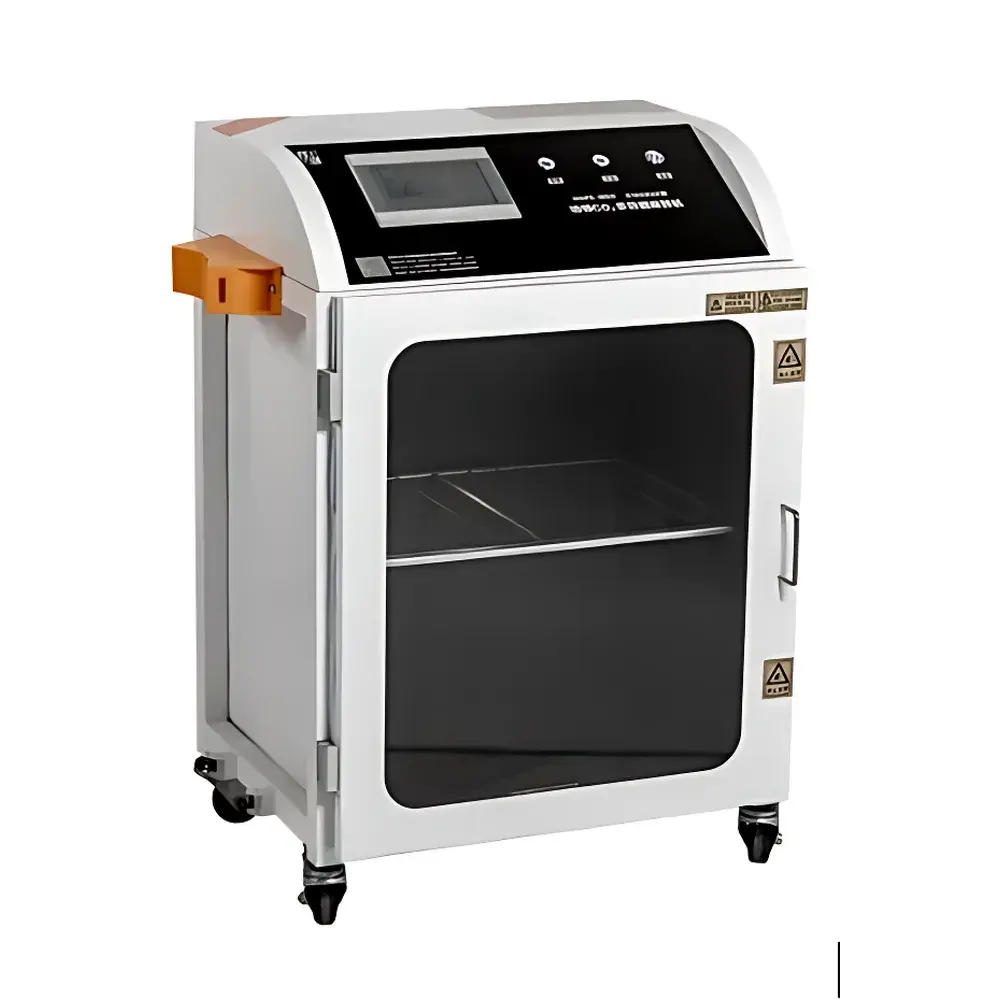
HOPE-MED 8160B2K CO₂ Euthanasia Chamber for Small Laboratory Animals
| Origin | Tianjin, China |
|---|---|
| Manufacturer Type | Authorized Distributor |
| Model | HOPE-MED 8160B2K |
| Price Range | USD 2,800 – 7,000 |
Overview
The HOPE-MED 8160B2K CO₂ Euthanasia Chamber is a purpose-built, regulatory-compliant device engineered for the humane and controlled induction of unconsciousness and subsequent euthanasia in small laboratory animals—including mice, rats, and other rodents—within research, preclinical, and veterinary settings. It operates on the scientifically validated principle of gradual CO₂ displacement of ambient air, inducing rapid loss of consciousness followed by apnea, in accordance with internationally recognized guidelines for humane endpoints (AVMA Guidelines for the Euthanasia of Animals, 2020; EU Directive 2010/63/EU Annex IV). Unlike volatile anesthetic gas systems, this chamber utilizes medical-grade carbon dioxide delivered at precisely regulated flow rates and concentration gradients to ensure consistent, reproducible, and stress-minimized transitions from wakefulness to insensibility—prior to cessation of cardiopulmonary function. The system is not intended for surgical anesthesia maintenance but strictly for terminal procedures where ethical rigor, operator safety, and environmental containment are paramount.
Key Features
- Programmable CO₂ delivery protocol with adjustable ramp-up profiles (e.g., 30%–70% v/v over 60–180 seconds), enabling alignment with institutional animal care and use committee (IACUC) or ethics board-approved protocols.
- Integrated pressure monitoring and feedback-controlled solenoid valves to maintain stable intra-chamber differential pressure (±0.5 kPa), preventing backflow and ensuring consistent gas distribution.
- Sealed, corrosion-resistant stainless-steel and polycarbonate chamber (internal volume: ~24 L) with HEPA-filtered exhaust line and optional CO₂ scrubber integration for lab ventilation compliance.
- Digital touchscreen interface with password-protected access, real-time display of CO₂ concentration (% v/v), elapsed time, and chamber pressure—logged automatically to internal memory (≥10,000 event records).
- Fail-safe interlocks: automatic gas shutoff upon door opening, power interruption, or sensor deviation beyond preset thresholds; audible and visual alarms for out-of-spec conditions.
- Modular design compatible with standard biosafety cabinet workflows and ISO 14644-1 Class 5 cleanroom environments.
Sample Compatibility & Compliance
The HOPE-MED 8160B2K is validated for use with rodents weighing ≤500 g and is not recommended for lagomorphs, non-human primates, or avian species without prior validation per institutional SOPs. Chamber dimensions (W×D×H: 350 × 450 × 380 mm) accommodate up to 10 adult mice or 4–5 rats in group euthanasia mode, with optional partition inserts for individualized restraint-free positioning. The device complies with key regulatory frameworks including NIH OLAW Policy on Humane Care and Use of Laboratory Animals, AAALAC International accreditation standards, and GLP-relevant documentation requirements for audit trails (time-stamped logs, user ID tagging, and exportable CSV reports). All CO₂ supply connections meet EN ISO 8536-4 medical gas outlet specifications.
Software & Data Management
Firmware v3.2 supports encrypted local storage and USB export of session logs containing timestamped CO₂ concentration curves, pressure traces, operator ID, and protocol version. Optional Ethernet/Wi-Fi module enables integration into centralized vivarium management platforms (e.g., LabVantage, Quartzy) via HL7 or RESTful API. Audit trail functionality satisfies FDA 21 CFR Part 11 requirements for electronic records—including immutable timestamps, user authentication, and change history—with no manual logbook dependency. Software updates are delivered via signed firmware packages with SHA-256 verification.
Applications
- Terminal endpoint euthanasia in oncology, immunology, and toxicology studies requiring high-throughput tissue harvesting (e.g., spleen, thymus, bone marrow) under consistent physiological conditions.
- Pre-sacrifice sedation for minimally invasive blood collection (retro-orbital, cardiac puncture) without chemical restraint artifacts.
- Validation of alternative euthanasia methods against benchmark agents (e.g., sodium pentobarbital) in comparative welfare assessments.
- Training modules for IACUC-certified personnel on AVMA-aligned euthanasia technique execution and documentation.
- Supporting 3Rs implementation (Replacement, Reduction, Refinement) through standardized, observer-independent endpoints that reduce inter-operator variability.
FAQ
Is CO₂ euthanasia accepted by major regulatory bodies for rodent studies?
Yes—when performed using validated equipment and protocols, CO₂ euthanasia is endorsed by the AVMA, EU Directive 2010/63/EU, and CCAC (Canada) as a primary method for rodents, provided concentration ramp rates and exposure durations adhere to current scientific consensus.
Can the chamber be used for anesthesia induction only, without proceeding to euthanasia?
No—the HOPE-MED 8160B2K is designed exclusively for terminal CO₂ exposure. It lacks oxygen supplementation, vaporizer integration, or recovery circuitry required for reversible anesthesia.
What maintenance is required for long-term calibration integrity?
Annual verification of CO₂ sensor accuracy (NIST-traceable calibration gas, 5% and 20% v/v) and pressure transducer linearity is recommended; full recalibration service is available through authorized distributors.
Does the system support multi-language UI or remote diagnostics?
The base firmware supports English and simplified Chinese UI; remote diagnostic access (via secure SSH tunnel) is enabled for certified service engineers only, per ISO/IEC 27001 data handling policies.





