
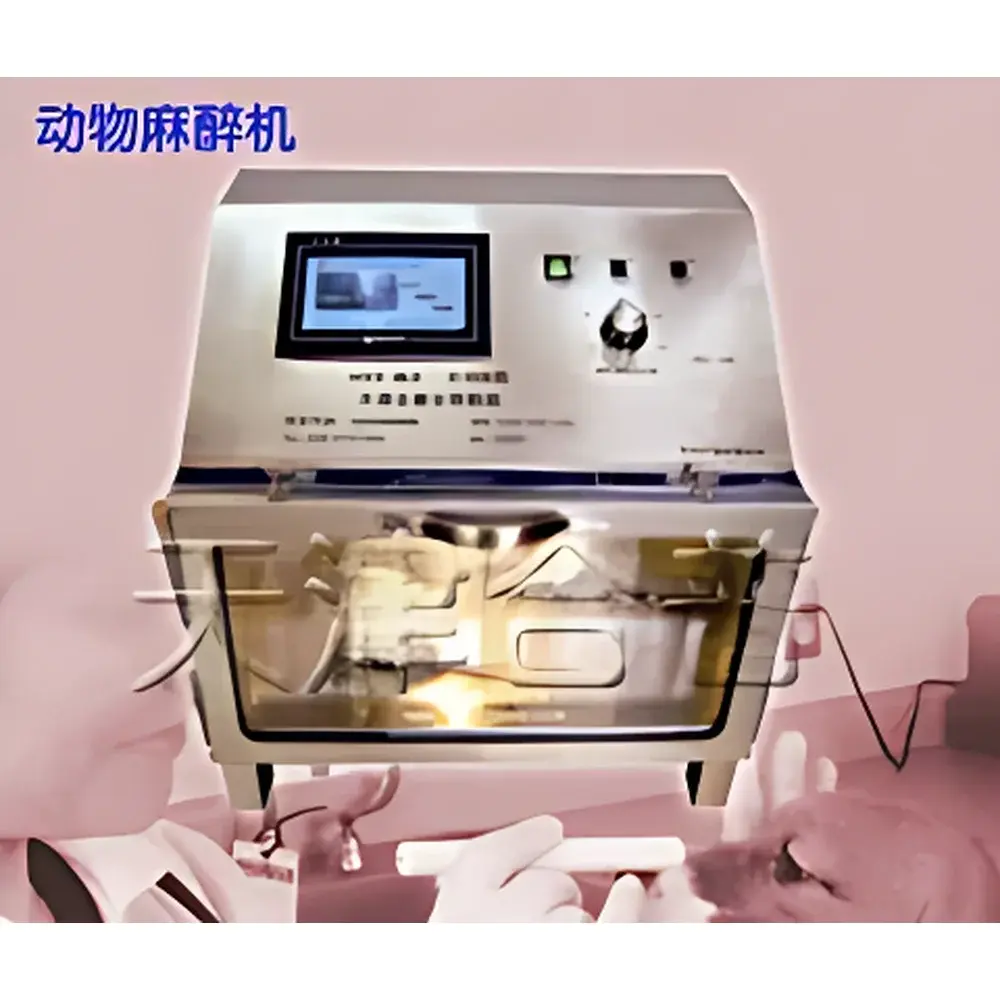
HOPE-MED8160 CO₂-Based Unrestrained Animal Anesthesia and Euthanasia System
| Brand | HOPE-MED |
|---|---|
| Origin | Tianjin, China |
| Manufacturer Type | Authorized Distributor |
| Country of Manufacture | China |
| Model | HOPE-MED8160 |
| Price Range | USD 2,800 – 7,000 |
Overview
The HOPE-MED8160 CO₂-Based Unrestrained Animal Anesthesia and Euthanasia System is an engineered solution for humane, controlled induction of anesthesia and euthanasia in small laboratory animals—primarily rodents (mice, rats) and other species weighing ≤5 kg. It operates on the principle of regulated carbon dioxide (CO₂) gas delivery to induce rapid, non-invasive unconsciousness via inhalation, followed by irreversible cessation of vital functions. Unlike volatile anesthetic agents (e.g., isoflurane), CO₂-based systems provide a chemically inert, non-accumulative method that eliminates residual vapor hazards and simplifies facility ventilation requirements. The system employs a closed-loop chamber design with real-time pressure monitoring and programmable gas flow control, ensuring consistent CO₂ concentration ramping (typically 30–70% v/v over 60–180 seconds), which aligns with AVMA 2020 Guidelines for the Euthanasia of Animals and EU Directive 2010/63/EU Annex VIII requirements for humane endpoints.
Key Features
- Unrestrained animal handling: Chamber-based design eliminates physical restraint, minimizing stress-induced physiological artifacts (e.g., elevated corticosterone, tachycardia) prior to induction.
- Programmable CO₂ delivery profiles: Pre-set protocols allow user-defined ramp rates, dwell times, and final concentration targets—enabling compliance with species-specific AVMA-recommended exposure parameters.
- Integrated pressure monitoring and regulation: Digital transducers continuously track intra-chamber pressure (±0.1 kPa resolution) and automatically adjust inlet/outlet valves to maintain safe, sub-atmospheric or neutral pressure conditions—preventing barotrauma and ensuring operator safety.
- Real-time gas concentration estimation: Calibrated mass flow controllers (MFCs) deliver precise CO₂ volumes; optional integrated NDIR sensor (add-on) enables direct CO₂ %v/v verification per ANSI/ISO 8573-1 Class 4 purity standards.
- Automated cycle logging: Timestamped event records include start time, gas flow rate, pressure trace, and completion status—supporting GLP-compliant documentation and audit readiness.
- Modular construction: Stainless steel 316L chamber, medical-grade silicone seals, and corrosion-resistant internal components ensure long-term reliability and compatibility with standard lab disinfectants (e.g., 70% ethanol, 0.5% sodium hypochlorite).
Sample Compatibility & Compliance
The HOPE-MED8160 accommodates animals up to 5 kg in weight and supports simultaneous processing of multiple subjects (e.g., up to 10 adult mice or 4 rats per cycle) without cross-contamination risk. Chamber volume is 12 L (internal dimensions: 300 × 250 × 160 mm), optimized for uniform gas distribution and rapid equilibration. The system meets ISO 13485:2016 design control principles for medical devices and incorporates fail-safes including redundant pressure relief valves, emergency purge override, and audible/visual alarm triggers for over-pressure, under-flow, or timeout events. Documentation includes CE marking per MDR 2017/745 Annex II technical file requirements and conforms to NIH OLAW Policy on Humane Care and Use of Laboratory Animals (PHS Policy), as well as AAALAC International accreditation expectations for endpoint refinement.
Software & Data Management
The embedded microcontroller runs firmware v2.3+ with embedded diagnostics and configurable operational logs stored on internal flash memory (16 MB). Data export is supported via USB-C interface in CSV format—compatible with LIMS platforms (e.g., LabVantage, STARLIMS) and electronic lab notebooks (ELNs) such as Benchling or LabArchives. Audit trail functionality complies with FDA 21 CFR Part 11 requirements for electronic records: all parameter changes are timestamped, user-ID logged, and immutable upon cycle completion. Optional Ethernet/Wi-Fi module enables remote status monitoring and integration into centralized animal facility management systems.
Applications
- Routine terminal procedures requiring blood collection, tissue harvest, or organ excision under deep sedation.
- Pre-surgical anesthesia for minor interventions where volatile agents are impractical (e.g., field studies, mobile units).
- Euthanasia for genetically modified lines where residual anesthetic metabolites may confound downstream molecular assays (e.g., RNA-seq, metabolomics).
- Behavioral neuroscience studies requiring baseline physiological stability—avoiding restraint-associated autonomic activation.
- Training modules for IACUC-certified personnel on AVMA-aligned humane endpoints and procedural documentation.
FAQ
Does the HOPE-MED8160 comply with AVMA 2020 Euthanasia Guidelines?
Yes—its programmable CO₂ ramping profile (30–70% v/v over ≥60 s) satisfies AVMA’s Category A recommendation for rodents when used in accordance with institutional SOPs.
Can this system be used for non-terminal anesthesia only?
No—it is designed exclusively for terminal anesthesia and euthanasia; it does not support recovery-mode operation or oxygen supplementation for reversible sedation.
Is calibration certification included with purchase?
A factory calibration report (traceable to NIST standards) is provided; annual recalibration using certified gas mixtures is recommended and supported by HOPE-MED’s authorized service network.
What maintenance is required for long-term reliability?
Quarterly inspection of O-rings, biannual MFC verification, and annual pressure sensor validation using dead-weight testers are advised per manufacturer’s Maintenance Schedule Rev. 4.2.
Is the chamber compatible with autoclaving or ethylene oxide sterilization?
The chamber is not autoclavable due to electronic integration; however, all wetted surfaces withstand repeated wipe-downs with EPA-registered disinfectants and are validated for EO compatibility per ISO 10993-7 cytotoxicity testing.




