
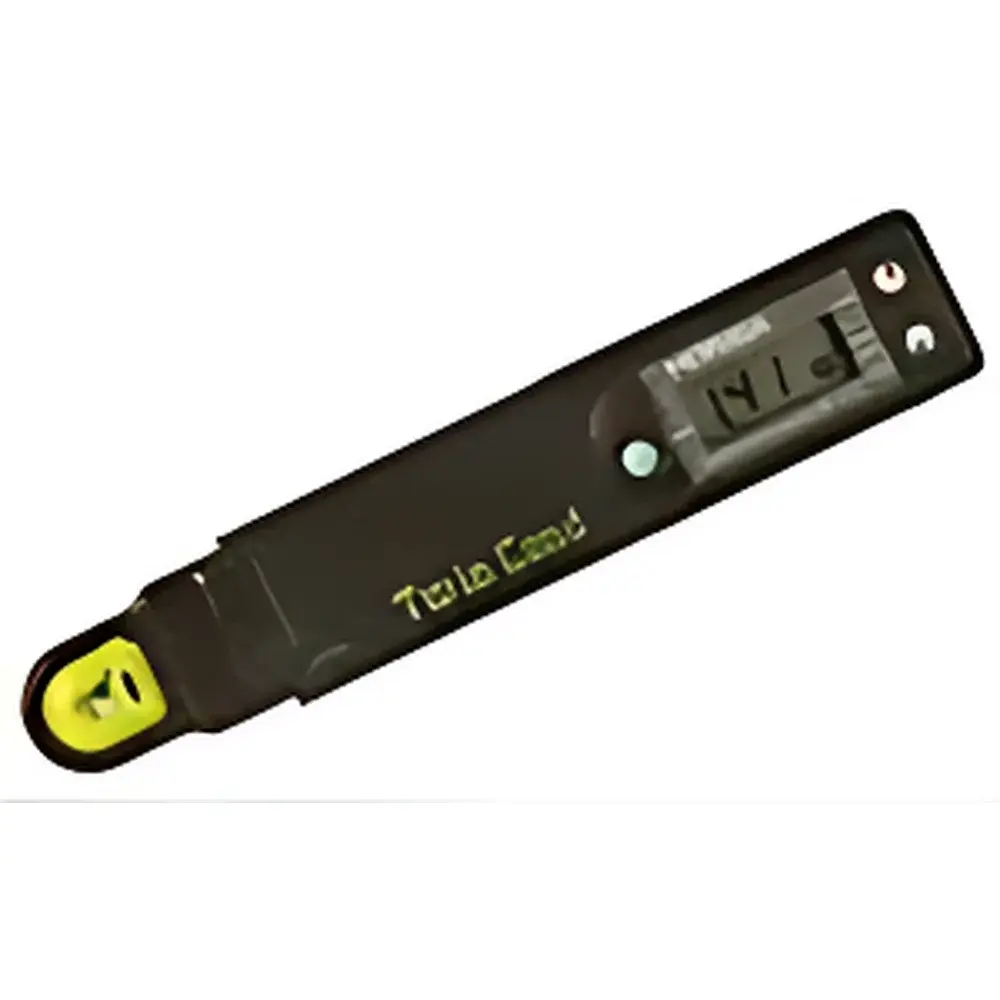
HORIBA B-173 Portable pH and Conductivity Pen Tester
| Brand | HORIBA |
|---|---|
| Origin | Japan |
| Model | B-173 |
| Instrument Type | Portable/HANDHELD Water Quality Analyzer |
| Conductivity Range | 0–199 µS/cm, 0.2–1.99 mS/cm, 2–19.9 mS/cm |
| Resolution | 1 µS/cm, 0.01 mS/cm, 0.1 mS/cm |
| Accuracy | ±2% of reading |
| Salinity Range | 0–1.1% (w/w) |
| Temperature Compensation | Automatic, 5–35 °C with 2%/°C coefficient |
| Power Supply | Two 3V CR2032 batteries (approx. 500 hours lifespan) |
| Dimensions | 15 × 2 × 2 cm (L × W × H) |
| Included | Calibration standard solution (1410 µS/cm KCl) |
Overview
The HORIBA B-173 is a compact, single-handed pH and conductivity pen tester engineered for rapid, on-site water quality assessment in field and laboratory environments. Designed around dual-sensor electrochemical principles—potentiometric measurement for pH (using a glass electrode system) and conductometric measurement for conductivity (via a two-electrode cell)—the B-173 delivers reliable, real-time readings without requiring external instrumentation or complex setup. Its pencil-style form factor enables intuitive operation during routine checks of drinking water, aquaculture systems, hydroponic nutrient solutions, wastewater effluents, and educational demonstrations. The device incorporates automatic temperature compensation (ATC) based on a fixed 2%/°C coefficient within the 5–35 °C operational range, ensuring consistent interpretation of conductivity data across typical ambient conditions encountered in environmental monitoring workflows.
Key Features
- Integrated dual-parameter sensing: Simultaneous pH and conductivity measurement capability in one handheld unit.
- Three-range conductivity auto-ranging: Covers low-conductivity freshwater (0–199 µS/cm), mid-range municipal supplies (0.2–1.99 mS/cm), and higher-salinity samples (2–19.9 mS/cm), with resolution optimized per range.
- Pre-calibrated sensor architecture: Factory-aligned electrodes reduce user calibration burden; includes certified 1410 µS/cm KCl standard solution for field verification.
- Low-power, long-life design: Powered by two standard CR2032 coin cells supporting up to 500 hours of cumulative operation—ideal for extended deployment in remote locations.
- Rugged, pocketable form factor: Dimensions of 15 × 2 × 2 cm and sealed housing provide resistance to incidental moisture and mechanical shock during transport and use.
- Direct-read display with intuitive layout: Large LCD shows measured parameter, unit, temperature, and battery status without menu navigation delays.
Sample Compatibility & Compliance
The B-173 is validated for aqueous solutions with total dissolved solids (TDS) below 20,000 ppm and non-aggressive chemical composition (pH 0–14, no strong oxidizers or HF). It complies with general-purpose environmental testing requirements under ISO 7888 (conductivity of water) and ASTM D1125 (electrical conductivity of water). While not certified for regulated GLP/GMP production environments, its performance meets the technical expectations of field technicians performing preliminary screening per EPA Method 120.1 (conductivity) and ISO 10523 (pH of water). Device construction adheres to IEC 60529 IP65-level ingress protection against dust and low-pressure water jets, suitable for outdoor use in light rain or humid conditions.
Software & Data Management
The HORIBA B-173 operates as a standalone, non-data-logging instrument. It does not interface with PCs, mobile devices, or cloud platforms, nor does it support audit trails or electronic records. This design prioritizes simplicity, reliability, and regulatory neutrality—eliminating validation overhead associated with software-based systems. For users requiring traceable documentation, manual recording of displayed values is recommended, and calibration events should be logged in accordance with internal QA procedures. No firmware updates or driver installation are required, ensuring stable, unchanging measurement behavior over the instrument’s service life.
Applications
- Field verification of potable water compliance prior to distribution or after infrastructure maintenance.
- Routine monitoring of recirculating aquaculture systems (RAS) and aquariums to maintain optimal ion balance and pH stability.
- Quality control of hydroponic and aeroponic nutrient reservoirs, where EC and pH directly influence nutrient bioavailability.
- Educational laboratories for teaching fundamental concepts of ionic strength, electrolyte behavior, and acid-base equilibria.
- Environmental site assessments—including stormwater runoff, irrigation channels, and wetland surveys—where rapid triage informs sampling priorities.
- Pre-screening of industrial process water before dispatch to centralized analytical labs.
FAQ
Does the B-173 support pH calibration?
No—the B-173 is factory-calibrated and not user-adjustable for pH. It is intended for relative trend analysis and pass/fail screening rather than metrologically traceable pH quantification.
Can the B-173 measure TDS directly?
No. TDS is estimated internally using a fixed conversion factor (typically 0.64–0.71 × conductivity), but the display shows only conductivity and pH. Users must apply application-specific conversion factors externally if quantitative TDS reporting is required.
Is the electrode replaceable?
No—the sensor assembly is integrated and non-serviceable. HORIBA specifies a typical functional lifespan of 12–18 months under normal usage conditions; replacement units are supplied as complete B-173 assemblies.
What is the operating temperature limit for accurate conductivity readings?
Measurements are compensated between 5 °C and 35 °C. Outside this range, ATC is disabled and readings reflect raw conductance without correction—users should avoid sampling outside this interval unless performing comparative measurements under controlled thermal conditions.
Does the device meet FDA 21 CFR Part 11 requirements?
No. As a non-networked, non-auditable, non-data-logging instrument, the B-173 falls outside the scope of electronic record and signature regulations. It is appropriate for non-GxP contexts where handwritten logs satisfy documentation needs.
Related Products







