
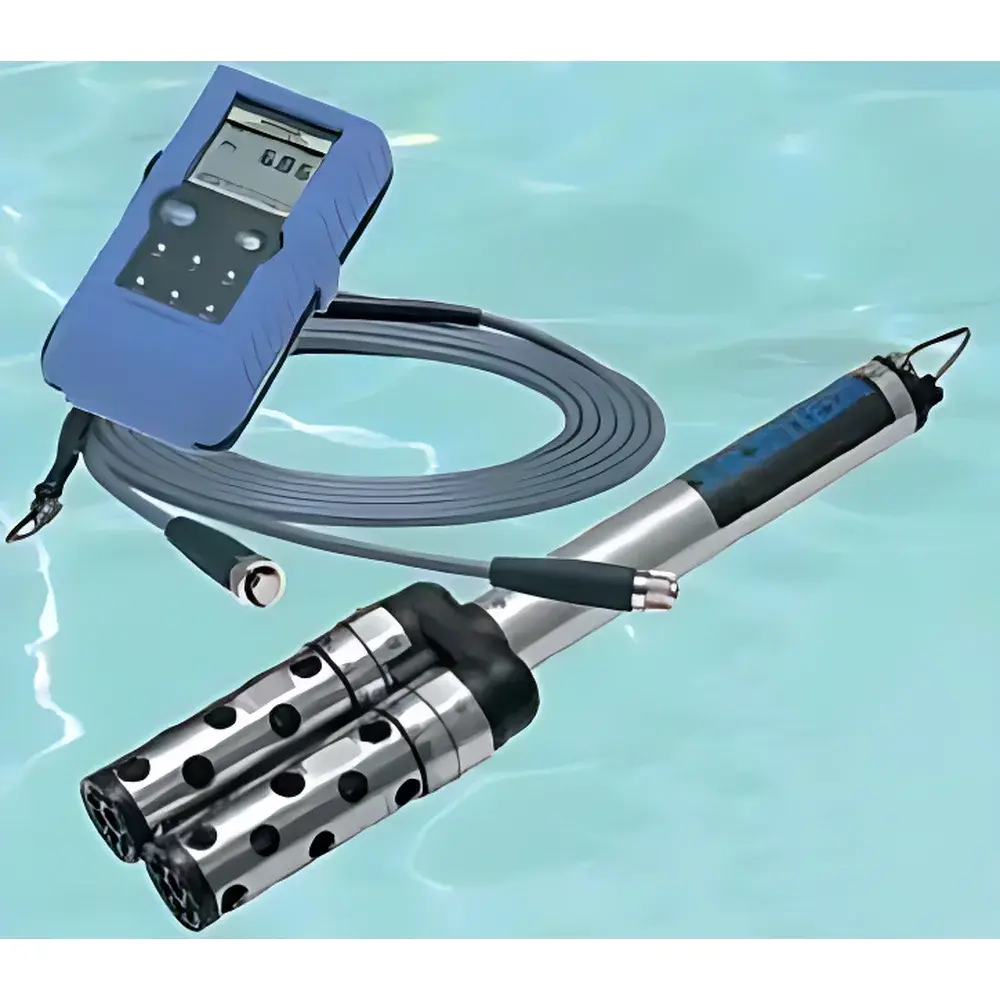
HORIBA W-20XD Series Multi-Parameter Water Quality Monitoring System
| Brand | HORIBA |
|---|---|
| Origin | Japan |
| Model | W-20XD Series (Outdoor Deployment) |
| Instrument Type | Portable Submersible Data Logger |
| Measurement Principle | Electrochemical & Physical Sensor Array (pH, DO, EC, ORP, Turbidity, Depth, Temp, Salinity, TDS, Seawater Specific Gravity, Ion-Selective Electrodes) |
| pH Range | 0–14 |
| pH Accuracy | ±0.1 pH |
| pH Repeatability | ±0.05 pH |
| pH Resolution | 0.01 pH |
| Dissolved Oxygen Range | 0–19.99 mg/L |
| DO Accuracy | ±0.2 mg/L |
| Conductivity Range | 0–9.99 S/m |
| Conductivity Accuracy | ±3% FS |
| Turbidity Range | 0–800 NTU |
| Turbidity Accuracy | ±5% |
| Depth Range | 0–100 m |
| Depth Accuracy | ±5% |
| Operating Temperature | 0–55 °C |
| Storage Temperature | −5–60 °C |
| Waterproof Rating | IP67 (Control Unit) |
| Continuous Logging Duration | 30 Days (2880 Data Points at 15-min Interval) |
| Max Submersion Depth | 100 m |
| Sensor Housing | Impact-Resistant, Pressure-Compensated Enclosure |
| Data Transmission | Remote Wireless Upload (Optional Module) |
Overview
The HORIBA W-20XD Series is a field-deployable, submersible multi-parameter water quality monitoring system engineered for long-term, unattended environmental surveillance in challenging aquatic environments. Designed around a modular sensor architecture and robust pressure-compensated housing, the system operates on proven electrochemical and physical measurement principles—including glass electrode potentiometry (pH), membrane-covered galvanic cell detection (dissolved oxygen), AC four-electrode conductivity, optical transmittance/scatter turbidimetry, piezoresistive pressure sensing (depth), thermistor-based temperature measurement, and ion-selective electrode (ISE) detection for targeted anions and cations. Its core function is autonomous, high-integrity data acquisition under variable hydrostatic load, salinity, and biofouling conditions—making it suitable for regulatory-grade monitoring of estuarine, lacustrine, marine, groundwater, wastewater effluent, and agricultural runoff sites.
Key Features
- Submersible design rated for continuous operation at depths up to 100 meters, with pressure-stabilized sensor chambers and corrosion-resistant titanium/stainless-steel wetted materials.
- Integrated 30-day internal data logger (2880 records at configurable 1–1440 minute intervals), eliminating need for real-time telemetry infrastructure during deployment.
- IP67-rated control unit with optional wireless communication module (LTE-M/NB-IoT or LoRaWAN) for remote data retrieval and firmware updates without physical retrieval.
- Simultaneous measurement of up to 13 parameters: pH, dissolved oxygen (DO), electrical conductivity (EC), salinity, total dissolved solids (TDS), seawater specific gravity (δt, δ₀, δ₁₅), turbidity (NTU), water depth, temperature, oxidation-reduction potential (ORP), and up to five user-selectable ions (e.g., NO₃⁻, Cl⁻, Ca²⁺, F⁻, K⁺, NH₃).
- Automatic temperature compensation across all applicable sensors, with built-in calibration verification routines and two-point pH auto-calibration support.
- Field-serviceable modular probe assembly—individual sensor cartridges can be replaced or upgraded without recalibrating the full array.
Sample Compatibility & Compliance
The W-20XD Series is validated for use in natural freshwater, brackish water, seawater, treated and untreated wastewater, groundwater, and aquaculture systems. Its sensor suite meets performance benchmarks aligned with ASTM D1293 (pH), ASTM D888 (DO), ASTM D5391 (conductivity), ISO 7027 (turbidity), and US EPA Method 180.1 (ion-selective electrode analysis). The system supports GLP-compliant data integrity through timestamped, tamper-evident logging and optional 21 CFR Part 11–enabled software for audit-trail generation. All electronics comply with IEC 61000-6-2/6-4 for electromagnetic immunity and emission in industrial environments.
Software & Data Management
Data export is supported via USB-C interface or over-the-air transmission using HORIBA’s proprietary AquaLink™ Desktop and Cloud Platform. The platform provides time-series visualization, statistical summaries (min/max/avg/std dev), automated alerting (threshold-based SMS/email), QA/QC flagging (e.g., drift detection, sensor timeout), and export to CSV, Excel, or XML for integration into LIMS or GIS workflows. Raw sensor outputs include diagnostic metadata (electrode impedance, membrane status, temperature drift coefficient), enabling root-cause analysis of measurement anomalies. Firmware updates are delivered via signed OTA packages to ensure traceability and cybersecurity compliance.
Applications
- Long-term ecological monitoring of lakes, reservoirs, and coastal zones under national water framework directives (e.g., EU WFD, US Clean Water Act Section 303(d)).
- Regulatory compliance tracking for municipal wastewater discharge permits, including real-time DO and pH trending against effluent limits.
- Groundwater quality assessment in contaminated plume studies, with simultaneous nitrate and chloride profiling to distinguish anthropogenic vs. geogenic sources.
- Aquaculture farm management—continuous monitoring of DO saturation, pH stability, and ammonia (NH₃) concentration to prevent hypoxic stress events.
- Infrastructure health assessment of dams and irrigation canals, where depth, turbidity, and conductivity trends inform sedimentation and infiltration rates.
- Climate resilience studies measuring thermal stratification, salinity intrusion, and carbonate system shifts (via pH + conductivity-derived alkalinity proxies).
FAQ
What is the maximum recommended deployment duration without maintenance?
The W-20XD Series is rated for continuous submerged operation up to 30 days at 15-minute logging intervals; extended deployments require periodic biofouling mitigation (e.g., copper-alloy antifouling sleeve or scheduled cleaning per ASTM D5905).
Can the system operate in freezing conditions or ice-covered water bodies?
The operational temperature range is 0–55 °C; while short-term exposure below 0 °C is mechanically tolerated, prolonged ice contact may impair optical turbidity measurement and pressure transducer response—use with caution in seasonal freeze-thaw environments.
Is sensor calibration traceable to NIST standards?
Yes—HORIBA provides factory calibration certificates traceable to NIST SRMs for pH, DO, and conductivity sensors; field recalibration kits include certified buffer solutions and zero-oxygen standards compliant with ISO 17025-accredited reference labs.
How is data security handled during wireless transmission?
All OTA communications use TLS 1.2+ encryption; device authentication employs X.509 certificates; and data payloads are cryptographically signed to prevent spoofing or replay attacks—fully compliant with IEC 62443-3-3 SL2 requirements.
Does the system support custom parameter derivation (e.g., carbonate alkalinity or saturation indices)?
Yes—AquaLink™ Desktop includes a formula editor allowing users to define derived parameters using arithmetic operations and conditional logic across logged variables, with units propagation and error propagation modeling.







