
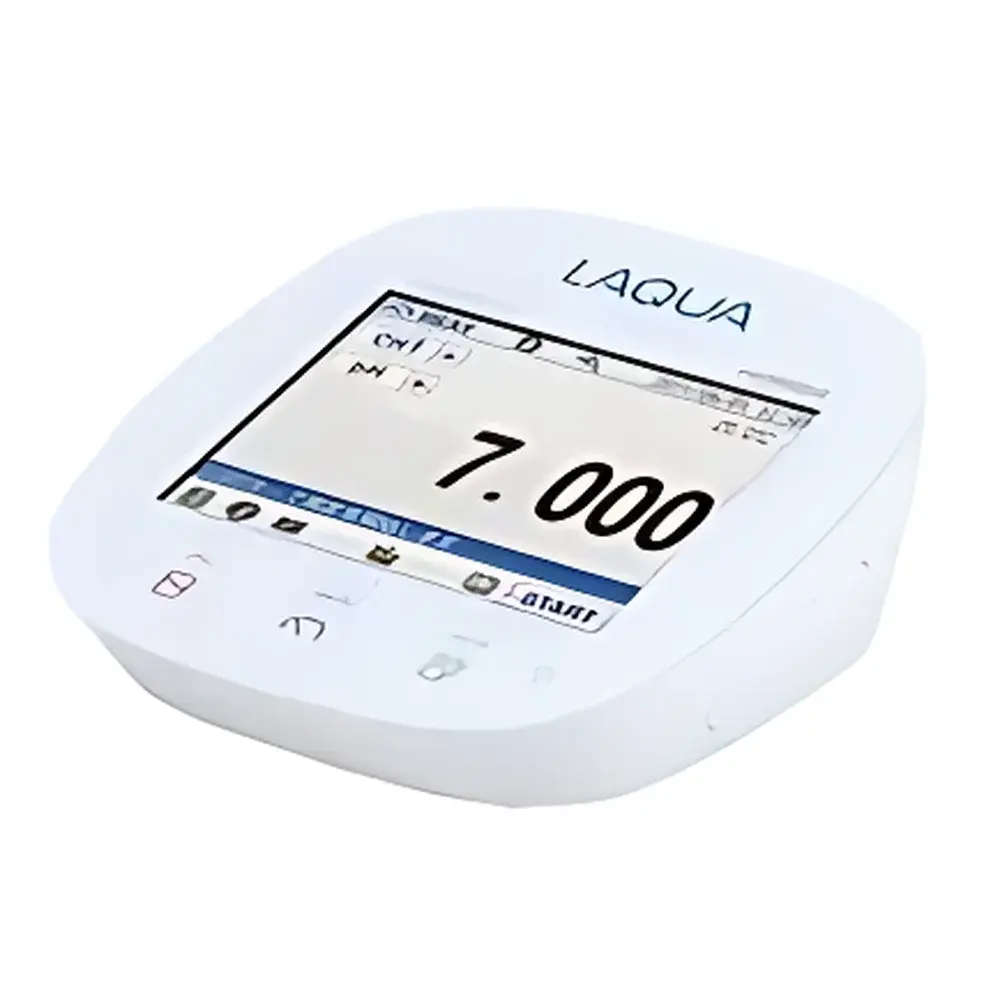
HORIBA ES-71 Benchtop Conductivity Meter
| Brand | HORIBA |
|---|---|
| Origin | Japan |
| Instrument Type | Benchtop |
| Measurement Parameters | Conductivity, Resistivity, TDS, Salinity, Temperature |
| Conductivity Range | 0–200 S/m (configurable via cell constant: 0.000 mS/m–199.9 S/m) |
| TDS Range | 0.01 mg/L–100 g/L |
| Resistivity Range | 0.000 Ω·m–1.999 MΩ·m |
| Salinity Range | 0.00–80.00 ppt |
| Temperature Range | 0.0–100.0 °C (extended to −30.0–130.0 °C with optional probe) |
| Accuracy | ±0.5% of full scale |
| Resolution | 0.05% F.S. for conductivity/resistivity/salinity/TDS |
| Temperature Resolution | 0.1 °C |
| Repeatability | ±0.5% F.S. ±1 digit (conductivity/resistivity) |
| Data Storage | 999 measurement records |
| Compliance | JIS Z 8806, USP <645>, EP 2.2.38, JP XVI, CP 2020 Chapter 0903 |
| Connectivity | USB port for PC communication and data export |
| Power Supply | AC adapter (100–240 V, 50/60 Hz), ~0.7 VA |
| Weight | ~500 g |
| Display | Capacitive touchscreen (full graphical interface) |
Overview
The HORIBA ES-71 Benchtop Conductivity Meter is a precision-engineered electrochemical analyzer designed for rigorous laboratory environments requiring traceable, reproducible, and regulatory-compliant measurements of aqueous solution properties. It operates on the principle of two-electrode alternating current (AC) conductometry—eliminating polarization errors and enabling stable, low-drift readings across wide dynamic ranges. Unlike single-frequency or DC-based systems, the ES-71 employs dual-frequency AC excitation to minimize electrode fouling effects and ensure accurate conductivity determination in samples ranging from ultrapure water (e.g., pharmaceutical WFI or PW) to high-ionic-strength industrial effluents. Its architecture integrates real-time temperature compensation (ATC) using a built-in Pt1000 sensor or external probe, adhering to the ISO 7888 and ASTM D1125 standard methodologies for conductivity-to-resistivity, TDS, and salinity conversion. The instrument is purpose-built for laboratories operating under Good Laboratory Practice (GLP) and Good Manufacturing Practice (GMP) frameworks, supporting audit-ready workflows through timestamped data logging and configurable user access levels.
Key Features
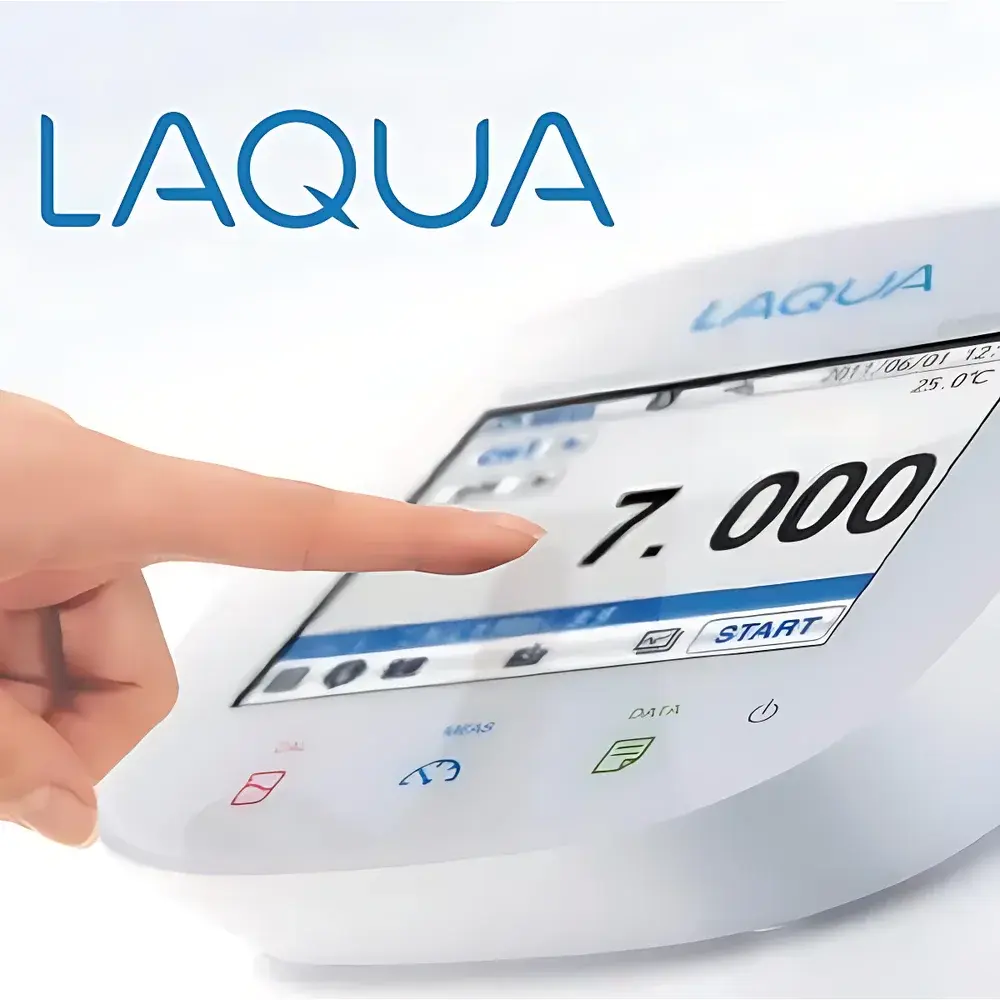
- Capacitive touchscreen interface with intuitive, icon-driven navigation—enabling rapid parameter selection, calibration confirmation, and diagnostic guidance without keyboard input.
- Multi-parameter simultaneous display: conductivity, resistivity, TDS, salinity, and temperature—all updated in real time with auto-ranging and unit toggling (e.g., µS/cm ↔ S/m, ppm ↔ ppt).
- Cell constant flexibility: supports three standardized electrode configurations (K = 0.1 m⁻¹, 1.0 m⁻¹, 10.0 m⁻¹), automatically recognized via plug-and-play connector encoding to prevent range mismatch errors.
- Regulatory navigation system: embedded checklists for JIS Z 8806 verification, USP system suitability testing, and EP 2.2.38 calibration validation—including step-by-step prompts for electrode conditioning, blank correction, and drift assessment.
- Self-diagnostic fault resolution: on-screen troubleshooting trees guide users through common issues (e.g., “No signal detected”, “Calibration slope out of tolerance”) with actionable remediation steps aligned with manufacturer service protocols.
- Robust mechanical design: compact housing (W × D × H: 190 × 220 × 85 mm), shock-absorbing rubber feet, and IP20-rated enclosure suitable for Class 10,000 cleanroom-adjacent benchtop use.
Sample Compatibility & Compliance
The ES-71 accommodates a broad spectrum of aqueous matrices—from deionized water and buffer solutions to seawater analogs and process rinse waters—without requiring hardware modification. Its AC conductometric method inherently suppresses interference from redox-active species, suspended solids (up to 50 mg/L turbidity), and moderate organic content (<50 mg/L TOC). All measurement algorithms comply with internationally harmonized definitions: TDS calculation follows the linear conversion factor (0.5–0.7) selectable per USP/EP guidelines; salinity derives from the PSS-78 equation implemented per IAPSO standards; and resistivity is computed as the reciprocal of conductivity with automatic temperature normalization to 25 °C. The device meets essential regulatory requirements for pharmaceutical water testing, including USP Category A (WFI/PW), EP 2.2.38 Annex II (system suitability), and JP XVI General Test Chapter 2.38. Full traceability is ensured via GLP-mode logging: each stored record includes operator ID, timestamp, electrode serial number, calibration history, and environmental conditions (ambient temperature/humidity if logged externally).
Software & Data Management
Data integrity is maintained through native USB 2.0 interface support for direct export to CSV or proprietary .hor format files. When connected to a Windows PC running HORIBA’s optional LabSolution software (v3.2+), users gain access to advanced features including automated report generation compliant with 21 CFR Part 11 (electronic signatures, audit trails, role-based permissions), batch trend analysis across multiple instruments, and deviation flagging against user-defined specification limits. Internal memory retains 999 timestamped entries with metadata (date/time, parameter values, cell constant, temperature, calibration status). No cloud dependency or subscription model is required—data remains under full user control at all times. Firmware updates are delivered via signed binary packages validated through SHA-256 checksums, ensuring cryptographic integrity during field upgrades.
Applications
- Pharmaceutical QC labs performing routine WFI, PW, and purified water conductivity verification per USP Stage 1–3 testing protocols.
- Environmental monitoring laboratories quantifying TDS and salinity in surface water, groundwater, and wastewater effluents for EPA Method 120.1 compliance.
- Chemical manufacturing facilities validating rinse water purity during equipment cleaning verification (CCV) and process hold-time studies.
- Academic research groups conducting ion transport studies in electrolyte solutions, battery electrolyte characterization, or membrane permeability assays.
- Food & beverage R&D labs assessing mineral content in beverages, brines, and dairy processing streams via calibrated TDS-to-conductivity correlation.
FAQ
Does the ES-71 support automatic temperature compensation (ATC)?
Yes—ATC is enabled by default using either the integrated Pt1000 sensor or an external temperature probe (optional). Compensation follows the linear or nonlinear (CaCl₂-based) algorithm per user selection, aligned with ISO 7888 Annex B.
Can the ES-71 be used for USP purified water testing?
Yes—the instrument includes preconfigured USP test modes with automated pass/fail evaluation, system suitability checks, and printable reports meeting FDA expectations for electronic records.
Is electrode calibration traceable to NIST standards?
While the ES-71 itself is not a primary standard, it accepts NIST-traceable KCl reference solutions (e.g., 1413 µS/cm, 12.88 mS/cm) and stores calibration certificates with date, solution lot number, and technician ID.
What is the maximum allowable sample temperature during measurement?
The standard temperature probe supports 0.0–100.0 °C continuously; with the optional high-temp probe (HORIBA P-310), the range extends to −30.0–130.0 °C, maintaining ±0.1 °C accuracy.
How does the ES-71 handle electrode fouling in viscous or particulate-laden samples?
The dual-frequency AC excitation minimizes polarization buildup, and the instrument provides real-time conductivity stability indicators. For persistent fouling, the “Electrode Maintenance” menu guides users through soak-cleaning protocols using recommended reagents (e.g., 0.1 M HNO₃ for carbonate deposits).




