
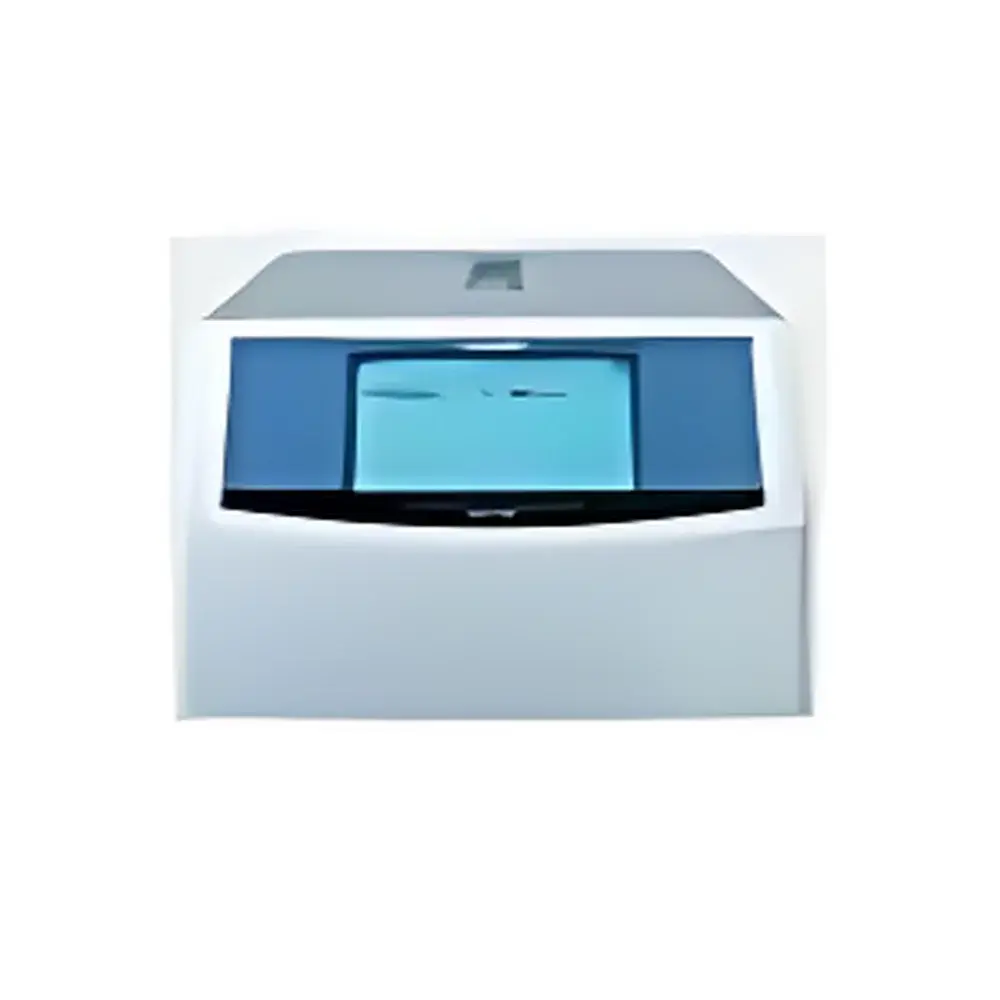
HORIBA FV-250 Portable Total Volatile Organic Compounds Analyzer
| Brand | HORIBA |
|---|---|
| Origin | Japan |
| Model | FV-250 |
| Instrument Type | Portable |
| Detection Principle | Flame Ionization Detection (FID) |
| Measurement Range | 0–10 / 20 / 50 / 100 / 200 / 500 / 1,000 / 2,000 / 5,000 / 10,000 ppmC |
| Resolution | ±1.0% FS |
| Accuracy | ±1.0% FS |
| Response Time (T90) | <2.0 s |
| Drift | ±1.0% FS / 8 h |
| Linearity | ±1.0% FS |
| Sampling Flow Rate | ~600 mL/min |
| Warm-up Time | ~1 h |
| Operating Temperature | 5–35 °C |
| Operating Humidity | <85% RH |
| Power Supply | AC 100 V, 50/60 Hz |
| Power Consumption | 50 VA |
| Dimensions | 260(W) × 260(H) × 510(D) mm |
| Output Signals | DC 0–1 V, RS-232C |
| Data Storage | CompactFlash (CF) card |
| Safety Features | Automatic H₂ shutoff and alarm upon flameout |
Overview
The HORIBA FV-250 is a field-deployable, portable total volatile organic compounds (TVOC) analyzer engineered for real-time, quantitative measurement of hydrocarbon-based VOCs in ambient air, industrial workspaces, indoor environments, and emission source testing applications. It employs flame ionization detection (FID), a well-established, highly sensitive, and linear analytical technique widely accepted in regulatory and industrial compliance contexts. Unlike photoionization detectors (PID) or metal oxide semiconductor (MOS) sensors, FID provides near-universal response to most organic compounds—particularly aliphatic and aromatic hydrocarbons—with minimal dependence on molecular structure. The FV-250 delivers stable baseline performance, low power consumption (50 VA), and rapid thermal stabilization (~1 hour warm-up), enabling reliable operation in mobile monitoring campaigns, leak detection surveys, and occupational hygiene assessments.
Key Features
- True portable architecture: Compact footprint (260 × 260 × 510 mm) and lightweight design facilitate single-operator deployment in confined spaces, rooftops, or remote sites without external support equipment.
- Multi-range auto-switching capability: Automatically selects optimal measurement span (from 0–10 ppmC to 0–10,000 ppmC) based on real-time concentration, eliminating manual range selection errors and ensuring full-scale accuracy across dynamic exposure scenarios.
- Sub-two-second T90 response time: Enables high-temporal-resolution monitoring of transient VOC plumes—critical for source identification, process upsets, or fugitive emission quantification.
- Integrated safety system: Monitors flame status continuously; triggers audible/visual alarm and cuts off hydrogen supply within milliseconds upon flame extinction—meeting IEC 61010-1 functional safety expectations for laboratory and field instrumentation.
- Intuitive 4.3-inch resistive touch display: Supports menu-driven configuration, live concentration readouts, trend graphing (time-series visualization), and real-time status indicators (e.g., flame health, flow rate, battery level).
- Robust data handling: Internal CompactFlash (CF) card logging with configurable sampling intervals; simultaneous RS-232C serial output enables direct connection to PCs, SCADA systems, or third-party data acquisition platforms for long-term archival and audit-ready reporting.
Sample Compatibility & Compliance
The FV-250 is optimized for gaseous samples drawn from ambient air, stack effluents (with appropriate dilution or conditioning), and indoor breathing zones. It responds quantitatively to C₁–C₁₂ hydrocarbons and many oxygenated VOCs (e.g., alcohols, ketones, esters), calibrated as ppmC (parts per million carbon-equivalent). While not certified to specific ISO or ASTM standards out-of-the-box, its FID methodology aligns with principles referenced in EPA Method 25A, ISO 11890-2, and EN 14792 for total hydrocarbon quantification. When operated under documented procedures—including daily zero/span verification, traceable calibration gas use, and environmental condition logging—the instrument supports GLP-compliant data generation. Its analog (0–1 V) and digital (RS-232C) outputs are compatible with systems configured for FDA 21 CFR Part 11–compliant audit trails when integrated into validated software environments.
Software & Data Management
No proprietary PC software is bundled with the FV-250; however, its RS-232C interface conforms to standard ASCII protocol with configurable baud rates (default: 9600 bps), allowing seamless integration with LabVIEW, MATLAB, Python-based DAQ scripts, or enterprise environmental management systems (EMS). CF card storage records timestamped concentration values, instrument status flags, and operational metadata in plain-text CSV format—ensuring platform independence and long-term readability. Users may implement custom post-processing workflows for trend analysis, exceedance flagging, or report generation compliant with ISO 14001 or OSHA PEL documentation requirements.
Applications
- Industrial hygiene monitoring: Real-time assessment of worker exposure to VOC mixtures in paint booths, printing facilities, chemical handling areas, and semiconductor cleanrooms.
- Indoor air quality (IAQ) audits: Rapid screening of building-related VOC sources (adhesives, coatings, furnishings) prior to occupancy or after renovation.
- Fugitive emission detection: Mobile surveying along pipe flanges, valves, and storage tank seals using probe extension kits.
- Environmental site assessment: Preliminary screening at brownfield sites, landfill perimeter monitoring, and vapor intrusion investigations.
- Process validation and troubleshooting: On-line verification of abatement system efficiency (e.g., thermal oxidizers, activated carbon beds) during commissioning or maintenance.
FAQ
What calibration gases are required for routine operation?
Certified methane-in-air or propane-in-air standard gases (traceable to NIST or equivalent national metrology institutes) are recommended for span calibration; zero air (hydrocarbon-free, <0.1 ppmC) is required for zero adjustment.
Can the FV-250 measure individual VOC species?
No—it reports total ionizable carbon (ppmC) as a summed signal. For speciated analysis, coupling with GC-FID or GC-MS is necessary.
Is hydrogen gas supply included with the instrument?
No—users must procure and manage compressed hydrogen (≥99.999% purity) and associated regulators/hoses separately, following local fire code and workplace safety regulations.
Does the FV-250 support battery-powered operation?
It operates exclusively on AC 100 V input; external portable inverters or UPS units may be used in field settings lacking mains power.
How often should the FID nozzle and collector electrode be cleaned?
Cleaning frequency depends on sample matrix; for clean ambient air, quarterly maintenance suffices; for high-particulate or condensable VOC environments, monthly inspection and cleaning per HORIBA Maintenance Manual Rev. 3.2 is advised.







