
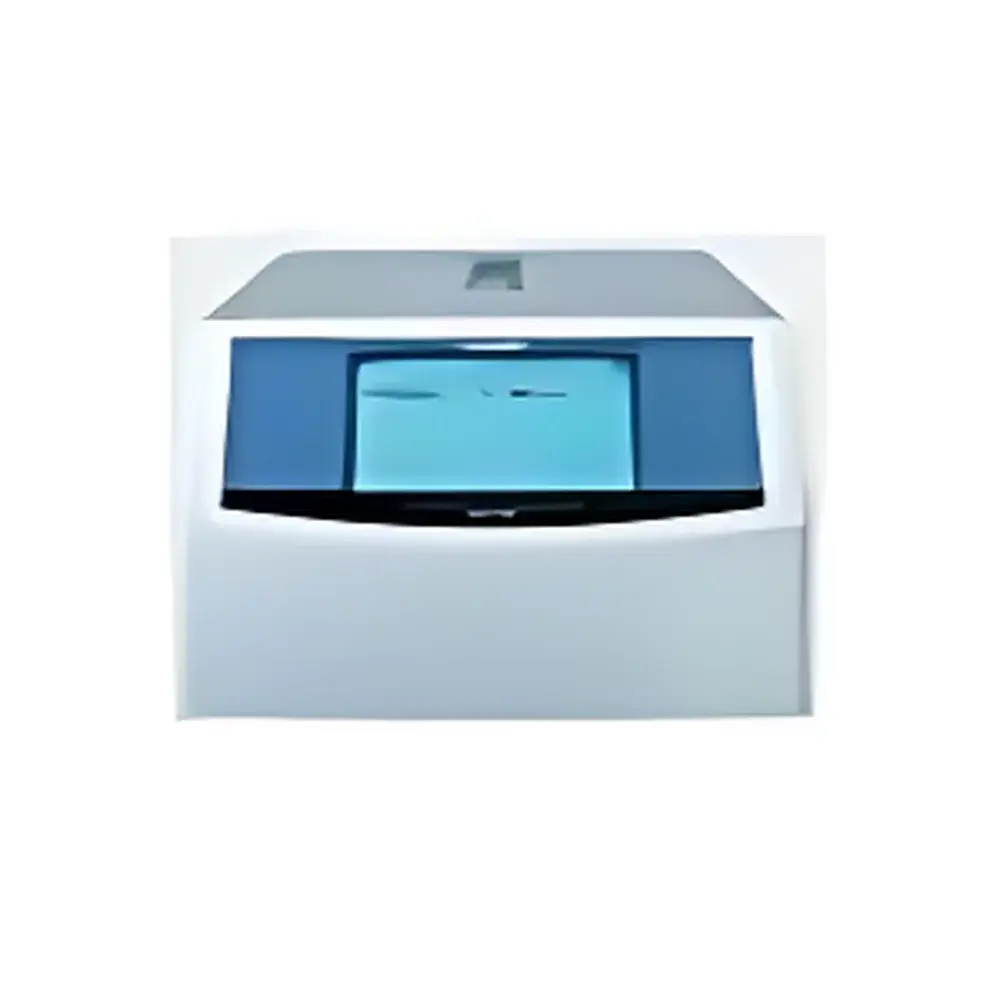
HORIBA FV-250 Portable TVOC Analyzer with Flame Ionization Detection
| Brand | HORIBA |
|---|---|
| Origin | Japan |
| Model | FV-250 |
| Instrument Type | Portable VOC Analyzer |
| Detection Principle | Flame Ionization Detection (FID) |
| Measurement Range | 0–10 / 20 / 50 / 100 / 200 / 500 / 1,000 / 2,000 / 5,000 / 10,000 ppmC |
| Resolution | ±1.0% FS |
| Accuracy | ±1.0% FS |
| Response Time (T90) | < 2.0 s |
| Drift | ±1.0% FS / 8 h |
| Linearity | ±1.0% FS |
| Sampling Flow Rate | ~600 mL/min |
| Warm-up Time | ~1 h |
| Operating Temperature | 5–35 °C |
| Operating Humidity | < 85% RH |
| Output Signals | DC 0–1 V, RS-232C |
| Power Supply | AC 100 V, 50/60 Hz |
| Power Consumption | 50 VA |
| Dimensions | 260(W) × 260(H) × 510(D) mm |
| Data Storage | CF card |
| Safety Feature | Automatic H₂ shutoff and alarm upon flameout |
Overview
The HORIBA FV-250 is a high-performance, portable total volatile organic compounds (TVOC) analyzer engineered for real-time, quantitative measurement of hydrocarbon-based vapors in ambient air, industrial workspaces, indoor environments, and emission source testing. It employs flame ionization detection (FID), a well-established, highly sensitive, and linear analytical technique widely accepted in regulatory and industrial applications for its robust response to most organic compounds (excluding formaldehyde, formic acid, and other non-ionizable species). Unlike photoionization detectors (PID), the FID principle provides superior linearity across wide concentration ranges—up to 10,000 ppmC—with minimal matrix interference and excellent signal stability. The instrument is designed for field-deployable operation without compromising laboratory-grade repeatability or traceability. Its compact footprint, integrated hydrogen supply management, and low power consumption (50 VA) make it suitable for extended battery-assisted mobile monitoring, stack testing, and leak detection surveys where portability and rapid response are critical.
Key Features
- True real-time analysis with T90 response time under 2 seconds—enabling dynamic plume tracking and transient emission characterization.
- Auto-ranging capability: seamlessly switches between ten preset full-scale ranges (0–10 ppmC to 0–10,000 ppmC) based on measured concentration, eliminating manual range selection errors.
- Integrated automatic zero and span calibration function, reducing operator dependency and ensuring long-term measurement consistency.
- Intuitive 5.7-inch color touchscreen interface with graphical trend display—supports real-time concentration history visualization over user-defined time windows (e.g., 1 min to 24 h).
- Onboard CF card data logging with timestamped records (concentration, range, status flags, ambient conditions); supports CSV export for post-processing in Excel or LIMS-compatible software.
- Dual-output connectivity: analog DC 0–1 V output for PLC integration and RS-232C serial interface for PC-based data acquisition, remote configuration, and firmware updates.
- Fail-safe hydrogen management system: detects flame extinction via ion current monitoring and triggers immediate hydrogen gas cutoff plus audible/visual alarm—fully compliant with IEC 61000-6-4 and local industrial safety codes.
Sample Compatibility & Compliance
The FV-250 responds quantitatively to aliphatic, aromatic, and chlorinated hydrocarbons—including benzene, toluene, xylene (BTX), hexane, propane, and ethylene—with near-uniform sensitivity expressed as ppmC (parts-per-million carbon equivalent). It does not detect inorganic gases (e.g., CO, NOx, SO2), methanol, ethanol, acetone, or highly polar VOCs such as acetic acid. As an FID-based system, it meets the fundamental performance criteria outlined in ASTM D6348–21 (Standard Test Method for Determination of Gaseous Compounds by Gas Chromatography) for detector suitability, and aligns with EPA Method 25A principles for total hydrocarbon quantification. While not certified as a Class I, Division 1 hazardous area device, its design adheres to IP20 ingress protection and CE marking requirements for electromagnetic compatibility (EMC) and low-voltage directive compliance. Routine verification can be performed using certified NIST-traceable methane or propane standards.
Software & Data Management
The FV-250 operates standalone but integrates fully with HORIBA’s optional PC-based FV-Link software suite. This application enables advanced data handling including multi-channel synchronization (when used with auxiliary sensors), customizable report generation (PDF/Excel), audit trail logging, and user-access-level control (operator, supervisor, administrator). All calibration events, alarm logs, and configuration changes are time-stamped and stored locally on the CF card. When deployed in regulated environments—such as pharmaceutical cleanroom monitoring or occupational health surveillance—the system supports GLP-compliant workflows through configurable electronic signatures, data immutability settings, and optional 21 CFR Part 11 readiness modules (requires validated software version and network authentication infrastructure).
Applications
- Indoor air quality (IAQ) assessment in offices, schools, hospitals, and residential buildings per ISO 16000-22 and EN 13725 guidelines.
- Industrial hygiene monitoring for OSHA PEL and ACGIH TLV compliance in petrochemical, coating, printing, and semiconductor fabrication facilities.
- Environmental site assessments—including soil vapor intrusion studies and landfill perimeter monitoring—where rapid screening precedes GC-MS confirmation.
- Process validation and fugitive emission detection during maintenance, startup/shutdown, or turnaround activities.
- Research applications requiring high-temporal-resolution VOC profiling, such as atmospheric chemistry field campaigns or material off-gassing studies (e.g., ASTM D5116).
FAQ
What compounds does the FV-250 detect, and how is the result reported?
The FV-250 reports total VOC concentration as ppmC (parts-per-million carbon), calibrated against methane or propane. It detects most organic compounds containing C–H bonds but exhibits negligible response to formaldehyde, CO, CO₂, NOₓ, SO₂, and permanently polar solvents.
Is external hydrogen supply required, and what safety provisions exist?
Yes—the instrument requires ultra-high-purity hydrogen (≥99.999%) delivered via external cylinder or generator. Integrated flame-out detection triggers automatic solenoid valve closure within 100 ms, accompanied by visual and audible alerts.
Can the FV-250 be used in explosive atmospheres?
No—it is not intrinsically safe or explosion-proof rated. Operation is restricted to non-hazardous locations per NEC Class I, Division 2 or ATEX Zone 2 classification.
How often must the FV-250 be calibrated, and what standards are recommended?
Initial calibration should be performed before first use; subsequent verification is recommended daily for critical applications or prior to each sampling shift. Certified gas standards traceable to NIST (e.g., 100 ppmC methane in air) are preferred for zero/span checks.
Does the instrument support remote data transmission or cloud connectivity?
The base model includes RS-232 only. Optional Ethernet or 4G LTE modules are available through HORIBA’s OEM integration program, enabling MQTT or Modbus TCP communication for SCADA or IIoT platform ingestion.
Related Products







