
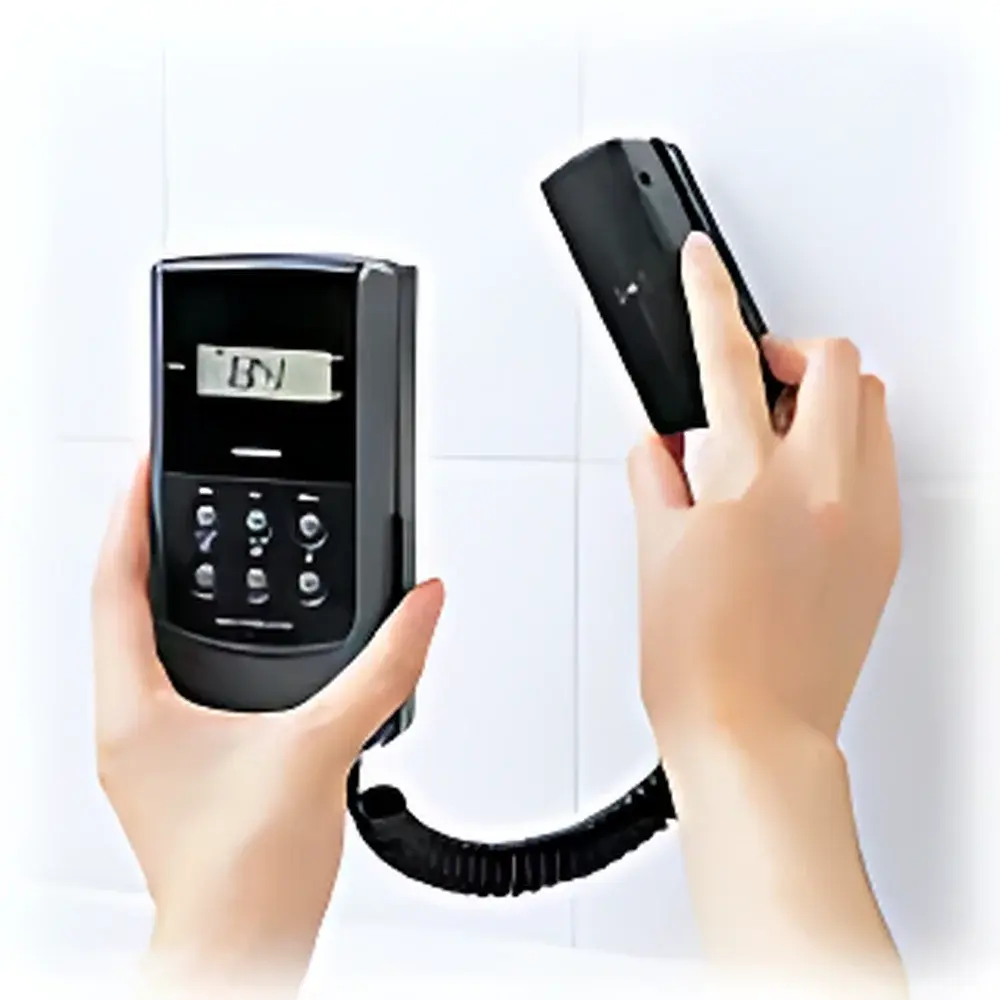
Horiba IG-331 Portable Gloss Meter
| Origin | Japan |
|---|---|
| Manufacturer Type | Authorized Distributor |
| Origin Category | Imported |
| Model | IG-331 |
| Pricing | Available Upon Request |
Overview
The Horiba IG-331 Portable Gloss Meter is a precision optical instrument engineered for objective, repeatable quantification of surface gloss—defined as the specular reflectance of a material under controlled geometric conditions. Based on the principle of specular reflection measurement at standardized incident/detection angles (20° and 60°), the IG-331 conforms to international gloss measurement standards including ISO 2813, ASTM D523, and JIS Z8741. Unlike subjective visual assessment—which exhibits high inter-observer variability and poor memory retention—the IG-331 delivers traceable numerical data (reported in gloss units, GU) that supports consistent quality evaluation across production lines, finishing operations, and maintenance workflows. Its compact, battery-powered architecture eliminates warm-up time and enables immediate deployment in factory floors, automotive paint booths, architectural site inspections, or laboratory environments—without reliance on external power or calibration infrastructure.
Key Features
- Switchable measurement geometry: Dual-angle capability (20° and 60°) enables accurate assessment across low-to-high gloss ranges; 60° is the default standard for general-purpose evaluation, while 20° provides enhanced sensitivity for highly reflective surfaces (GU > 70) where 60° measurements approach saturation.
- Modular, detachable optical head: The sensor unit separates from the main display body via a robust coaxial cable, allowing flexible positioning in confined, elevated, or ergonomically challenging locations—improving both operator safety and measurement repeatability.
- One-touch auto-calibration: A single press of the CAL button initiates a full internal calibration sequence using the built-in reference standard, eliminating manual zeroing or external calibration tiles during routine operation.
- LED light source (890 nm): Provides stable, narrow-band illumination with semi-permanent lifetime (>50,000 hours), ensuring long-term photometric consistency without spectral drift or lamp replacement.
- High-resolution silicon photodiode (SPD) detector: Optimized for angularly resolved reflectance capture with ±5% F.S. repeatability and 1 GU resolution across the full 0–199 GU display range.
- Extended operational autonomy: Powered by four AA alkaline batteries (R6P), supporting over 50 hours of continuous use; includes real-time battery level indicator and automatic power-down after 5 minutes of inactivity.
Sample Compatibility & Compliance
The IG-331 is validated for non-destructive gloss assessment of flat or gently curved solid surfaces—including painted metal, coated plastics, lacquered wood, ceramic tiles, printed packaging, and polished stone. Its 3 × 6 mm elliptical measurement spot (60° mode) and 3 × 4 mm spot (20° mode) ensure representative sampling while minimizing edge effects. The instrument complies with ISO/IEC 17025-relevant metrological practices for field-deployable optical testers and supports GLP-aligned documentation through its built-in data hold and out-of-range alert functions. While not FDA 21 CFR Part 11-certified as a standalone system, its objective output facilitates integration into regulated quality management systems (QMS) requiring auditable surface finish verification per ASTM D523 Annex A1 or ISO 2813 Clause 6.
Software & Data Management
The IG-331 operates as a stand-alone handheld device with no embedded Bluetooth, USB, or PC connectivity. All measurement data remain on-device only—displayed numerically in real time with hold function for recording. Users manually log results into external spreadsheets, LIMS, or paper-based QC forms. This design prioritizes operational simplicity, electromagnetic immunity in industrial settings, and compliance with environments restricting wireless emissions. For laboratories requiring digital traceability, Horiba recommends pairing the IG-331 with its optional RS-232 interface kit (sold separately) and Horiba GlossLink™ desktop software (v3.2+), which enables batch export, statistical process control (SPC) charting, and PDF report generation compliant with ISO 9001 clause 8.2.4.
Applications
- Automotive OEM and aftermarket: Quantitative verification of clear-coat gloss uniformity post-polishing or repainting; monitoring gloss degradation during weathering tests.
- Architectural coatings: In-field validation of gloss specification adherence for interior wall paints, ceiling finishes, and exterior cladding systems.
- Consumer electronics: Final inspection of anodized aluminum housings, glass displays, and injection-molded polymer components.
- Flooring maintenance: Objective tracking of gloss recovery following buffing, crystallization, or topical sealant application on marble, terrazzo, and vinyl composite tile (VCT).
- Printing & packaging: Consistency checks for varnish, lamination, and foil stamping gloss levels across print runs per ISO 12647-2.
FAQ
What is the recommended measurement angle for general-purpose gloss testing?
The 60° geometry is internationally recognized as the standard for routine gloss evaluation across most industrial substrates.
When should I switch to the 20° measurement mode?
Use 20° when measuring surfaces that yield readings above 70 GU at 60°, as this prevents signal saturation and improves discrimination in the high-gloss region.
Does the IG-331 require periodic recalibration with external standards?
No—its one-touch auto-calibration uses an integrated reference surface; however, annual verification against NIST-traceable ceramic standards is recommended for ISO 17025-accredited labs.
Can the IG-331 measure curved or textured surfaces?
It is designed for flat or moderately curved surfaces; pronounced curvature or coarse texture may exceed the effective aperture and compromise accuracy.
Is the LED light source replaceable by the user?
No—the 890 nm LED is sealed within the optical module and rated for semi-permanent operation; replacement requires factory service.



