
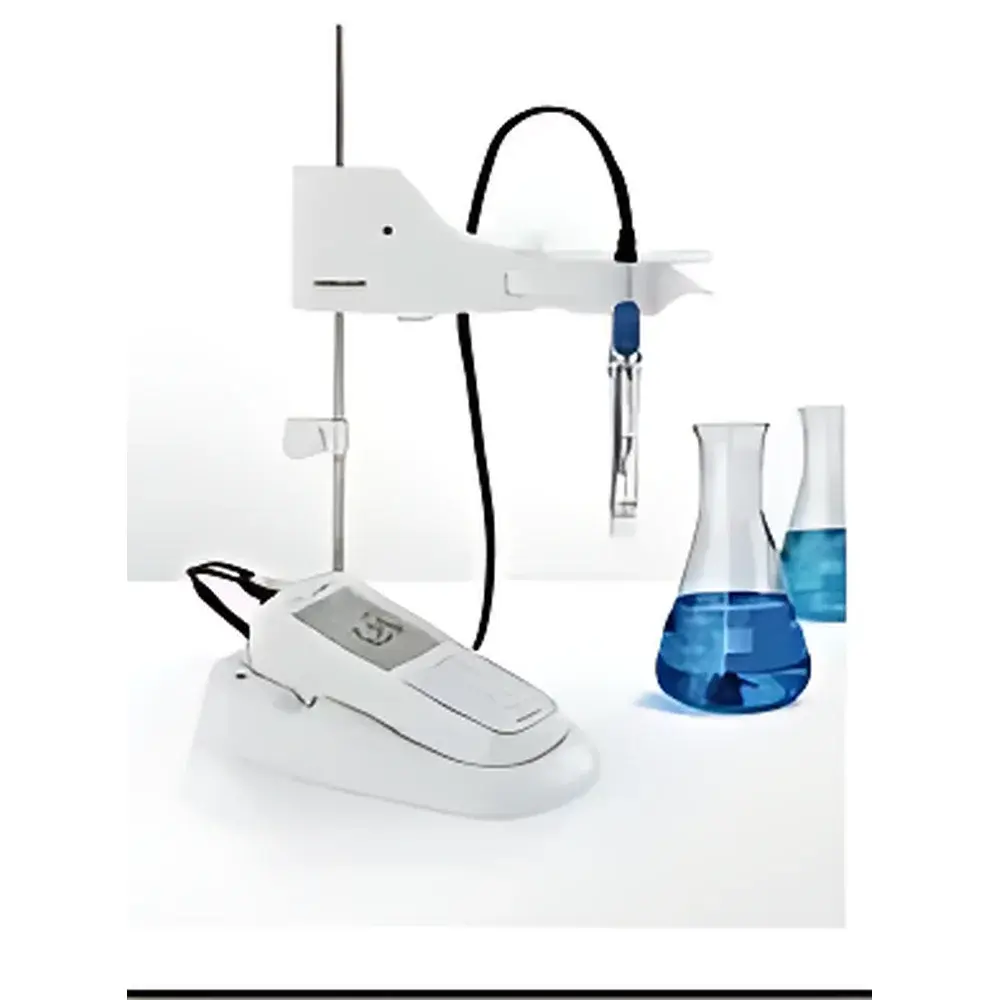
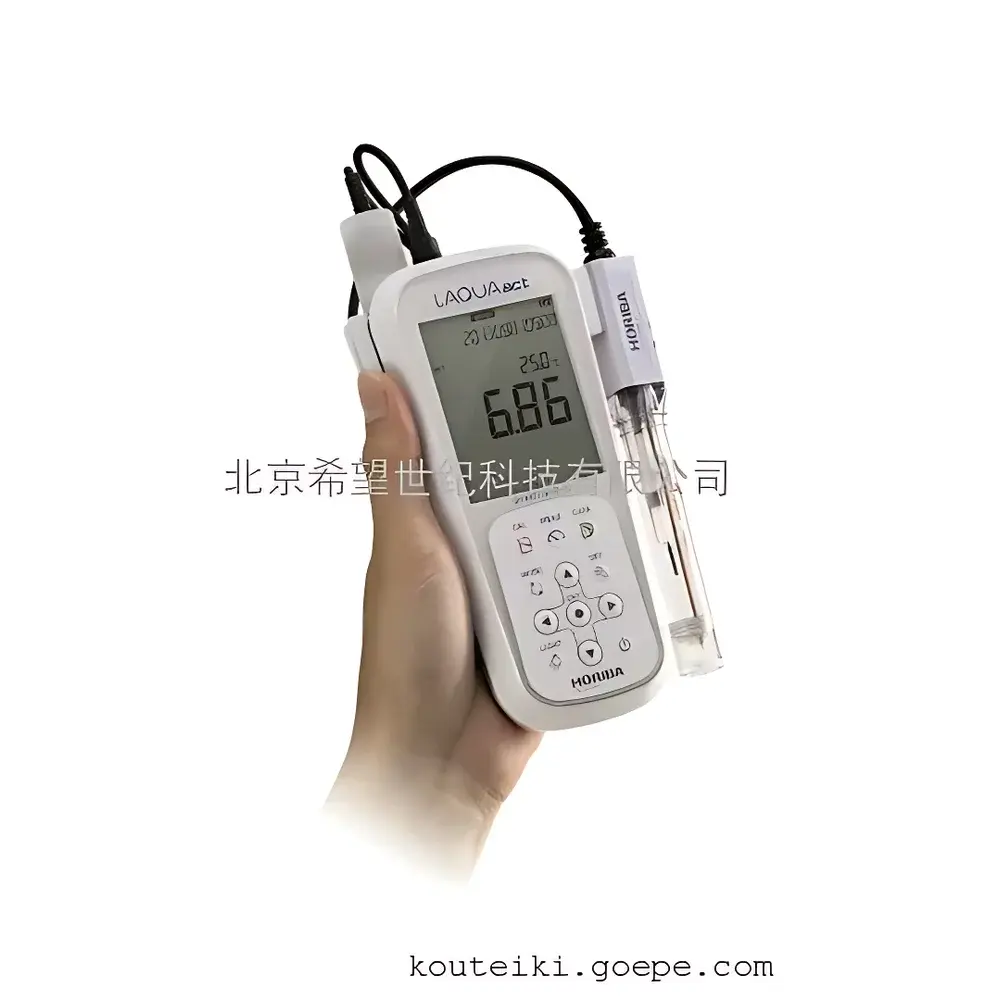
HORIBA LAQUAact D-71 Portable Multi-parameter Water Quality Analyzer
| Brand | HORIBA |
|---|---|
| Origin | Japan |
| Model | D-71 |
| Instrument Type | Portable/Handheld Water Quality Analyzer |
| Measurable Parameters | pH, mV (ORP), Conductivity, Resistivity, Salinity, TDS, Dissolved Oxygen (DO), Ion Concentration |
| Display | Backlit LCD with Capacitive Touchscreen |
| Protection Rating | IP67 (Instrument & Electrodes) |
| Data Storage | 1,000 measurements |
| Power Supply | AAA Alkaline/Ni-MH Batteries or AC Adapter |
| Calibration | Auto-calibration support |
| Compliance | JIS Z 8401 (pH), JIS K 0101 (Conductivity), ISO 5667-3, ASTM D1293, ASTM D5391, USP <645>, FDA 21 CFR Part 11 (with optional software module) |
| Connectivity | USB interface for PC connection and printer output |
Overview
The HORIBA LAQUAact D-71 is a rugged, field-deployable multi-parameter water quality analyzer engineered for high-reliability environmental monitoring in diverse operational settings—from municipal wastewater sampling and river basin surveys to industrial effluent verification and regulatory compliance testing. Built upon HORIBA’s proven electrochemical sensor architecture, the D-71 employs potentiometric (pH, ORP, ion-selective), conductimetric (conductivity, resistivity, salinity, TDS), and optical/electrochemical (luminescent-based DO) measurement principles. Its dual-channel capability enables simultaneous real-time acquisition and display of two independent parameters—e.g., pH and dissolved oxygen—without cross-interference, ensuring data integrity during dynamic field conditions. The instrument complies with Japanese Industrial Standards (JIS Z 8401 for pH, JIS K 0101 for conductivity) and aligns with international method frameworks including ISO 5667-3 (water sampling), ASTM D1293 (pH of natural water), ASTM D5391 (conductivity of pure water), and USP (electrical conductivity for pharmaceutical water systems).
Key Features
- Rugged IP67-rated housing and electrode assemblies—fully submersible up to 1 m for 30 minutes; resistant to alcohol, acids, and organic solvents
- Capacitive touchscreen with chemically strengthened glass display—optimized for gloved operation and outdoor readability under variable ambient lighting
- Intelligent on-screen navigation with context-aware prompts for calibration, maintenance, and troubleshooting
- Real-time electrode response diagnostics—quantified response time and slope stability indicators displayed post-calibration
- Auto-ranging conductivity measurement with automatic temperature compensation (ATC) and selectable reference temperatures (20 °C, 25 °C)
- Dissolved oxygen measurement with integrated barometric pressure and salinity compensation—enabling accurate saturation and concentration reporting per ISO 5814
- Five-point pH calibration support with auto-recognition of NIST and USA traceable buffer standards
- Onboard clock, sample ID tagging, timed interval logging (excluding D-71 base configuration), and auto-power-off to conserve battery life
Sample Compatibility & Compliance
The D-71 accommodates aqueous samples across a broad matrix range: surface water, groundwater, drinking water, wastewater, seawater, and process streams with turbidity ≤ 500 NTU and suspended solids ≤ 100 mg/L. All sensors are designed for direct immersion without filtration in most routine applications. The system supports GLP/GMP-aligned workflows through audit-trail-capable data export (via HORIBA’s optional LAQUA Software Suite), which records user ID, timestamp, calibration history, electrode serial numbers, and environmental metadata. It meets essential requirements for EPA Method 150.1 (conductivity), EPA Method 150.2 (pH), and ISO 10523 (water quality—determination of pH)—making it suitable for certified laboratory use and third-party environmental auditing.
Software & Data Management
Data from the D-71 is transferred via USB to Windows-compatible PCs running HORIBA’s LAQUA Software (v3.0+), a validated application compliant with FDA 21 CFR Part 11 when configured with electronic signatures and audit trail activation. The software enables batch export to CSV or Excel formats, customizable report generation (including calibration certificates and QC summaries), trend visualization, and statistical analysis (mean, SD, %RSD). Internal memory retains 1,000 measurement records with full parameter sets—including raw mV values, temperature, date/time stamp, and operator ID—and supports manual annotation for field notes.
Applications
- Regulatory field monitoring for NPDES permits and watershed management programs
- Drinking water distribution system integrity assessment (pH stability, corrosion potential via ORP)
- Aquaculture and hydroponics process control (DO, pH, EC)
- Industrial pretreatment verification prior to discharge (TDS, salinity, conductivity)
- Educational and research fieldwork requiring traceable, portable metrology
- Emergency response screening during chemical spills or algal bloom events
FAQ
Does the D-71 support GLP-compliant data handling?
Yes—when used with LAQUA Software and configured with user authentication, electronic signatures, and audit trail logging, the system satisfies core GLP documentation requirements.
Can the D-71 measure both pH and dissolved oxygen simultaneously?
Yes—the dual-channel architecture allows concurrent measurement and real-time display of any two parameters, including pH + DO, conductivity + salinity, or ORP + TDS.
What calibration standards are supported for pH measurement?
The D-71 recognizes and auto-configures calibration based on NIST-traceable (4.01, 7.00, 10.01) and USA-standard (4.01, 7.00, 10.01) buffer solutions, with optional 2- or 5-point protocols.
Is the instrument suitable for marine or high-salinity environments?
Yes—its IP67-rated electrodes and built-in salinity compensation for DO and conductivity ensure stable performance in seawater and brackish matrices up to 45 ppt.
How is temperature compensation applied across parameters?
Temperature is measured continuously via integrated Pt1000 sensor; compensation algorithms follow ISO 7888 (conductivity), ISO 10523 (pH), and ISO 5814 (DO), with user-selectable reference points.







