
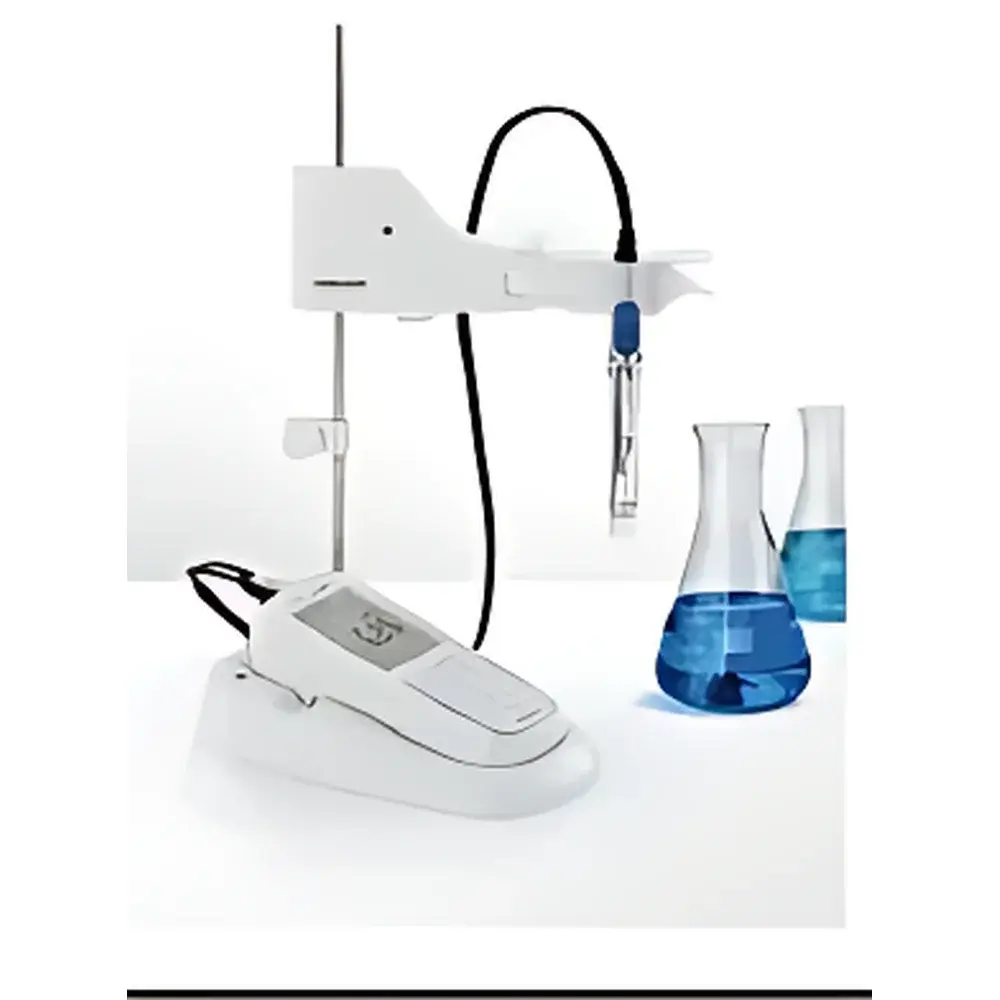
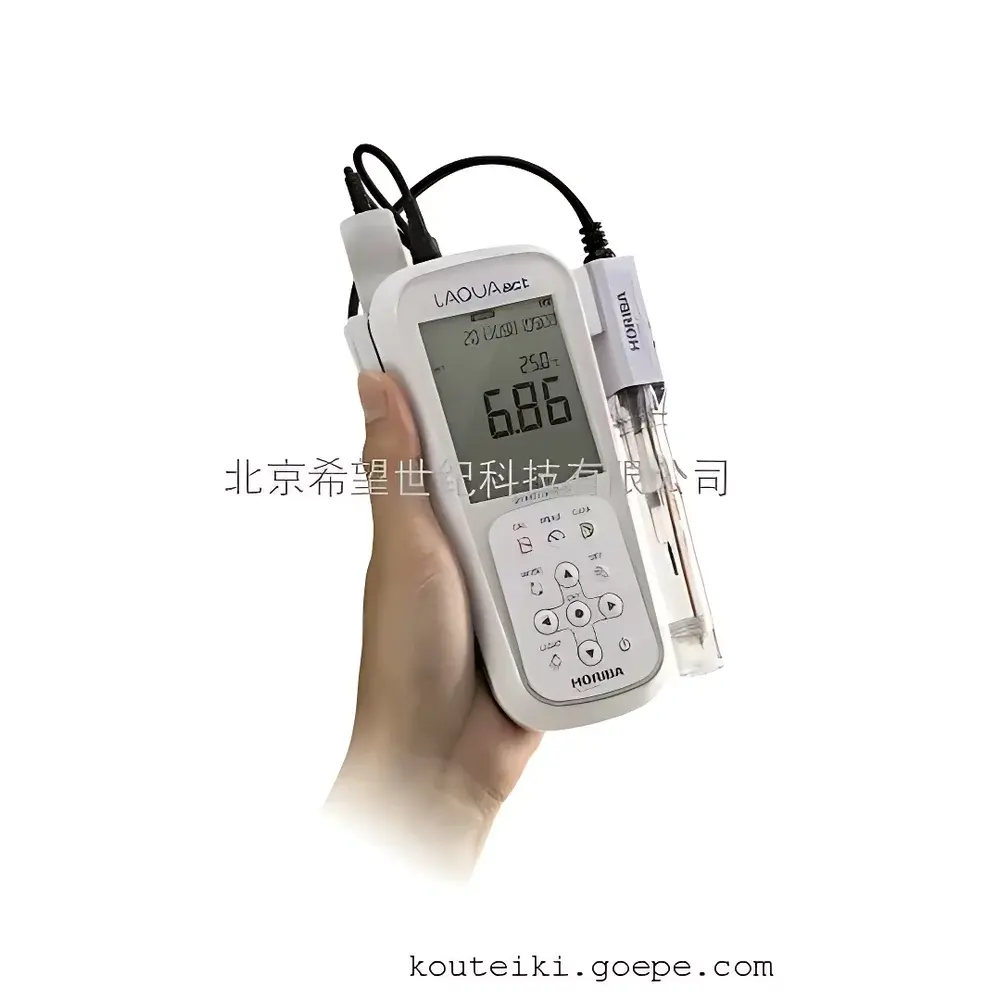
HORIBA LAQUAact D-73 Portable Multi-Parameter Water Quality Analyzer
| Brand | HORIBA |
|---|---|
| Origin | Japan |
| Model | D-73 |
| Instrument Type | Portable/Handheld Water Quality Analyzer |
| Measurable Parameters | pH, mV (ORP), Temperature, Conductivity, Resistivity, Salinity, TDS, Dissolved Oxygen (DO), Ion Concentration |
| Display | Backlit Monochrome LCD |
| Data Storage | 1000 Records |
| Protection Rating | IP67 |
| Power Supply | 2× AAA Alkaline/Ni-MH Batteries or AC Adapter |
| Operating Environment | 0–45 °C, RH 0–80% (non-condensing) |
| Compliance | GLP/GMP-ready, ASTM D1293 (pH), ASTM D5391 (Conductivity), ISO 5814 (DO), USP <643> (TDS), NIST/USA Buffer Recognition |
Overview
The HORIBA LAQUAact D-73 is a field-deployable, IP67-rated multi-parameter water quality analyzer engineered for high-reproducibility measurements in diverse environmental and industrial settings—from municipal wastewater outfalls and river monitoring stations to aquaculture facilities and industrial process streams. Built upon HORIBA’s proven electrochemical sensor architecture, the D-73 implements potentiometric (glass electrode), galvanic (DO), and four-electrode conductivity measurement principles to deliver traceable, metrologically sound data. Its dual-channel capability enables simultaneous real-time acquisition of two independent parameters—e.g., pH and dissolved oxygen—without cross-interference, while automatic temperature compensation (ATC) and pressure/salinity correction algorithms ensure accuracy across variable field conditions. The instrument conforms to internationally recognized test methods including ASTM D1293 for pH, ASTM D5391 for conductivity, ISO 5814 for dissolved oxygen, and USP for total dissolved solids quantification.
Key Features
- IP67-rated rugged housing constructed from alcohol-resistant, impact-absorbing polymer—certified for submersion up to 1 m for 30 minutes and full dust ingress protection
- Capacitive touch-enabled monochrome LCD with adjustable backlight—optimized for legibility under direct sunlight and low-light field conditions
- Dual-channel real-time measurement and display: supports concurrent readouts of any two parameters (e.g., pH + DO, conductivity + salinity)
- Smart calibration assistant with auto-buffer recognition for five-point pH calibration (NIST or USA standard buffers), including on-screen slope/mV offset diagnostics
- Integrated self-diagnostic engine that evaluates electrode health post-calibration and flags drift, coating, or junction clogging via status indicators
- 1000-point internal memory with timestamped records (date/time stamping enabled by built-in real-time clock), exportable via USB to PC for audit-compliant reporting
- GLP/GMP-ready functionality: user ID assignment, measurement ID tagging, automatic calibration logging, and audit trail support for regulatory submissions
Sample Compatibility & Compliance
The D-73 is validated for use with natural waters (freshwater, estuarine, seawater), treated effluents, cooling tower fluids, and process rinse waters. Its glass pH electrode meets ISO 4787 durability standards; the DO sensor complies with ISO 5814 membrane diffusion kinetics requirements; and its four-electrode conductivity cell eliminates polarization errors per IEC 60746-3. All measurement modes incorporate automatic temperature compensation referenced to ITS-90. The instrument supports traceability through NIST-traceable calibration verification and adheres to data integrity requirements outlined in FDA 21 CFR Part 11 when paired with HORIBA’s optional LAQUA Studio software (audit trail, electronic signatures, role-based access control).
Software & Data Management
Data export is supported via micro-USB interface using HORIBA’s LAQUA Studio PC application—a validated desktop platform for post-acquisition analysis, report generation (PDF/CSV), and compliance documentation. LAQUA Studio enforces ALCOA+ principles (Attributable, Legible, Contemporaneous, Original, Accurate, Complete, Consistent, Enduring, Available) and provides full electronic record retention, version-controlled method templates, and automated calibration certificate generation. Field data can also be printed directly to compatible thermal printers via RS-232 or USB-serial adapters—supporting on-site verification without laptop dependency.
Applications
- River, lake, and reservoir monitoring programs requiring rapid, repeatable grab-sample assessment
- Wastewater treatment plant influent/effluent compliance verification per EPA Method 150.1 (pH), 120.1 (conductivity), and 360.1 (DO)
- Aquaculture site management—tracking diurnal pH shifts, oxygen saturation deficits, and salinity gradients
- Industrial cooling water system surveillance for corrosion risk (pH/ORP), scaling potential (conductivity/TDS), and biocide efficacy (ORP)
- Educational field labs and environmental science coursework where portability, battery longevity (>1000 h), and intuitive operation are essential
FAQ
Does the D-73 support GLP-compliant data handling?
Yes—the instrument logs calibration events, operator IDs, timestamps, and measurement metadata internally, and LAQUA Studio extends this into a fully auditable electronic record system compliant with ISO/IEC 17025 and FDA 21 CFR Part 11.
Can the D-73 measure dissolved oxygen in seawater?
Yes—its galvanic DO sensor includes automatic salinity and barometric pressure compensation, enabling accurate saturation and concentration readings across 0–40 g/kg salinity and 60–106 kPa ambient pressure ranges.
What is the pH measurement uncertainty under field conditions?
When calibrated with certified NIST buffers at 25 °C and operated within 15–35 °C, the typical expanded uncertainty (k=2) for pH is ±0.02 pH units, including contributions from electrode drift, temperature gradient, and calibration reproducibility.
Is the D-73 suitable for drinking water analysis per WHO or EPA guidelines?
Yes—it satisfies core parameter requirements for potable water screening: pH (WHO Guideline 6.5–8.5), conductivity (<2500 µS/cm), TDS (650 mV for chlorine efficacy), with documented metrological traceability.
How does the D-73 handle electrode maintenance in remote locations?
The integrated electrode health diagnostic continuously monitors response time, asymmetry potential, and zero-point stability; combined with the smart navigation interface, it guides users through cleaning, rehydration, and recalibration procedures without external reference materials.
Related Products







