
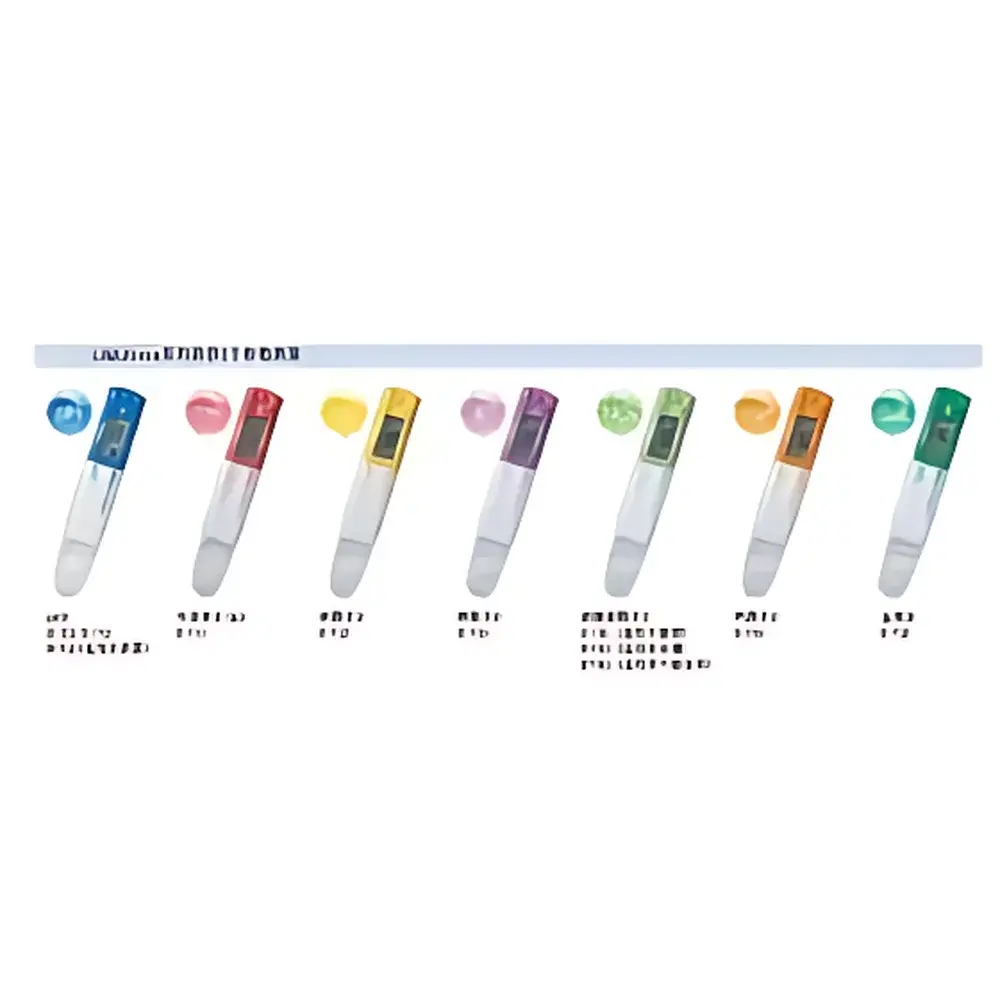
HORIBA LAQUAtwin B-700 Series Portable Pocket-Sized Water Quality Analyzer
| Brand | HORIBA |
|---|---|
| Origin | Japan |
| Model | B-700 |
| Instrument Type | Laboratory & Field-Portable Water Quality Analyzer |
| Measurable Parameters | pH, Electrical Conductivity (EC), Na⁺, K⁺, NO₃⁻, Ca²⁺, Salinity (NaCl) |
| Measurement Principle | Glass Electrode (pH), Dual-Electrode AC Conductometry (EC), Ion-Selective Electrode (ISE) |
| Minimum Sample Volume | 0.05–0.3 mL |
| Accuracy | ±0.1 pH |
| IP Rating | IP67 |
| Operating Temperature | 5–40 °C |
| Relative Humidity | <85% RH (non-condensing) |
| Power | Two CR2032 batteries |
| Dimensions | 164 × 29 × 20 mm (L×W×H) |
| Weight | ~50 g (instrument only) |
Overview
The HORIBA LAQUAtwin B-700 Series is a compact, pocket-sized water quality analyzer engineered for rapid, on-site, and laboratory-grade measurement of seven critical aqueous parameters: pH, electrical conductivity (EC), sodium (Na⁺), potassium (K⁺), nitrate (NO₃⁻), calcium (Ca²⁺), and salinity (as NaCl). Designed around HORIBA’s proprietary planar electrode technology—refined over decades of electrochemical sensor development—the B-700 platform eliminates the need for bulky flow cells or large-volume sample cups. Each instrument employs a miniaturized, integrated sensing module with a flat-surface glass electrode (for pH), dual-electrode AC conductometric cell (for EC), or solid-contact ion-selective electrodes (for monovalent and divalent cations/anions). This architecture enables reliable measurements from as little as 0.05 mL of sample—a volume achievable using optional sampling film accessories—while maintaining metrological integrity across environmental, agricultural, aquaculture, and educational applications. As a direct evolution of the B-200 series, the B-700 introduces enhanced environmental resilience, simplified calibration logic, and standardized firmware architecture for cross-model interoperability.
Key Features
- Ultra-low sample requirement: Measures pH, EC, and ISE parameters from ≤0.05 mL (with sampling film) to 0.3 mL—ideal for droplet analysis, leaf sap extraction, microcosm studies, and limited-sample field scenarios.
- IP67-rated enclosure: Fully dust-tight and submersible up to 1 m for 30 minutes; validated per IEC 60529, enabling robust operation in humid, dusty, or splash-prone environments including greenhouse, soil lab, and coastal monitoring sites.
- One-touch calibration and auto-hold functionality: Integrated microprocessor guides users through single- or two-point calibration routines; measurement stabilizes automatically and locks the value upon signal convergence—indicated by a confirmation “smiley” icon on the LCD.
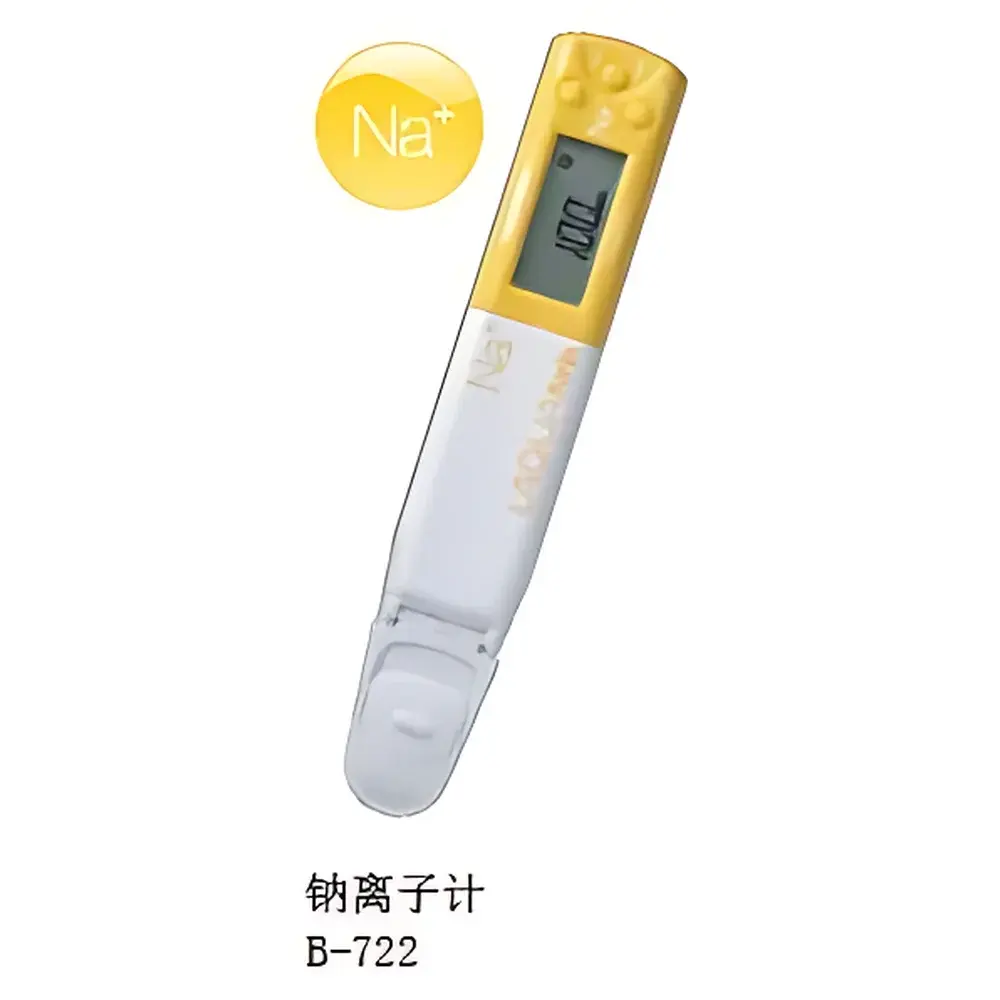
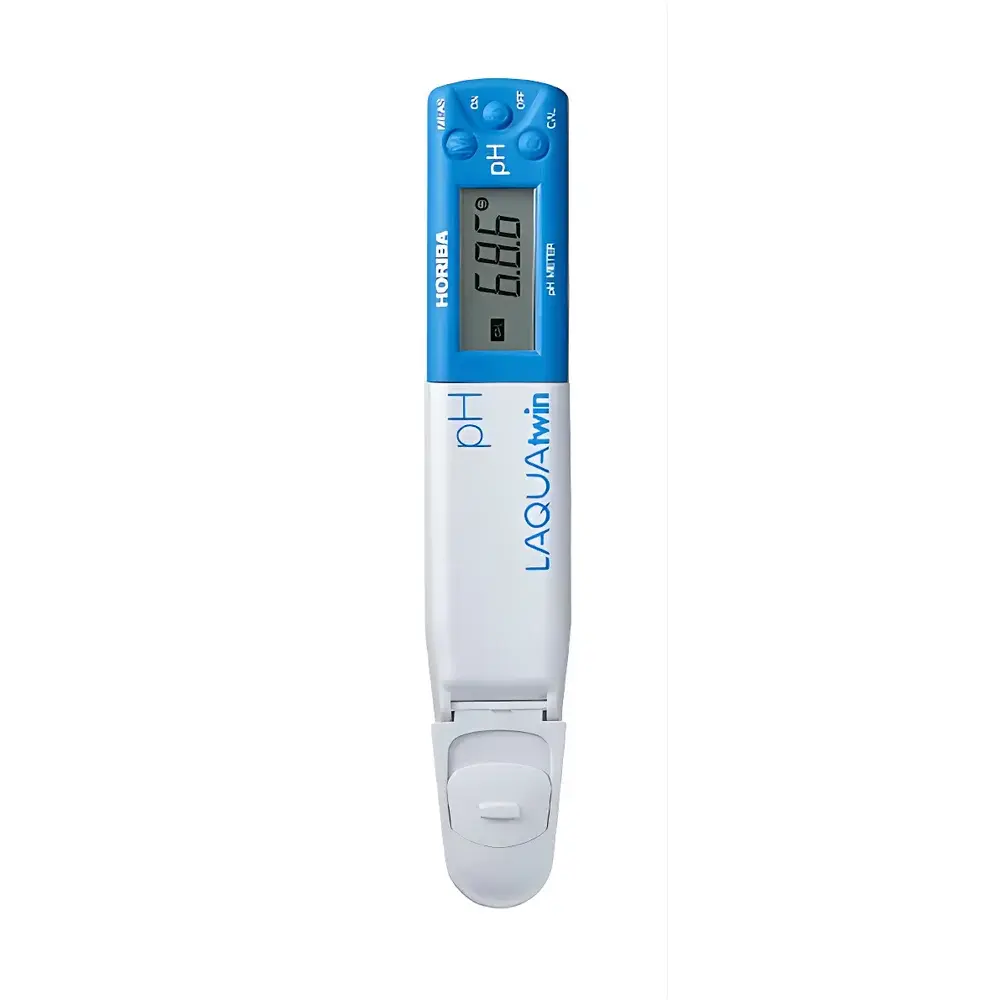
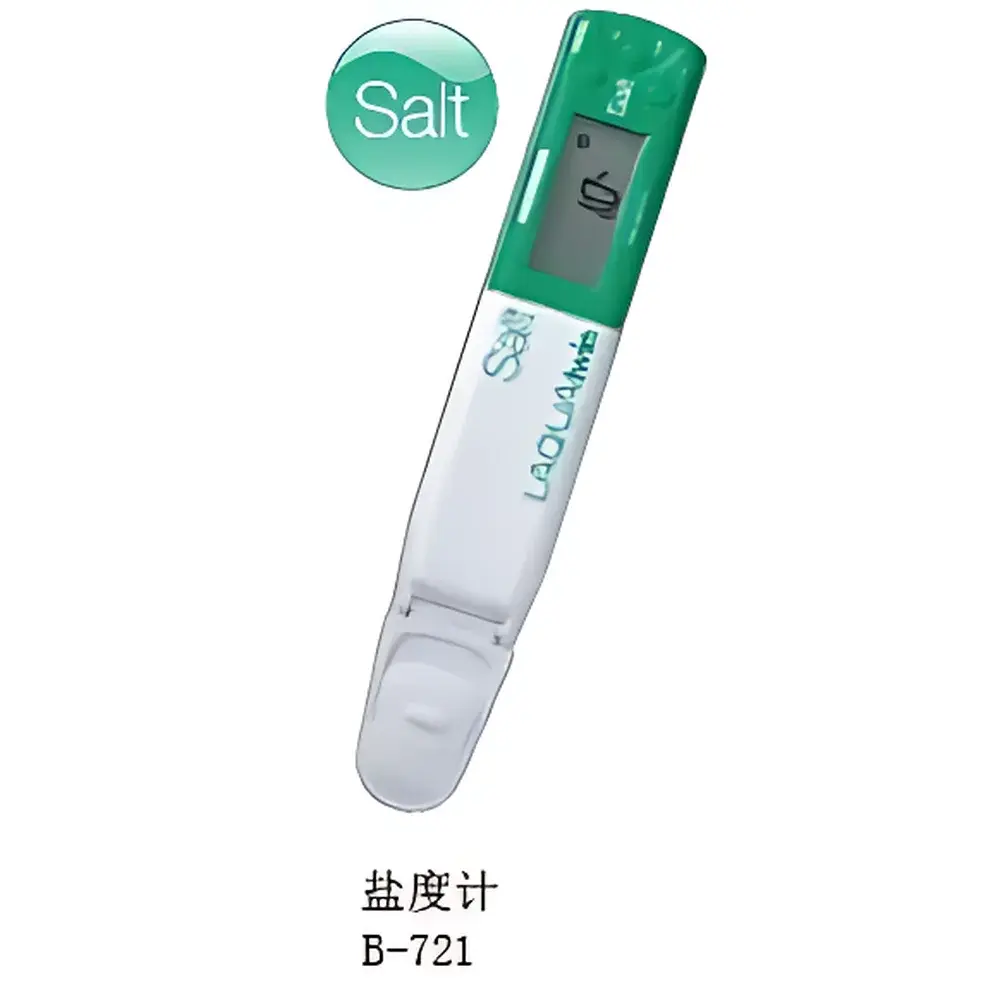
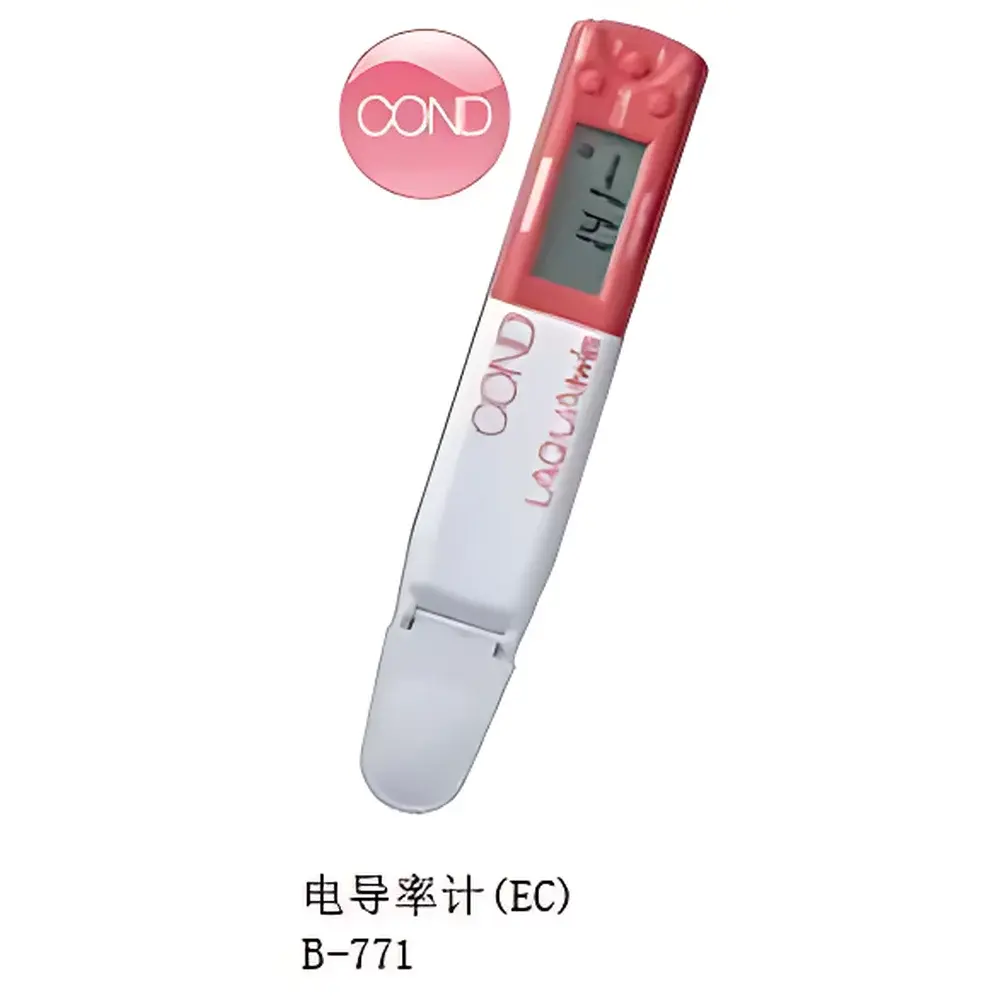
- Dedicated parameter-specific models: Eleven distinct variants (e.g., B-711 pH meter, B-771 EC meter, B-722 Na⁺ analyzer) share identical ergonomics, battery format, and housing, allowing labs to deploy application-optimized tools without training overhead.
- Temperature compensation: Built-in NTC thermistor enables automatic temperature correction per ISO 7888 (pH) and ASTM D1125 (conductivity); fixed 2%/°C coefficient applied for EC, while ISE modes support manual or fixed T-compensation based on ion mobility models.
Sample Compatibility & Compliance
The B-700 Series accommodates a broad range of aqueous matrices—including freshwater, seawater, nutrient solutions, hydroponic effluents, plant xylem sap, soil extracts (1:5 w/v), and wastewater pre-filtrates—provided particulates are removed via optional 0.45 µm filtration membranes prior to measurement. All models comply with IEC 61010-1:2010 for electrical safety in laboratory equipment and meet RoHS Directive 2011/65/EU for hazardous substance restrictions. While not certified for GLP or GMP-regulated release testing, the instruments support audit-ready workflows: calibration events (date/time-stamped), measurement history (up to 100 records), and unit consistency checks align with ISO/IEC 17025 documentation expectations for in-house method validation. No regulatory claim is made for FDA 21 CFR Part 11 compliance; however, raw data export (via optional IR interface or manual transcription) facilitates integration into LIMS or ELN systems requiring traceable input.
Software & Data Management
The B-700 operates autonomously without external software dependency. All configuration, calibration, and measurement data reside within non-volatile memory. Each unit stores up to 100 measurement records with timestamp, parameter value, temperature, and unit designation. Data retrieval is manual: values are displayed on the high-contrast LCD and may be transcribed or logged externally. Optional infrared (IR) wireless modules (sold separately) enable serial data transfer to PCs or mobile devices running HORIBA’s LAQUA Connect utility—supporting CSV export, trend visualization, and batch calibration report generation. Firmware updates are performed via dedicated programming dock (not included), ensuring long-term compatibility with evolving field protocols and metrological guidelines.
Applications
- Agricultural water management: Real-time monitoring of irrigation water pH and EC to prevent nutrient lockout; rapid screening of Na⁺ and Ca²⁺ in drainage leachates to assess sodicity risk.
- Aquaculture and hatchery operations: Spot-checking NO₃⁻ and K⁺ in recirculating aquaculture systems (RAS) to maintain optimal ion balance for larval development.
- Environmental field surveys: Deploying B-721 (salinity) and B-771 (EC) in estuarine transects to map brackish intrusion gradients; using B-743 (NO₃⁻) for point-source pollution screening near agricultural runoff zones.
- Educational laboratories: Teaching core principles of potentiometry, conductometry, and ion-selective detection with low-cost, intuitive instrumentation that mirrors industrial sensor fundamentals.
- Food & beverage QC: Verifying rinse water pH and residual NaCl content during CIP validation in small-scale processing facilities.
FAQ
What is the minimum sample volume required for accurate measurement?
For most models (B-711, B-722, B-731, B-743, B-751), the minimum recommended volume is 0.05 mL when used with HORIBA’s optional sampling film (LAQUAtwin Sampling Film B). Without the film, ≥0.1–0.3 mL is required depending on the parameter and electrode type.
Can the B-700 series be used for soil analysis?
Yes—specific models (e.g., B-742 for NO₃⁻ in soil extracts) are validated for 1:5 soil-to-water extracts. Users must filter extracts through 0.45 µm membrane prior to measurement to avoid electrode fouling.
Is temperature compensation automatic across all parameters?
pH and EC modes feature automatic temperature compensation via integrated NTC sensor. For ISE measurements (Na⁺, K⁺, etc.), temperature compensation is fixed or manually selectable per user-defined coefficient, consistent with standard ion activity correction practices.
How often does calibration need to be performed?
Calibration frequency depends on usage intensity and matrix variability. HORIBA recommends daily calibration for routine QC work; for infrequent field use, calibration before each session is sufficient. Two-point pH calibration is advised for measurements spanning >2 pH units.
Are calibration standards included with the instrument?
No—calibration buffers and standard solutions (e.g., pH 4.01/7.00, 1.41 mS/cm KCl, 100 ppm Na⁺) are sold separately. High-conductivity standard (12.9 mS/cm) for B-771 is also an optional accessory.
Related Products







