
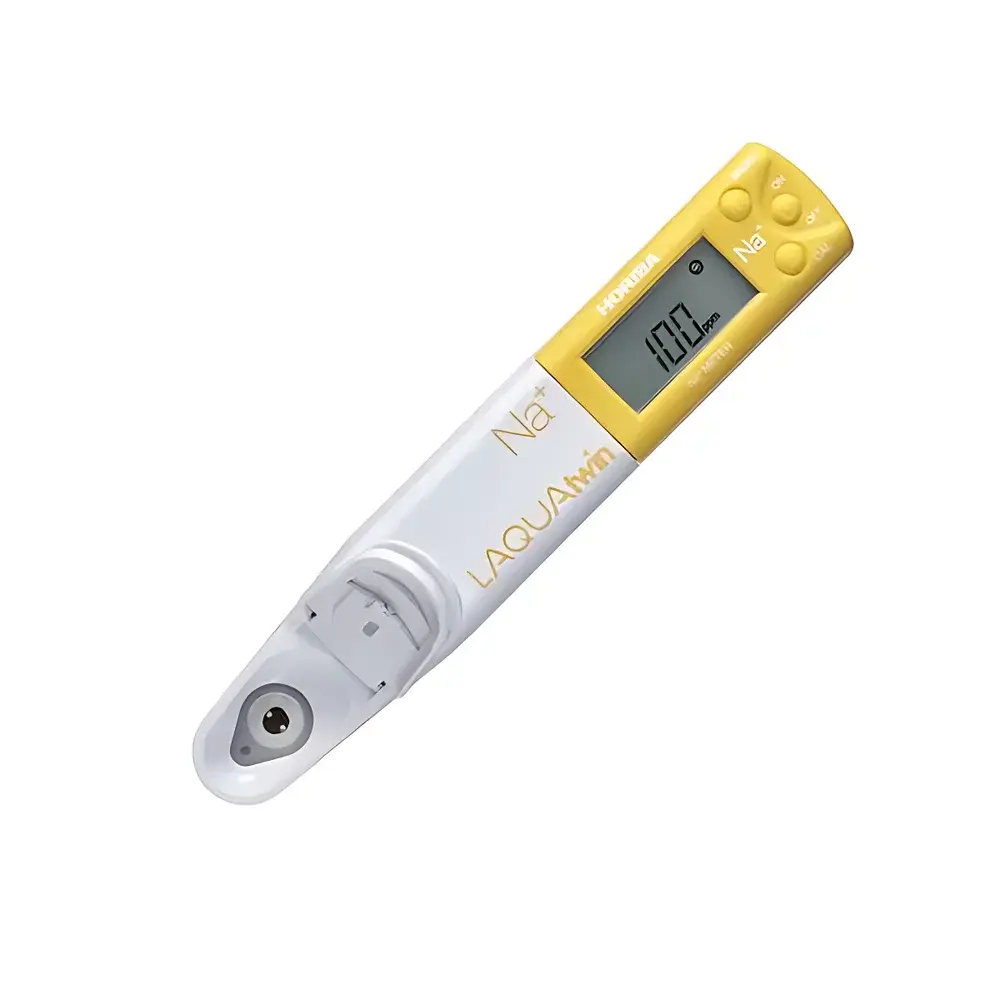
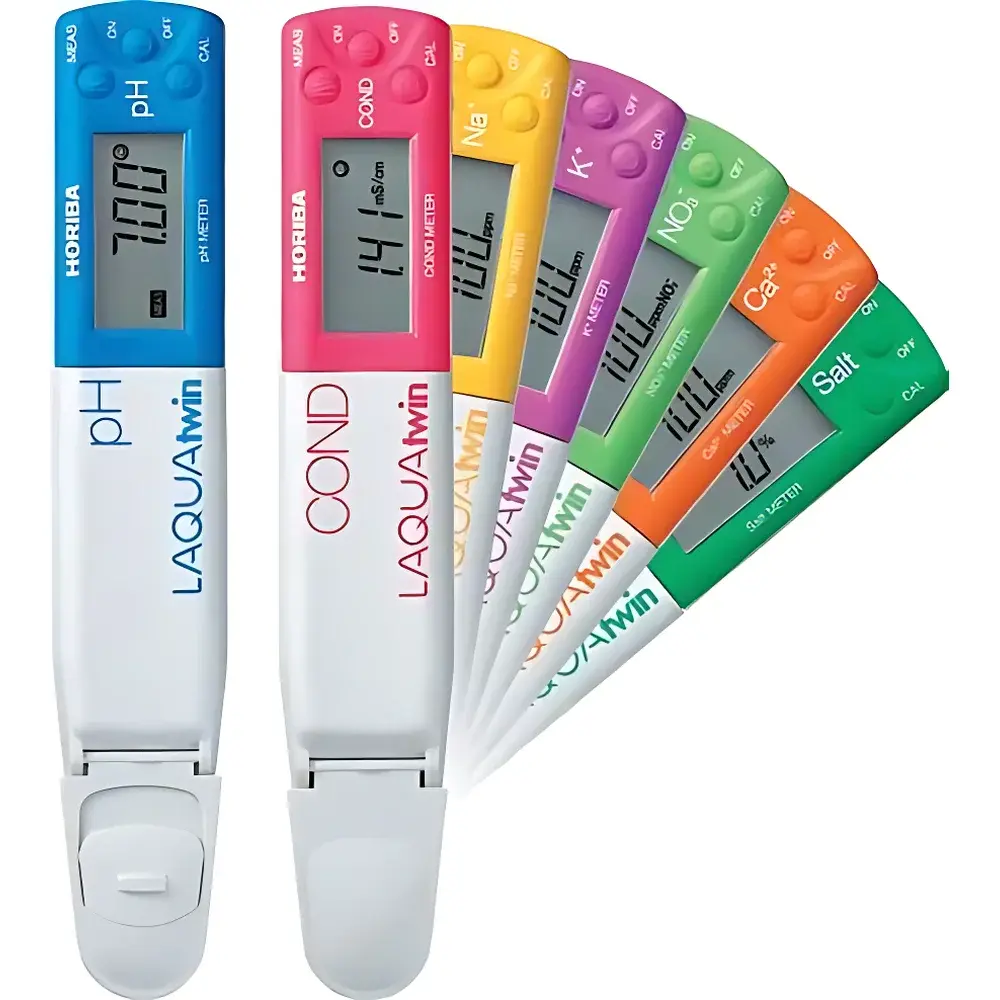
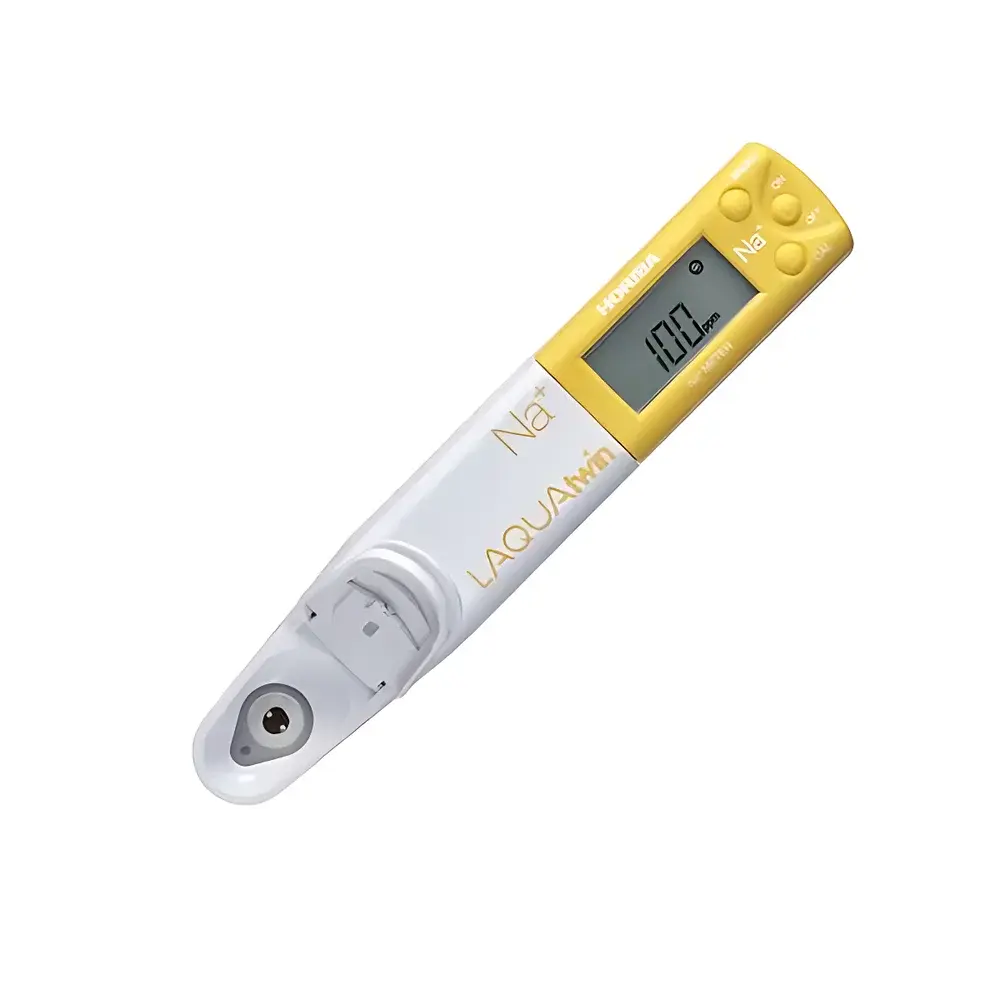
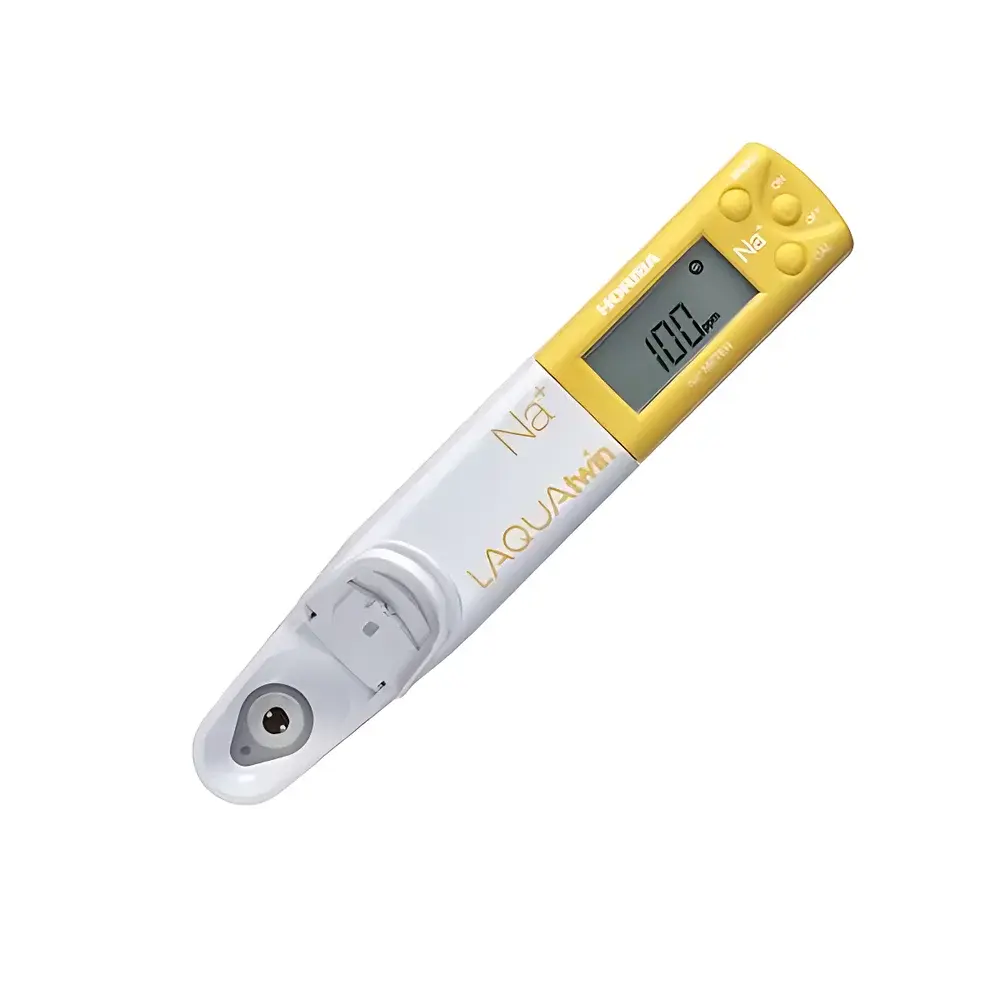
HORIBA LAQUAtwin B-722 Sodium Ion Meter
| Brand | HORIBA |
|---|---|
| Origin | Japan |
| Model | B-722 |
| Instrument Type | Portable Sodium Ion Meter |
| Measurement Range | 23–2300 ppm (mg/L) |
| Accuracy | ±10% of reading |
| Resolution | 0.1 ppm (0–1.0 ppm), 1 ppm (0–99 ppm), 10 ppm (100–990 ppm), 100 ppm (1000–9900 ppm) |
| Sample Volume | 0.3 mL (0.05 mL with Sampling Sheet B) |
| Temperature Range | 5–40 °C, ≤85% RH (non-condensing) |
| IP Rating | IP67 |
| Calibration | 2-point |
| Auto Functions | Auto-range switching, automatic temperature compensation, auto-hold, auto-power-off (15 min) |
| Power | 2 × CR2032 batteries (~400 h operation) |
| Dimensions | 164 × 29 × 20 mm (L×W×H, excluding protrusions) |
| Weight | ~50 g (instrument only, no batteries) |
| Housing Material | ABS epoxy resin |
| Included Accessories | 2 × CR2032 batteries, 1 pipette, user manual, quick guide, carrying case, 2 × 14 mL standard solutions (high/low), 5 × Sampling Sheets B |
Overview
The HORIBA LAQUAtwin B-722 Sodium Ion Meter is a compact, handheld electrochemical sensor system engineered for rapid, on-site quantification of sodium ion concentration in aqueous and semi-solid samples. It employs a solid-state, miniaturized ion-selective electrode (ISE) based on a proprietary polymer membrane technology—identical in measurement principle to benchtop laboratory-grade sodium ISEs—but integrated into a sub-1 mm thick planar sensor chip. This design enables direct potentiometric detection of Na+ activity in compliance with established electrochemical standards (e.g., ASTM D1129, ISO 10523). The device operates on the Nernst equation principle, converting measured potential difference (mV) into concentration values (ppm or mol/L) via built-in calibration algorithms and temperature-compensated slope calculation. Its portability, rugged IP67-rated enclosure, and single-drop sampling capability make it suitable for field-deployed environmental monitoring, process verification, and educational applications where lab access is limited.
Key Features
- True IP67-rated construction: Fully sealed against dust ingress and immersion in water up to 1 m for 30 minutes—enabling reliable use in humid laboratories, outdoor aquatic environments, and industrial settings with splash exposure.
- Ultra-low sample volume requirement: Measures accurately from as little as 0.05 mL using optional Sampling Sheet B—ideal for precious, viscous, or low-yield samples including food extracts, soil leachates, and biological fluids.
- Multi-mode sampling flexibility: Supports six validated sampling protocols—drop, immersion, scooping, wiping, solid placement, and powder reconstitution—each optimized for matrix-specific interference mitigation and reproducible contact geometry.
- Intelligent calibration workflow: Two-point calibration with visual feedback (smiley-face indicator) confirms stable electrode response before measurement; supports multiplicative and additive correction factors for matrix-matched standardization.
- Integrated temperature compensation: Built-in thermistor automatically adjusts Nernst slope across 5–40 °C, minimizing drift due to thermal variation without requiring external probes or manual input.
- Long-duration battery operation: Dual CR2032 cells deliver approximately 400 hours of active use, with auto-power-off after 15 minutes of inactivity to preserve shelf life and reduce maintenance overhead.
Sample Compatibility & Compliance
The B-722 is validated for use with freshwater, seawater dilutions, aquarium effluents, hydroponic nutrient solutions, food homogenates (e.g., cheese, cured meats), soil extracts (1:5 w/v distilled water), and pharmaceutical rinse waters. It complies with general requirements for portable ISE-based analyzers under ISO/IEC 17025:2017 for testing laboratories, and supports GLP-aligned documentation when paired with external logging software. While not certified for clinical diagnostics per FDA 21 CFR Part 860, its performance characteristics meet ASTM D6414 (Standard Test Method for Sodium in Water by Ion-Selective Electrode) for non-regulated environmental screening. No regulatory claim is made for drinking water compliance under EPA Method 300.1 or WHO guidelines without matrix-specific validation by the end user.
Software & Data Management
The B-722 operates as a standalone instrument with no embedded Bluetooth or USB interface. All data are displayed on a monochrome LCD with customizable digit formatting and auto-ranging. For traceable recordkeeping, users may manually log results alongside timestamp, calibration status, and sample ID using the included quick guide template. When deployed in QA/QC workflows, the device supports audit-ready practices through consistent use of certified reference standards (provided: 100 ppm and 1000 ppm NaCl solutions), documented calibration logs, and periodic verification against secondary reference electrodes. Though lacking native electronic data export, its operational simplicity ensures minimal training burden and high inter-operator repeatability in multi-shift environments.
Applications
- Environmental field monitoring: Rapid assessment of sodium intrusion in freshwater streams, irrigation runoff, and groundwater near road salting zones or coastal aquifers.
- Aquaculture and aquarium management: Tracking Na+ stability during marine tank cycling, osmoregulation studies, and post-treatment verification of reverse osmosis systems.
- Food quality control: Quantifying salt content in processed meats, dairy products, and plant-based alternatives—supporting label accuracy and sodium-reduction initiatives aligned with WHO dietary guidance.
- Soil science and agronomy: Estimating exchangeable sodium percentage (ESP) precursors via saturated paste extracts, supporting salinity risk mapping in arid-zone agriculture.
- Academic instruction: Teaching core concepts of ion-selective potentiometry, Nernstian behavior, and matrix effects in undergraduate analytical chemistry and environmental engineering laboratories.
FAQ
What sample matrices are compatible with the B-722?
The meter is validated for aqueous solutions, low-viscosity suspensions, moist solids (e.g., cheese, tofu), and reconstituted powders. Highly turbid, oily, or strongly chelating matrices (e.g., EDTA-rich buffers) require filtration or dilution prior to analysis.
Is temperature compensation automatic?
Yes—integrated thermistor continuously monitors ambient sensor temperature and applies real-time Nernst slope correction across the full operating range (5–40 °C).
Can the B-722 be used for drinking water compliance testing?
It is not certified for regulatory reporting under EPA or WHO frameworks; however, it serves as a rapid screening tool when validated against accredited methods for specific site conditions.
How often should calibration be performed?
Calibrate before each measurement session and whenever ambient temperature changes exceed ±5 °C or after cleaning the sensor surface.
Does the device store historical measurements?
No—the B-722 does not include internal memory or data logging; all readings must be recorded externally.
What maintenance is required for long-term accuracy?
Rinse the sensor with deionized water after each use; store with protective cap installed and dry. Replace Sampling Sheets B after single-use; clean the sensor chip gently with soft tissue if residue accumulates.







