
HORIBA LAQUAtwin ORP-11 Portable ORP/Eh Meter
| Brand | HORIBA |
|---|---|
| Origin | Japan |
| Model | ORP-11 |
| Type | Portable ORP/Eh Meter |
| Measurement Range | −1000 to +1000 mV |
| Resolution | 1 mV |
| Accuracy | ±2 mV |
| Minimum Sample Volume | 0.3 mL (0.05 mL with sampling sheet) |
| Temperature Range | 0.0–50.0 °C |
| Temp. Resolution | 0.1 °C |
| IP Rating | IP67 |
| Display | Backlit monochrome digital LCD |
| Power | Two CR2032 batteries (~400 h operation without backlight) |
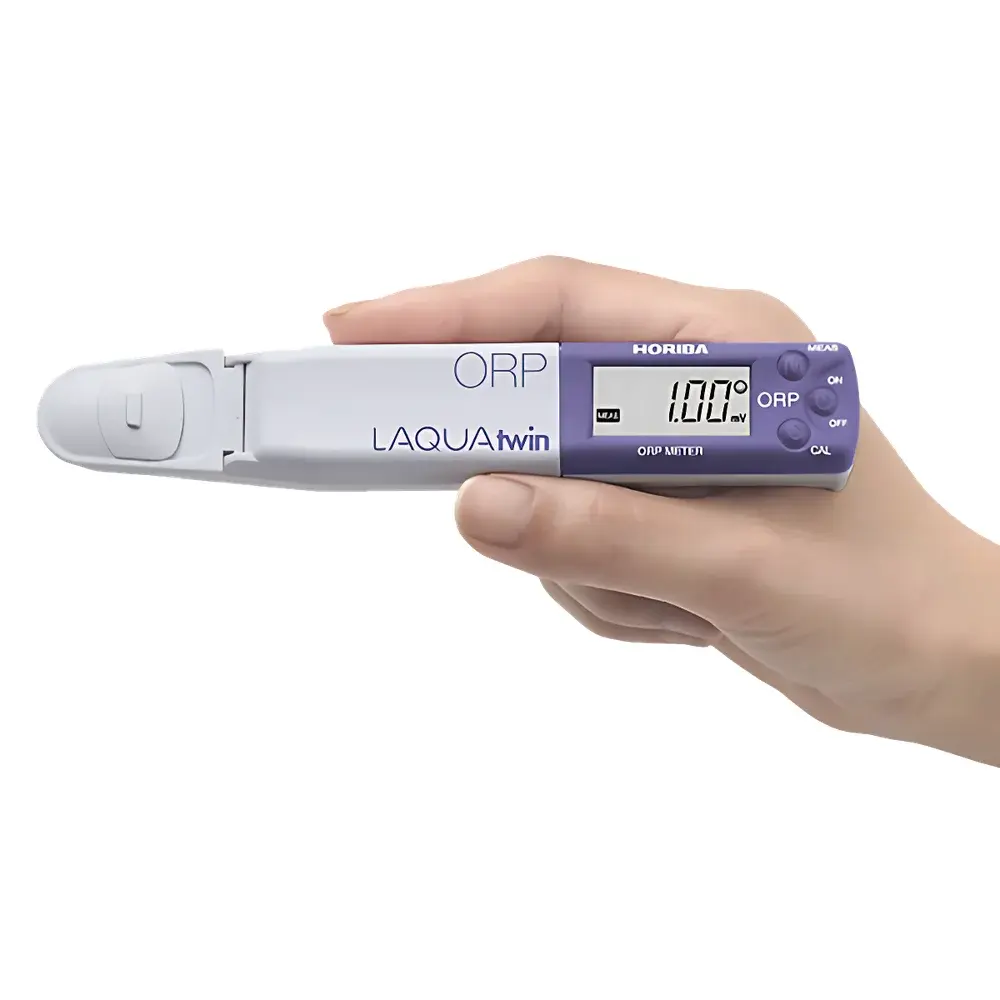
| Dimensions | 164 × 29 × 20 mm |
| Weight | ~55 g (incl. sensor & batteries) |
| Compliance | CE-marked, RoHS-compliant, designed for GLP-supporting workflows |
Overview
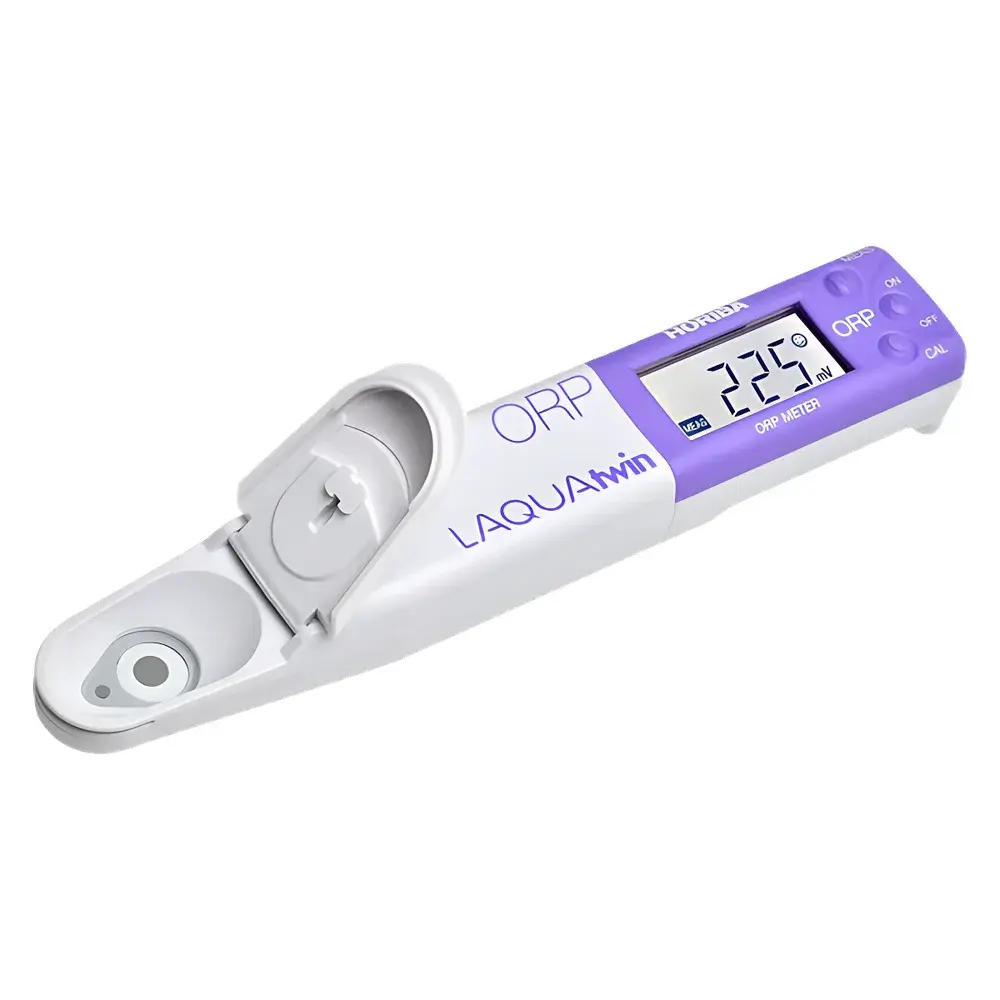
The HORIBA LAQUAtwin ORP-11 is a compact, handheld potentiometric meter engineered for precise in-field and on-site measurement of oxidation-reduction potential (ORP), expressed either as millivolt (mV) output relative to the Standard Hydrogen Electrode (SHE) or as Eh (redox potential under defined thermodynamic conditions). Unlike conventional benchtop ORP analyzers, the ORP-11 employs a miniaturized platinum-disk sensing element integrated into a robust, pen-style ABS/epoxy housing—enabling direct immersion or drop-wise analysis with minimal sample consumption. Its measurement principle relies on the Nernst equation, where the voltage difference between the inert Pt working electrode and an internal Ag/AgCl reference electrode reflects the electron activity of redox-active species (e.g., Cl₂/Cl⁻, Fe³⁺/Fe²⁺, MnO₄⁻/Mn²⁺) in aqueous media. This makes it particularly suited for rapid assessment of disinfection efficacy, wastewater treatment stability, groundwater redox zoning, and corrosion monitoring—applications requiring immediate, trace-volume electrochemical evaluation without laboratory infrastructure.
Key Features
- True dual-mode operation: Simultaneous display of ORP (mV vs. SHE) and Eh (calculated thermodynamic potential) with user-selectable units
- Ultra-low sample requirement: Measures accurately from just 0.3 mL bulk liquid; further reduced to 0.05 mL using included hydrophilic sampling sheets—ideal for micro-sampling in confined or sensitive environments
- Wide dynamic range: −1000 to +1000 mV at 1 mV resolution ensures reliable detection across strongly reducing (e.g., sulfidic sediments) and highly oxidizing (e.g., chlorinated effluents) matrices
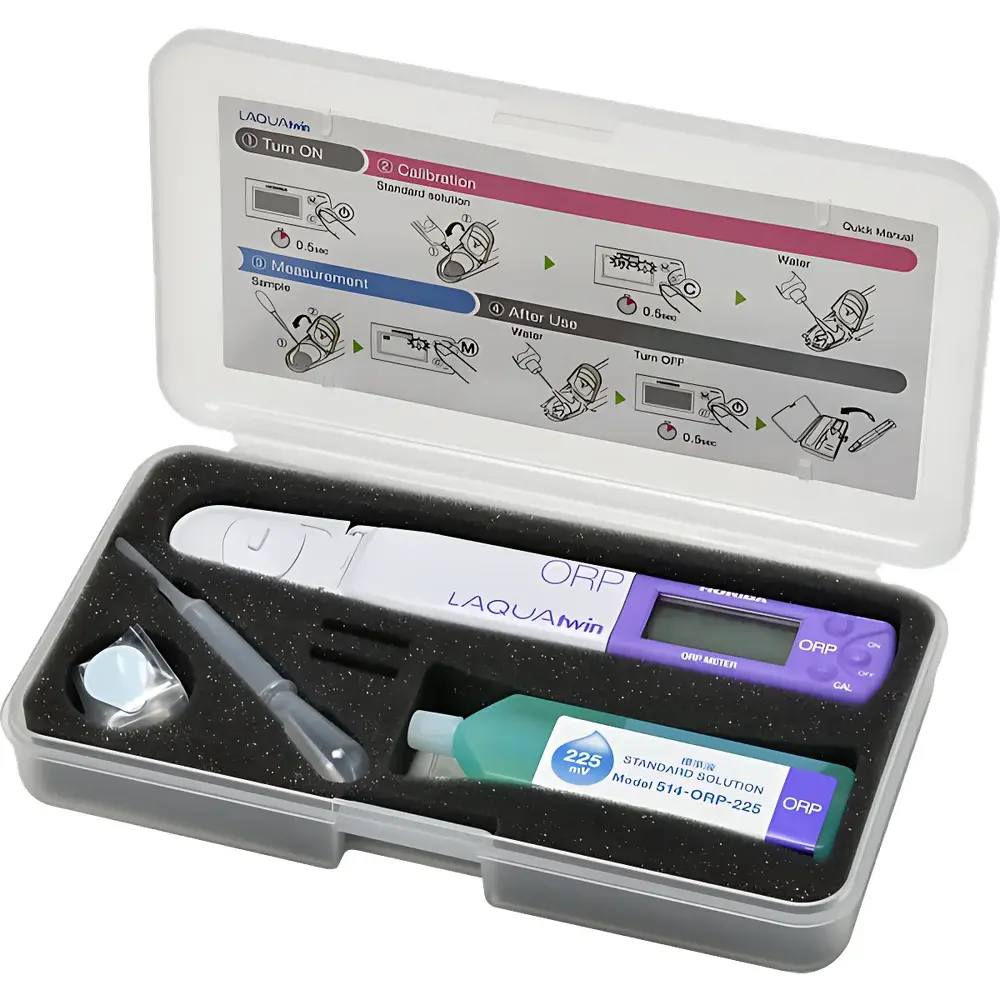
- Intelligent calibration architecture: Automatic recognition of supplied 225 mV ORP standard solution (14 mL); supports manual entry of alternative standard values (e.g., 470 mV quinhydrone, 670 mV Zobell’s solution) for application-specific traceability
- Stabilization-assisted measurement: Auto-hold and auto-stability algorithms freeze readings only when signal drift falls below 0.5 mV/3 s; visual “smiley face” indicator confirms measurement readiness
- Integrated temperature compensation: Built-in thermistor enables real-time correction per Nernst slope (−59.16 mV/pH unit at 25 °C), with manual temperature calibration capability for non-aqueous or high-ionic-strength samples
- Ruggedized field design: IP67-rated enclosure withstands immersion up to 1 m for 30 min and full dust ingress protection; operating range: 5–40.0 °C / ≤85% RH (non-condensing)
Sample Compatibility & Compliance
The ORP-11 is validated for use with freshwater, seawater, wastewater, process streams, and low-conductivity purified water (≥50 µS/cm recommended for stable junction potential). It is not intended for non-aqueous solvents, viscous slurries, or samples containing heavy metal sulfides that may poison the Pt surface. The replaceable Pt-disk sensor is compatible with routine cleaning using provided abrasive swabs and mild acidic rinses (e.g., 0.1 M HNO₃), extending service life beyond 12 months under typical field use. Device firmware and data handling conform to GLP documentation requirements: all measurements include embedded timestamps, temperature metadata, and operator ID fields (via optional software export). While not FDA 21 CFR Part 11-certified out-of-the-box, audit trails generated via HORIBA’s optional LAQUA Connect PC software support GMP-aligned validation protocols.
Software & Data Management
Data export is enabled via optional USB-to-serial adapter and HORIBA’s free LAQUA Connect software (Windows/macOS), supporting CSV and Excel-compatible output with column headers: Date_Time, ORP_mV, Eh_mV, Temp_°C, Stability_Flag. Each exported record includes automatic annotation of calibration date, sensor serial number, and battery status—critical for ISO/IEC 17025-compliant lab notebooks. No proprietary cloud platform is required; raw files are stored locally and fully editable. Firmware updates (v2.1+) introduce enhanced logging intervals (1–60 s configurable) and batch ID tagging for multi-site monitoring campaigns.
Applications
- Drinking water disinfection verification: Rapid confirmation of residual chlorine oxidation capacity (target: +650 to +750 mV)
- Wastewater bioreactor monitoring: Tracking anaerobic/aerobic transition zones in activated sludge systems
- Environmental site assessment: Mapping redox gradients in contaminated aquifers (e.g., Cr(VI) reduction plumes)
- Aquaculture health management: Early detection of nitrite accumulation and oxygen depletion stress indicators
- Swimming pool & spa maintenance: On-the-spot validation of sanitizer efficacy without reagent kits
- Corrosion control in cooling towers: Monitoring oxidizing biocide dosing to prevent pitting in stainless steel circuits
FAQ
Does the ORP-11 require regular electrode refilling or electrolyte replacement?
No—the ORP-11 uses a sealed, gel-filled Ag/AgCl reference system with no liquid junction or refill port. Sensor longevity depends on cleaning frequency and exposure to sulfide or cyanide contaminants.
Can the device measure ORP in high-salinity seawater without drift?
Yes, but users must perform a single-point calibration in a seawater-matched standard (e.g., 225 mV in 35 ppt NaCl) prior to deployment; the built-in temperature compensation corrects for thermal effects on junction potential.
Is the sampling sheet reusable?
No—each hydrophilic cellulose acetate sheet is single-use to prevent cross-contamination and ensure consistent capillary action; 5 sheets are included per kit.
How is traceability maintained during field calibrations?
Calibration events are timestamped and logged internally; when connected to LAQUA Connect, calibration parameters (standard value, date, operator ID) are appended to every subsequent measurement file.
What is the expected service life of the Pt-disk sensor under daily field use?
Typical operational lifespan exceeds 18 months with weekly polishing and avoidance of abrasive particulates; HORIBA offers factory refurbishment services for worn electrodes.
Related Products







