
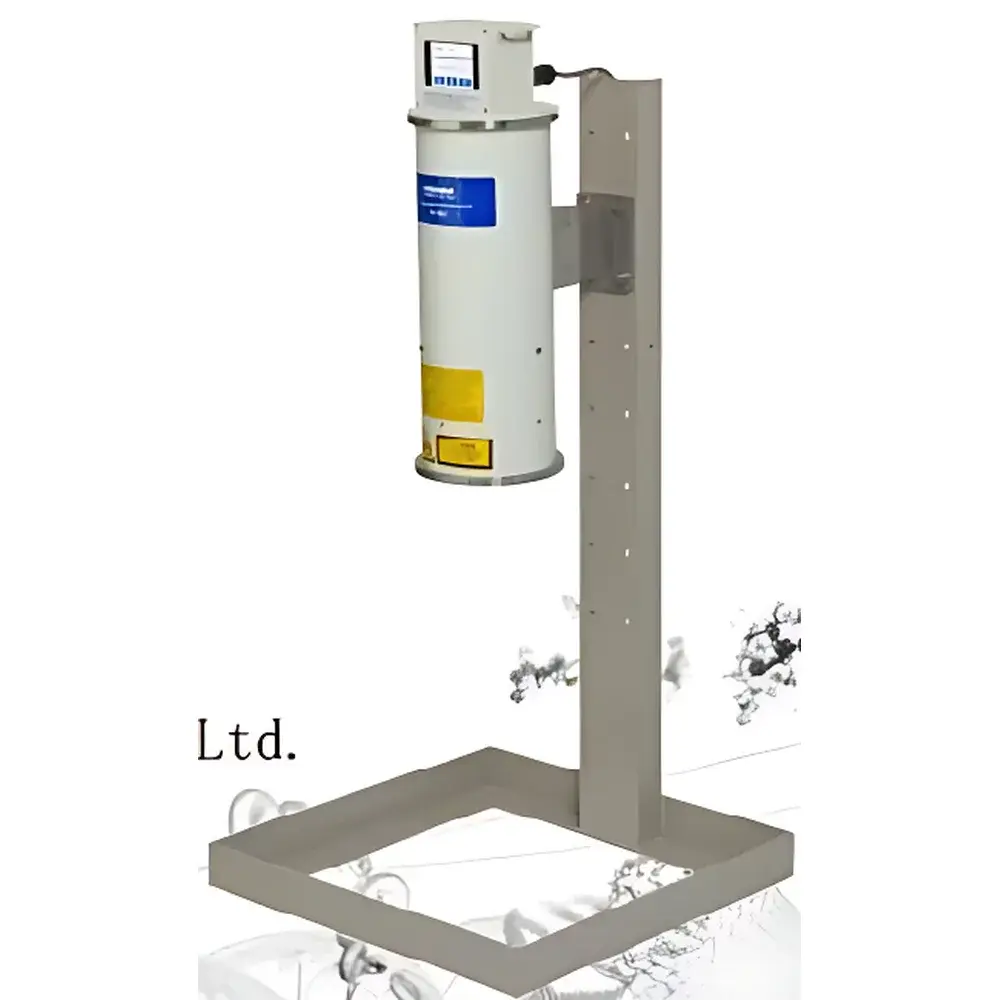
HORIBA LO-300 Online Oil Film Monitor
| Brand | HORIBA |
|---|---|
| Origin | Japan |
| Model | LO-300 |
| Detection Principle | Laser Circular Area Scanning Reflectometry |
| Detection Range | 0.3–4.0 m (up to 6.0 m on still water) |
| Oil Types Detected | Floating hydrocarbon films (gasoline, kerosene, diesel, heavy oil, insulating oil, lubricating oil) |
| Output Signals | 4–20 mA analog (reflected light intensity), 2 dry contact relays (oil film alarm, system fault) |
| Display | Color touchscreen showing oil coverage (%), received light level (4–20 mA), threshold setting, and status indicators |
| Power Supply | AC 100 V ±10%, 50/60 Hz, ≤100 VA |
| Enclosure Rating | IP66 |
| Operating Temperature | −10 to +50 °C |
| Dimensions | Ø185 × 547 mm (H) |
| Weight | ~11 kg |
| Optional Features | Integrated HD surveillance camera with pre-/post-alarm MP4 video recording (3 fps, 6 MB/event), automatic LED illumination for nighttime operation, LAN remote monitoring capability |
Overview
The HORIBA LO-300 Online Oil Film Monitor is an industrial-grade, non-contact optical sensor engineered for continuous, real-time detection of floating hydrocarbon oil films on water surfaces in environmental monitoring, wastewater treatment, industrial effluent discharge points, and harbor/port surveillance applications. Unlike conventional extractive or fluorescence-based analyzers, the LO-300 employs a proprietary laser circular area scanning reflectometry principle: a Class 2 semiconductor laser (≤1 mW) projects a rotating conical beam onto the water surface, and the system analyzes spatially resolved reflection intensity patterns across a defined scan zone. This method enables robust discrimination between thin oil sheens (as low as sub-micron thickness) and natural surface disturbances—including ripples, foam, debris, and algae—by quantifying the percentage of the scanned area exhibiting characteristic specular reflectance enhancement. The instrument operates without immersion, reagents, or consumables, delivering long-term stability and minimal maintenance requirements under harsh outdoor conditions.
Key Features
- Non-invasive laser scanning detection—no sample extraction, no fouling risk, zero operational consumables
- Extended detection range: 0.3–4.0 m standard; up to 6.0 m on calm, frozen-free water surfaces
- Self-aligning optical head with automatic vertical calibration—reduces installation complexity and alignment drift
- Configurable multi-parameter alarm logic: user-defined oil coverage threshold (%), minimum persistence duration, and dynamic level validation
- IP66-rated sealed enclosure—certified for permanent outdoor deployment in rain, dust, and temperature extremes (−10 to +50 °C)
- Integrated color touchscreen HMI with intuitive menu navigation, real-time visualization of oil coverage (%), reflected light intensity (4–20 mA), and system status
- Modular architecture supporting optional high-resolution surveillance camera module with synchronized event-triggered video capture
Sample Compatibility & Compliance
The LO-300 is validated for detection of non-polar, immiscible hydrocarbon films—including gasoline, jet fuel (kerosene), diesel, marine fuel oil (IFO/MGO), transformer insulation oil, and industrial lubricants—on freshwater, seawater, and treated effluent surfaces. It does not detect water-soluble oils (e.g., synthetic ester-based coolants) or emulsified oil-in-water dispersions below the phase separation threshold. While not certified to a single harmonized standard, its measurement methodology aligns with principles referenced in ASTM D3921 (Standard Practice for Monitoring Oil Sheens), ISO 9377-2 (Water quality — Determination of hydrocarbon oil index — Part 2: Infrared spectrometry), and EPA Method 1664B (n-Hexane Extractable Material). The device supports integration into facilities operating under ISO 14001 environmental management systems and complies with electromagnetic compatibility (EMC) per IEC 61326-1 and safety requirements per IEC 61010-1.
Software & Data Management
The LO-300’s embedded firmware provides local data logging of oil coverage trends, alarm timestamps, and system diagnostics. When equipped with the optional camera module, it records MP4-formatted video clips (3 fps, 6 MB/event) capturing 30 seconds before and after each alarm trigger—each frame stamped with UTC time and overlayed with real-time oil coverage % and signal intensity. Video files are stored internally on industrial-grade flash memory and accessible via FTP or SMB over standard Ethernet (RJ45, 10/100BASE-TX). Remote configuration, live view, and historical review are supported through a browser-based interface compatible with Windows, macOS, and Linux clients—requiring no proprietary software installation. Audit trails, user access levels, and configuration change logs meet foundational requirements for GLP-compliant environmental monitoring programs.
Applications
- Continuous monitoring of stormwater outfalls and combined sewer overflows (CSOs) for illicit hydrocarbon discharges
- Early warning at refinery, petrochemical plant, and power station cooling water intakes
- Compliance verification at municipal wastewater treatment plant final effluent channels
- Oil spill response coordination in marinas, docks, and inland waterways
- Long-term ecological monitoring of sensitive wetlands and estuarine zones adjacent to transport corridors
- Preventive maintenance support for oil-water separator performance validation
FAQ
Does the LO-300 require periodic calibration with reference oil standards?
No. The system relies on relative reflectance contrast rather than absolute concentration calibration. Routine verification is performed via built-in self-test routines and visual inspection of optical windows; field recalibration is not required under normal operating conditions.
Can the LO-300 distinguish between diesel and crude oil sheens?
It detects presence and spatial extent of hydrocarbon films but does not perform chemical speciation. Classification by oil type requires complementary lab analysis (e.g., GC-MS) of grab samples collected upon alarm confirmation.
Is the laser safe for use in public or ecologically sensitive areas?
Yes. The Class 2 laser (≤1 mW, 635–650 nm visible red) poses no skin or eye hazard under normal viewing conditions and complies with IEC 60825-1. No special permits are required for open-air deployment.
What network protocols does the LAN interface support?
The device implements DHCP, static IP assignment, HTTP/HTTPS, FTP(S), and SNMP v2c for integration with SCADA, EMS, or centralized environmental data platforms.
How is false alarm suppression handled during high-wind or rainy conditions?
The circular scanning geometry and adaptive pixel-level intensity thresholding minimize wave-induced noise. Users may further refine reliability by adjusting minimum detection duration (e.g., requiring ≥5 seconds of sustained coverage >15%) and excluding transient spikes via configurable hysteresis.







