
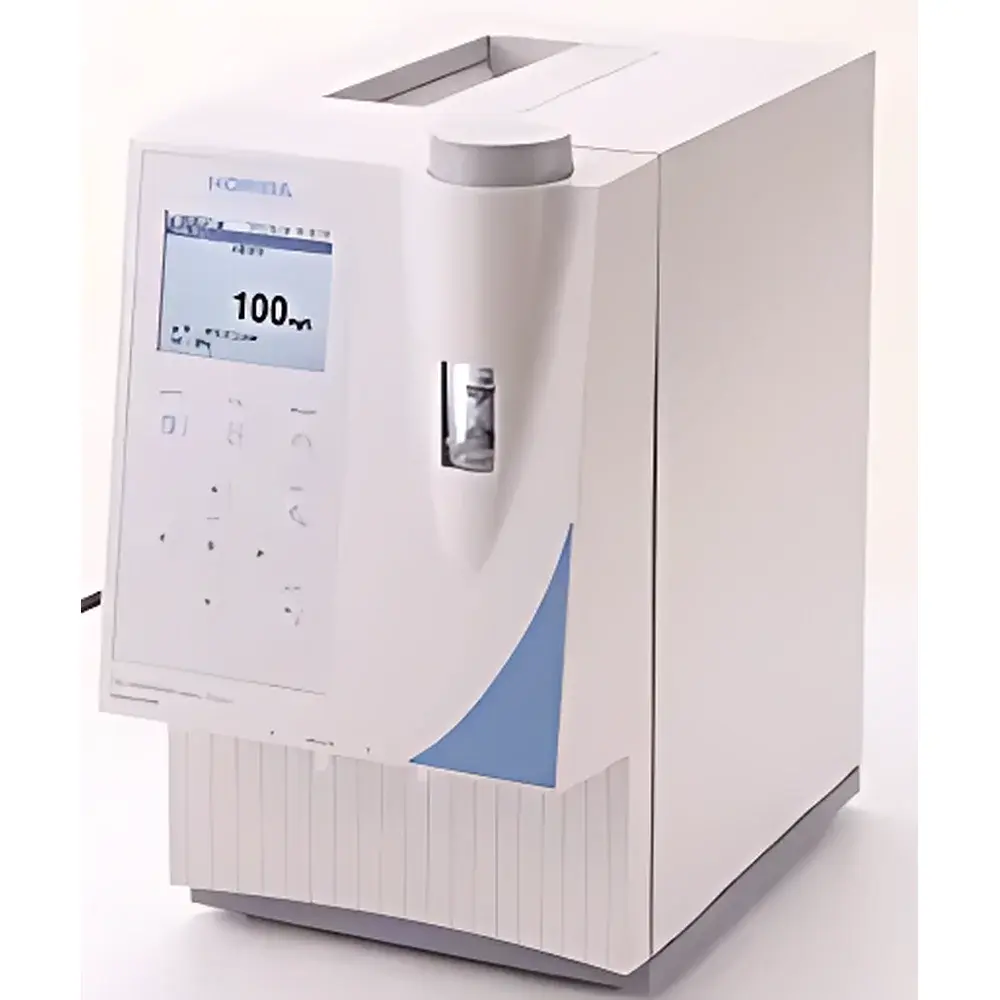
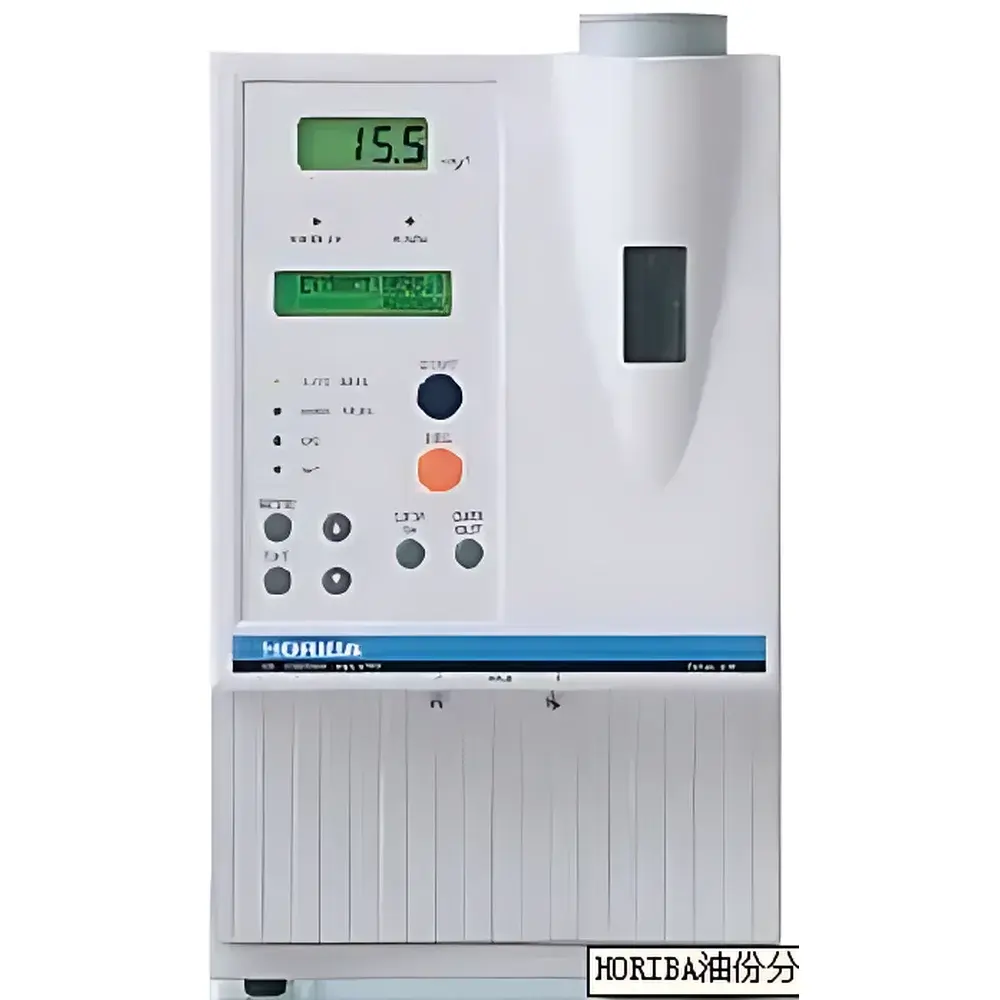
HORIBA OCMA-500 Portable Oil-in-Water Analyzer
| Brand | HORIBA |
|---|---|
| Origin | Japan |
| Model | OCMA-500 / OCMA-505 |
| Instrument Type | Portable |
| Measurement Principle | Non-Dispersive Infrared (NDIR) Spectrophotometry |
| Measurement Range | 0–200 mg/L |
| Accuracy | ±0.2 mg/L (0–10 mg/L), ±2 mg/L (10–100 mg/L), ±4 mg/L (100–200 mg/L) |
| Resolution | 0.1 mg/L |
| Extractant | S-316 (trichloroethylene-free chlorinated solvent) |
| Optional Accessory | Solvent Regenerator SR-305 |
Overview
The HORIBA OCMA-500 is a portable, field-deployable oil-in-water analyzer engineered for rapid, reliable quantification of hydrocarbon contaminants in aqueous matrices—including freshwater, seawater, industrial effluents, and wastewater treatment streams. It operates on the principle of non-dispersive infrared (NDIR) absorption spectroscopy, specifically targeting the characteristic C–H stretching vibration bands (~2930 cm⁻¹ and ~2960 cm⁻¹) common to aliphatic hydrocarbons. Unlike traditional gravimetric or fluorescence-based methods, the OCMA-500 employs solvent extraction followed by NDIR detection, delivering high specificity for total petroleum hydrocarbons (TPH) without interference from humic substances or chlorophyll. Its fully integrated, self-contained design eliminates the need for external spectrometers or laboratory infrastructure—enabling on-site analysis with laboratory-grade reproducibility.
Key Features
- Single-range dynamic quantification: Full 0–200 mg/L measurement range without manual range switching—reducing operator error and improving throughput across low- and high-concentration samples.
- Digital precision interface: High-contrast LCD display with real-time status monitoring, English-language error diagnostics, and traceable numeric readouts (0.1 mg/L resolution).
- Quantitative solvent extraction: Proprietary syringe-based fluid handling system ensures precise, repeatable delivery of both sample water and S-316 extractant—minimizing volumetric variability and enhancing method robustness.
- Field-ready portability: Compact footprint (W × D × H ≈ 300 × 250 × 200 mm), battery-operated capability (optional), and shock-resistant housing suitable for plant floor, coastal monitoring, or mobile lab deployment.
- Regulatory-aligned methodology: Extraction and detection protocol aligns with ASTM D7066-22 (Standard Test Method for Determination of Oil and Grease and Selected Petroleum Hydrocarbons in Water by Infrared Spectrophotometry) and ISO 9377-2:2000 (Water quality — Determination of hydrocarbon oil index — Part 2: Infrared spectrometric method).
Sample Compatibility & Compliance
The OCMA-500 is validated for use with raw surface water, treated wastewater, seawater, cooling tower blowdown, and bilge water. Sample turbidity and suspended solids do not interfere with quantification when standard filtration (e.g., 0.45 µm membrane) is applied prior to extraction. The instrument complies with key environmental regulatory frameworks including EPA Method 1664B (for oil and grease), JIS K 0102 (Japanese Industrial Standard for water quality testing), and EU Water Framework Directive (WFD) Annex V monitoring requirements. All internal calibration and validation routines support GLP-compliant data integrity, and audit trails (via optional PC connectivity) meet basic FDA 21 CFR Part 11 expectations for electronic records.
Software & Data Management
Data output is provided via RS-232 serial interface or USB-to-serial adapter for direct transfer to LIMS or spreadsheet applications. The embedded firmware stores up to 1,000 measurement records with timestamp, operator ID (user-defined), and calibration status flag. While the OCMA-500 does not include onboard spectral processing software, HORIBA provides optional PC-based configuration and reporting tools (OCMA Manager v3.x) supporting CSV export, trend graphing, and QC chart generation (X-bar/R charts). Calibration verification checks—performed using certified reference standards traceable to NIST SRM 2781 (Mineral Oil in Water)—are programmable and logged with pass/fail flags.
Applications
- Real-time monitoring of influent/effluent oil content at municipal and industrial wastewater treatment plants
- Compliance verification for discharge permits under NPDES (U.S.) or IED (EU)
- Leak detection and source tracking in refinery outfalls, petrochemical process drains, and offshore platform bilge systems
- Environmental impact assessment of harbor sediments and coastal seawater following spill incidents
- QA/QC of oily water separators (OWS) and coalescing filter performance in marine and energy sectors
FAQ
What solvent is required for OCMA-500 operation?
S-316—a proprietary, low-toxicity chlorinated solvent developed by HORIBA—is the only validated extractant. It exhibits optimal infrared transparency and hydrocarbon solubility while meeting modern occupational safety thresholds (TLV-TWA = 25 ppm).
Can the OCMA-500 distinguish between mineral oil and vegetable oil?
No. As an NDIR-based total hydrocarbon analyzer, it measures absorbance attributable to C–H bonds common to all aliphatic hydrocarbons. For compound-class differentiation, GC-FID or GC-MS analysis is required.
Is the SR-305 Solvent Regenerator compatible with all OCMA models?
Yes—the SR-305 is designed exclusively for OCMA-series instruments and regenerates spent S-316 via dual-bed adsorption (activated carbon + activated alumina), extending solvent service life by ≥10× and reducing hazardous waste disposal volume.
Does the OCMA-500 require annual factory recalibration?
While not mandatory, HORIBA recommends biannual verification using certified reference standards and full calibration every 12 months—or after 500 extractions—to maintain stated accuracy specifications per ISO/IEC 17025 traceability requirements.
Related Products







