
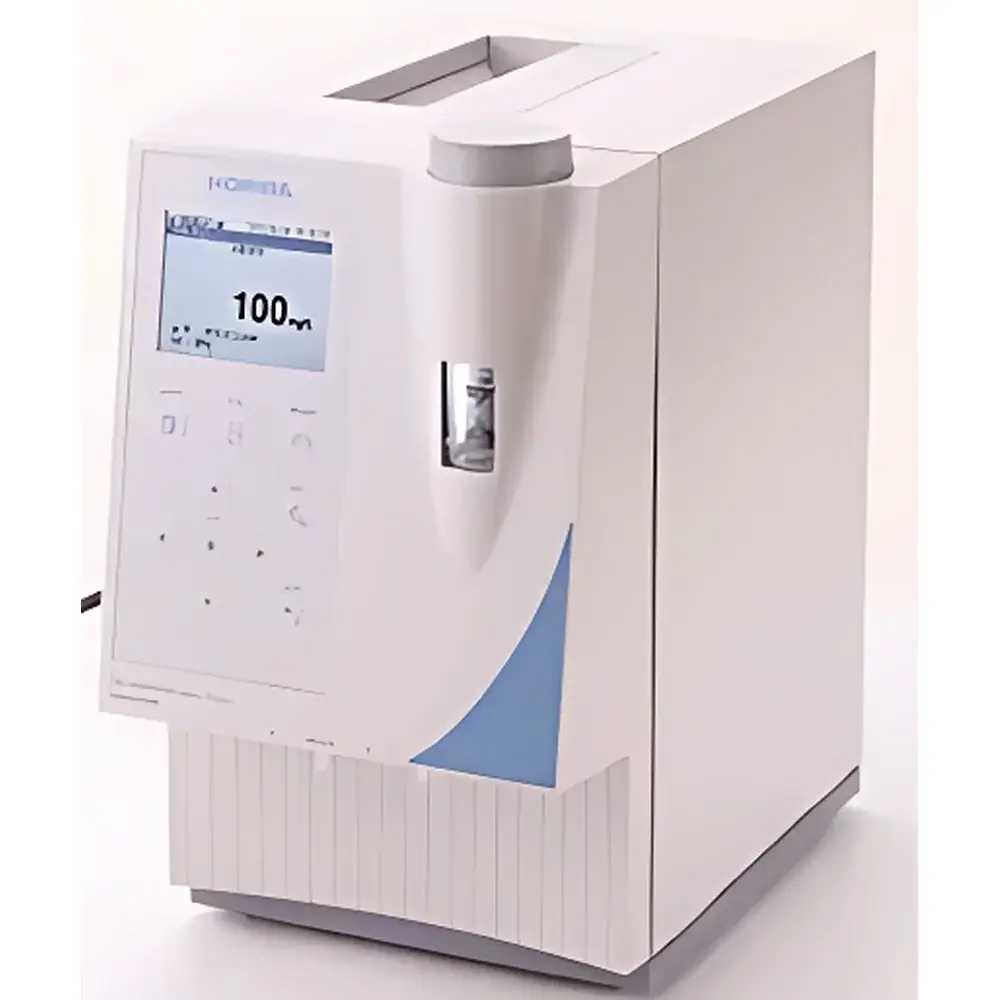
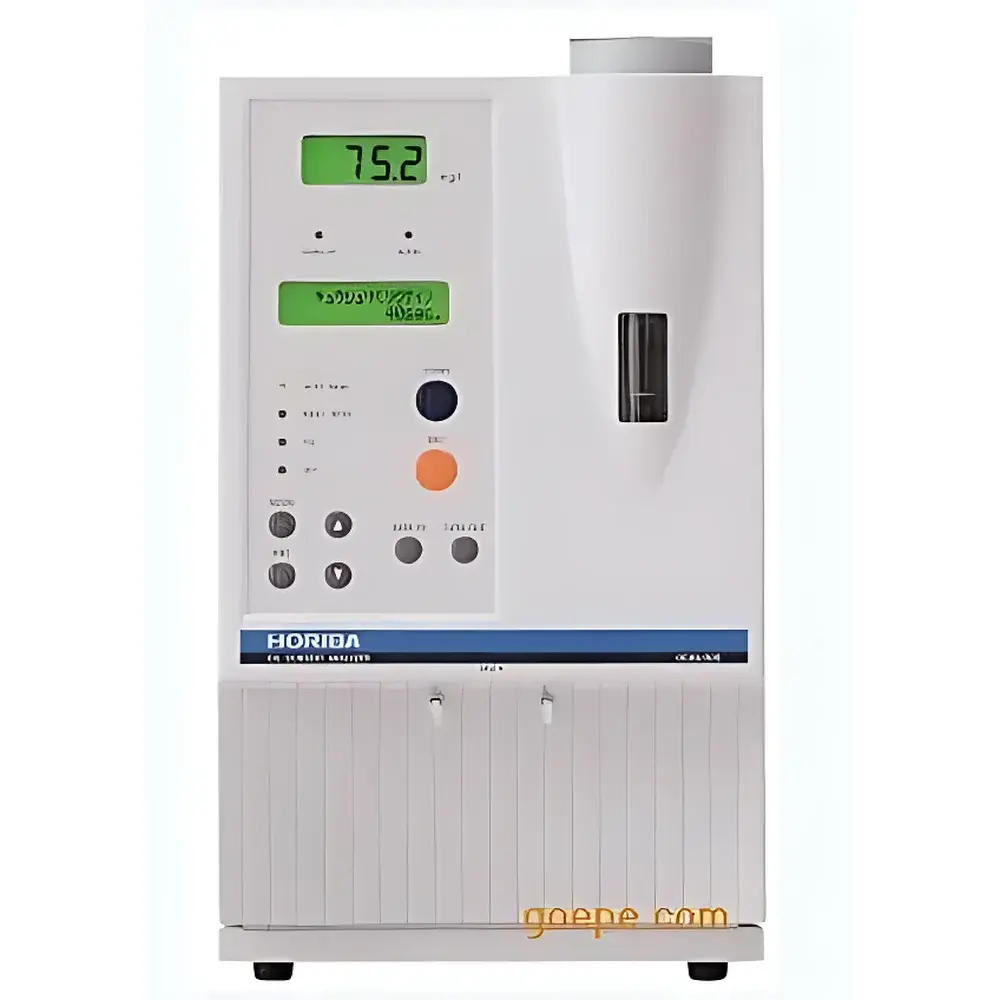
HORIBA OCMA-500 Portable Oil-in-Water Analyzer
| Brand | HORIBA |
|---|---|
| Origin | Japan |
| Model | OCMA-500 / OCMA-505 |
| Instrument Type | Portable |
| Measurement Principle | Non-Dispersive Infrared (NDIR) Spectrophotometry |
| Measurement Range | 0–200 mg/L |
| Resolution | 0.1 mg/L |
| Extraction Solvent | S-316 (Tetrachloroethylene) |
| Repeatability | ±0.2 mg/L (0–10 mg/L), ±2 mg/L (10–100 mg/L), ±4 mg/L (100–200 mg/L) |
| Optional Accessory | Solvent Regenerator SR-305 |
Overview
The HORIBA OCMA-500 is a field-deployable, fully automated oil-in-water analyzer engineered for precise quantification of hydrocarbon contaminants in aqueous matrices—including freshwater, seawater, industrial effluent, and treated wastewater. It operates on the principle of non-dispersive infrared (NDIR) absorption spectroscopy, targeting the characteristic C–H stretching vibration band near 2930 cm⁻¹—a spectral region highly selective for aliphatic hydrocarbons commonly found in mineral oils, diesel, lubricants, and crude oil emulsions. Unlike conventional benchtop extractive methods requiring manual solvent addition, phase separation, and transfer to external spectrometers, the OCMA-500 integrates sample extraction, solvent-phase isolation, and NDIR detection into a single compact platform. Its 0–200 mg/L dynamic measurement range eliminates manual range switching, enabling uninterrupted analysis across regulatory thresholds—from trace-level environmental compliance (e.g., <1 mg/L discharge limits per ISO 9377-2) to high-concentration process monitoring in oil-water separators or refinery outfalls.
Key Features
- Fully automated sample handling: Integrated syringe-driven extraction delivers precise, reproducible volumes of water sample and S-316 solvent (tetrachloroethylene), ensuring stoichiometric consistency and minimizing operator variability.
- Self-contained NDIR optical system: Utilizes a stable tungsten-halogen source, thermopile detector, and fixed-wavelength filter optimized at 2930 cm⁻¹—no moving parts, no wavelength calibration drift, and immunity to ambient light interference.
- Digital real-time diagnostics: LCD interface displays operational status, error codes, and measurement history in English; supports traceable audit logs with time/date stamping for GLP/GMP-aligned workflows.
- Robust environmental rating: IP65-rated enclosure enables reliable operation in humid, coastal, or outdoor settings—including onboard vessel sampling and remote wastewater pump stations.
- Integrated waste management: Automatic post-measurement solvent expulsion and internal waste collection reduce exposure risk and simplify field maintenance.
Sample Compatibility & Compliance
The OCMA-500 is validated for use with freshwater, brackish water, seawater (up to 35 ppt salinity), and aerobically/anaerobically treated effluents. It complies with core international standard methodologies including ASTM D7066-04 (Standard Test Method for Determination of Oil and Grease in Water by Infrared Spectrophotometry), ISO 9377-2:2000 (Water quality — Determination of hydrocarbon oil index — Part 2: Infrared spectrometric method), and JIS K 0102 (Japanese Industrial Standard for water analysis). Its measurement uncertainty profile meets EPA Method 1664B performance criteria for precision and recovery when operated within specified temperature (10–40 °C) and humidity (30–80% RH, non-condensing) ranges. The S-316 solvent is certified for low background absorbance and consistent extraction efficiency—critical for achieving the stated repeatability specifications across the full 0–200 mg/L span.
Software & Data Management
Data output is available via RS-232 serial interface for direct integration with LIMS or SCADA systems. Internal memory stores up to 1,000 measurement records with timestamp, operator ID (optional), and raw absorbance values. The instrument supports FDA 21 CFR Part 11-compliant data integrity protocols when paired with HORIBA’s optional OCMA DataLink software—enabling electronic signatures, user access levels, and immutable audit trails. All firmware updates are delivered via secure USB flash drive with cryptographic verification to ensure system integrity and regulatory defensibility.
Applications
- Regulatory discharge monitoring at municipal and industrial wastewater treatment plants (WWTPs).
- Leak detection and bilge water screening on marine vessels and offshore platforms (MEPC.107(49) compliant).
- Process control in petroleum refining, petrochemical manufacturing, and metalworking fluid management.
- Environmental site assessment and sediment pore-water analysis during brownfield remediation.
- Field validation of online oil-in-water sensors (e.g., as a reference method per IEC 62282-3-100).
FAQ
What solvent is required for OCMA-500 operation?
S-316 (tetrachloroethylene) is the factory-specified and validated extraction solvent. Substitution with alternative solvents invalidates calibration and compromises compliance with ASTM D7066 and ISO 9377-2.
Can the OCMA-500 measure emulsified oil?
Yes—the integrated extraction process effectively liberates both free and emulsified hydrocarbons into the solvent phase, provided emulsion stability does not exceed the kinetic limits of the 60-second extraction cycle.
Is the SR-305 solvent regenerator compatible with all OCMA models?
The SR-305 is designed exclusively for OCMA-500/505 systems using S-316; it is not certified for use with other HORIBA analyzers or third-party solvents.
How often must the optical path be cleaned?
Under typical field use (≤10 samples/day), the NDIR cell requires cleaning every 200–300 measurements using lint-free wipes and analytical-grade ethanol—no disassembly required.
Does the OCMA-500 support multi-point calibration?
Yes—up to five calibration points can be stored internally, allowing linear or quadratic curve fitting per ISO/IEC 17025 requirements for measurement traceability.







