
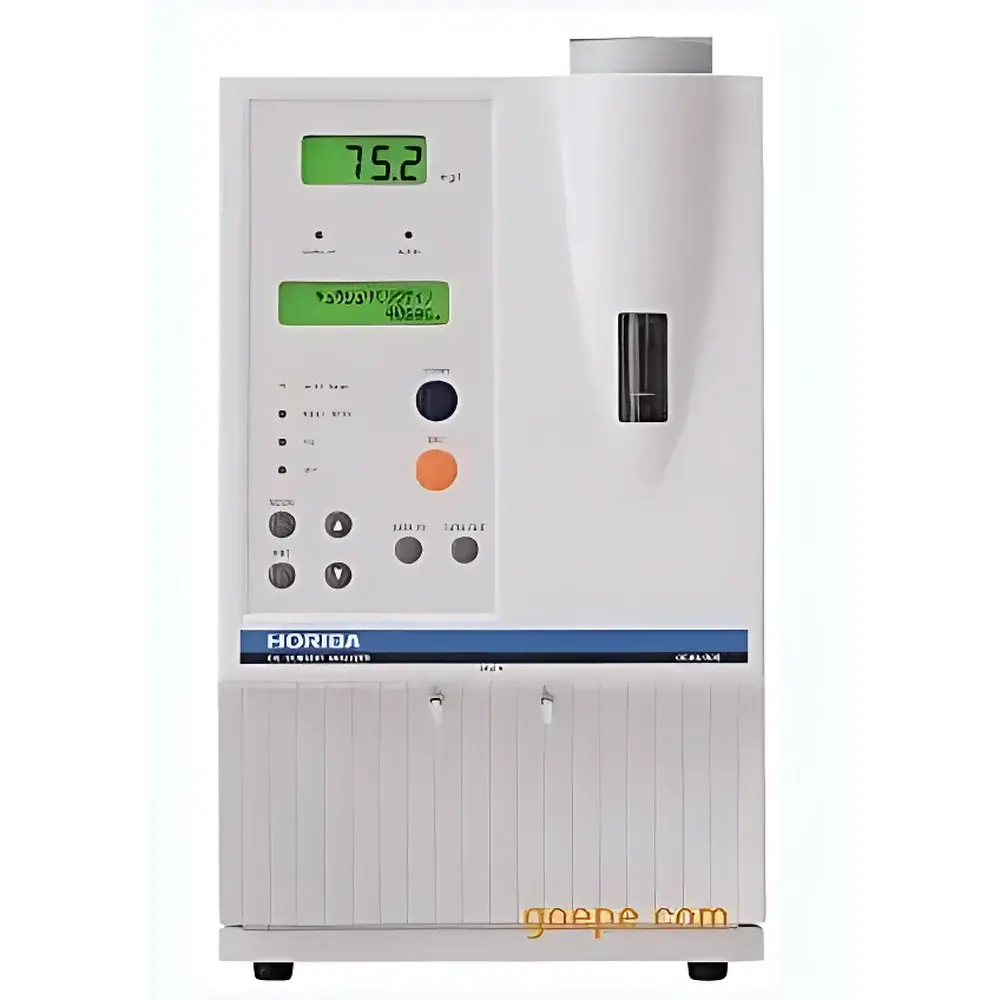
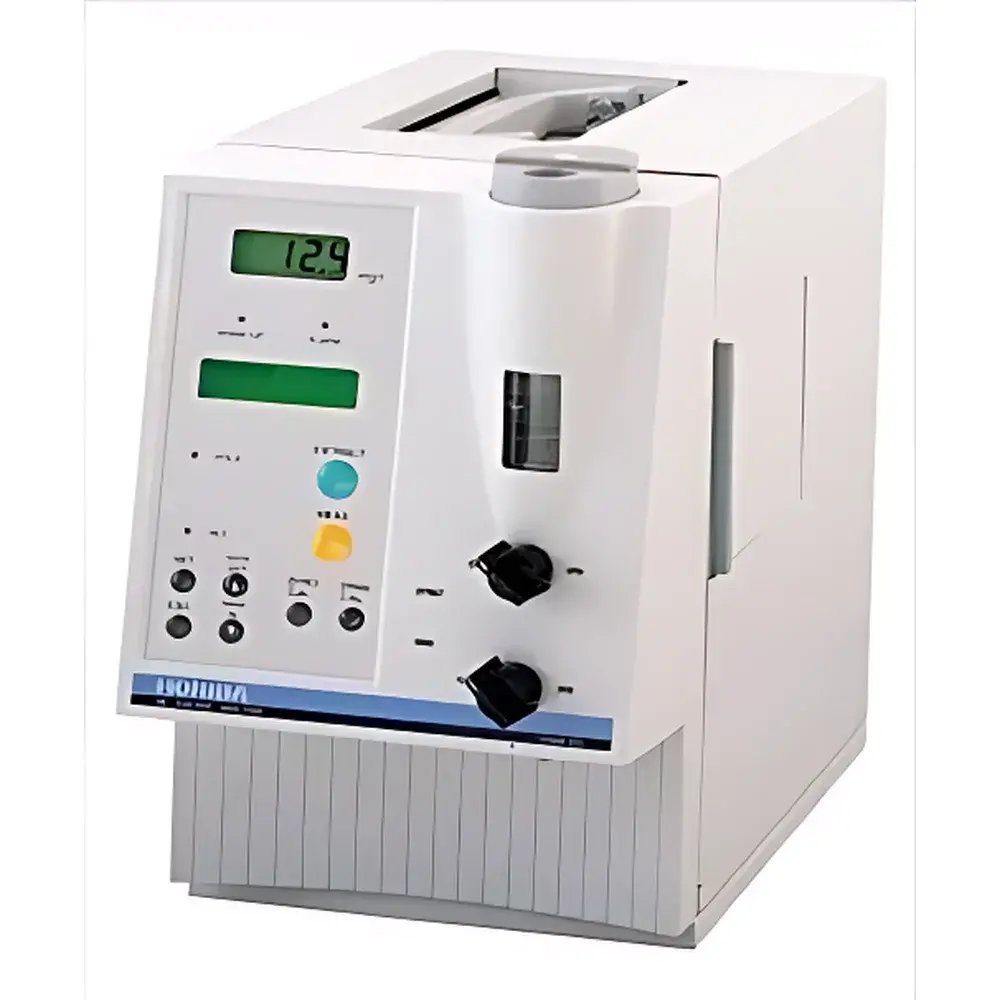
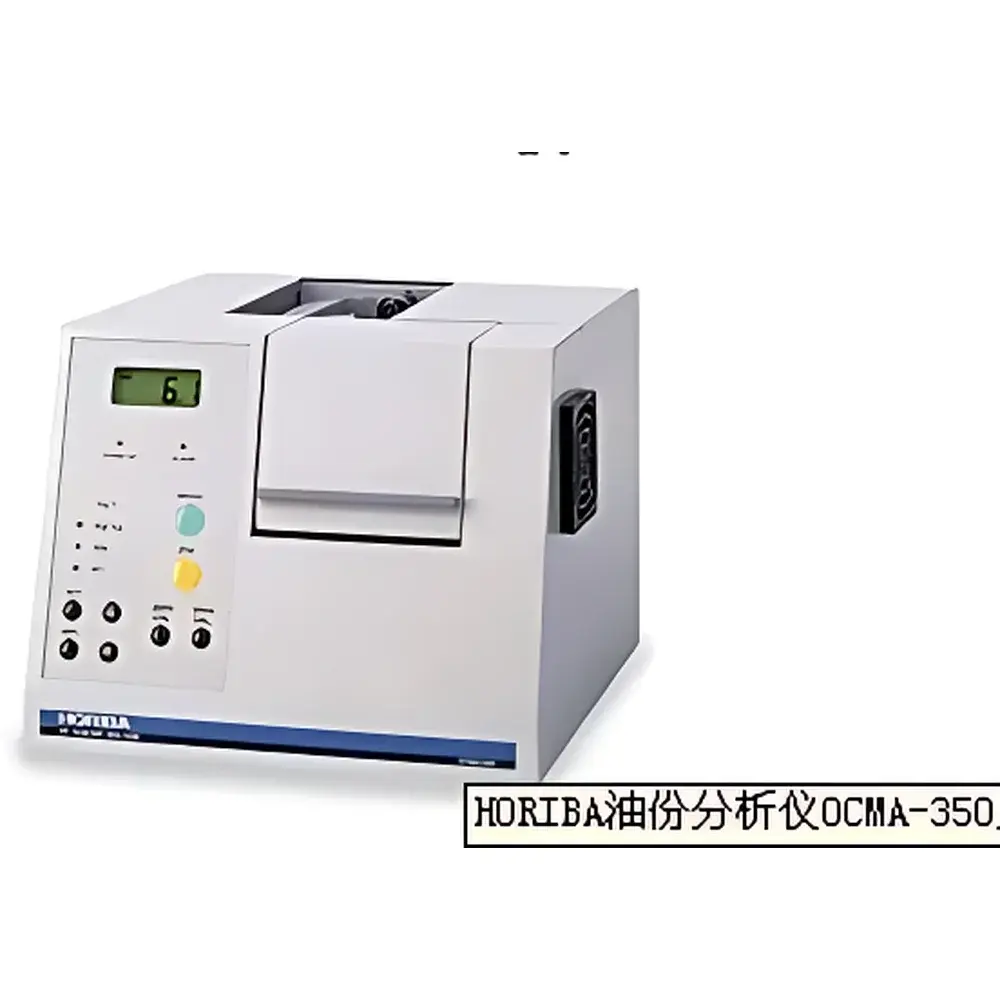
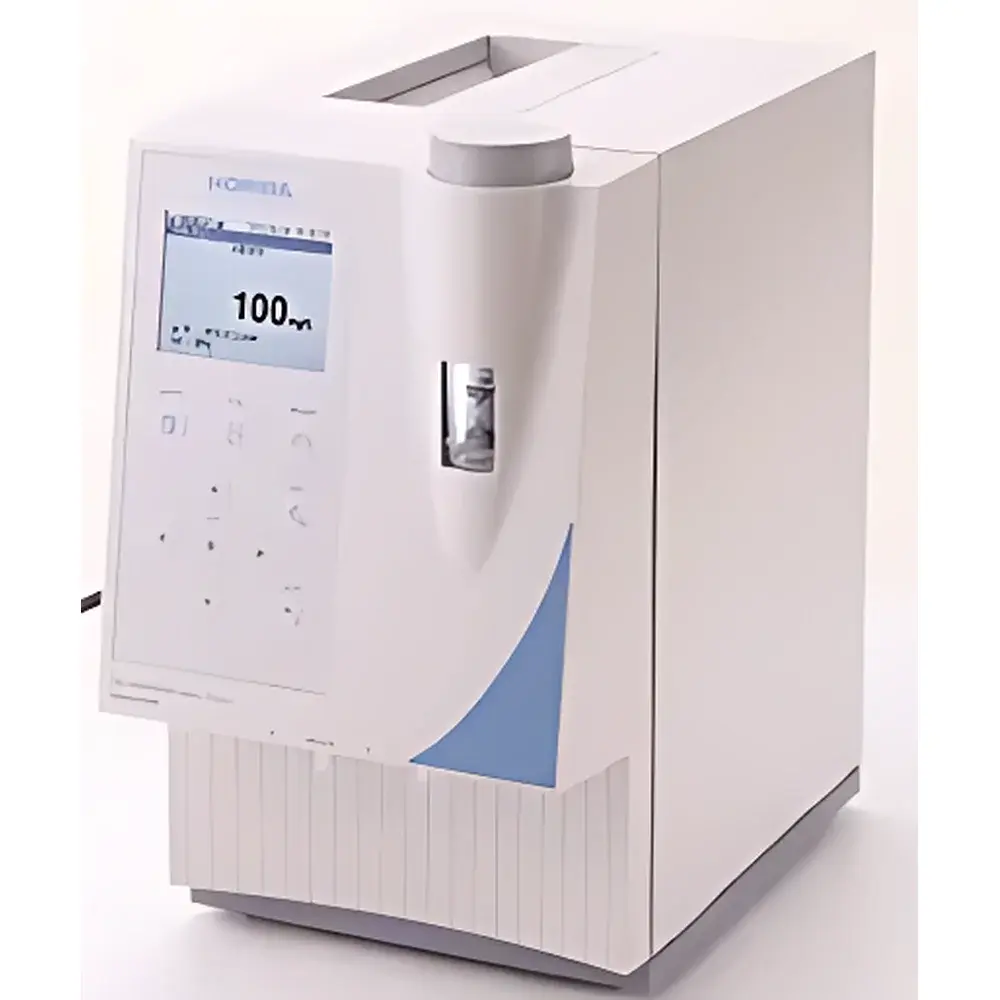
HORIBA OCMA-500 Series Non-Dispersive Infrared (NDIR) Oil-in-Water Analyzer
| Brand | HORIBA |
|---|---|
| Origin | Japan |
| Model | OCMA-500/505 & OCMA-550/555 |
| Instrument Type | Portable |
| Measurement Principle | Non-Dispersive Infrared Absorption (NDIR) at ~3.4 µm |
| Measurement Range | 0–200 mg/L (water), 0–1000 mg/kg (soil), 0–1 Abs (absorbance) |
| Detection Limit | < 0.1 ppm (equivalent to < 0.1 mg/L) |
| Accuracy | ±0.2 mg/L (0–9.9 mg/L), ±2.0 mg/L (10.0–99.9 mg/L), ±4 mg/L (100–200 mg/L) |
| Resolution | 0.1 mg/L (0–99.9 mg/L), 1 mg/L (100–200 mg/L) |
| Sampling Frequency | 1 measurement per 2 minutes (0.5 Hz) |
| Extractant Compatibility | S-316 or H-997 chlorinated solvents |
| Calibration | Automatic zero and span calibration (OCMA-500/505) |
| Compliance | Designed for ASTM D7066, ISO 9377-2, and EPA Method 1664B workflows |
Overview
The HORIBA OCMA-500 Series is a field-deployable, non-dispersive infrared (NDIR) oil-in-water analyzer engineered for quantitative determination of hydrocarbon contaminants in aqueous matrices, soil extracts, and surface residues. Operating on the fundamental principle of selective absorption at the C–H stretching vibration band near 3.4 µm, the instrument delivers highly specific detection of aliphatic and aromatic hydrocarbons—including mineral oils, lubricants, cutting fluids, and petroleum derivatives—without interference from water, salts, or common polar organics. Unlike fluorescence-based systems, NDIR eliminates matrix-induced quenching effects and photobleaching artifacts, ensuring robust performance across variable sample chemistries and turbidities. The OCMA-500 Series supports three reporting modes—mg/L (for water), mg/kg (for soil/solid extracts), and absorbance units (Abs)—enabling direct traceability to regulatory extraction protocols such as EPA 1664B and ISO 9377-2. Its optical architecture features a thermoelectrically stabilized IR source, dual-wavelength detection (measurement + reference channel), and solvent-compensated signal processing to suppress baseline drift caused by residual extractant vapor.
Key Features
- True portable design with integrated battery operation (up to 8 hours), enabling real-time analysis at wastewater outfalls, remediation sites, and manufacturing cleanrooms.
- Dynamic 0–200 mg/L linear range eliminates manual range switching—critical for unattended monitoring of fluctuating discharge streams.
- Proprietary precision syringe delivery system ensures reproducible 10 mL sample + 10 mL extractant dosing, minimizing volumetric error to < ±0.5% CV.
- Dual-mode operation: OCMA-500/505 offers fully automated extraction-integrated analysis with internal solvent separation and waste management; OCMA-550/555 provides manual control over liquid–liquid extraction, phase separation, and cell loading—ideal for method validation and heterogeneous samples.
- Self-diagnostic firmware with English-language status display, error logging (e.g., “Low Solvent Level”, “Cell Contamination Detected”), and audit-trail-capable event timestamps.
- Calibration stability verified per ISO/IEC 17025 requirements: automatic zero and span verification every 24 hours (OCMA-500/505); optional NIST-traceable calibration standards available for GLP-compliant laboratories.
Sample Compatibility & Compliance
The OCMA-500 Series is validated for use with standard EPA-approved extractants—S-316 (tetrachloroethylene) and H-997 (Freon替代溶剂)—and compatible with post-extraction filtration (0.45 µm PVDF) to remove suspended solids (SS) prior to analysis. It meets the instrumental performance criteria outlined in ASTM D7066 (Standard Test Method for Determination of Oil and Grease and Selected Petroleum Hydrocarbons in Water by Infrared Spectrophotometry), ISO 9377-2 (Water quality — Determination of hydrocarbon oil index — Part 2: Infrared spectrometric method), and EPA Method 1664B (n-Hexane Extractable Material). For regulated environments, the instrument’s data handling architecture supports 21 CFR Part 11-compliant electronic records when paired with HORIBA’s optional OCMA Data Manager software (version 3.2+), including user authentication, electronic signatures, and immutable audit trails.
Software & Data Management
The OCMA-500 Series interfaces via USB-C or Bluetooth 5.0 to Windows-based OCMA Data Manager software, which provides full GxP-aligned data governance. Functions include method storage (up to 50 user-defined protocols), real-time chromatogram-like spectral preview (3.2–3.6 µm region), automatic report generation (PDF/CSV), and integration with LIMS via ASTM E1384-compliant export. All raw absorbance values, calibration logs, and environmental metadata (temperature, humidity, operator ID) are timestamped and cryptographically hashed to ensure forensic data integrity. Software updates are delivered through HORIBA’s secure firmware portal, with version history and release notes compliant with IEC 62304 Class B medical device software standards.
Applications
- Industrial effluent compliance monitoring: real-time verification of oil removal efficiency in API separators, dissolved air flotation (DAF) units, and membrane bioreactors (MBRs).
- Hazardous waste site characterization: rapid screening of groundwater plumes and excavated soil leachates for diesel-range organics (DRO) and gasoline-range organics (GRO).
- Manufacturing process control: quantification of residual machining oils on semiconductor wafers, precision-machined components, and textile substrates per JIS Z 8808 and ISO 14644-1 cleanliness classes.
- Marine and coastal surveillance: detection of bilge water contamination and ballast water treatment efficacy in port state control inspections.
- Research applications: kinetic studies of oil biodegradation, sorption isotherms on activated carbon, and interfacial tension modeling in enhanced oil recovery (EOR) formulations.
FAQ
What extractants are certified for use with the OCMA-500 Series?
S-316 (tetrachloroethylene) and H-997 (a low-ozone-depletion-potential chlorinated solvent) are pre-validated and supplied with factory calibration certificates.
Can the instrument measure emulsified oil without phase separation?
No—emulsified oil must first be broken using acidification (e.g., HCl to pH <2) and centrifugation per EPA 1664B prior to extraction. The OCMA-500 analyzes only the solvent-phase extract.
Is soil analysis performed directly on solid samples?
Soil requires Soxhlet or ultrasonic-assisted extraction using S-316/H-997, followed by filtration and dilution to fit the 0–1000 mg/kg reporting scale. The instrument does not accept undiluted soil slurries.
How often is recalibration required under routine operation?
For OCMA-500/505: automatic daily zero/span verification suffices for ≤8-hour shifts; full multi-point calibration recommended weekly or after solvent batch change. For OCMA-550/555: manual calibration before each analytical batch is required.
Does the system support remote data transmission for continuous monitoring networks?
Yes—via optional 4–20 mA analog output or Modbus TCP/IP interface, enabling integration into SCADA systems for unattended wastewater plant surveillance.
Related Products







