
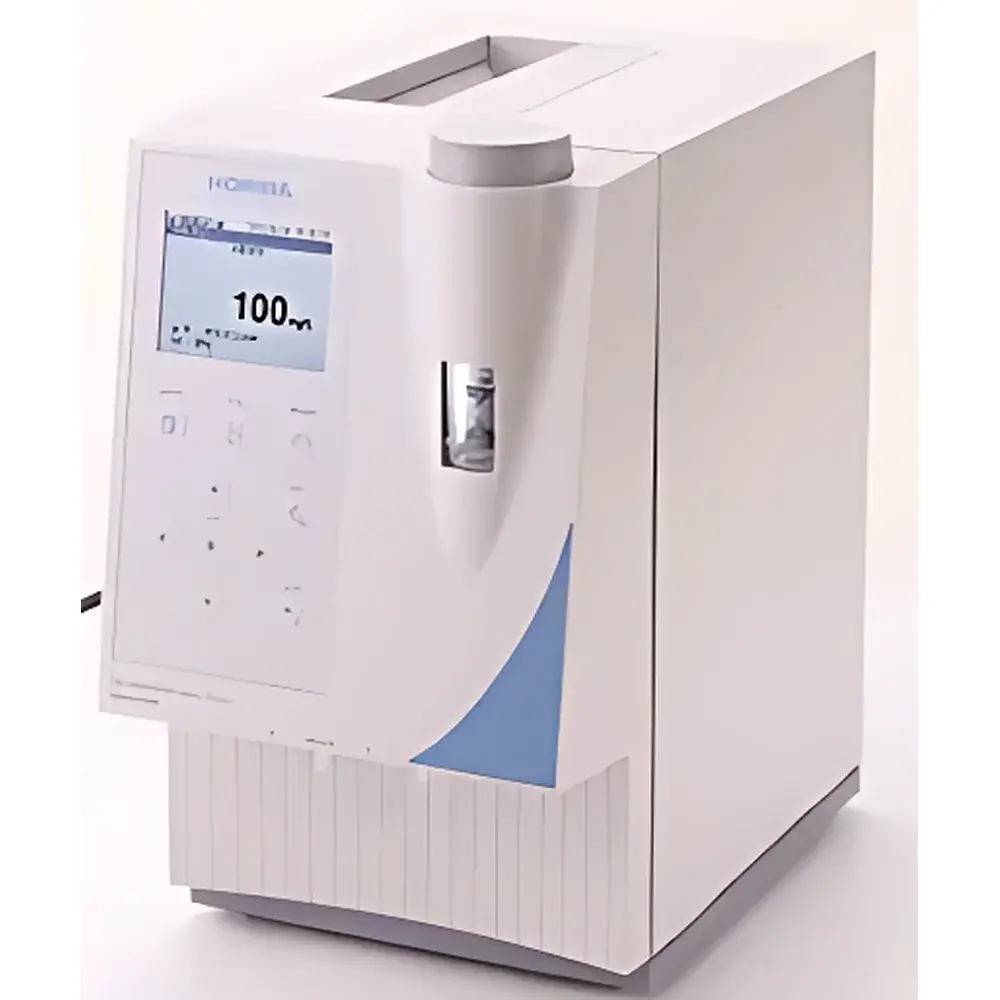
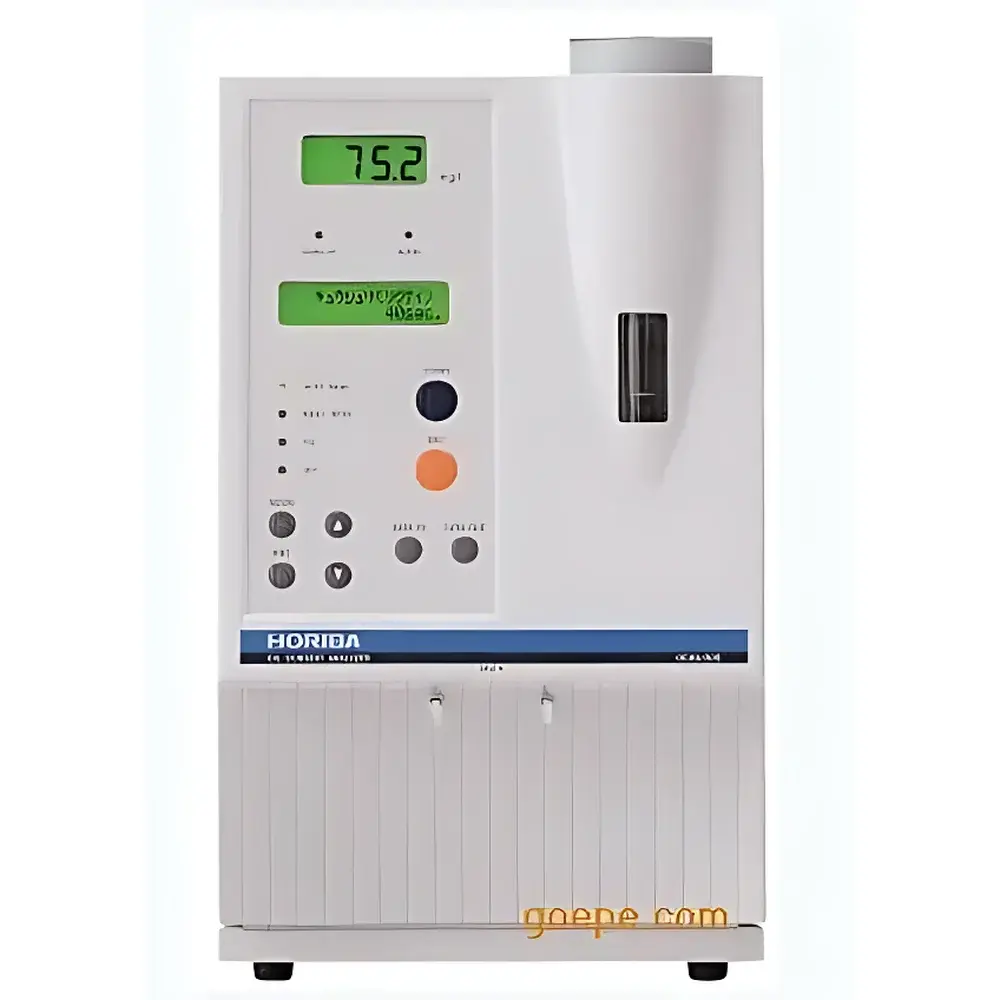
HORIBA OCMA-505 Infrared Oil-in-Water Analyzer
| Brand | HORIBA |
|---|---|
| Origin | Japan |
| Model | OCMA-505 |
| Instrument Type | Laboratory Analyzer |
| Measurement Principle | Non-Dispersive Infrared (NDIR) Absorption Spectrophotometry |
| Measurement Range | 0–200 mg/L (dynamic, single-range) |
| Accuracy | ±0.2 mg/L (0–10 mg/L), ±2 mg/L (10–100 mg/L), ±4 mg/L (100–200 mg/L) |
| Resolution | 0.1 mg/L |
| Extractant | HORIBA H-997 Solvent |
| Integrated Sample Extraction | Yes |
| Compliance | ASTM D7066, ISO 9377-2, EPA Method 1664 (compatible), GLP/GMP-ready data logging |
Overview
The HORIBA OCMA-505 is a fully automated, benchtop infrared oil-in-water analyzer engineered for precise quantification of hydrocarbon contaminants in aqueous matrices—including freshwater, seawater, industrial process water, and wastewater effluents. It operates on the principle of non-dispersive infrared (NDIR) absorption spectroscopy, targeting the characteristic C–H stretching vibrations near 2930 cm⁻¹ (≈3.4 µm), which provides high selectivity for aliphatic and aromatic hydrocarbons commonly found in petroleum-based oils. Unlike conventional gravimetric or fluorescence methods, the OCMA-505 integrates solvent extraction and optical detection into a single, closed-loop workflow—eliminating manual transfer steps, reducing operator variability, and minimizing exposure to hazardous solvents. Its 0–200 mg/L dynamic measurement range enables unattended analysis across trace-level regulatory thresholds (e.g., <1 mg/L discharge limits) and elevated concentrations typical of oil-water separator outputs—without range switching, dilution, or recalibration.
Key Features
- Fully automated extraction and analysis cycle: integrated syringe-driven liquid handling system delivers precise, repeatable volumes of sample water and H-997 extractant (a proprietary chlorinated hydrocarbon solvent optimized for IR transparency and oil solubility).
- Single-range NDIR photometer with thermoelectrically stabilized detector and dual-wavelength referencing (measurement/reference channels) to compensate for solvent background drift and particulate scattering.
- Digital display interface with real-time status monitoring, error diagnostics, and multilingual support (English default); all operational states—including extraction progress, solvent level, cell cleaning status, and calibration alerts—are logged with timestamps.
- Onboard memory stores ≥1,000 measurement records with full audit trail: date/time, sample ID, raw absorbance values, calculated concentration, operator ID (if configured), and QC flag status.
- Modular design supports optional SR-305 Solvent Regenerator: a dedicated column-based unit using activated carbon and activated alumina to remove polar impurities and residual water from spent H-997, extending solvent lifetime by >5× and reducing consumable costs and hazardous waste generation.
Sample Compatibility & Compliance
The OCMA-505 is validated for use with potable water, surface water, seawater (with salinity compensation enabled), cooling tower water, and primary/secondary wastewater. It complies with key international standards governing hydrocarbon analysis, including ISO 9377-2 (water quality — determination of hydrocarbon oil index — part 2: infrared spectrometric method), ASTM D7066 (standard test method for determination of oil and grease in water by infrared absorption), and EPA Method 1664 (revision B) for n-hexane extractable material (HEM), when paired with appropriate sample pretreatment (e.g., pH adjustment, filtration). The instrument’s firmware supports 21 CFR Part 11-compliant user access control, electronic signatures, and immutable data archiving—making it suitable for regulated environments requiring GLP or GMP documentation.
Software & Data Management
Data export is supported via USB 2.0 port (CSV format) and optional RS-232/RS-485 serial interface for integration into LIMS or SCADA systems. HORIBA’s OCMA Manager PC software (Windows-compatible) enables remote instrument control, method setup, calibration curve management (linear or polynomial), QC charting (X-bar/R charts), and automated report generation compliant with ISO/IEC 17025 requirements. All calibration events—including blank subtraction, standard verification, and multi-point linearity checks—are timestamped and stored with operator identification, supporting full traceability during internal audits or regulatory inspections.
Applications
- Environmental monitoring: routine compliance testing of effluent discharges from refineries, petrochemical plants, and marine terminals per local and national oil-in-water limits.
- Wastewater treatment: performance evaluation of API separators, coalescers, and membrane filtration units through rapid, on-site oil concentration trending.
- Drinking water safety: detection of accidental hydrocarbon intrusion in intake sources or distribution networks.
- Research & development: kinetic studies of oil biodegradation, emulsion stability, and surfactant-assisted remediation efficiency.
- Port and harbor authorities: enforcement of MARPOL Annex I sampling protocols for bilge water certification.
FAQ
What solvent is required for the OCMA-505, and is it included with the instrument?
The OCMA-505 requires HORIBA’s proprietary H-997 extraction solvent, which is supplied separately. Each 500 mL bottle supports approximately 200–250 analyses under standard conditions.
Can the OCMA-505 measure dissolved vs. emulsified oil fractions separately?
No—the instrument reports total extractable hydrocarbons (TEH) as defined by EPA 1664 and ISO 9377-2. Fractionation requires offline pre-treatment (e.g., centrifugation, filtration, or acid digestion) prior to analysis.
Is the SR-305 Solvent Regenerator mandatory for operation?
No—it is an optional accessory that improves operational sustainability and reduces long-term solvent procurement costs; the OCMA-505 functions fully without it using fresh H-997.
How often does the instrument require calibration verification?
Daily verification with a mid-range standard (e.g., 50 mg/L) is recommended for routine QA/QC; full multi-point calibration is advised after maintenance, solvent change, or if system diagnostics indicate drift exceeding ±5% of full scale.
Does the OCMA-505 support network connectivity or remote diagnostics?
Standard configuration includes USB and RS-232 interfaces; Ethernet or Wi-Fi modules are not built-in but may be implemented via third-party serial-to-Ethernet converters compatible with HORIBA’s communication protocol.







