
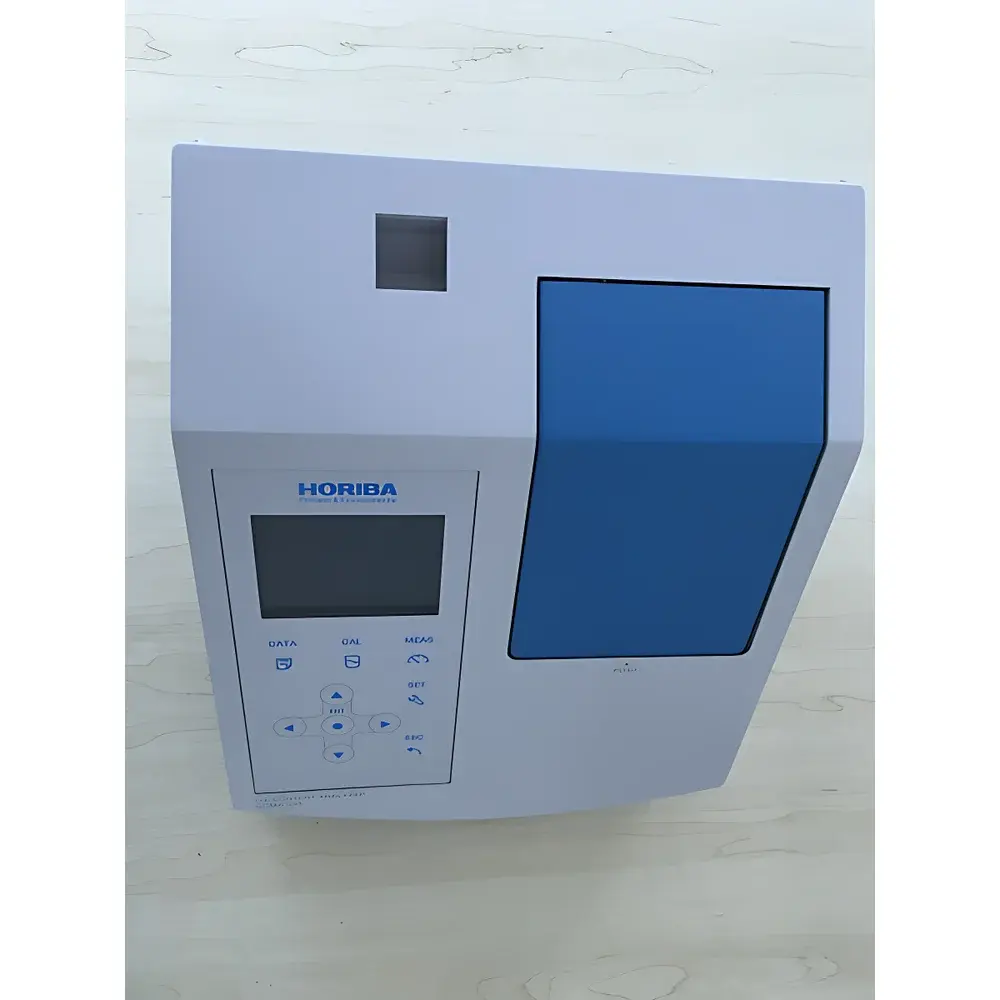
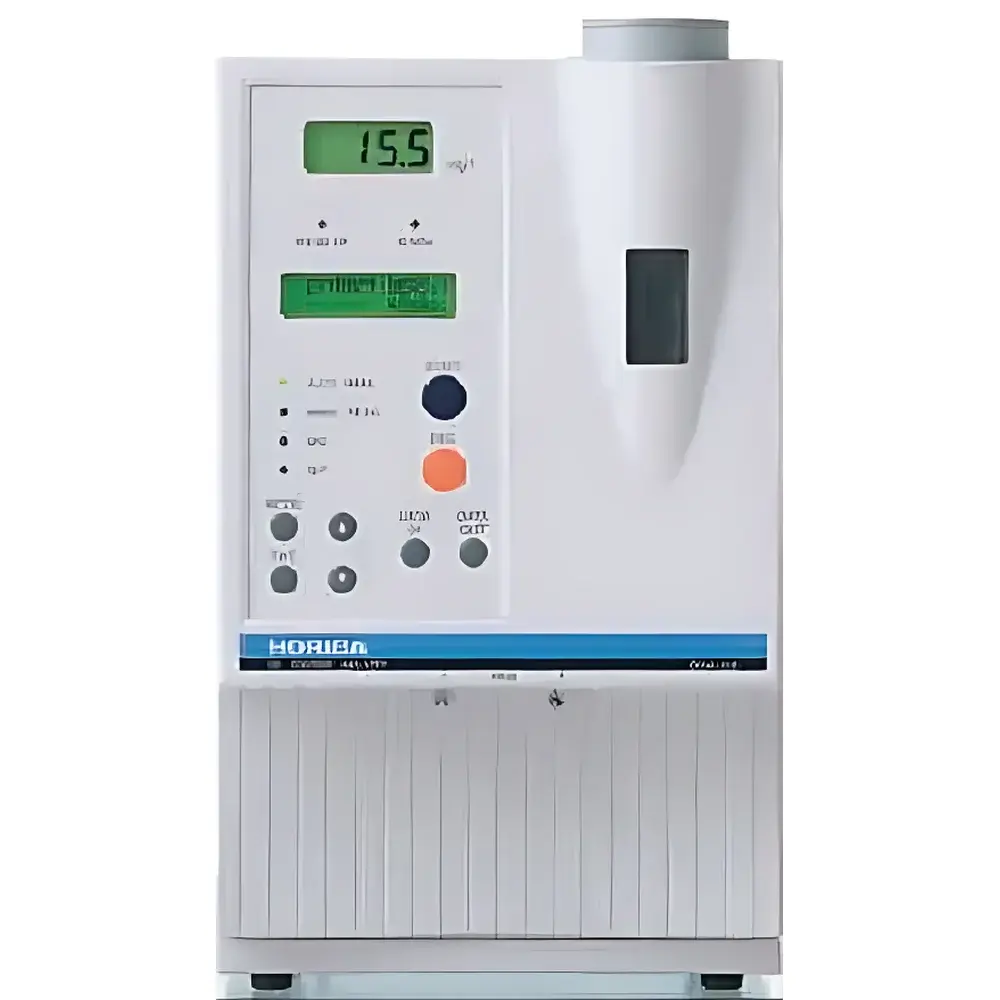
HORIBA OCMA-505 Portable Oil-in-Water Analyzer
| Brand | HORIBA |
|---|---|
| Origin | Japan |
| Model | OCMA-505 |
| Instrument Type | Portable |
| Measurement Principle | Solvent Extraction + Non-Dispersive Infrared (NDIR) Absorption |
| Detection Range | 0–200 mg/L |
| Extractant | H-997 |
| Repeatability | ±0.2 mg/L (0–10 mg/L), ±2 mg/L (10–100 mg/L), ±4 mg/L (100–200 mg/L) |
| Compliance | Designed for ASTM D7066, ISO 9377-2, and EPA Method 1664B alignment |
| Optional Accessory | Solvent Regenerator SR-305 |
Overview
The HORIBA OCMA-505 is a field-deployable, fully automated oil-in-water analyzer engineered for rapid, trace-level quantification of hydrocarbon contaminants in aqueous matrices—including freshwater, seawater, industrial process water, and wastewater effluents. It employs a two-stage analytical workflow: first, quantitative solvent extraction using the proprietary H-997 extractant; second, non-dispersive infrared (NDIR) absorption measurement at characteristic C–H stretching wavelengths (~2960 cm⁻¹). This method delivers high selectivity for aliphatic and aromatic hydrocarbons while minimizing interferences from humic substances, chlorophyll, or suspended solids. Unlike conventional gravimetric or fluorescence-based systems, the OCMA-505 eliminates manual phase separation and calibration drift through integrated fluid handling, temperature-stabilized optics, and real-time baseline correction. Its 0–200 mg/L dynamic range enables single-range operation across regulatory thresholds—from background monitoring (e.g., 100 mg/L in refinery outfalls)—without manual range switching or dilution.
Key Features
- Fully automated sample processing: Integrated syringe pump, solvent delivery, liquid–liquid extraction, and waste disposal—all triggered by a single button press.
- Proprietary H-997 extractant: Optimized for high recovery (>95%) of C10–C40 hydrocarbons with low volatility and minimal water miscibility—ensuring reproducible phase separation and NDIR signal stability.
- NDIR optical system: Dual-beam configuration with thermoelectrically cooled detector and sealed reference cell, delivering long-term photometric stability (<0.5% drift over 8 hours).
- Digital error tracking: Real-time display of operational status, fault codes (e.g., “Low Solvent”, “Extraction Timeout”, “Absorbance Saturation”), and diagnostic logs in English interface.
- Traceable quantification: Built-in calibration verification via certified reference standards; supports user-defined calibration curves compliant with ISO/IEC 17025 documentation requirements.
- Ruggedized portable design: IP65-rated enclosure, shock-absorbing housing, and battery-operated mode (optional) for on-site deployment in wastewater plants, coastal monitoring stations, or offshore platforms.
Sample Compatibility & Compliance
The OCMA-505 is validated for direct analysis of raw, filtered, or centrifuged water samples—including saline matrices up to 35 ppt salinity—without pretreatment. It meets method performance criteria specified in ASTM D7066 (Standard Test Method for Determination of Oil and Grease and Selected Petroleum Hydrocarbons in Water by Infrared Spectrophotometry), ISO 9377-2 (Water quality — Determination of hydrocarbon oil index — Part 2: Infrared spectrometric method), and EPA Method 1664B (n-Hexane Extractable Material (HEM) and Silica Gel Treated n-Hexane Extractable Material (SGT-HEM)). Its measurement uncertainty profile aligns with GLP/GMP data integrity expectations: full audit trail logging, electronic signature support, and 21 CFR Part 11–ready firmware (with optional software license). All consumables—including H-997 solvent cartridges and SR-305 regeneration columns—are manufactured under HORIBA’s ISO 9001-certified quality system.
Software & Data Management
Instrument control and data acquisition are managed via HORIBA’s OCMA Control Suite v3.2—a Windows-based application supporting both standalone operation and networked deployment. The software provides real-time chromatogram-like absorbance traces, automatic peak integration, and QC flagging per ICH Q2(R2) guidelines. Raw spectra, method parameters, operator ID, timestamp, and environmental conditions (ambient temperature, humidity) are embedded in each result file (.ocm format), exportable as CSV or PDF reports compliant with LIMS integration protocols (ASTM E1482, ANSI/NIST SP 800-90B). Audit trails record all user actions—including calibration edits, result overrides, and method changes—with immutable timestamps and role-based access controls.
Applications
- Regulatory compliance monitoring at municipal wastewater treatment plants (WWTPs) and industrial discharge points per NPDES permits.
- Marine environmental surveillance: detection of bilge water contamination, harbor sediment pore water screening, and oil spill impact assessment.
- Process water quality assurance in petrochemical refineries, power plant cooling circuits, and metalworking fluid systems.
- Research applications in aquatic toxicology and bioremediation studies requiring high-frequency, low-concentration oil profiling.
- Emergency response: rapid field triage during pipeline leaks or tanker groundings, with results available within 8 minutes per sample.
FAQ
What solvent is required for the OCMA-505, and is it included with the instrument?
The OCMA-505 uses HORIBA’s proprietary H-997 extractant, supplied in sealed, pre-calibrated cartridges. One cartridge is included with initial shipment; additional cartridges are orderable as consumables (Cat. No. H997-CARTRIDGE).
Can the OCMA-505 analyze seawater without modification?
Yes—the system is factory-validated for direct analysis of seawater up to 35 ppt salinity. No desalting, filtration, or pH adjustment is required prior to extraction.
How does the SR-305 Solvent Regenerator integrate with the OCMA-505?
The SR-305 is an external, benchtop unit that reconditions spent H-997 extractant via dual-layer activated carbon and activated alumina columns. It restores >90% of original extraction efficiency and reduces solvent consumption by ~70%, supporting sustainable operation under ISO 14001 frameworks.
Is method validation documentation provided for regulatory submissions?
HORIBA supplies a comprehensive Validation Support Package—including system suitability tests, LOD/LOQ determination reports, ruggedness evaluation data, and cross-method comparison studies against EPA 1664B—upon request for regulated users.
What maintenance intervals are recommended for routine operation?
Daily: Visual inspection of fluid lines and waste reservoir. Weekly: Cleaning of extraction chamber and optical window with isopropanol. Annually: Full optical alignment verification and syringe pump calibration—performed by HORIBA-certified service engineers.







