
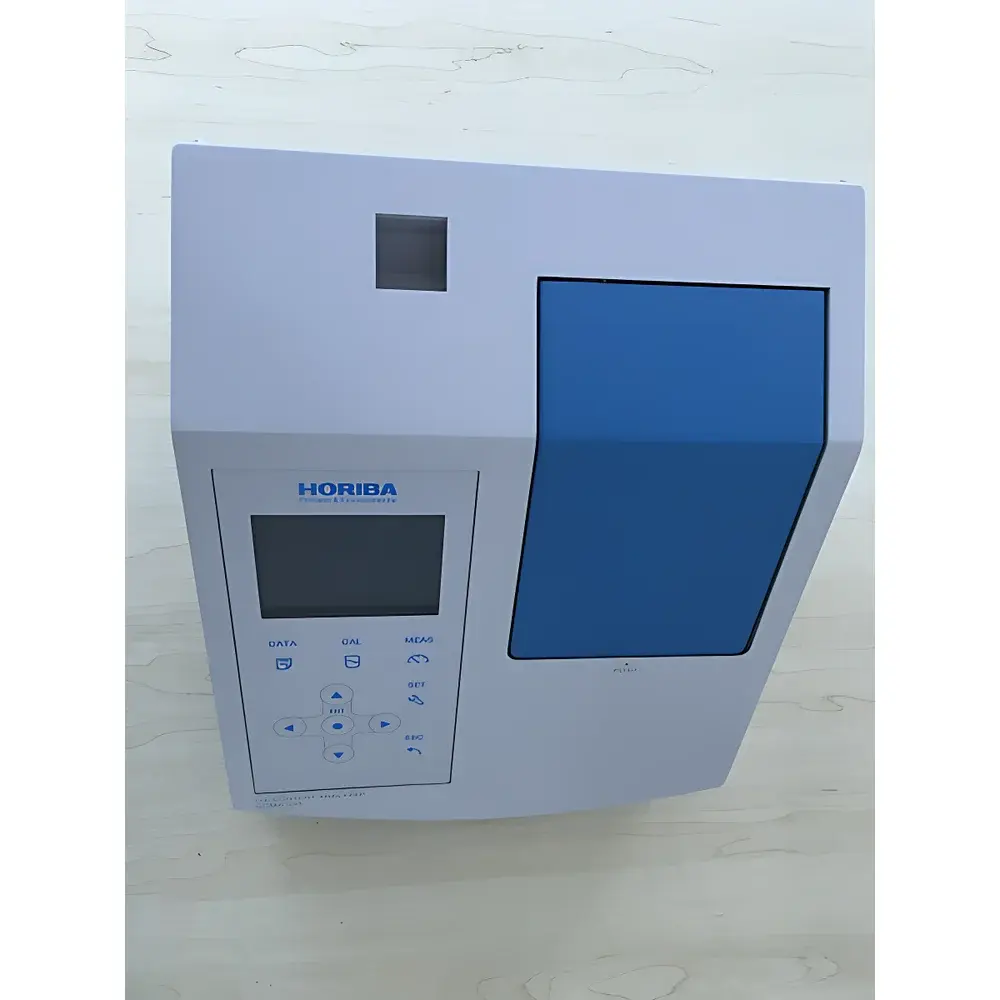
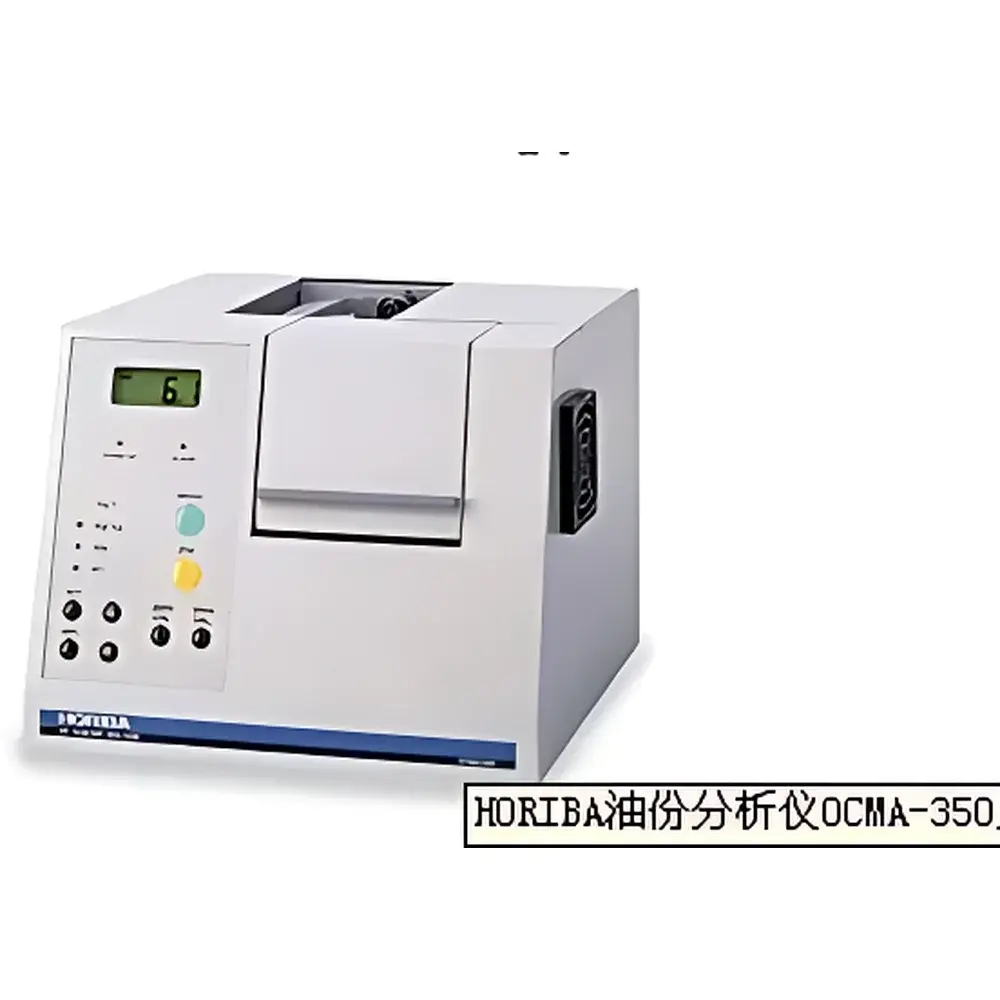
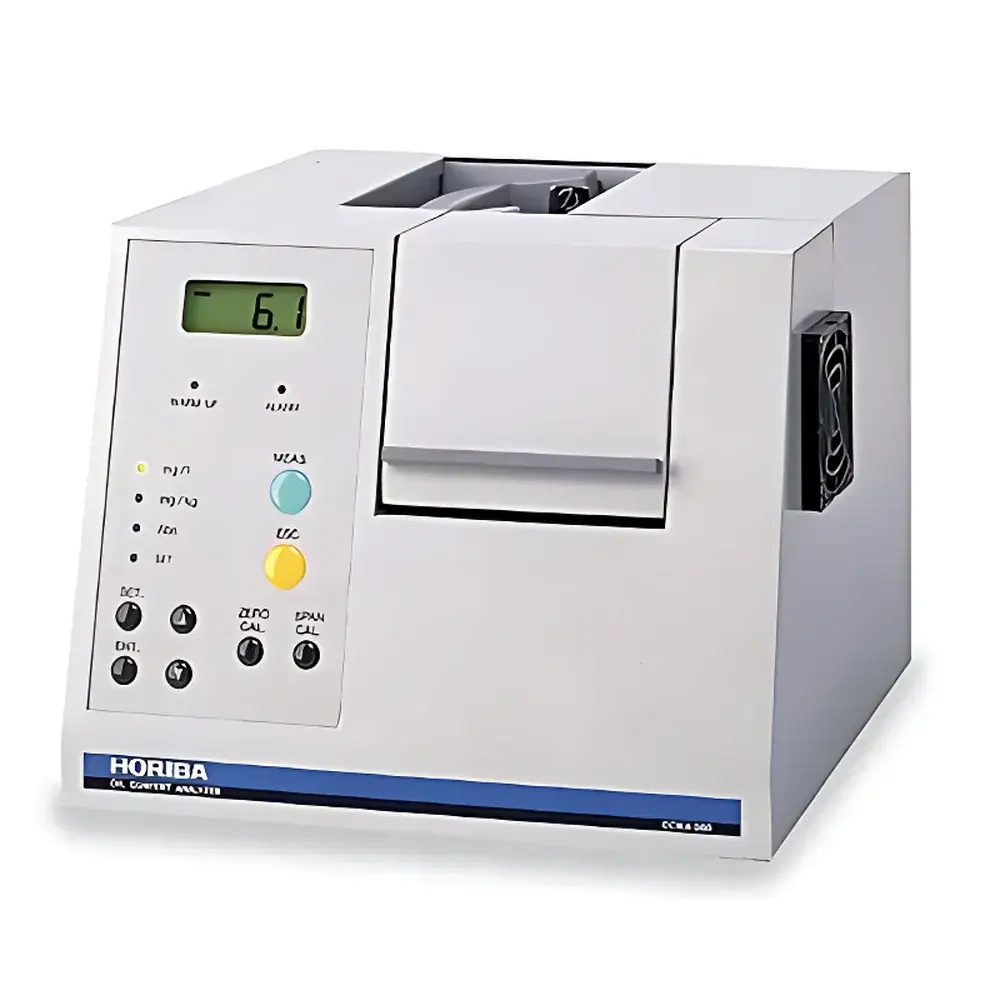
HORIBA OCMA-550 Portable Oil Content Analyzer
| Brand | HORIBA |
|---|---|
| Origin | Japan |
| Model | OCMA-550 |
| Instrument Type | Portable |
| Measurement Principle | Non-Dispersive Infrared (NDIR) Absorption using S-316 Extraction Solvent |
| Measurement Range | 0–200 mg/L (water), 0–1000 mg/kg (soil), 0–1 Abs |
| Detection Limit | 0.1 ppm |
| Repeatability | ±0.4 mg/L (0–9.9 mg/L), ±2.0 mg/L (10.0–99.9 mg/L), ±4 mg/L (100–200 mg/L), ±1% F.S. (0–1 Abs) |
| Display | Backlit LCD with timestamping |
| Interface | RS-232C, Parallel Printer Port |
| Power Supply | 230 V AC, 50 Hz |
| Dimensions | 250 × 200 × 285 mm (W × H × D) |
| Detector | Thermoelectric Sensor |
| Cell | Quartz Cuvette (200 mm path length) |
| Compliance | ASTM D7066, ISO 9377-2 (indirectly applicable), EPA Method 1664 (S-316-compatible extraction) |
Overview
The HORIBA OCMA-550 is a portable, field-deployable oil content analyzer engineered for quantitative determination of hydrocarbon contamination in aqueous and solid-phase environmental matrices. It operates on the principle of non-dispersive infrared (NDIR) absorption spectroscopy at the characteristic C–H stretching band near 3.4 µm — a spectral region where extracted hydrocarbons exhibit strong, selective absorbance while the extraction solvent S-316 remains optically transparent. This spectral selectivity eliminates interference from solvent residuals and enables high specificity for aliphatic and aromatic hydrocarbons commonly found in petroleum-based oils, lubricants, cutting fluids, and industrial effluents. The instrument is designed for compliance-ready operation in regulated environments, supporting trace-level quantification down to 0.1 ppm (mg/L) with documented repeatability per defined concentration intervals. Its compact footprint, battery-independent AC operation, and ruggedized optical architecture make it suitable for on-site screening at hazardous waste sites, wastewater treatment plants, manufacturing facilities, and environmental remediation zones.
Key Features
- Three selectable measurement units: mg/L (for water extracts), mg/kg (for soil/sediment extracts), and absorbance (Abs) — configurable via front-panel interface without software dependency
- Integrated backlit LCD display with automatic timestamping for each measurement, enabling GLP-compliant recordkeeping without external data loggers
- Thermoelectric detector optimized for stability across ambient temperature fluctuations (10–40 °C operating range), minimizing drift during extended field use
- Pre-calibrated optical path using a 200 mm quartz cuvette, ensuring high sensitivity for low-concentration samples while maintaining mechanical robustness
- Single-button measurement workflow: after solvent extraction (using S-316), sample introduction into the cuvette triggers automated zeroing, baseline correction, and concentration calculation
- RS-232C serial interface and parallel printer port support direct data export to LIMS or QA/QC databases; no proprietary drivers required
- Optional solvent recovery system (SR-305) compatible with S-316, incorporating activated carbon and activated alumina columns for >95% solvent reuse — reducing consumable cost and hazardous waste generation
Sample Compatibility & Compliance
The OCMA-550 is validated for use with S-316 (1,1,2-trichloro-1,2,2-trifluoroethane) as the primary extraction solvent, a halogenated compound selected for its high hydrocarbon solubility and negligible IR absorbance at 3.4 µm. Sample matrices include surface water, groundwater, industrial wastewater, soil slurries, and swab extracts from metal or precision components. While not a direct EPA-certified method, the OCMA-550’s analytical approach aligns with the technical foundation of EPA Method 1664 (n-Hexane Extractable Material) and ISO 9377-2 (petroleum hydrocarbons in water), particularly when coupled with standardized extraction protocols. The instrument supports audit-ready documentation: all measurements retain embedded timestamps, and raw absorbance values are retained alongside calculated concentrations — fulfilling core requirements for GLP and internal QA/QC traceability. It does not meet FDA 21 CFR Part 11 electronic signature requirements out-of-the-box but can be integrated into compliant workflows via external data capture systems.
Software & Data Management
The OCMA-550 operates autonomously without embedded firmware-based software. All calibration, unit conversion, and concentration calculation logic reside in hardwired microcontroller firmware — eliminating version control dependencies or cybersecurity vulnerabilities associated with PC-based applications. Data output is ASCII-formatted via RS-232C at 9600 baud (8N1), including sample ID (user-entered), date/time stamp, measured absorbance, selected unit, and final concentration. This format ensures seamless ingestion into laboratory information management systems (LIMS), Excel-based QA trackers, or custom Python/SQL validation pipelines. No proprietary file formats or license keys are involved. For long-term archiving, users may connect a parallel thermal printer (e.g., Epson FX-890) to generate physical audit trails concurrent with digital records.
Applications
- Field screening of oil-contaminated groundwater and leachate at brownfield sites prior to remediation
- Verification of cleaning efficacy in semiconductor wafer rinsing baths and precision machining coolant systems
- Monitoring oil carryover in electroplating rinse waters and metalworking fluid recycling loops
- Quantitative assessment of residual lubricant on stamped or machined automotive components
- Regulatory reporting support for discharge permits requiring hydrocarbon limits (e.g., NPDES, local sewer authority thresholds)
- QA testing of solvent recovery efficiency in SR-305-equipped laboratories
FAQ
What extraction solvent is required for the OCMA-550?
S-316 (1,1,2-trichloro-1,2,2-trifluoroethane) is the specified extraction solvent. Its IR transparency at 3.4 µm ensures selective detection of hydrocarbons without solvent interference.
Can the OCMA-550 measure diesel, mineral oil, and synthetic lubricants equally?
Yes — provided they contain extractable C–H bonds in the aliphatic/aromatic region. Performance varies slightly with molecular weight distribution; calibration with matrix-matched standards is recommended for highest accuracy.
Is the instrument suitable for unattended operation?
No — it requires manual cuvette loading and solvent handling. However, its stable thermal design allows consistent performance over multi-hour field sessions with periodic recalibration.
Does the OCMA-550 require annual factory calibration?
Not mandatory. Users perform daily zeroing with solvent blank; NIST-traceable oil standards (e.g., B-grade heavy oil included) enable in-house verification. Factory recalibration is advised every 24 months or after physical impact.
Can the 200 mm quartz cuvette be cleaned and reused?
Yes — it is chemically resistant to S-316 and may be rinsed with fresh solvent and dried under nitrogen. Avoid ultrasonic cleaning or abrasive wiping to preserve optical surface integrity.
Related Products







