
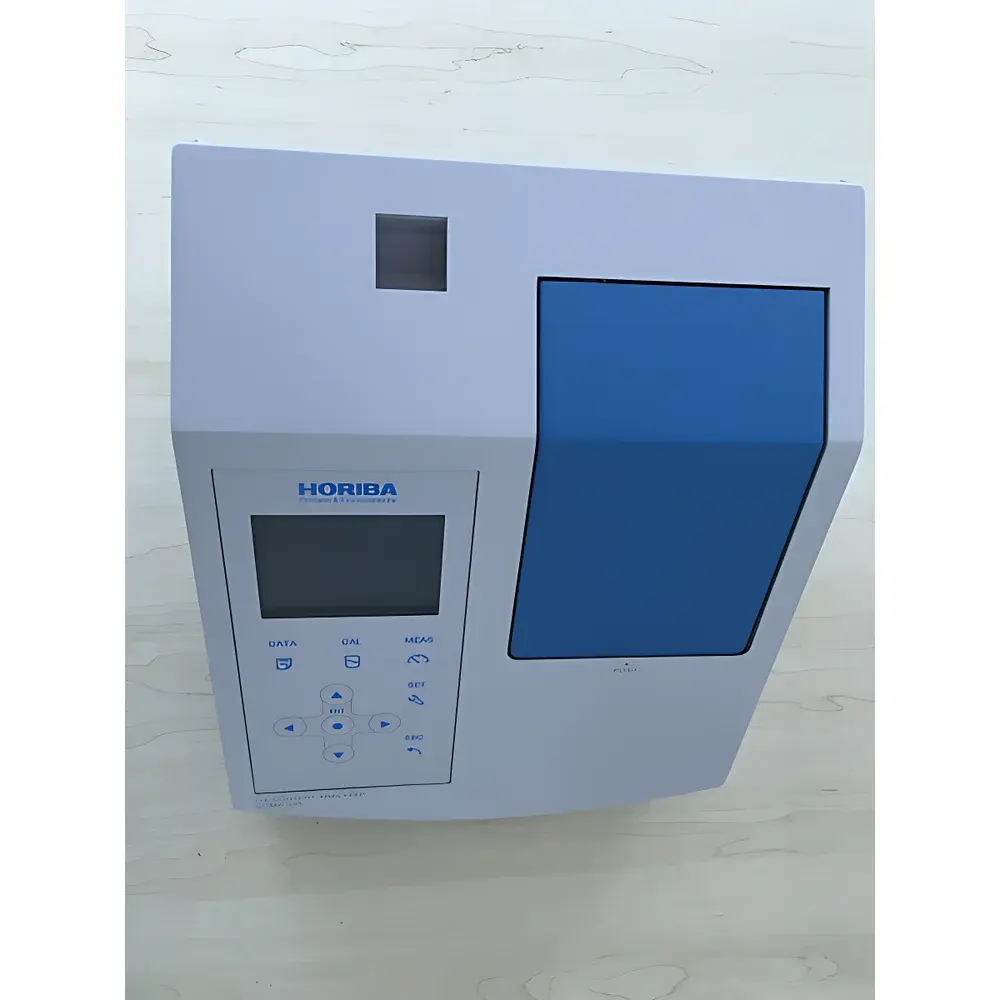
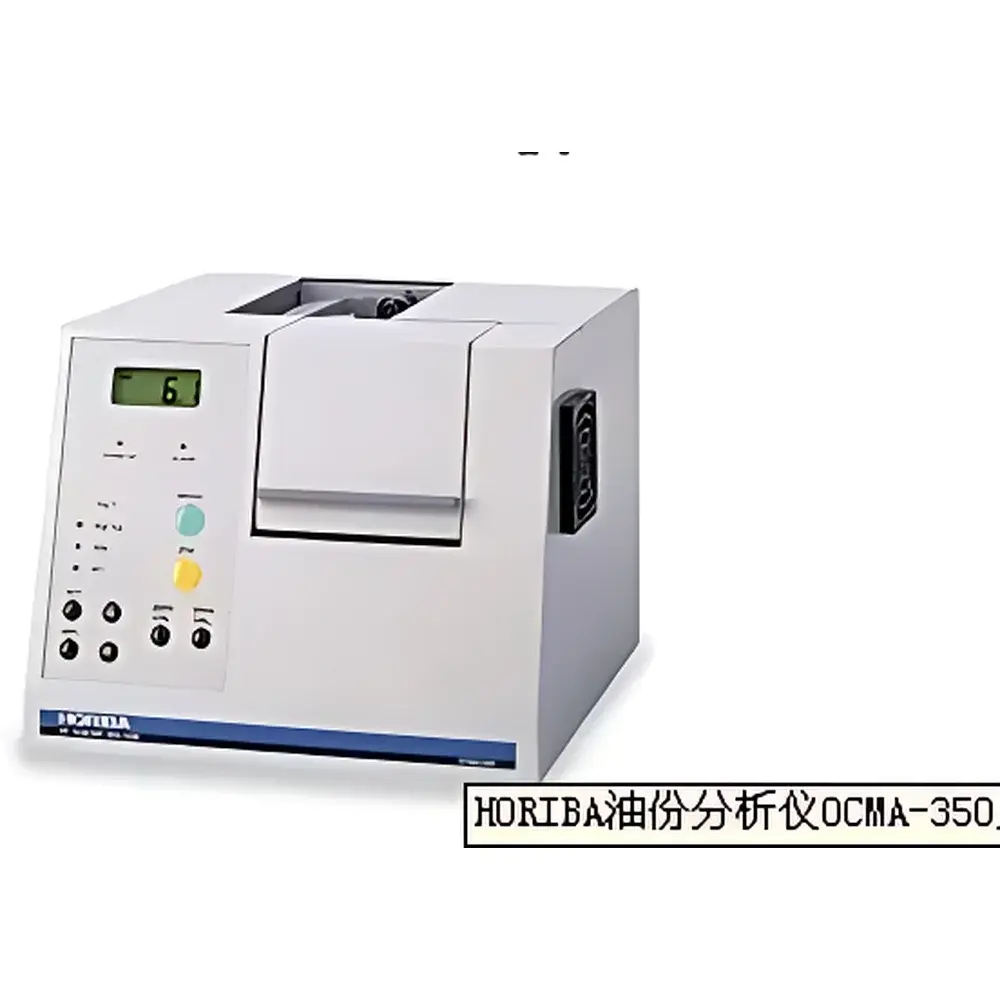
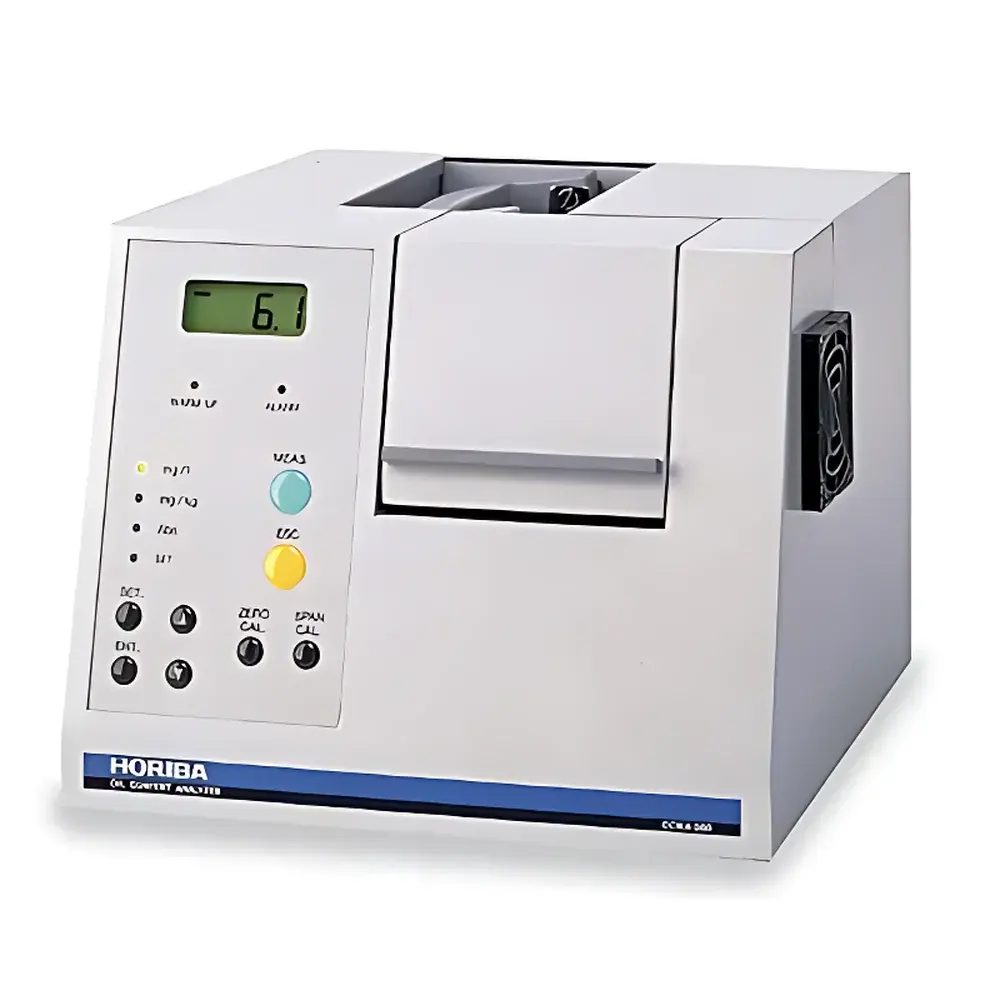
HORIBA OCMA-555 Oil Content Analyzer
| Brand | HORIBA |
|---|---|
| Origin | Japan |
| Model | OCMA-555 |
| Measurement Principle | Non-Dispersive Infrared (NDIR) Absorption Spectrophotometry |
| Extraction Solvent | H-997 |
| Measurement Range | 0–200 mg/L (water), 0–1000 mg/kg (soil), 0–1 Abs |
| Resolution | 0.2 mg/L (or 0.001 Abs) |
| Repeatability | ±0.4 mg/L (0–9.9 mg/L), ±2.0 mg/L (10.0–99.9 mg/L), ±4 mg/L (100–200 mg/L), ±1% F.S. (0–1 Abs) |
| Detector | Thermoelectric Sensor |
| Display | Backlit LCD with Timestamp |
| Interface | RS-232C, Parallel Printer Port |
| Power Supply | 230 V AC, 50 Hz |
| Dimensions | 250 × 200 × 285 mm (W × H × D) |
| Sample Cell | 200-mm Pathlength Quartz Cuvette |
| Compliance | ASTM D7066, ISO 9377-2 (principle-aligned), EPA Method 1664 (extraction-compatible) |
Overview
The HORIBA OCMA-555 Oil Content Analyzer is a laboratory-grade, non-dispersive infrared (NDIR) spectrophotometer engineered for precise quantification of hydrocarbon-based oil residues in aqueous and solid-phase environmental matrices. It operates on the principle of selective infrared absorption at the C–H stretching band near 3.4 µm — a spectral region where aliphatic and aromatic hydrocarbons exhibit strong, characteristic absorbance, while the proprietary extraction solvent H-997 remains optically transparent. This spectral selectivity ensures measurement specificity to petroleum-derived oils (e.g., mineral oil, lubricants, cutting fluids) without interference from water, chlorinated solvents, or common polar contaminants. The instrument is calibrated for three traceable reporting units: mg/L (for water extracts), mg/kg (for soil/sediment extracts), and absorbance (Abs) — enabling direct correlation with regulatory compliance frameworks such as EPA Method 1664 (for wastewater discharge monitoring) and ISO 9377-2 (for hydrocarbon contamination in environmental samples). Its fixed-pathlength (200 mm) quartz cell maximizes optical sensitivity for low-concentration detection, supporting quantitation down to sub-mg/L levels with high inter-laboratory reproducibility.
Key Features
- Triple-unit reporting capability: switch seamlessly between mg/L, mg/kg, and Abs via front-panel interface — eliminating manual unit conversion errors in multi-matrix workflows.
- Thermoelectric detector with temperature-stabilized optics ensures long-term signal stability and minimal drift during extended batch analysis.
- Integrated timestamping and auto-zero calibration upon power-up or user-initiated reset — compliant with GLP documentation requirements for audit-ready data integrity.
- Backlit monochrome LCD display with 4-digit resolution supports clear visualization under variable ambient lighting conditions in laboratory or field-deployable settings.
- Dual digital output: RS-232C serial interface for direct connection to LIMS or data acquisition software; parallel printer port for immediate hardcopy generation of certified results.
- Compact benchtop footprint (250 × 200 × 285 mm) optimized for space-constrained QC labs while maintaining full NDIR optical path performance.
Sample Compatibility & Compliance
The OCMA-555 is validated for use with solvent-extracted samples prepared using H-997 — a halogenated hydrocarbon solvent specifically formulated for high-efficiency oil recovery and IR transparency. It accommodates liquid extracts from water (per ASTM D7066), homogenized soil/sediment slurries (ISO 16703), and surface wipe samples from metal or textile substrates. The system meets functional equivalency to EPA Method 1664B for total recoverable petroleum hydrocarbons (TRPH) when paired with standardized liquid-liquid extraction protocols. Its measurement uncertainty profile aligns with ISO/IEC 17025 method validation criteria for environmental testing laboratories. No internal moving parts or consumable optical filters reduce maintenance frequency and support >5-year operational reliability under routine QC use.
Software & Data Management
While the OCMA-555 operates as a standalone instrument, its RS-232C interface enables bidirectional communication with third-party laboratory software (e.g., LabWare LIMS, Thermo Fisher SampleManager) via ASCII protocol. All measurements include embedded date/time stamps, operator ID fields (configurable via terminal command), and automatic range identification (0–9.9 / 10–99.9 / 100–200 mg/L) to ensure traceability. Raw absorbance values and selected concentration units are transmitted in real time, supporting automated report generation and electronic signature workflows compliant with FDA 21 CFR Part 11 when integrated into validated IT environments. Internal memory retains the last 100 measurements with timestamps — sufficient for interim review prior to external data archiving.
Applications
- Regulatory wastewater monitoring: quantification of residual oils in effluent from electroplating, metalworking, and textile finishing operations.
- Hazardous waste characterization: TRPH screening in soil cores and leachate per RCRA Land Disposal Restrictions (LDR) requirements.
- Manufacturing process control: verification of cleaning efficacy in semiconductor wafer rinsing, precision machining, and aerospace component degreasing.
- Environmental site assessment: rapid on-site screening of groundwater plumes and sediment contamination following spill incidents.
- Research applications: kinetic studies of oil biodegradation, sorption isotherms in activated carbon columns, and solvent recovery efficiency evaluation.
FAQ
What extraction solvent is required for the OCMA-555, and why is it specified?
The OCMA-555 requires H-997 solvent — a low-toxicity, high-boiling-point chlorinated hydrocarbon optimized for complete oil extraction and zero IR absorbance at 3.4 µm. Its spectral neutrality ensures measurement specificity to target hydrocarbons only.
Can the OCMA-555 measure polycyclic aromatic hydrocarbons (PAHs) independently?
No. It measures total extractable petroleum hydrocarbons (TEPH) based on bulk C–H bond density. PAH-specific quantification requires GC-MS or HPLC-UV analysis.
Is the 200-mm quartz cuvette included with the instrument?
Yes — one capped quartz cuvette with 200-mm optical pathlength is supplied standard. Additional cuvettes are available as spares (Part No. 012345-XXX).
Does the OCMA-555 support multi-point calibration curves?
No — it uses a single-point factory calibration traceable to NIST-traceable mineral oil standards. User verification is performed via B-grade heavy oil reference standard (included).
Is the OCMA-555 compatible with solvent recycling systems?
Yes — it integrates with HORIBA’s SR-305 solvent regeneration unit (sold separately), which employs dual-bed activated carbon and activated alumina columns to restore H-997 purity over ≥50 extraction cycles.
Related Products







