
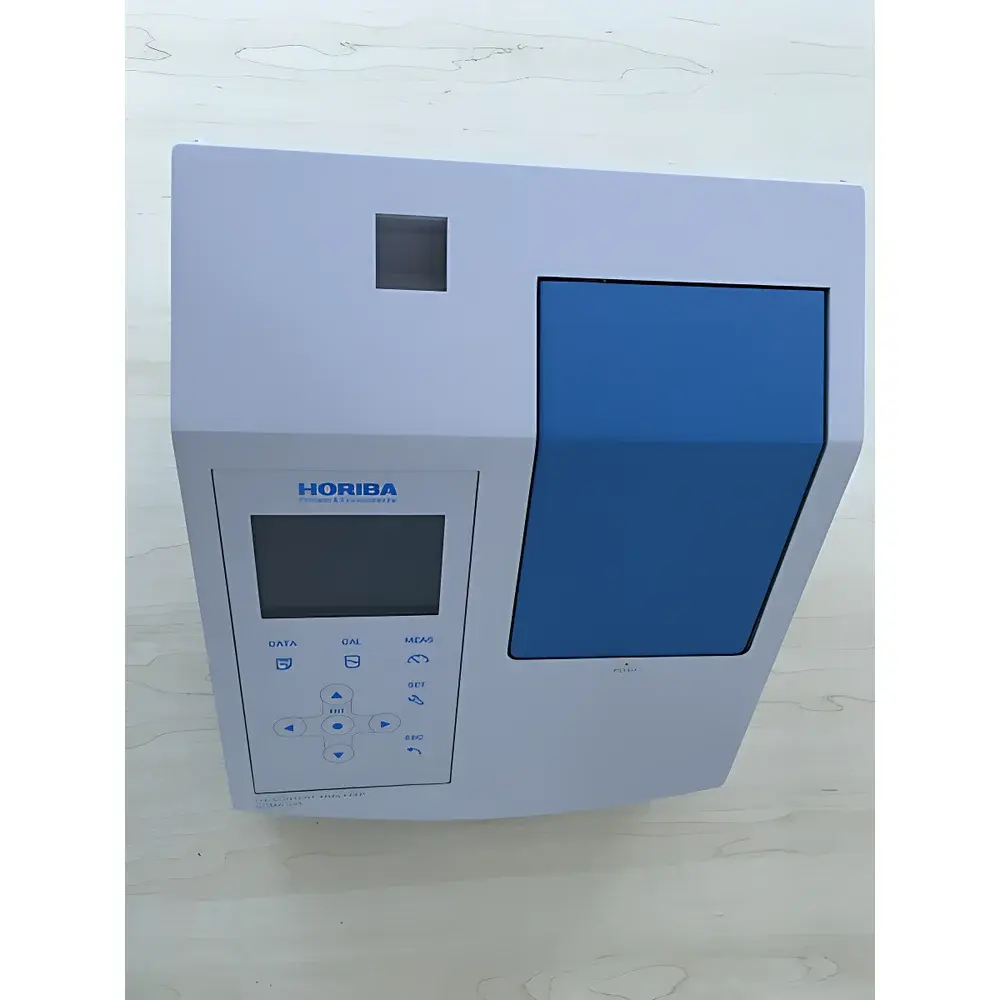
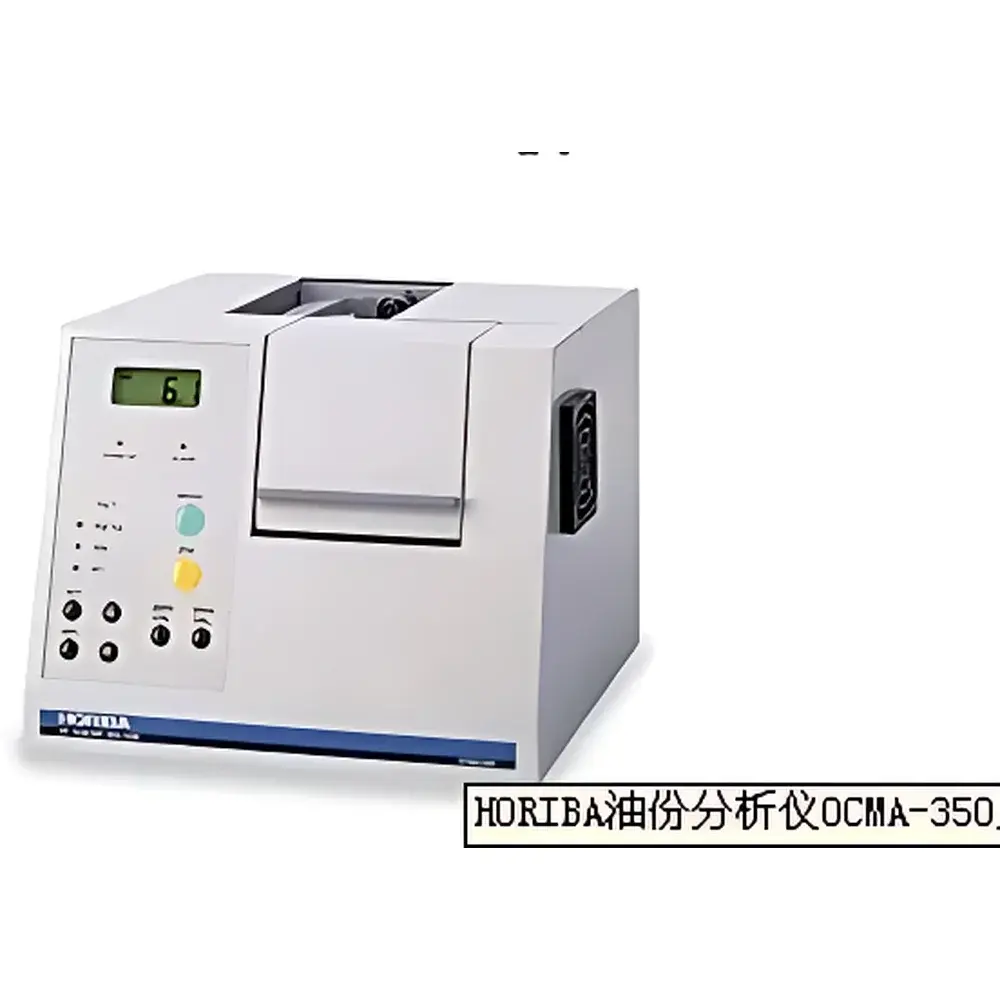
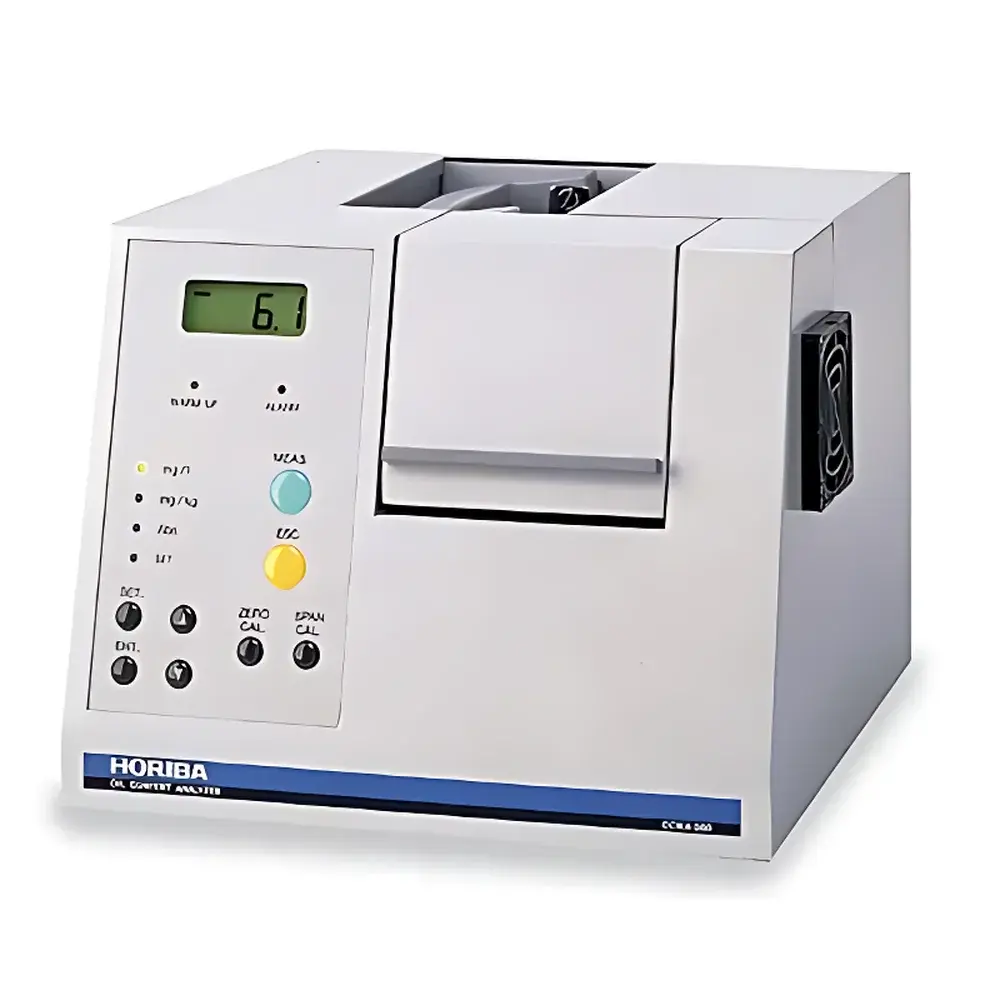
HORIBA OCMA-555 Portable Oil Content Analyzer
| Brand | HORIBA |
|---|---|
| Origin | Japan |
| Model | OCMA-555 |
| Instrument Type | Portable |
| Measurement Principle | Non-Dispersive Infrared (NDIR) Absorption with H-997 Extraction Solvent |
| Measurement Range | 0–200 mg/L (water), 0–1000 mg/kg (soil), 0–1 Abs |
| Repeatability | ±0.4 mg/L ±1 digit (0–9.9 mg/L), ±2.0 mg/L ±1 digit (10.0–99.9 mg/L), ±4 mg/L ±1 digit (100–200 mg/L), ±1% F.S. (0–1 Abs) |
| Optical Path | Quartz Cuvette (200 mm path length) |
| Detector | Thermoelectric Sensor |
| Display | Backlit LCD with Timestamp |
| Data Interface | RS-232C, Parallel Printer Port |
| Power Supply | 230 V AC, 50 Hz |
| Dimensions | 250 × 200 × 285 mm (W × H × D) |
| Standard Accessories | Covered quartz cuvette, power cord, heavy oil standard (B-grade), 2 A fuse, 10 mL and 25 µL syringes |
Overview
The HORIBA OCMA-555 is a portable, laboratory-grade oil content analyzer engineered for precise quantification of hydrocarbon contamination in aqueous and solid-phase environmental samples. It operates on the principle of non-dispersive infrared (NDIR) absorption spectroscopy—specifically targeting the characteristic C–H stretching vibration band near 3.4 µm—enabling selective detection of petroleum-based oils while excluding interference from solvent absorbance. Unlike fluorescence-based instruments, the OCMA-555 employs H-997 extraction solvent, which exhibits negligible IR absorption at the measurement wavelength, ensuring high specificity and minimal baseline drift. The instrument is calibrated against certified heavy oil standards traceable to NIST-maintained reference materials and complies with methodological frameworks aligned with ASTM D7066 (Standard Test Method for Determination of Oil and Grease in Water by Infrared Spectrophotometry) and ISO 9377-2 (Water quality — Determination of hydrocarbon oil index — Part 2: Infrared spectrometric method). Its robust architecture supports field-deployable operation without sacrificing analytical rigor, making it suitable for regulatory monitoring, industrial effluent compliance verification, and site remediation assessment.
Key Features
- Triple-unit display capability: switch seamlessly between concentration units—mg/L (for water extracts), mg/kg (for soil/sediment extracts), and absorbance (Abs)—without recalibration.
- Integrated timestamping and data logging: all measurements are automatically stamped with date/time metadata, supporting audit-ready documentation under GLP and ISO/IEC 17025 requirements.
- Thermoelectric detector with temperature-stabilized optics: ensures long-term signal stability and minimizes thermal drift during extended field use or sequential batch analysis.
- Backlit monochrome LCD interface: optimized for readability under variable ambient lighting conditions, including outdoor daylight and low-illumination laboratory settings.
- Dual communication ports: RS-232C serial interface for direct PC connectivity and parallel printer port for immediate hard-copy reporting—both support ASCII-formatted output compatible with LIMS integration.
- Compact, benchtop-portable design: weighs under 5 kg with integrated handle; meets IEC 61010-1 safety standards for electrical equipment used in measurement, control, and laboratory applications.
Sample Compatibility & Compliance
The OCMA-555 accepts pre-extracted samples prepared using H-997 solvent—a chlorinated hydrocarbon blend optimized for efficient recovery of aliphatic and aromatic hydrocarbons from water, wastewater, soil, sludge, and surface swabs. It accommodates sample volumes up to 10 mL in standardized 200-mm-path-length quartz cuvettes, ensuring optimal signal-to-noise ratio across the full 0–200 mg/L dynamic range. The system is validated for use in EPA Region 9 and EU WFD (Water Framework Directive) compliant monitoring programs, and its measurement protocol satisfies the technical criteria outlined in US EPA Method 1664B (for oil and grease) when paired with appropriate extraction validation. All calibration and performance verification procedures adhere to internal SOPs that mirror FDA 21 CFR Part 11 data integrity expectations—including electronic signature support via optional software modules.
Software & Data Management
While the OCMA-555 operates as a standalone instrument with embedded firmware, its RS-232C interface enables bidirectional communication with HORIBA’s optional OCMA Data Manager v3.x software suite (sold separately). This Windows-based application supports automated calibration curve generation, multi-point standardization, QC flagging (e.g., out-of-range absorbance, cuvette misalignment alerts), and export to CSV, Excel, or PDF formats. Audit trails record operator ID, calibration history, maintenance logs, and raw spectral data timestamps—fully compliant with ALCOA+ principles (Attributable, Legible, Contemporaneous, Original, Accurate, Complete, Consistent, Enduring, Available). Data files include cryptographic hash signatures to prevent post-acquisition tampering, fulfilling forensic-grade evidentiary requirements.
Applications
- Industrial wastewater monitoring: real-time verification of oil removal efficiency in API separators, coalescers, and membrane filtration systems.
- Soil and sediment screening at brownfield sites: rapid quantification of total petroleum hydrocarbons (TPH) prior to excavation or bioremediation initiation.
- Manufacturing process control: residual oil assessment on machined metal parts, semiconductor wafers, and textile substrates following solvent cleaning cycles.
- Regulatory discharge compliance: routine analysis of treated effluent prior to release into municipal sewers or natural waterways per local environmental agency mandates.
- Emergency response: on-site triage of spill-contaminated groundwater or surface runoff during hazardous material incidents.
FAQ
What extraction solvent is required for the OCMA-555?
H-997 solvent is mandatory for OCMA-555 operation; it is chemically distinct from S-316 (used in OCMA-550) and specifically formulated to eliminate interfering IR absorbance at 3.4 µm.
Can the OCMA-555 measure emulsified or dissolved oil fractions?
No—the instrument quantifies only extractable, non-polar hydrocarbons recovered via liquid–liquid extraction. Emulsified or surfactant-stabilized oil requires phase separation or acidification pretreatment prior to analysis.
Is third-party calibration verification supported?
Yes—HORIBA provides NIST-traceable calibration verification kits (Cat. No. OCMA-CAL-KIT-555), including certified oil standards at 5, 50, and 150 mg/L concentrations, for annual instrument qualification per ISO/IEC 17025 Clause 6.5.
Does the instrument require annual factory recalibration?
Not mandatory; however, HORIBA recommends biannual performance verification using certified standards and optional optical alignment checks performed by authorized service engineers.
Is the quartz cuvette included with the base configuration?
Yes—the standard package includes one covered 200-mm-path-length quartz cuvette, certified for IR transmission >90% at 3.4 µm, along with calibration oil, syringes, fuses, and power cord.







