
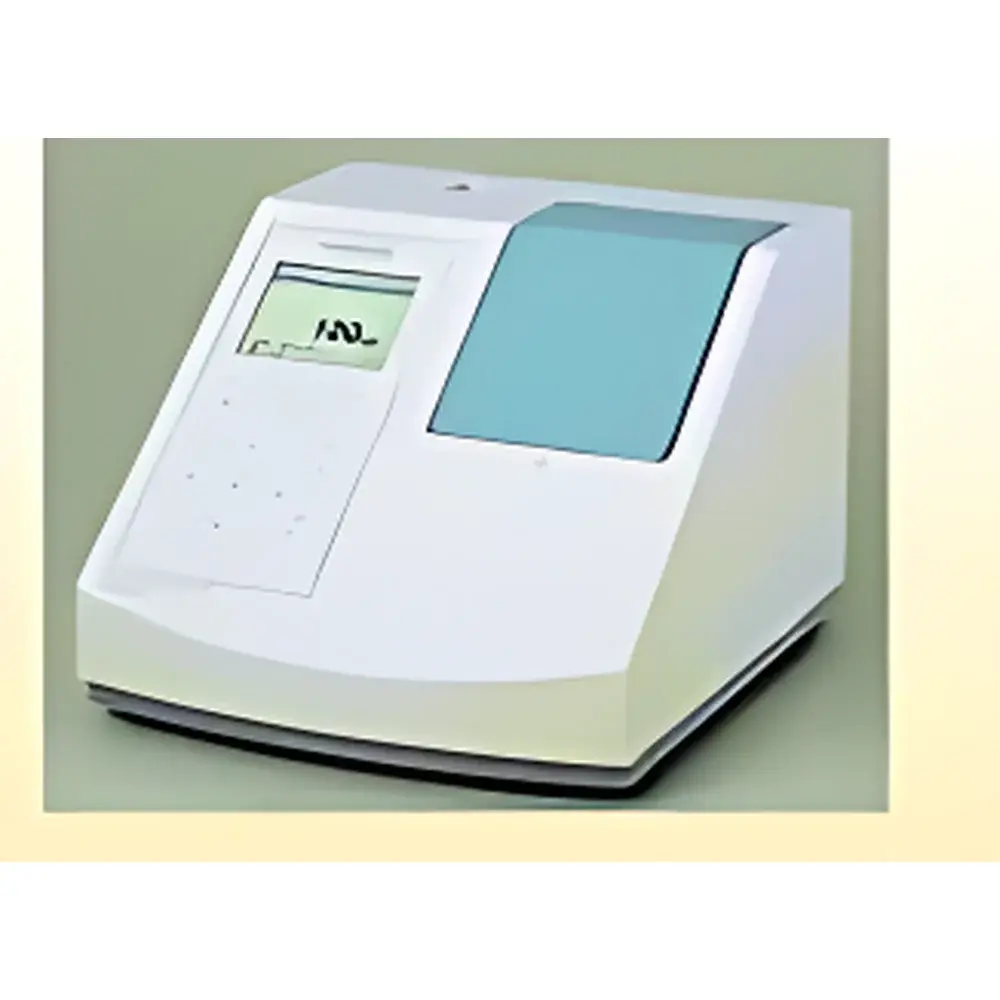
Horiba OCMA-555 Portable Oil Content Analyzer
| Brand | HORIBA |
|---|---|
| Origin | Japan |
| Model | OCMA-555 |
| Instrument Type | Portable |
| Measurement Principle | Non-Dispersive Infrared (NDIR) Absorption |
| Measurement Range | 0–200 mg/L (water), 0–1000 mg/kg (soil), 0–1 Abs |
| Detection Limit | 0.2 mg/L |
| Accuracy | ±1% of reading or ±1 digit (whichever is greater) |
| Resolution | 0.1 mg/L |
| Measurement Frequency | 1 test per 2 minutes |
| Solvent | H-997 (non-absorbing at ~3.4 µm) |
| Sample Cell | 20 mm quartz cuvette |
| Output Interface | RS-232C, parallel printer port |
| Power Supply | 230 V AC, 50 Hz |
| Dimensions | 250 × 200 × 285 mm (W × H × D) |
| Weight | Approx. 6.5 kg |
Overview
The Horiba OCMA-555 Portable Oil Content Analyzer is a field-deployable, NDIR-based instrument engineered for precise quantification of hydrocarbon oil content in aqueous and solid-phase environmental samples. It operates on the principle of non-dispersive infrared absorption at the characteristic C–H stretching band near 3.4 µm — a spectral region where hydrocarbons exhibit strong, selective absorbance while the proprietary extraction solvent H-997 remains optically transparent. This spectral specificity eliminates interference from water, particulates, and common matrix components, enabling direct, reagent-free analysis of solvent-extracted samples without spectral deconvolution or calibration against complex reference oils. Designed for compliance with standard methods including EPA Method 1664A (for wastewater) and ISO 9377-2 (for hydrocarbon contamination in soil), the OCMA-555 delivers trace-level sensitivity (detection limit: 0.2 mg/L) and high reproducibility across dynamic ranges spanning three reporting units: mg/L (for water), mg/kg (for soil/sediment), and absorbance (Abs) for method development or inter-instrument comparison.
Key Features
- Triple-unit display capability: switch seamlessly between mg/L, mg/kg, and Abs — configurable per application protocol or regulatory requirement
- Integrated backlit LCD with real-time timestamping for GLP-compliant data logging; no external PC required for basic operation
- Thermoelectrically stabilized IR detector ensuring thermal drift <0.05% FS/°C over ambient range (10–40°C)
- Auto-zero and auto-calibration sequence initiated after solvent blank measurement, reducing operator dependency and minimizing baseline drift
- Compact, ruggedized chassis (250 × 200 × 285 mm; ~6.5 kg) with IP20-rated enclosure suitable for mobile labs, field vans, and industrial QC stations
- Dual-output connectivity: native RS-232C interface for integration into LIMS or SCADA systems, plus parallel port for direct thermal printer output
Sample Compatibility & Compliance
The OCMA-555 accepts solvent extracts prepared using H-997 — a chlorinated hydrocarbon blend optimized for high recovery (>95%) of aliphatic, aromatic, and naphthenic hydrocarbons from water, soil, swabs, and metal surfaces. It supports standardized extraction protocols per ASTM D7066 (oil in water by IR), ISO 9377-2 (petroleum hydrocarbons in soils), and JIS K 0102 (Japanese Industrial Standard for oil content in industrial effluents). The instrument’s optical path accommodates 20-mm pathlength quartz cuvettes, compatible with both liquid-phase extracts and clarified suspensions containing suspended solids (SS) up to 500 mg/L — validated via spike-recovery tests under turbid matrix conditions. All measurements adhere to FDA 21 CFR Part 11 requirements when paired with Horiba’s optional Data Manager software (v3.2+), supporting electronic signatures, audit trails, and secure user access control.
Software & Data Management
While standalone operation requires no software, the OCMA-555 is fully compatible with Horiba’s OCMA Data Manager Suite — a Windows-based application certified for GMP/GLP environments. It enables batch report generation (PDF/CSV), statistical process control (SPC) charting (X-bar/R charts), calibration history tracking, and full audit trail export compliant with ISO/IEC 17025 clause 7.7. Raw absorbance spectra (not stored internally) can be captured via RS-232 during manual mode for secondary validation. Data files include embedded metadata: operator ID, sample ID, timestamp, solvent lot number, cuvette ID, and environmental temperature — all essential for regulatory submissions to EPA, EEA, or local environmental authorities.
Applications
- On-site monitoring of industrial wastewater discharge compliance (e.g., metalworking fluid carryover, textile mill effluent)
- Rapid assessment of soil contamination at brownfield sites or spill response zones
- Verification of cleaning efficacy in semiconductor wafer rinsing baths and precision machining lines
- Quantitative residue testing on machined parts, stamped components, and aerospace hardware prior to coating or assembly
- Regulatory screening of landfill leachate, stormwater runoff, and produced water in upstream oil & gas operations
FAQ
What extraction solvent is required, and why is H-997 specified?
H-997 is a proprietary, low-volatility chlorinated solvent formulated to exhibit zero absorbance at 3.4 µm while achieving >95% recovery of C10–C40 hydrocarbons. Its spectral neutrality ensures that only analyte absorbance contributes to the signal — eliminating baseline correction artifacts inherent in alternative solvents like CCl₄ or FC-40.
Can the OCMA-555 measure emulsified or dissolved oil fractions?
No — it measures only extractable, non-polar hydrocarbons. Emulsified or surfactant-stabilized oil must first be phase-separated or acidified per EPA 1664A prior to H-997 extraction. Dissolved low-MW aromatics (e.g., BTEX) are not quantified due to insufficient C–H bond density at 3.4 µm.
Is SR-300 or SR-305 solvent regeneration supported natively?
The OCMA-555 does not integrate solvent recycling hardware. SR-300/SR-305 are standalone accessories requiring manual transfer of spent H-997; their use reduces solvent consumption by ≥85% but adds two additional handling steps per sample batch.
How is calibration traceability maintained?
Calibration uses gravimetrically prepared mineral oil standards (e.g., NIST-traceable B-grade heavy oil) in H-997 matrix. Certificate of Analysis includes uncertainty budget (<±0.8% k=2) and stability data over 12 months when stored at 4°C.
Related Products







